
Explore Ancient Metallurgy and Artifacts
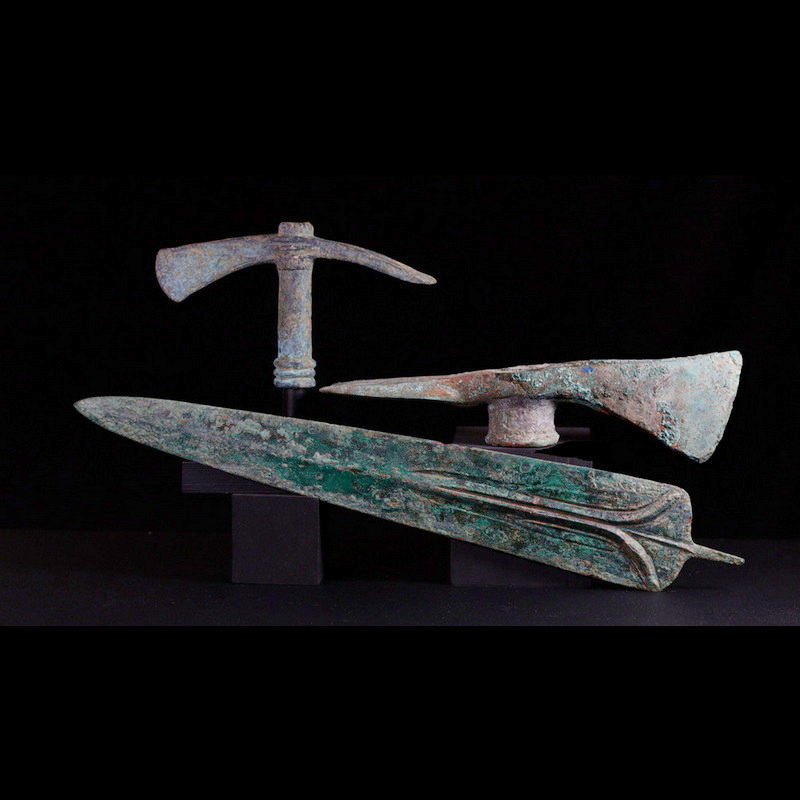
Dive into an extensive catalog of copper alloy and bronze artifacts, starting from Chalcolithic, through Bronze Age, to Early Iron Age. Ancient metal artifacts from Europe and Asia, revealing insights into craftsmanship, warfare, and ceremonial traditions that intrigue scholars and enthusiasts alike. Appreciate the evolution of Bronze Age metalworking technology over millenia from natural copper processing to sophisticated and elegant bronze artifacts.
-
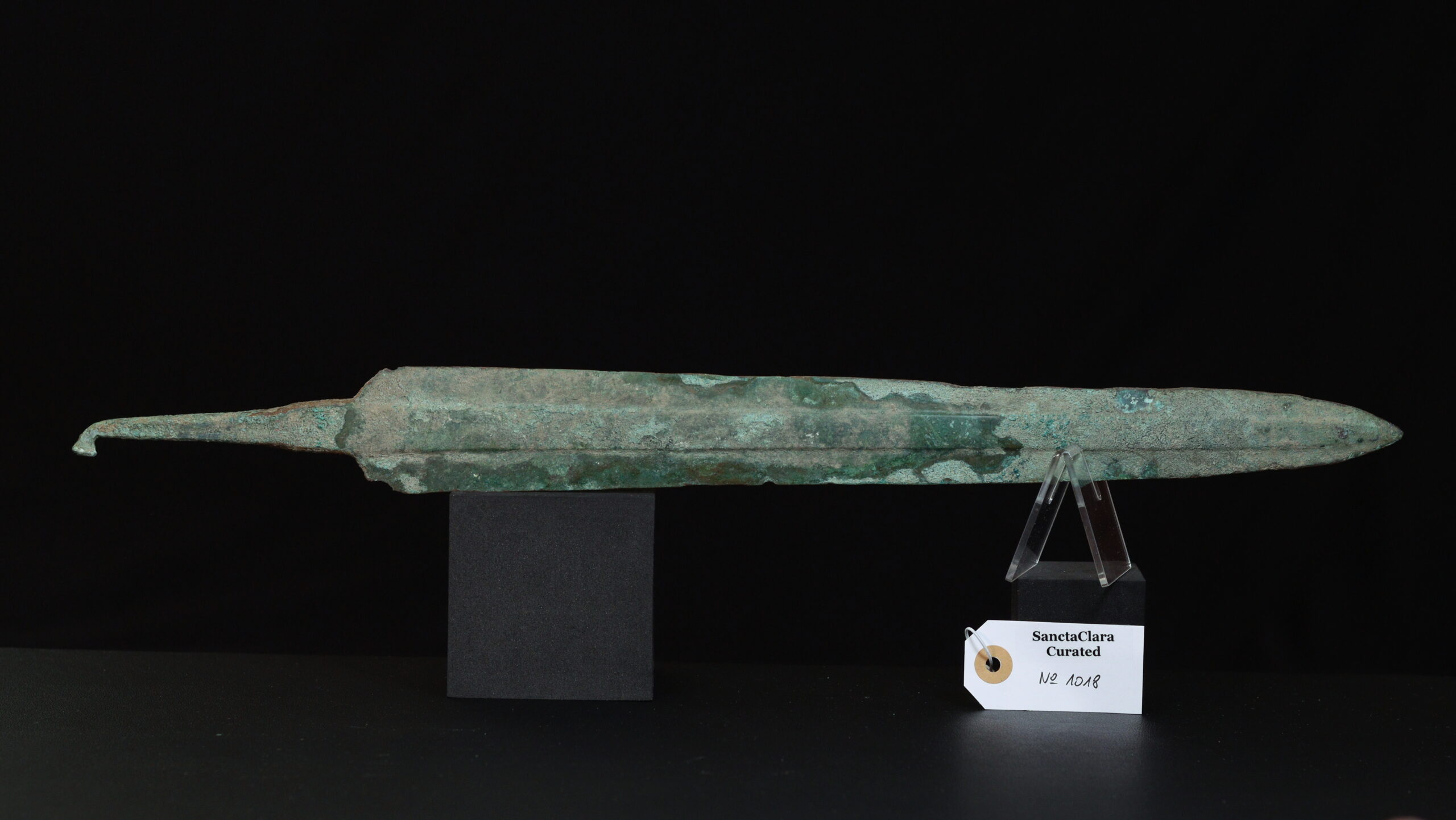 Visit the page Bronze sword blade with flat midrib and hook tail rivet tang. A substantial cast bronze sword, preserved through its full blade and the complete core of its grip. The 521 mm measured here is the surviving length: it carries the blade and the tang, but it does not account for the perished organic grip that was built up over the tang, nor for any pommel that capped its end. The complete weapon as wielded would have been longer — and at this surviving length already a true sword, well beyond the reach of the dirks and long daggers, intended for the cut as much as the thrust. Form and construction The piece is cast in a single pour, blade and tang continuous. The blade is long and sturdy with a flattened, wide raised midrib that runs almost the full length of the weapon, fading only near the point. This is not the high, sharp keel of a stabbing rapier but a broad, low ridge — a deliberate compromise that stiffens the blade against flexion while leaving generous flats on either side to take an edge. The resulting cross-section is lenticular with a thickened spine: the profile of a weapon meant to both thrust and cut. What survives of the hilt is the tang — and it is essential to understand that the tang is the structural core of the grip, not a separate appendage to it. Around this flat strap of bronze the smith built the actual handle from organic material — wood, bone, or horn — which has long since perished. The sword therefore reaches us as its own skeleton: blade and grip-core intact, the soft cladding and any pommel gone. This is the normal condition in which such weapons come down to us, and it is no defect; it is simply what remains when only the metal endures. The tang is of the hook-tail type and bears the weapon’s most distinctive feature: a small hook finished with a button knob, projecting from the side of the grip rather than from its terminal. This lateral hook-and-button is a functional hafting device. Set against the side of the organic grip, it anchored the binding or grip-cladding and resisted the tendency of the handle to work loose under the shock of a blow — a positive catch built into the grip-core to lock the perishable handle to the enduring metal. Such side hooks are a recurring solution in the Near Eastern bronze tradition to the perennial weakness of all early swords: the union of blade and grip. At the hilt shoulders, where blade meets tang, sit two rivet half-holes — semicircular notches opening laterally from each shoulder edge. These took the rivets that pinned the organic grip-plates against the flat of the tang, working together with the side hook to hold the handle fast. That they survive as open half-holes rather than fully enclosed perforations reflects a construction economical of bronze, the seats cut at the very margin of the metal. Cultural attribution The morphology places this firmly within the Western Asiatic / Near Eastern sphere of the Bronze Age. The flat broad midrib, the integral strap-tang forming the grip-core, and the side hook-and-button are features that recur across the Iranian plateau and the northern Zagros — the metallurgical world that produced the Luristan bronzes — and find echoes in the contemporary blades of the Levant and the eastern Aegean. The hook-and-button principle in particular is a hafting signature shared with several of the spear- and javelin-heads in this Collection, where a comparable hook secures the head to its shaft; the same idea is applied here to lock a grip to a sword. I attribute the piece to the broad Near Eastern tradition, circa 1500–1000 BC, with the Iranian / Luristan workshops the most probable origin on the present evidence. The length and the deliberate edge geometry argue for a place well within the era of the mature bronze sword. Metallurgy and surface The weapon is cast bronze — a copper–tin alloy — and the surface tells the expected story of three millennia of burial. A stable, well-developed patina covers the piece in mottled greens, from deep malachite to paler verdigris, broken by warmer reddish-brown passages where cuprite (the red cuprous oxide that forms first directly on the metal) shows through the malachite skin. Earthen encrustations remain across both faces, undisturbed. The patina is layered and adherent rather than powdery, with no sign of the bright, active light-green spotting that would signal “bronze disease” — the corrosion is mature and at rest. The texture and stratification of these layers are exactly what one hopes to read on an authentic excavated bronze; for the principles behind that reading, see The Language of Patina. Condition Excellent and stable for the type. The blade is complete from point to shoulder, the midrib intact along its run. The tang — the grip-core — survives whole, retaining both the side hook with its button and the two shoulder rivet-notches. The organic grip and any pommel that once dressed the tang are lost, as is invariably the case. Minor losses and chipping to the cutting edges are consistent with ancient use and age. The survival of the complete grip-core with its hook and rivet seats intact is what distinguishes this example from the many broken-tanged blades on the market.
 -
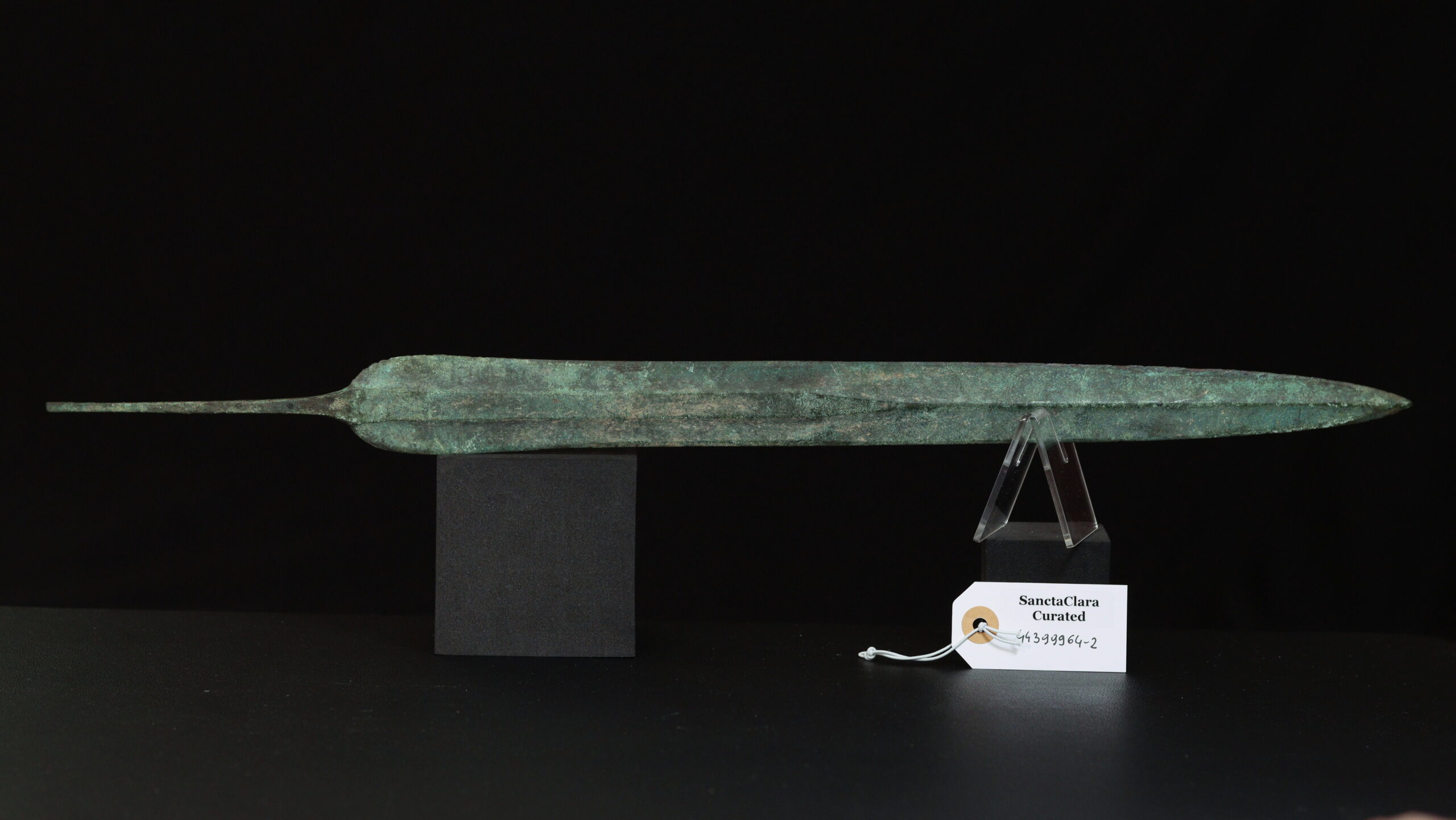 Visit the page Western Asiatic Bronze Large Sword blade with long tang Western Asiatic Bronze sword. Perfectly preserved sword with a long full tang. The blade’s shoulders are round at hilt, blade with a wide flat tang merging into a triangular midrib at half of blades length. There is a round shadow of hilt guard on the forte, and a patch of organic glue on the neck shows under UV light.
 -
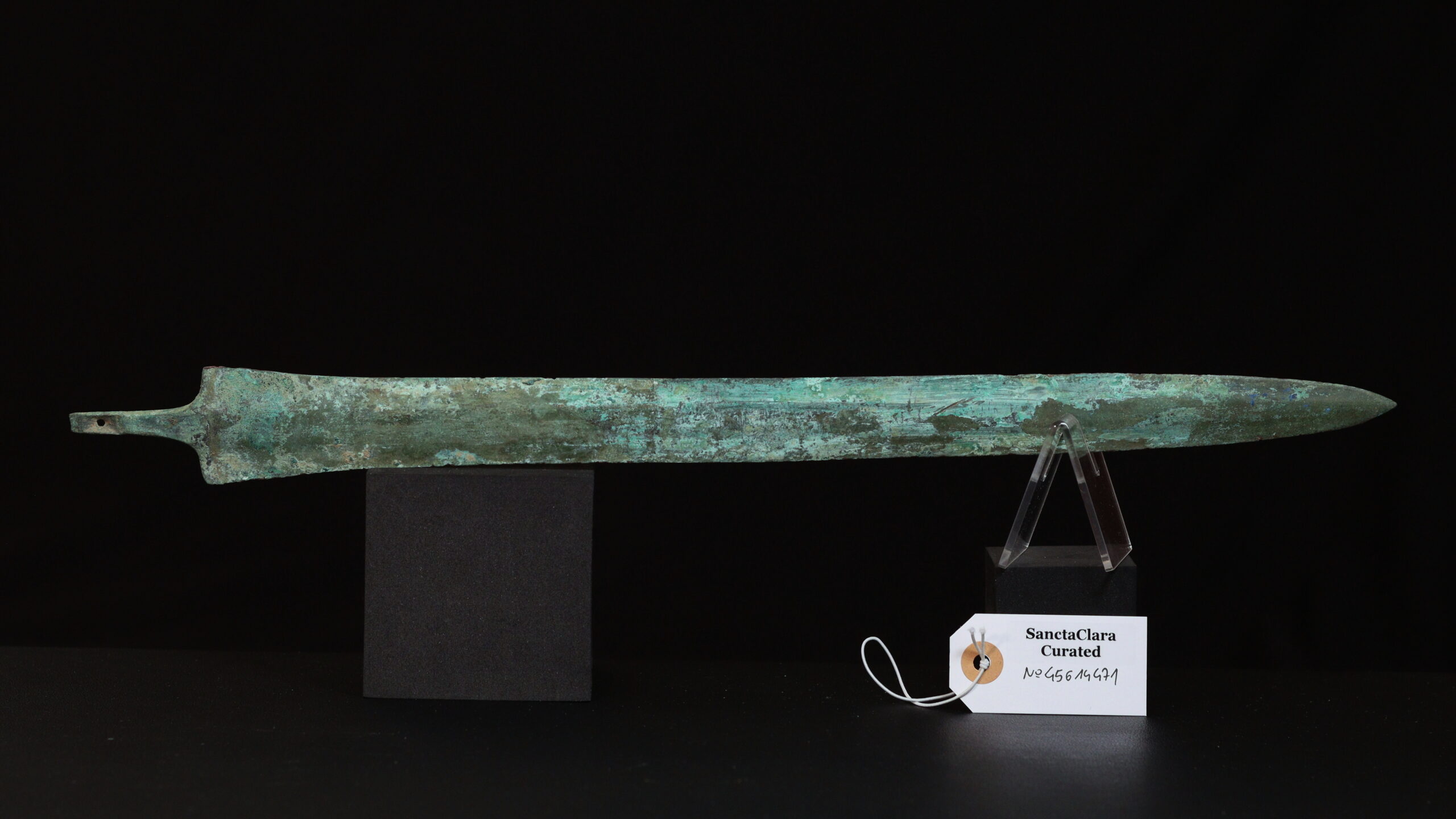 Visit the page Leaf shaped bronze sword with short tang Bronze Age Mycenaean type Short Sword category: Tang-hilted blades, characteristic of the Near East and the Eastern Mediterranean during the late 3rd to early 2nd millennium BCE. Short tang with single mounting hole. Splayed square shoulders and concave blade geometry. Hilt mounting shape visible. Culture/Region: Likely Levantine (Canaanite) or Anatolian tradition. It shares significant similarities with weapons from the Amorite or Early Phoenician spheres. Time Period: Middle Bronze Age I–II (approx. 2000–1700 BCE). Morphological Type: This is a Square-Shouldered blade with a simple piercing on the tang for a rivet. The Shoulders: The splayed square shoulders are a key diagnostic feature. In the Middle Bronze Age, the transition from the blade to the hilt was often the weakest point. Square shoulders provided a wide surface area for a separate hilt (likely made of organic material like wood, bone, or ivory) to be seated firmly against the metal. Profile: The blade has a slow, elegant taper toward the point. This design suggests a weapon balanced for both thrusting and slicing. At 471 mm (approx. 18.5 inches), it sits right on the border between a long dagger and a short sword (dirk). Short Tang: The narrow, projecting tang would have been inserted into a slotted handle. Mounting Hole: The single mounting hole is designed for a bronze or silver rivet that would pass through the handle and the tang to lock the assembly in place. Weight (346 g): This is exceptionally light for its length, suggesting a high-quality tin-bronze alloy that allowed for a thinner, more flexible blade without sacrificing lethal strength. The surface displays a mottled, stable crusty green patina (malachite) with flecks of azurite (blue). This noble patina indicates the artifact was buried in a relatively stable environment for millennia. There are no obvious signs of notched edges (battle damage), which, combined with the elegant form, suggests it may have been a status symbol or a funerary accompaniment for a high-ranking individual.
 -
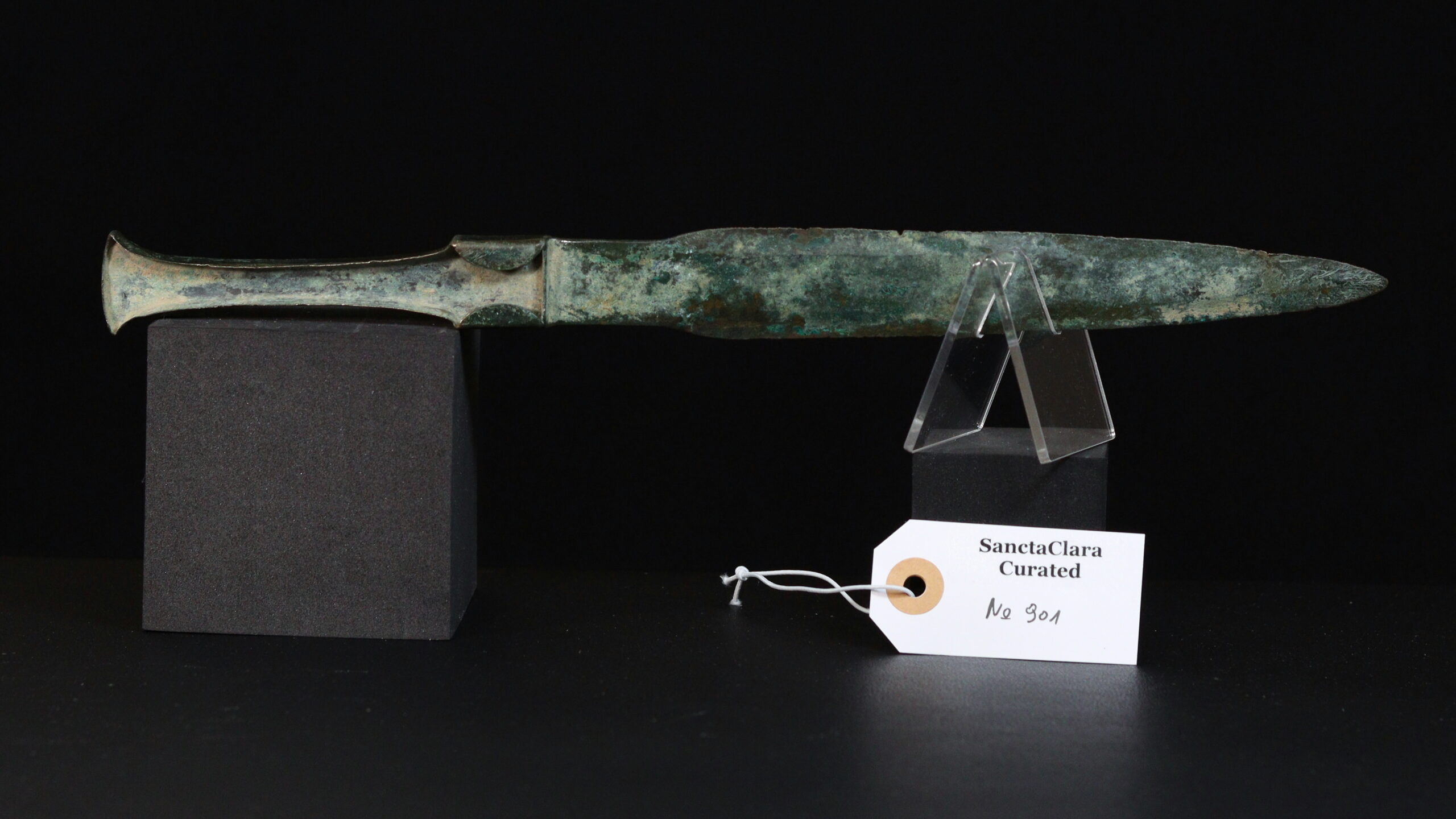 Visit the page Bronze Dagger with flanged inlaid hilt A bronze dirk or short sword: The blade and hilt cast in one piece, flanged hilt with a rectangular guard and semi-circular lappets on both sides which were used to secure the inlay, which would have been of ivory or bone. Fine condition, the metal stable with an olive green patina over much of the weapon, a few light accretions in places. Length 34.4 cms (13.5 ins), 156 gr, timesancient.com](http:// Times Ancient Gallery, Invoice AI2024/01, 25.04.2024 Iron Age Near East : circa 1000-800 BC. Litehookure: Cf. Item 48, Catalogue of the Ancient Persian Bronzes in the Ashmoleon Museum: P.R.S. Moorey.
 -
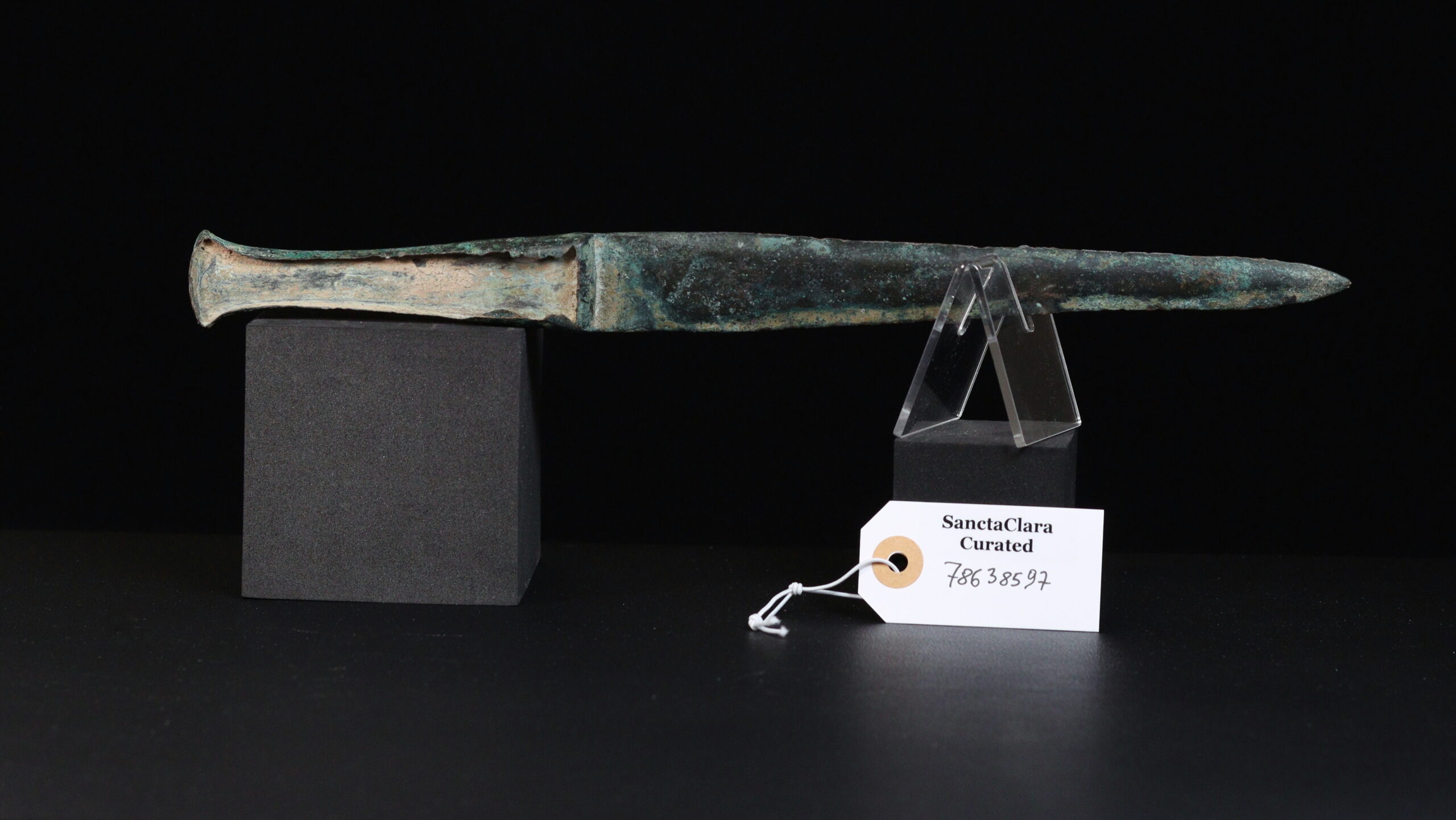 Visit the page Bronze Dagger with flanged inlaid hilt A bronze dirk or short sword: The blade and hilt cast in one piece, flanged hilt with a rectangular guard and semi-circular lappets on both sides which were used to secure the inlay, which would have been of ivory or bone.
 -
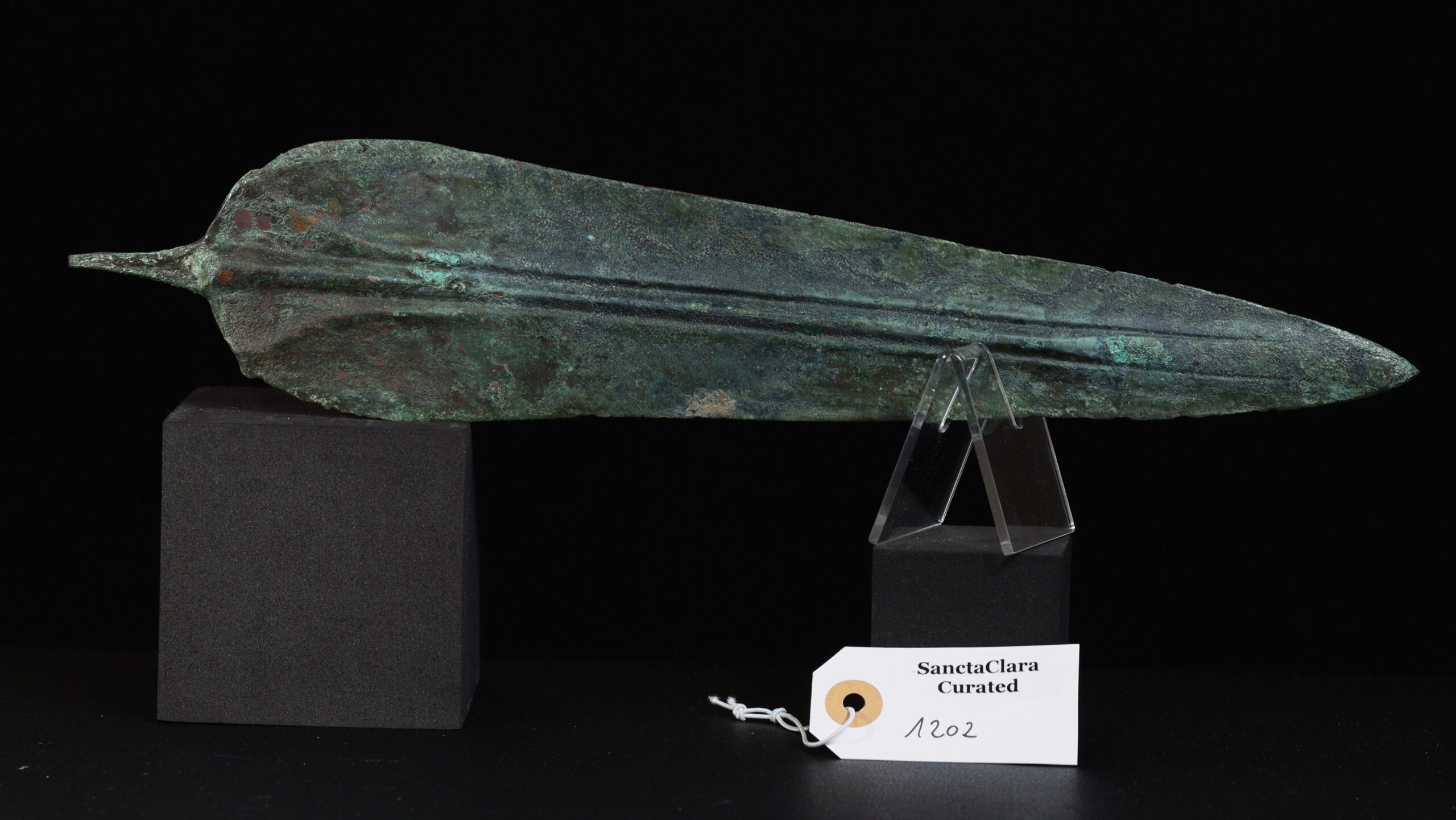
 Visit the page Ornamented Mycenaean Bronze Short Sword Mycenaean/Aegean, Ca. 1700 – 1200 BC A striking example of a two-edged bronze blade with a leaf-shaped design and a small tang providing a secure attachment to the sword hilt. The blade boasts a corrugated midrib that extends to the tip and flares at the shoulder. This type of blade is often wrongly characterized as a spear blade, which is contradicted by very short tang and faded traces of wide organic hilt guard left sometimes on the shoulders of such blades.
 -
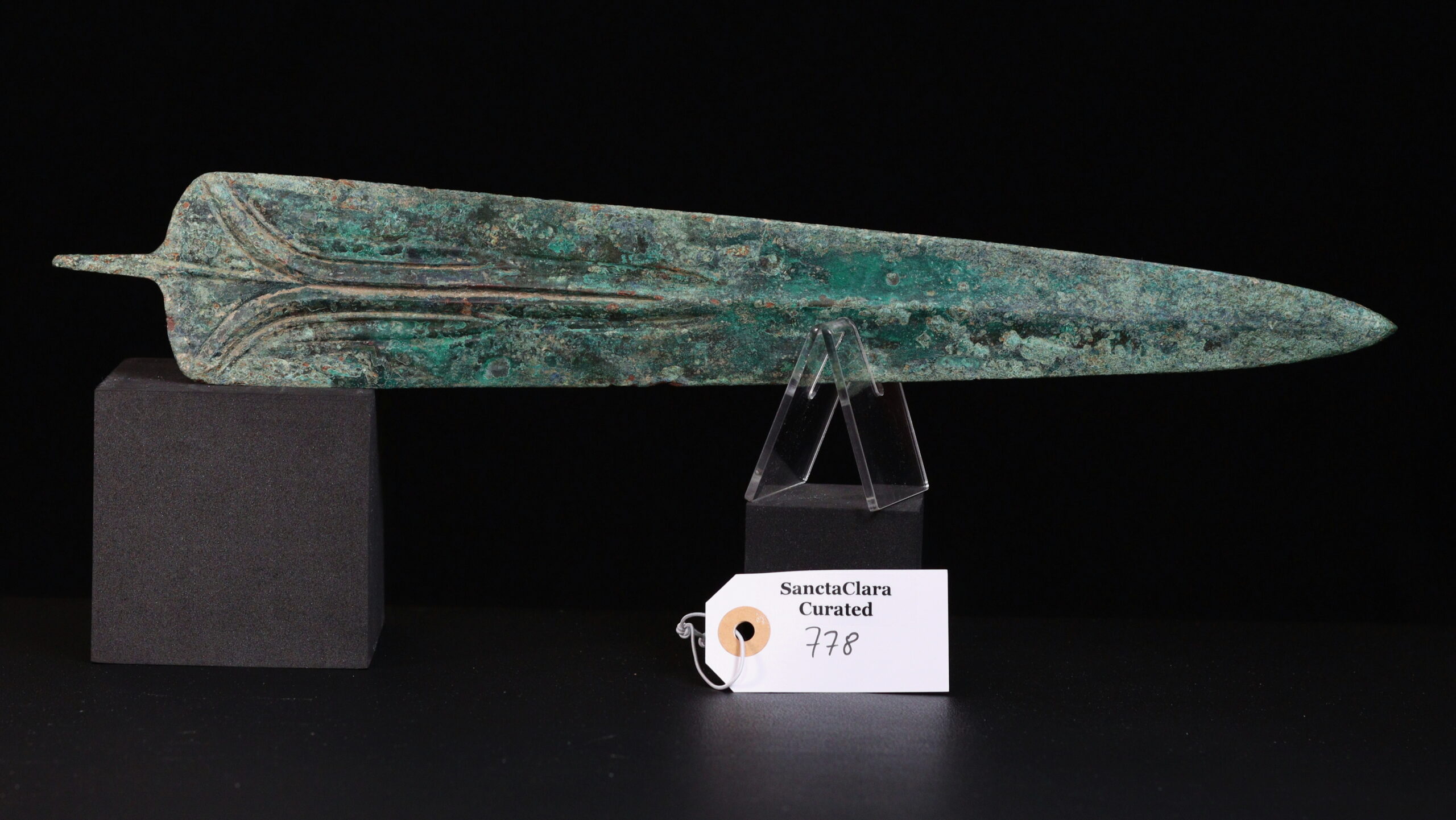
 Visit the page Ornamented Egyptian bronze sword blade Bronze age, decorated bronze short sword blade of Ur type. North West Persian or Egyptian 2nd-1st millennium BC. A bronze short sword with short tang to be inserted into an organic hilt, the slightly concave blade is showing multiple ornamental grooves which form a pronounced mid-rib spanning roughly three-quarters of the blade.
 -
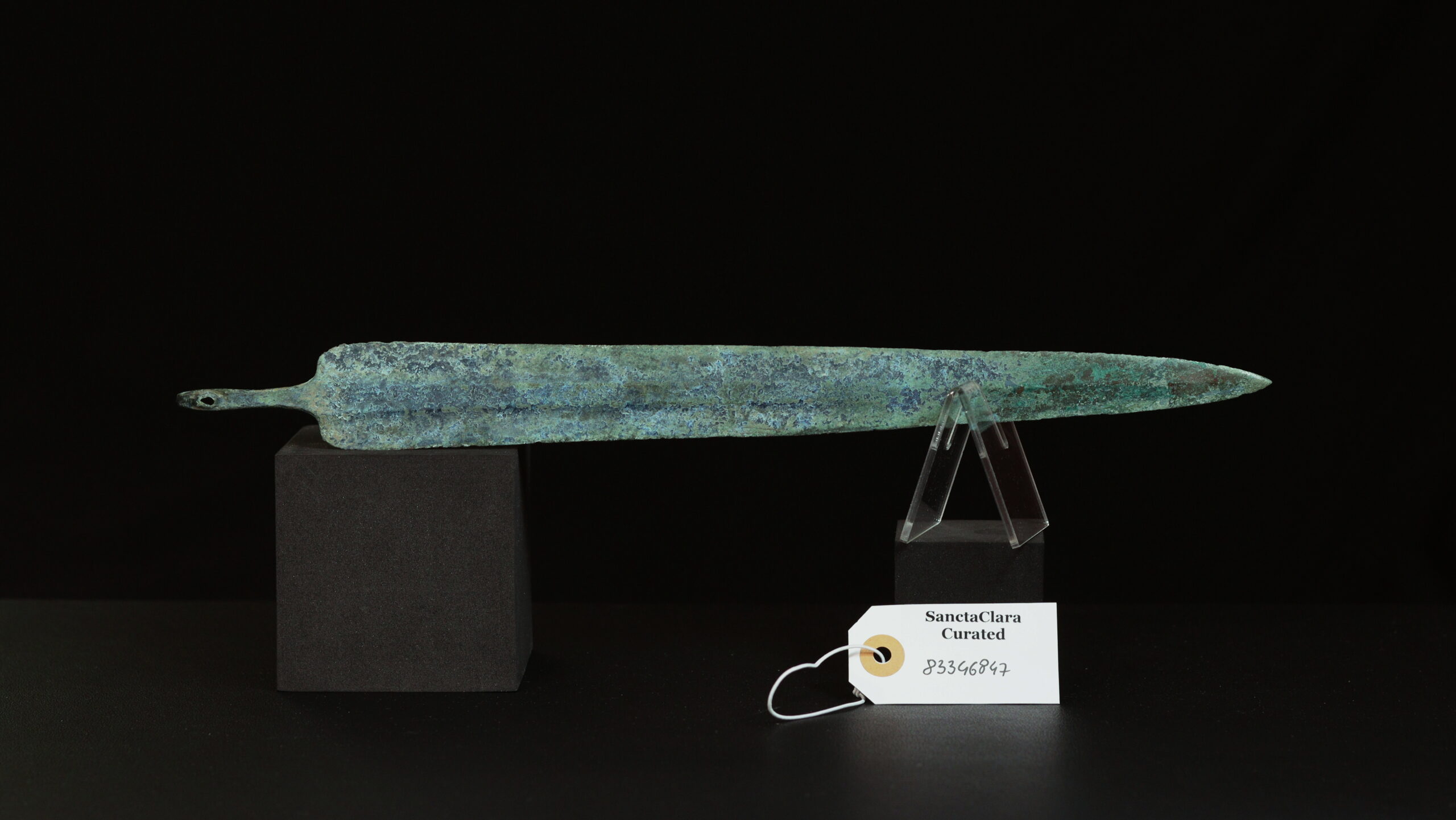 Visit the page Bronze Age Bronze Sword Blade with flat mid ridge Ancient Bronze Age Bronze Sword Blade with a strong flat central ridge and one rivet hole int the short tang. Wide ridge merging into single high rib. Shoulder square, rounded at corners. Variant A
 -
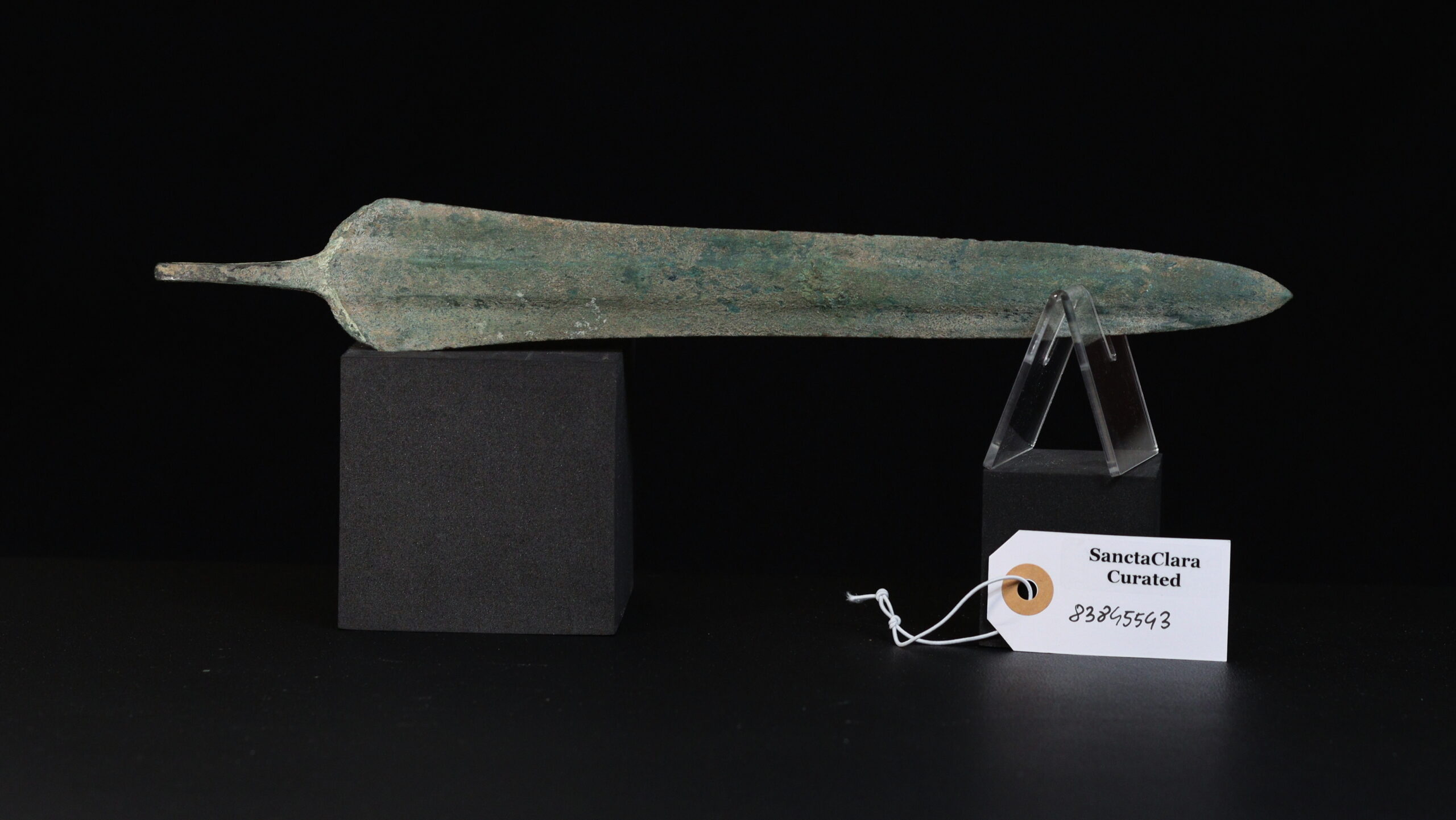 Visit the page Bronze Sword Blade, concave and splayed at the shoulders Bronze Short Sword Blade, dating to about 1000 B.C. Mycenaean or Western Asiatic. A wide flat rib, narrowing toward the tip. Shoulder widening like the Mycenaean and Cycladic blades. Remains of round incuse hilt mount. Thick green patina under some mineral incrustations. Blade intact. Original lenght with organic hilt estimated at 430 mm.
 -
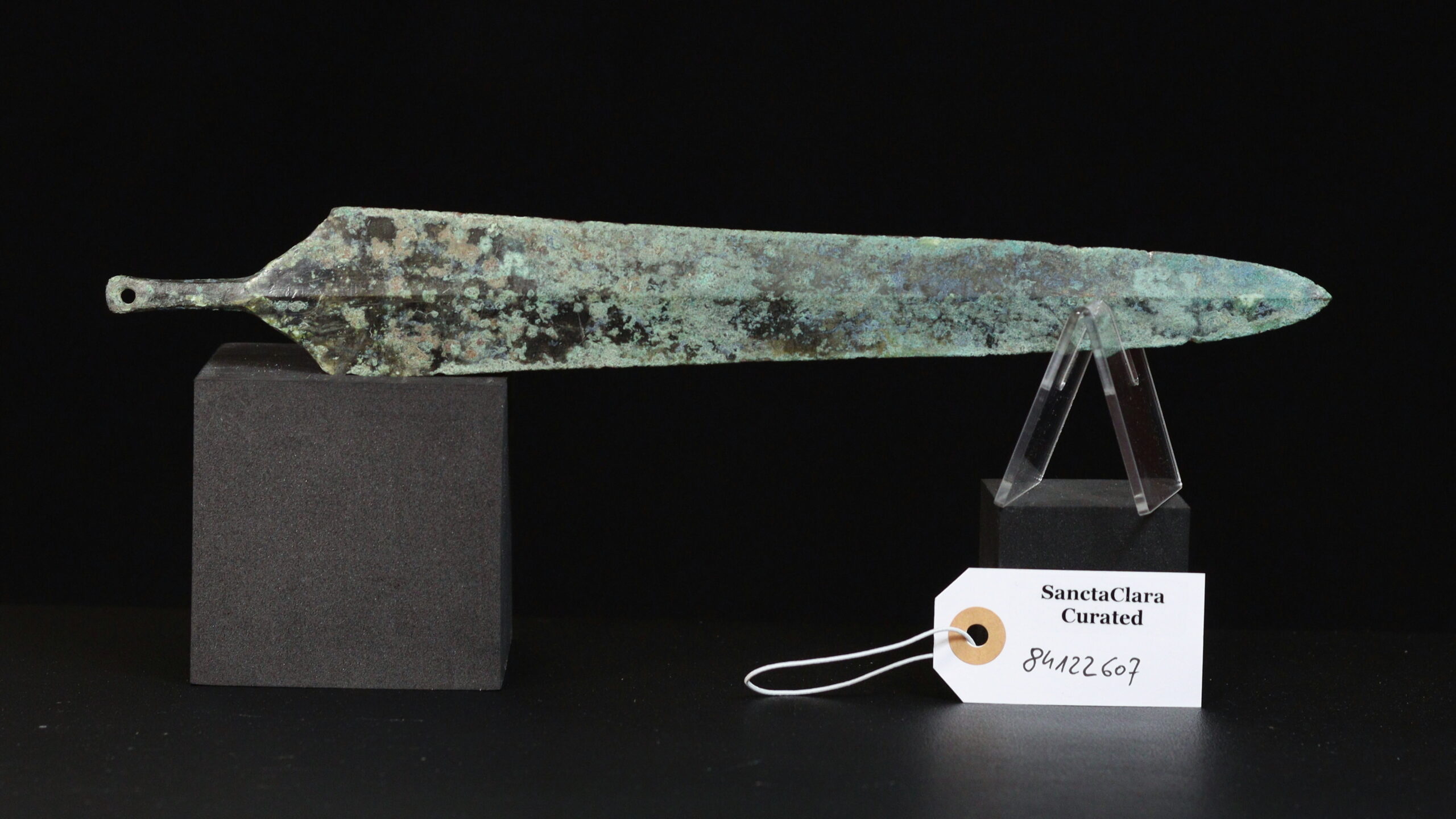 Visit the page Egyptian Elite Straight Bronze Sword Blade A stunning condition Bronze Age Bronze Sword or dagger blade with a strong central ridge and one rivet loophole at the end of a short tang. Trapezoidal, thick blade cross-section with round hilt mount shadow visible. Blade slightly concave in shape, with magnificent obsidian black, vitreous shiny chalcocite and cassiterite patina. Blade grinded and meticulously polished to perfection after being cast in antiquity. Original length with organic hilt estimated at 420 mm.
 -
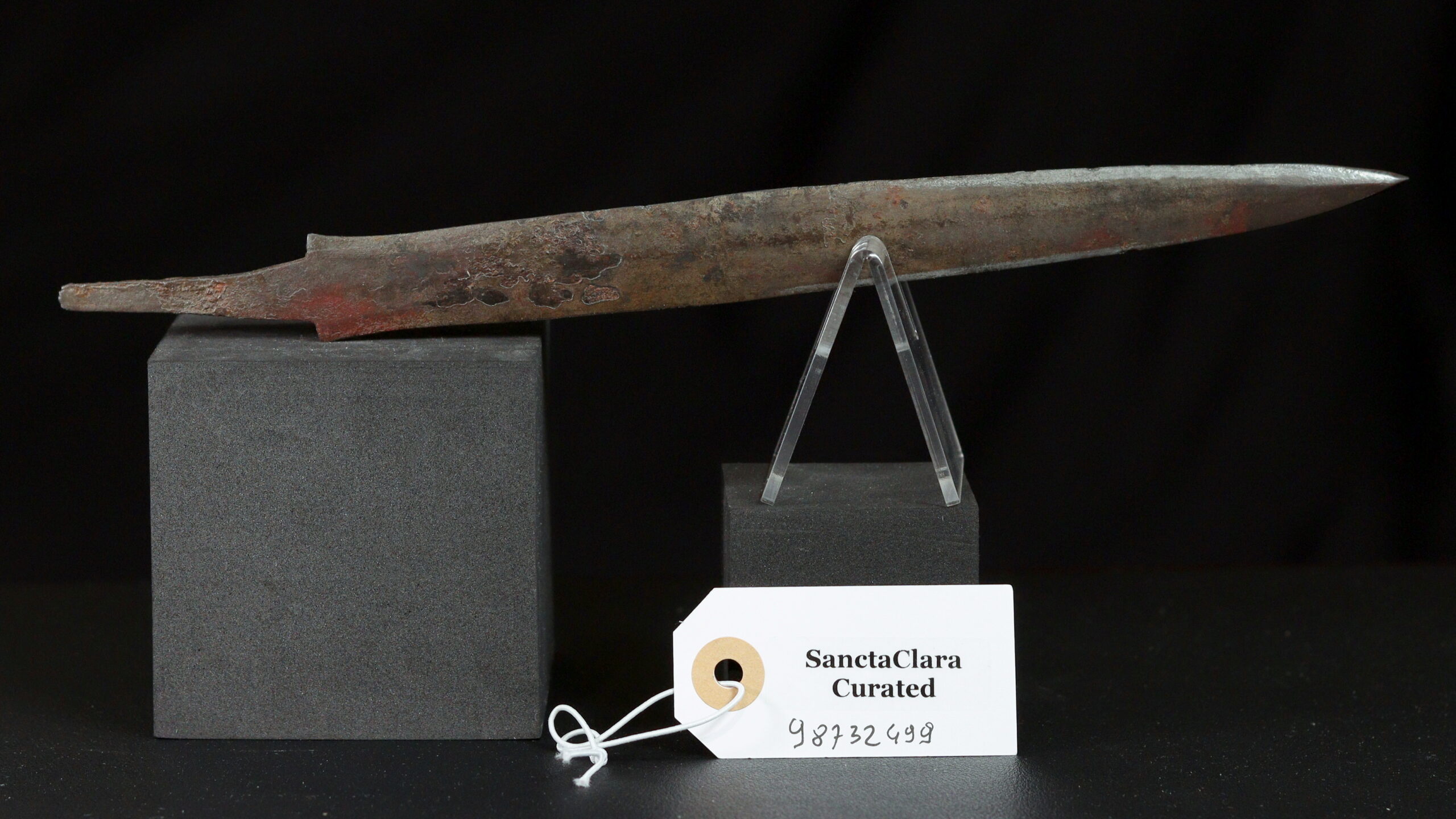 Visit the page Greek Hoplite Iron Dagger Encheiridion Greek Hoplite Iron Dagger. This fine iron dagger blade is long and slightly leaf shaped, widening at the square shoulders. Blade waisted elegantly near the shoulders and thickened along the midline for rigidity, transitions to the rectangular tang designed for an organic hilt glued to the tang with bone glue. No rivet holes on ang indicates an earlier design.
 -
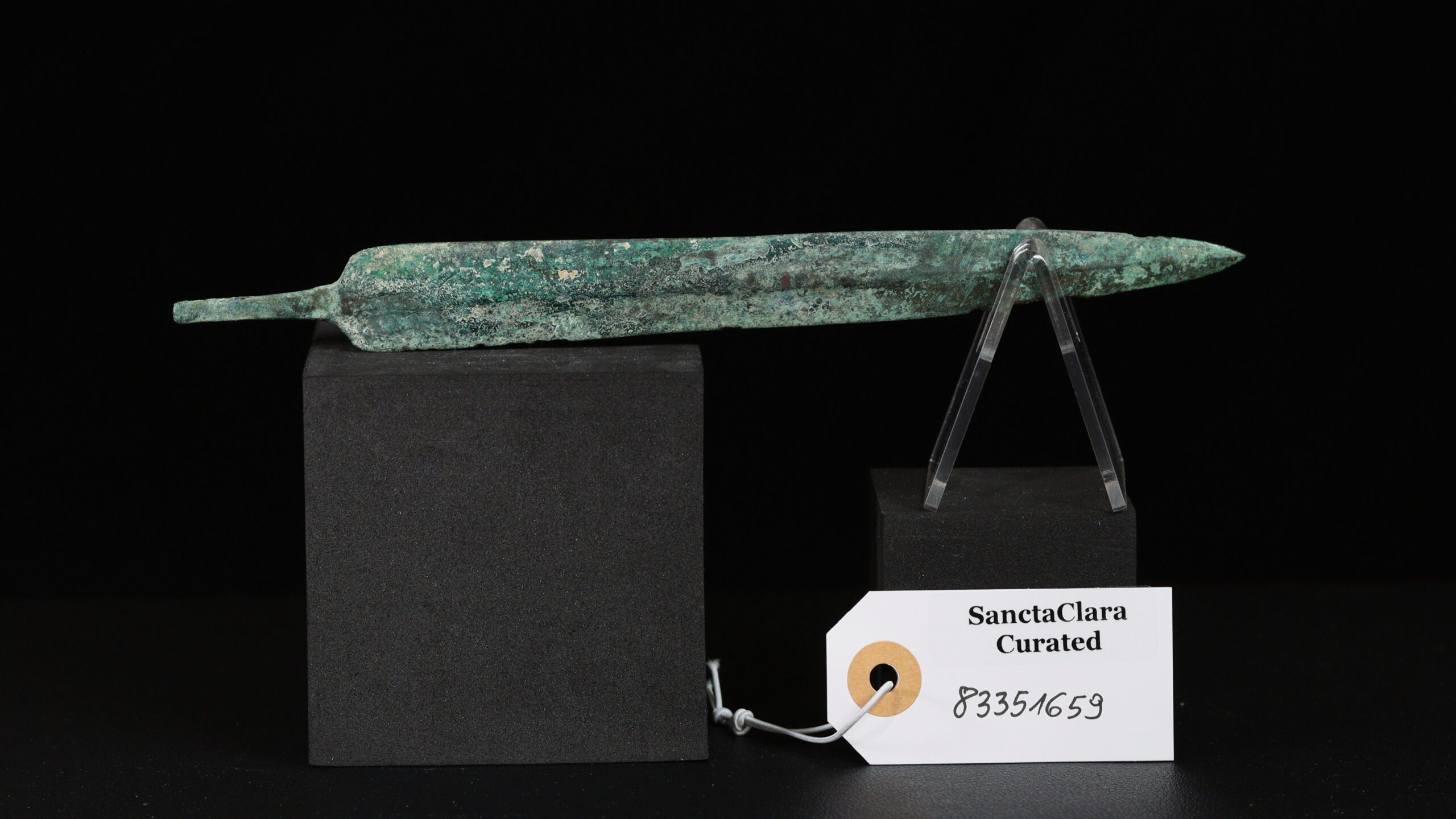 Visit the page Cypriot Bronze Age Bronze Large Dagger A very good condition Ancient Bronze Age Bronze Dagger, larger size. Cypriot Rapier type D41 type (F. Petrie)
 -
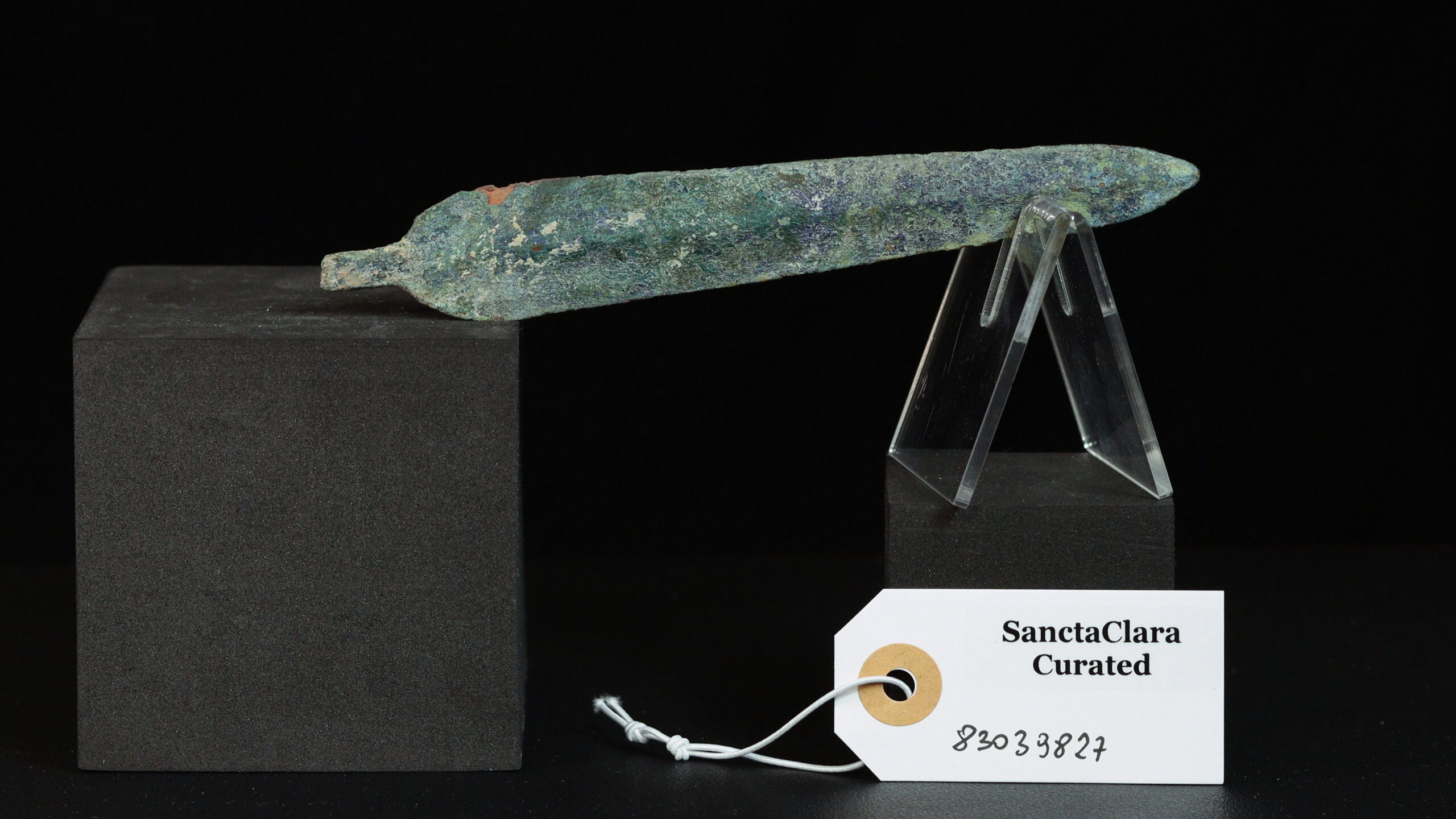 Visit the page Copper dagger A finely cast and hammered copper alloy blade. The piece features a long leaf-shaped blade with a central midrib, and a short, flattened, broken tang. The surface is covered with very thick azurite patination with some earth encrustations remaining. There are some small chips along the edges of the blade and the surface. Copper blade with extremely thick mineral patina in layers, first crystalized red patina, later green malachite and blue azurite patina. Metal almost entirely mineralized, only a few millimeters of the core left. Before 1600 BC. Alloy with minute iron content, lightly magnetic
 -
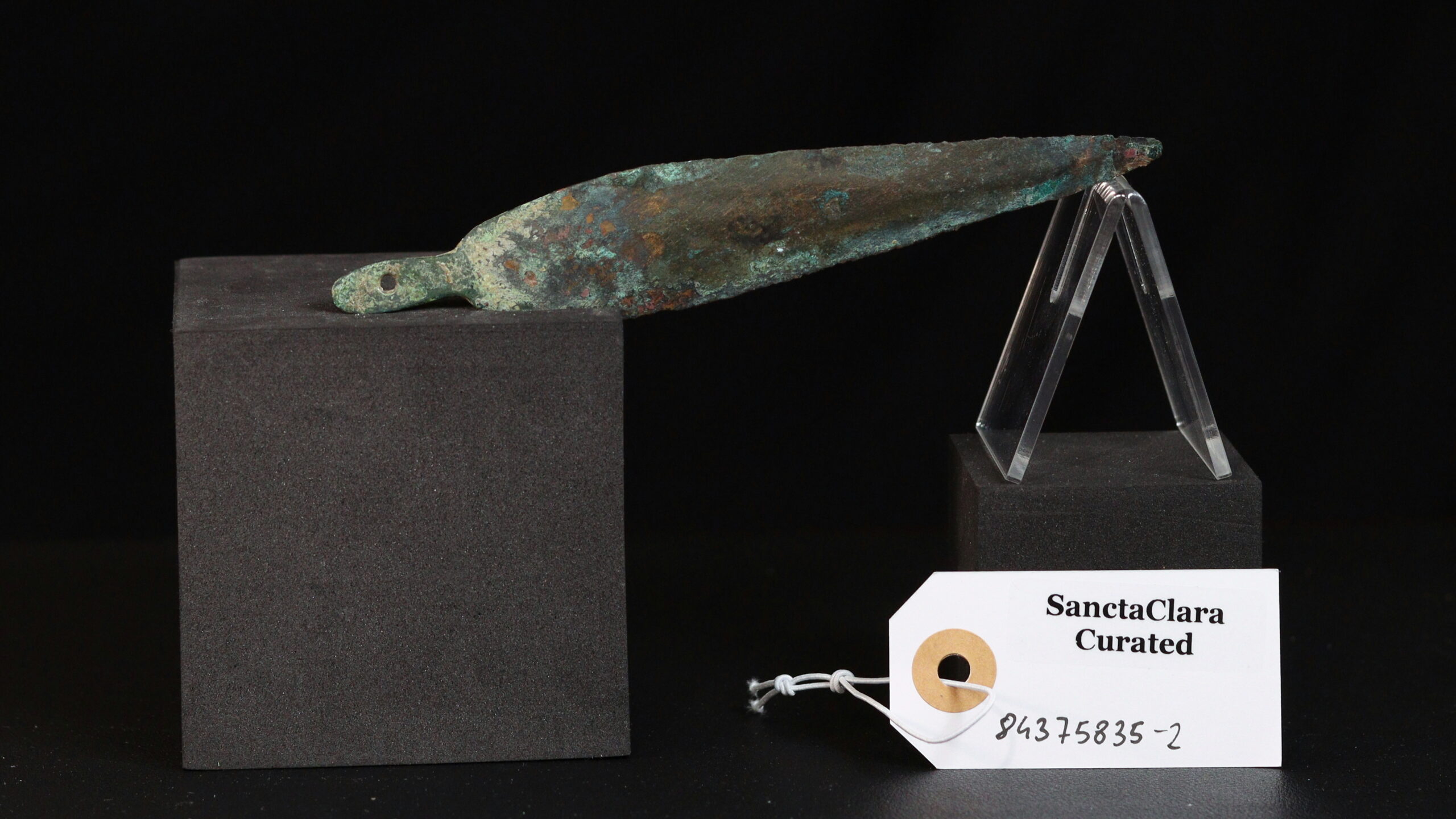 Visit the page Chalcolithic era copper dagger flat tang, almost flat blade with a weakly pronounced midrib in narrow part. Remains of incuse round hilt mounting
 -
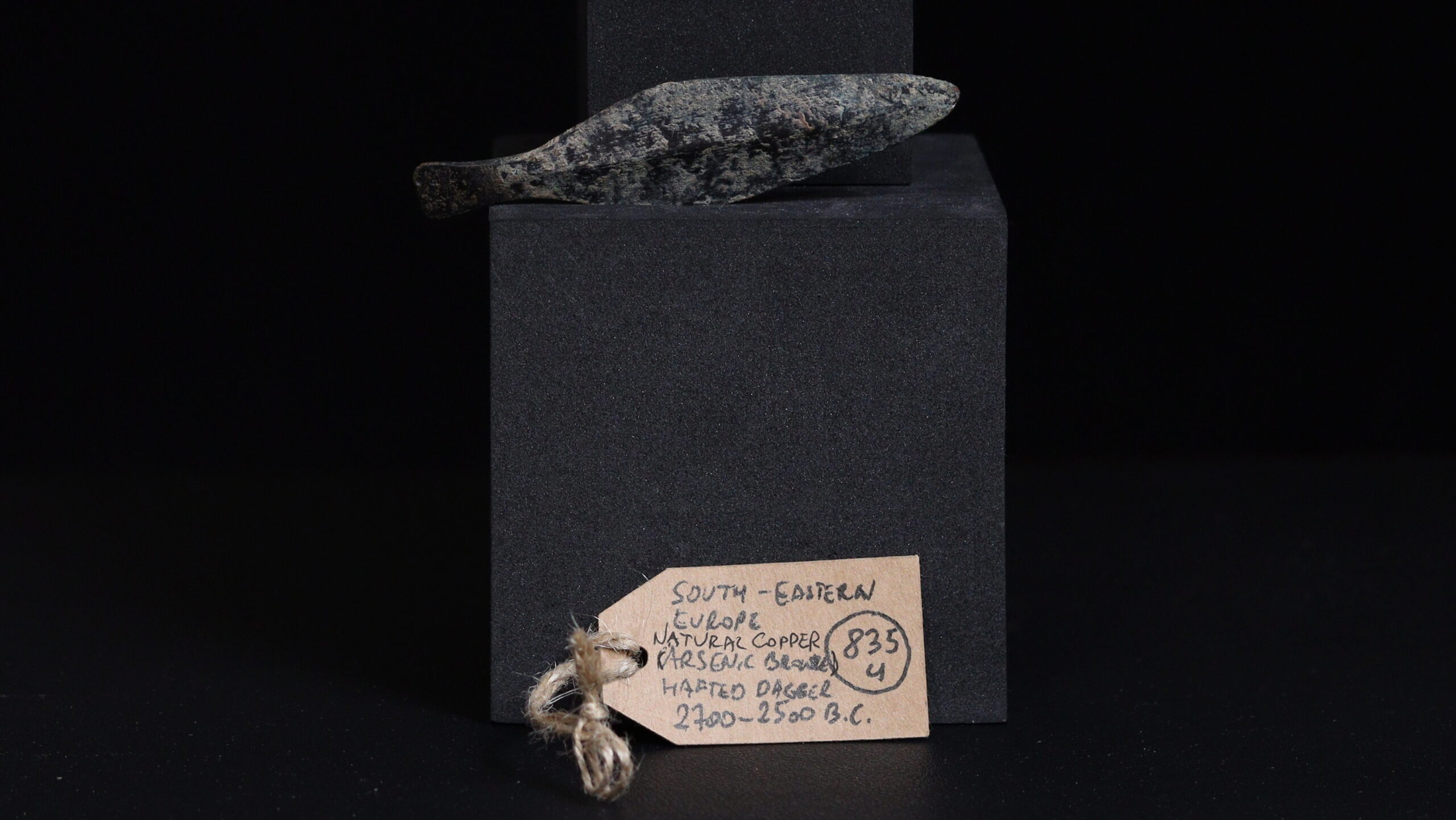 Visit the page Luristan Copper and Bronze Age Dagger Copper arrowhead or knife blade, REF: Early Bronze Age bronze knife or dart-head 2700-2500 B.C. South-Eastern Europe Cast and hammered. Double-edged, rhomboidal shaped blade. Narrow and slightly thicker haft with rectangular cross section.
 -
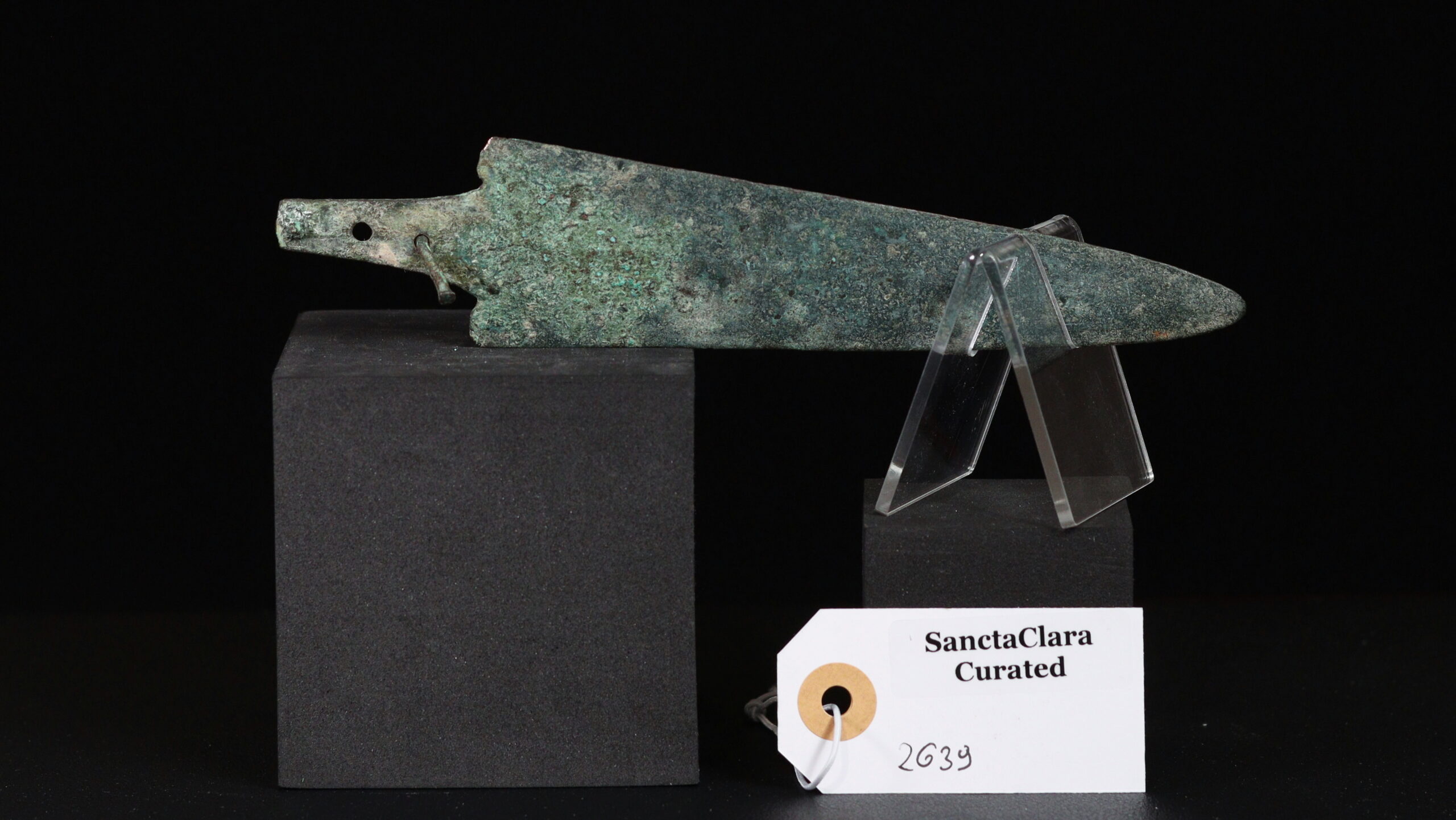 Visit the page Western Asiatic Bronze Dagger with Incised Shoulder A bronze dagger blade with shoulders formed at negative angle. 3 rivet holes with 2 rivets.
 -
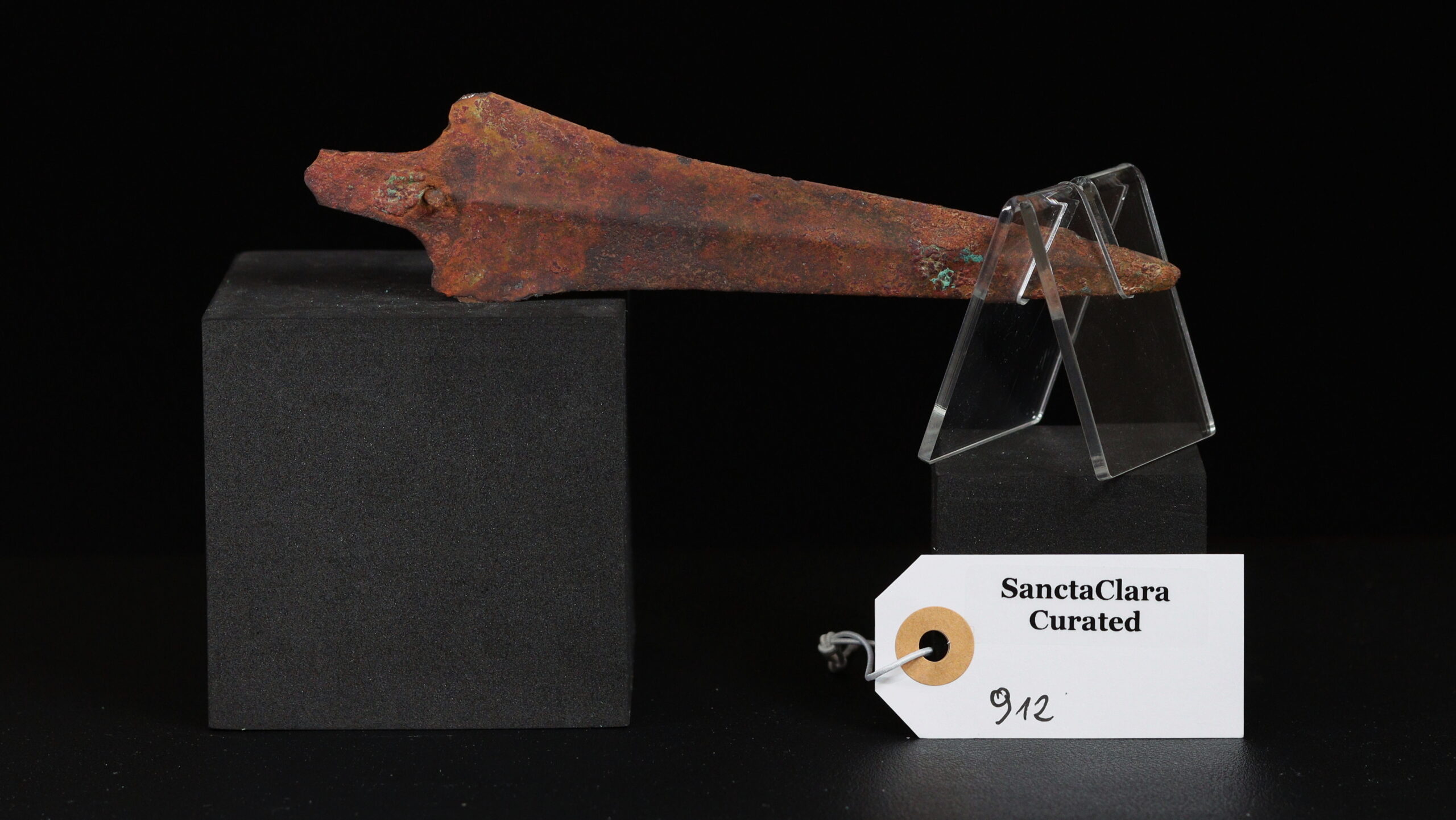 Visit the page Cypriot Ferrite copper alloy dagger with concave blade Mediterranean Ferrite copper (Black Copper) alloy dagger, reddish iron oxide patina indicates minimal iron content. Nonmagnetic. Mediterranean, Cyprus. Cast and hammered. Double-edged, rhomboidal shaped blade. Narrow and slightly thicker haft with rectangular cross section. Tang hammered and polished in antiquity. 1 rivet hole with Cypriot Bronze Age 2400 – 2201
 -
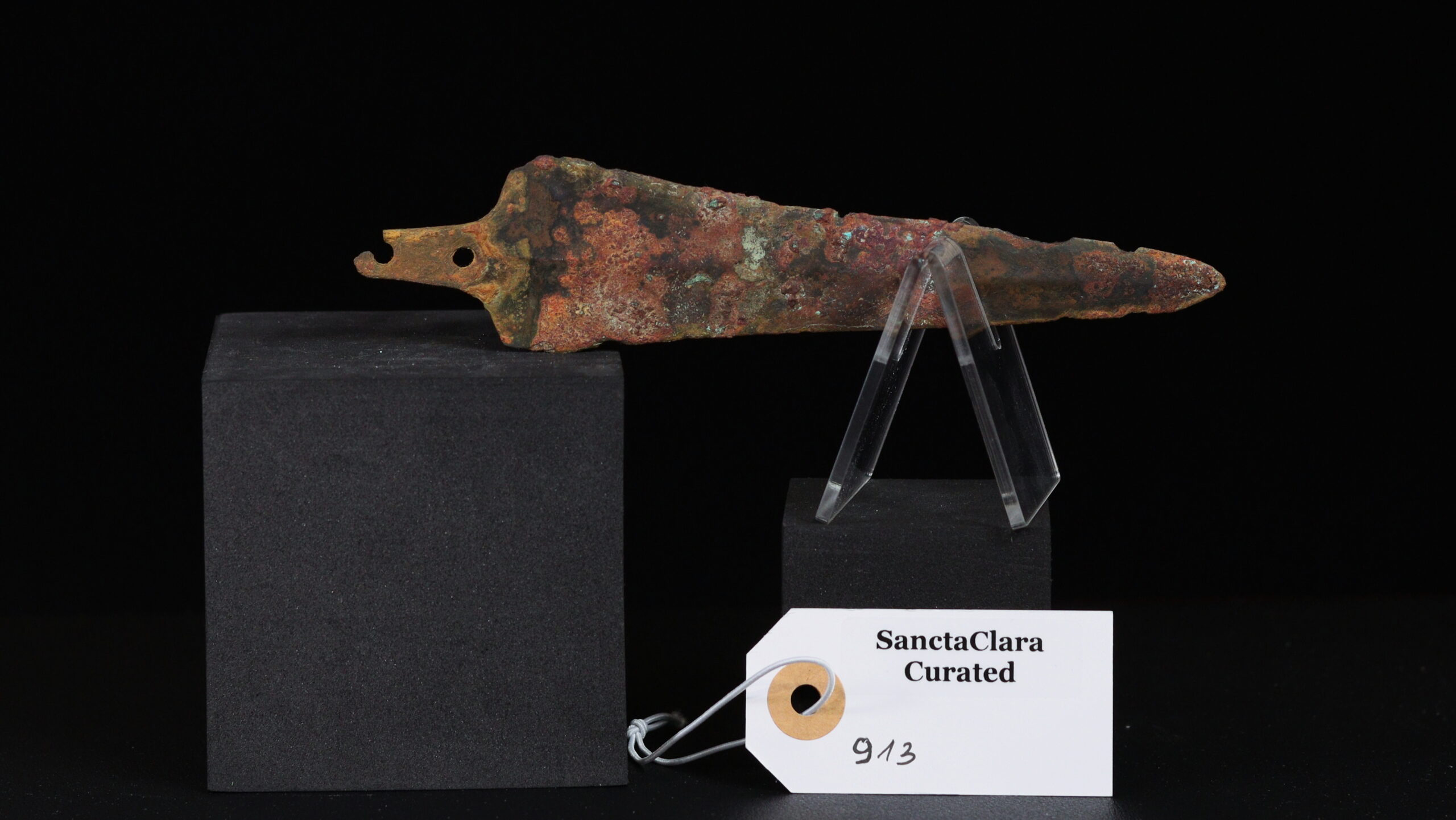 Visit the page Ferrite Copper Cypriot Dagger Copper alloy dagger blade, Mediterranean, Near East. 2 rivet holes. Round wide hilt mark visible. Reddish patina indicates minimal iron content. Nonmagnetic.
 -
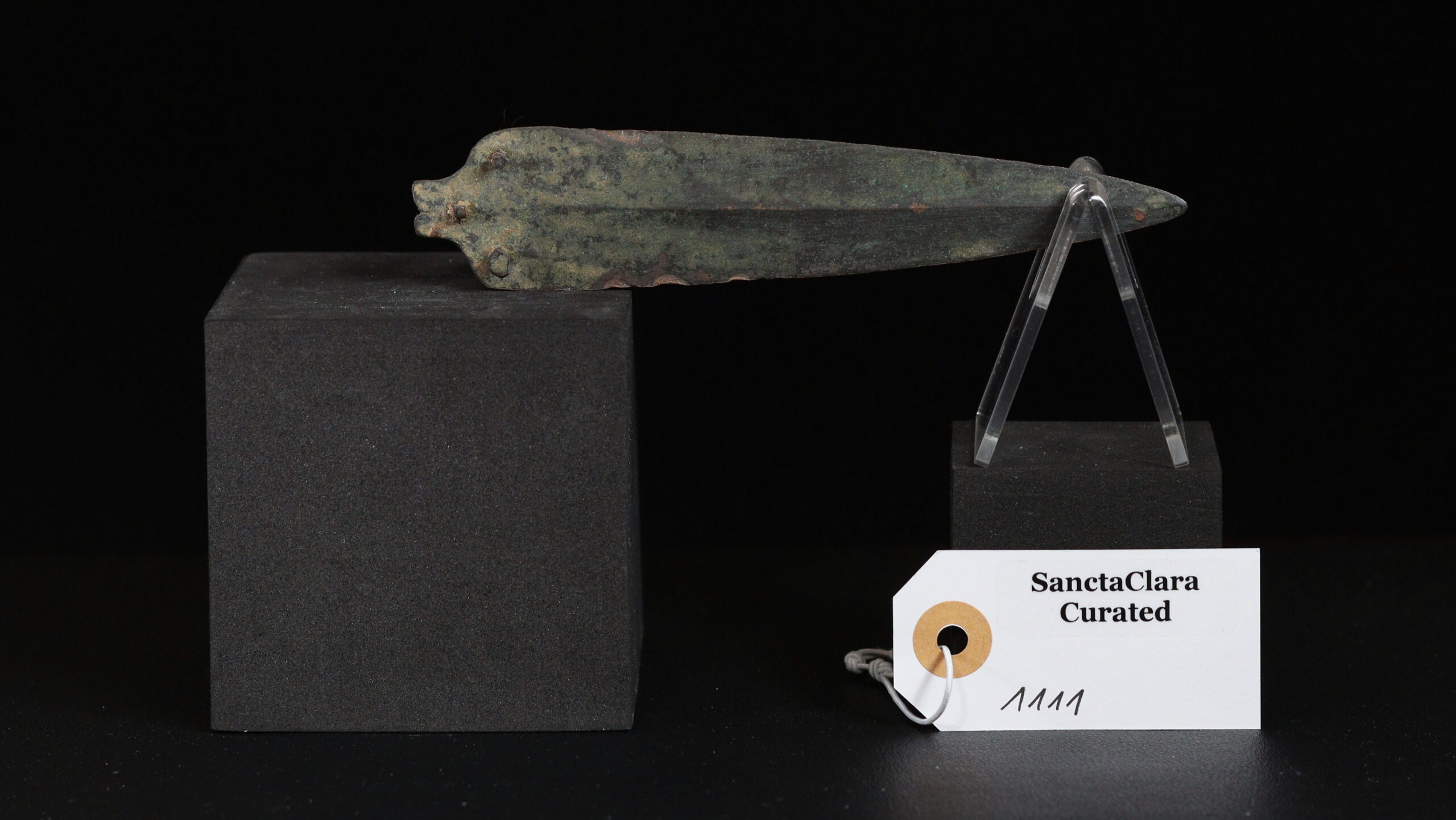 Visit the page Chalcolitic Age copper riveted dagger with convex blade Chalcolitic Age hammered copper dagger with copper rivets. Blade convex in shape, concave in cross section. 3 rivets and 4 rivet holes, tang broken in antiquity. Alloy with minute iron content, lightly magnetic – Ferrite copper. South- Eastern Europe
 -
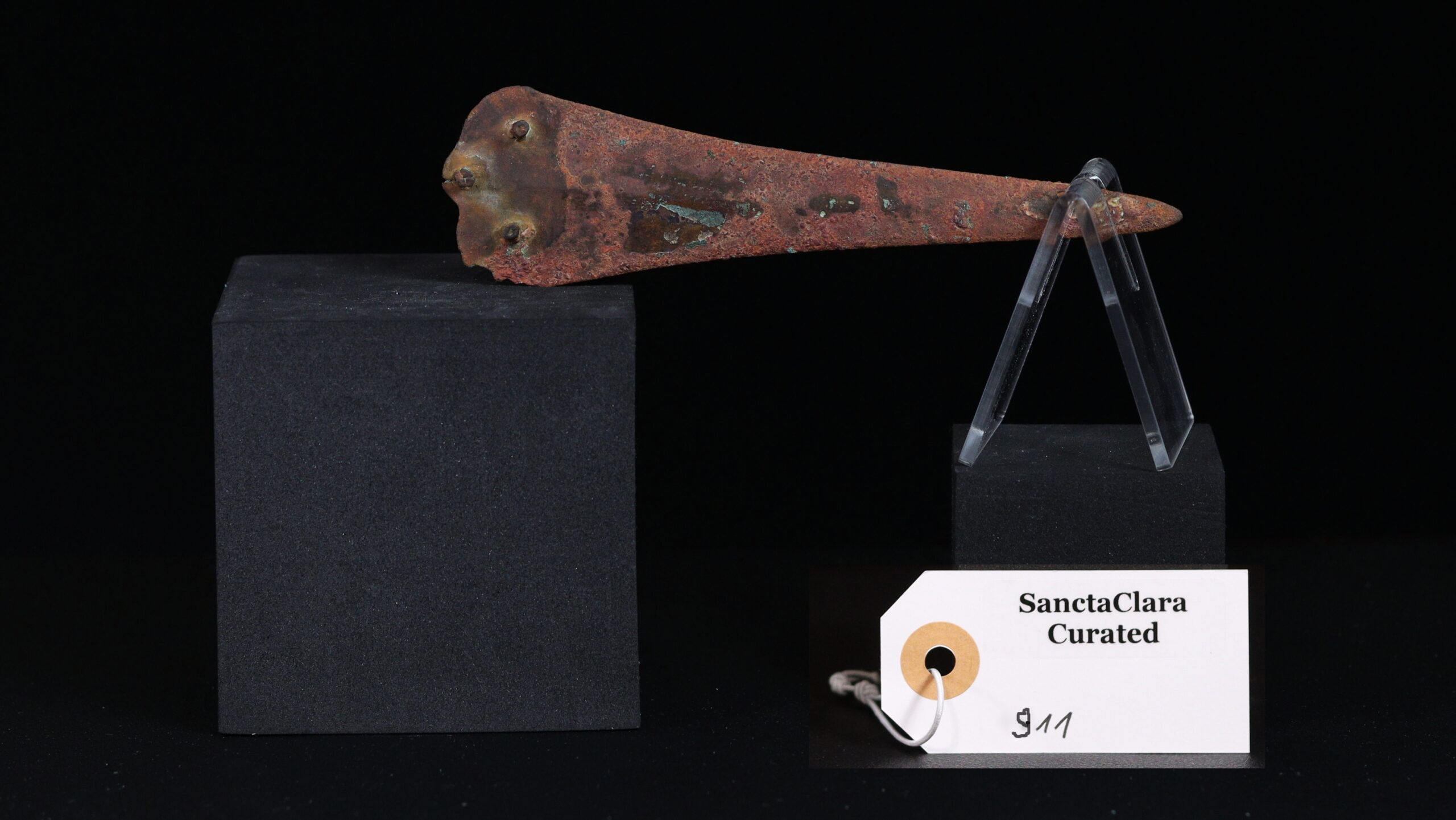 Visit the page Minoan Ferrit Copper dagger with no tang and concave blade Ancient EBA ferrite copper (Black Copper) dagger, 3 rivets, round shaft hilt mark visible, rusty patina indicating iron content in copper alloy, very slightly magnetic.
 -
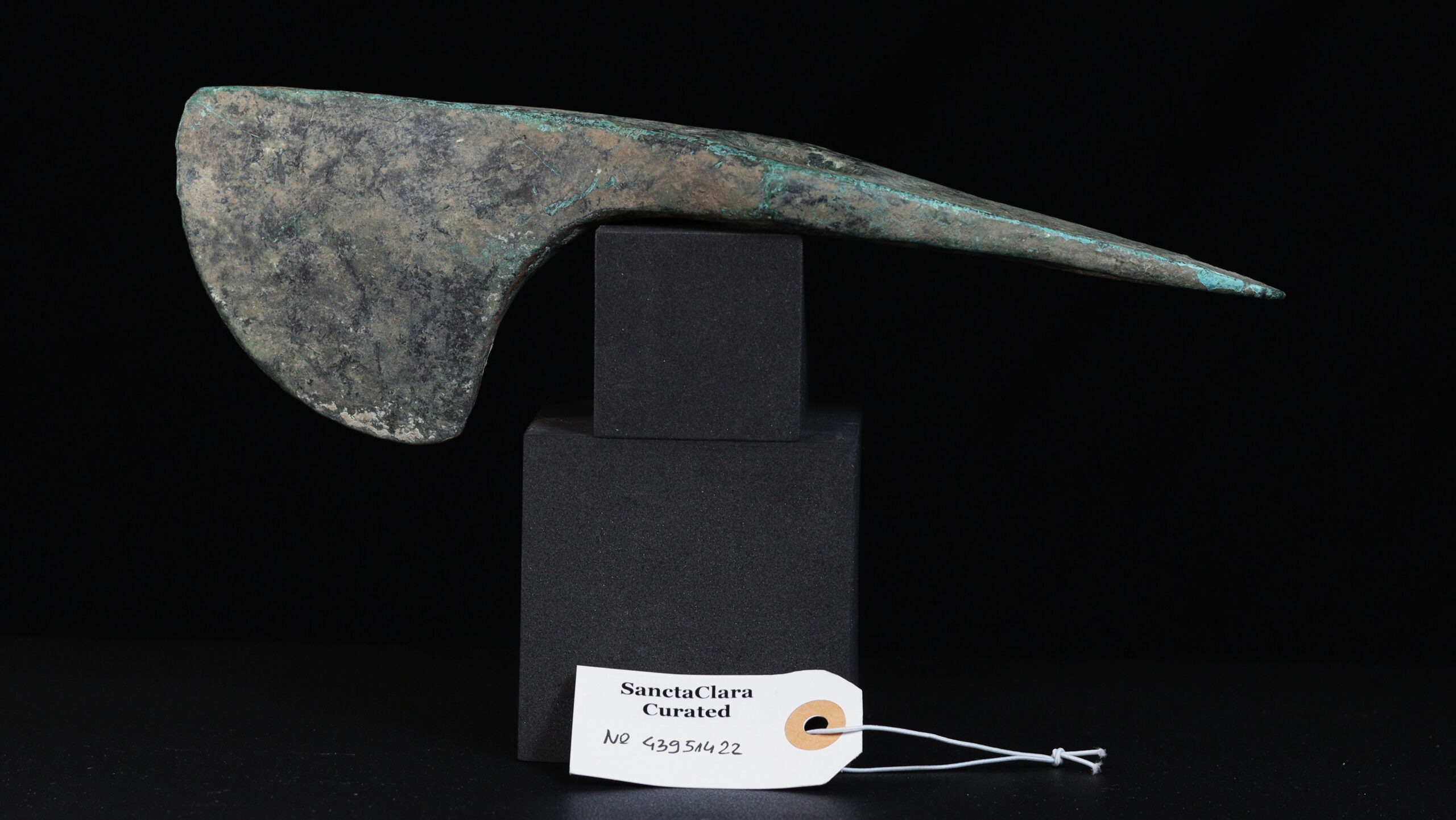 Visit the page Copper “Old Europe” Axe – Adze Sagaris Copper axe with spiked butt (Sagaris). This artifact is an extraordinarily significant piece of Chalcolithic metalwork, representing a high concentration of wealth, power, and long-distance trade. Mugeni or Siria Type Hammer-Axe/Adze (Plocnik/Vidra family), typology by Schubert 1965, p. 276, morphological type described as Battle axe (Patay 1984). Alternatively Jaszladany A1 type due to high weight for a Mugeni type. Material: Copper, with natural trace arsenic content Period Early Chalcolithic (Eneolithic), Late 5th to Earlier 4th Millennium BC (∼4500−3800 BC) Cultural Sphere: Danube Civilization, Vinća, Varna or Polgár Cultural Complex and the Kodžadermen-Gumelnița-Karanovo VI (KGK VI) Complex (Carpathian Basin Origin) Dimensions Length: 27.0 cm. Weight: 1211 g, volume 139 ml, density (average including patina) 8,71 g/cm3 (indicating copper with natural arsenic content from Carpatian mines). Probable Function: Specialized two-handed Battle-Pick and ultimate Prestige Symbol. The axe’s design illustrates the pivotal transition from stone to metal technology, where the aesthetics of power dictated form even when metallurgy allowed for more efficient shapes. Design and Prototype: This axe is a prime example of technological emulation (skueomorphism). Its massive, angular profile and substantial bulk around the hafting hole (18 mm socket wall thickness) are metallurgically unnecessary for copper (which would save material if thinner). However, this bulk was structurally required for its Late Neolithic stone hammer-axe predecessors. By retaining this costly, massive form, the copper axe deliberately transferred the established symbolic authority of the old stone weapon to the new metal medium. Form and Function: The head is a single-piece casting that combines a broad, crescent-shaped cutting blade with a long, sharply tapered spike butt. This configuration defines it as a dual-purpose Axe-Adze or Battle Pick. This design maximizes the massive 1040 g weight into devastating kinetic energy upon striking, particularly with the spike. Hafting: The overall mass strongly dictates its use as a two-handed weapon to ensure control and maximize impact force. The short metal tunnel required a robust wooden haft (likely Ash or Oak) reinforced against lateral shock.
 -
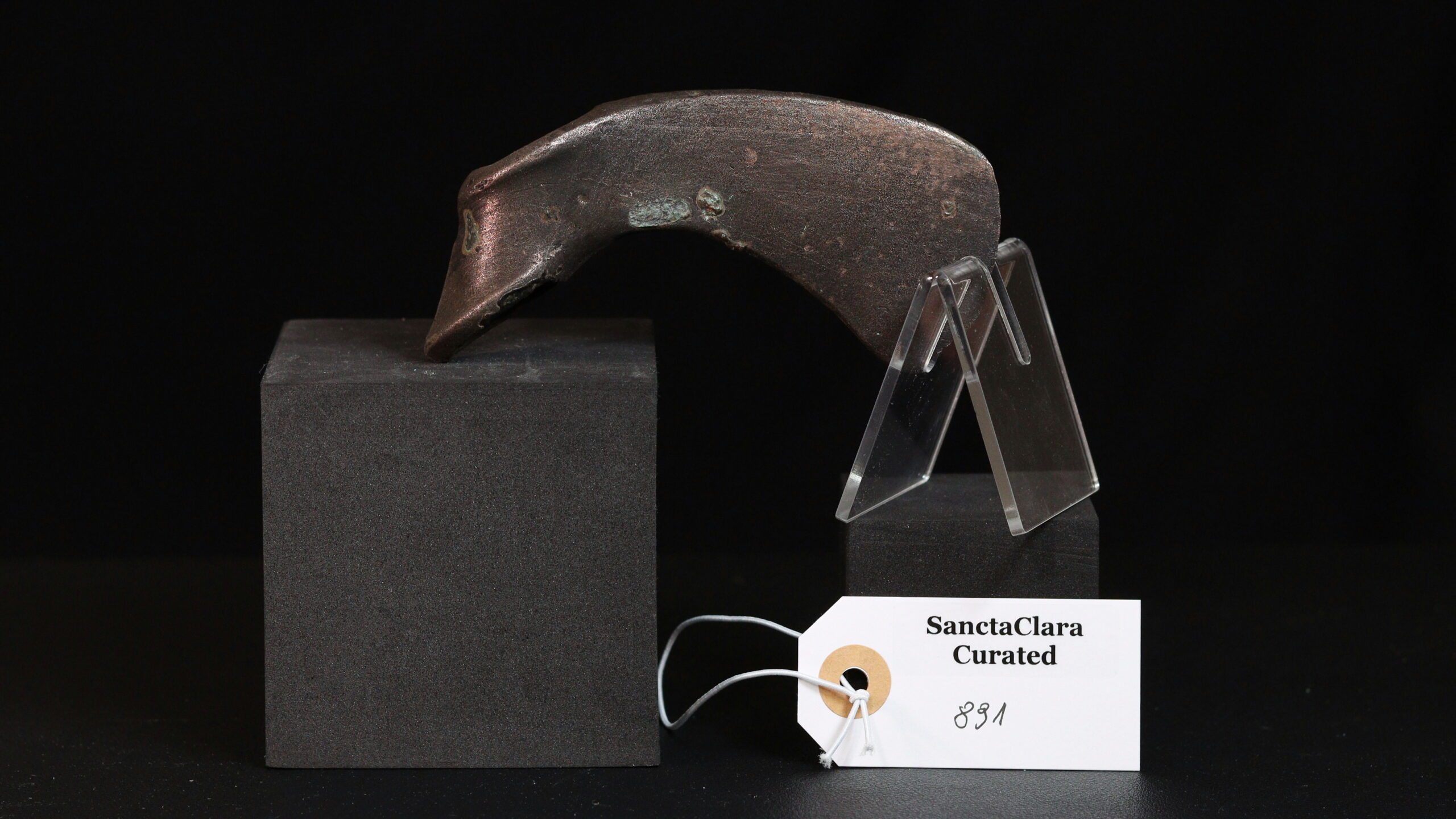 Visit the page Eneolithic Copper Shaft-Hole Battle Axe (Epirus/Kurgan/Veselinovo Type) Late Chalcolithic/Early Bronze Age Shaft-Hole Battle Axe (Circumpontic Type) Object: Copper / Arsenical Copper Shaft-Hole Battle Axe (Lightweight Variant) Date: Late Eneolithic/Early Bronze Age (c. 3000 — 2600 BC) Origin: Circumpontic Metallurgical Sphere — Western Georgia (Colchis) or Northern Greece (**Epirus**/Macedonia). A finely cast arsenic copper shaft-hole axe characterized by a distinct drooping or downward-curved blade profile. The blade is notably flat and slender in cross-section, expanding symmetrically from the socket to a convex cutting edge. The hafting hole features a circular shaft hole with reinforced, thickened collars at both the upper and lower margins, at 45 deg angle. The butt end (poll) is marked by a prominent vertical ridge or seam-like protrusion running down the center of the back side, a diagnostic mark of bivalve (two-part) stone mold casting.
 -
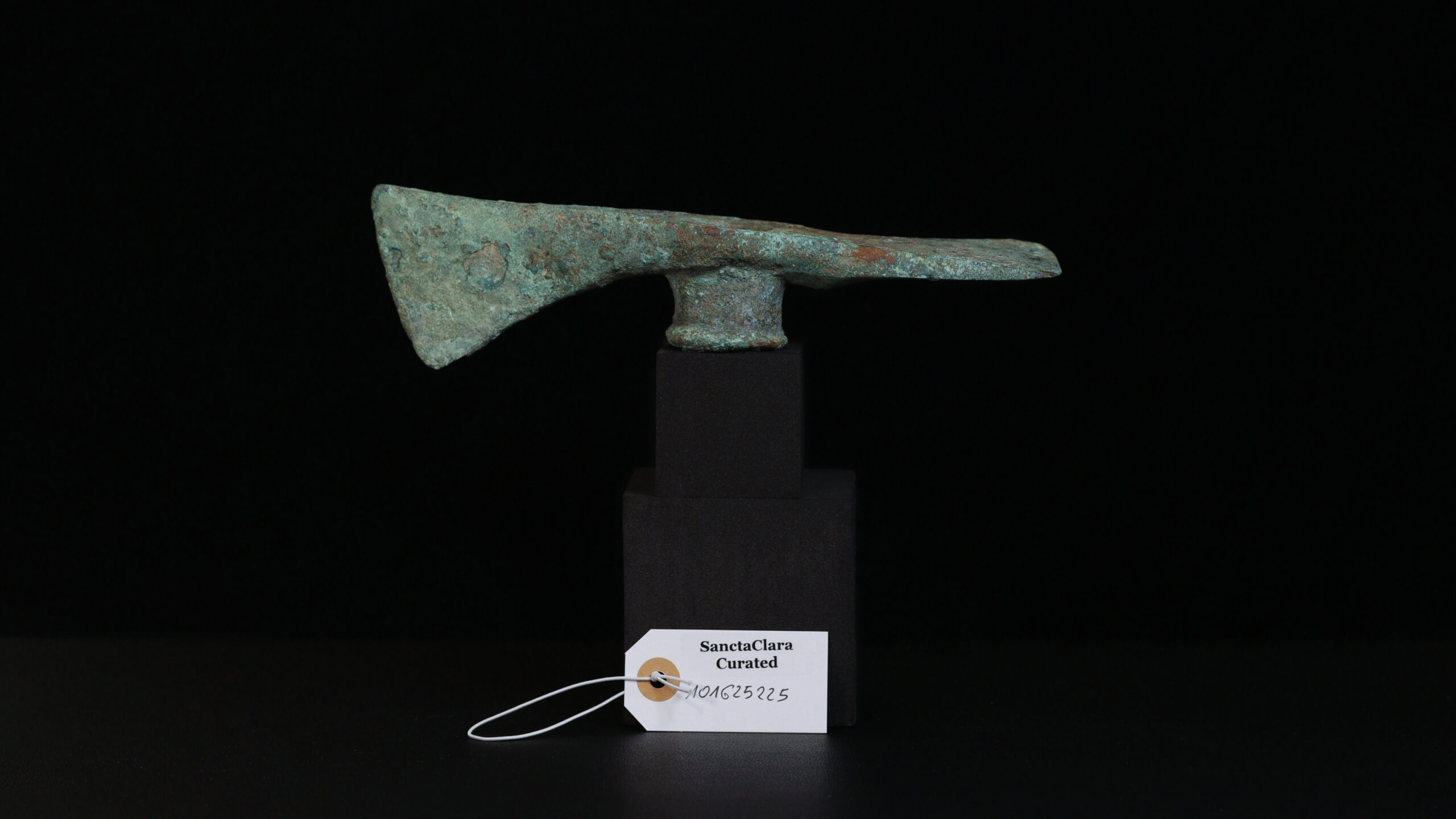 Visit the page Copper axe -adze w/collar socket mount Carpathianaxe – adze. Carpathian Basin / Transylvanian or Middle Danubian metallurgical tradition. Large copper alloy axe — adze (dolabra) with 2 perpendicular wide blades, an axe blade of 67 mm and an adze blade of 82 mm wide. Sturdy construction with shoulders widened at the socket, with additional collar at the lower end of the socket. Upper part of the axe blade cast with a deep recess. Probable Scope of Use Given the weight (950 g) and sturdy construction: Primary: Heavy-duty woodworking and carpentry within a settled agricultural community. Secondary: A prestige weapon. Such complex castings were symbols of status and authority. Ritual: Many such large, high-quality bronze items were never intended for daily labor but were cast specifically for ritual burial (hoarding) to demonstrate the wealth of a clan or to appease deities. The weight of nearly 1 kg is substantial for the period, this was an industrial-strength implement of its time, likely owned by a master craftsman or a high-ranking warrior-leader.
 -
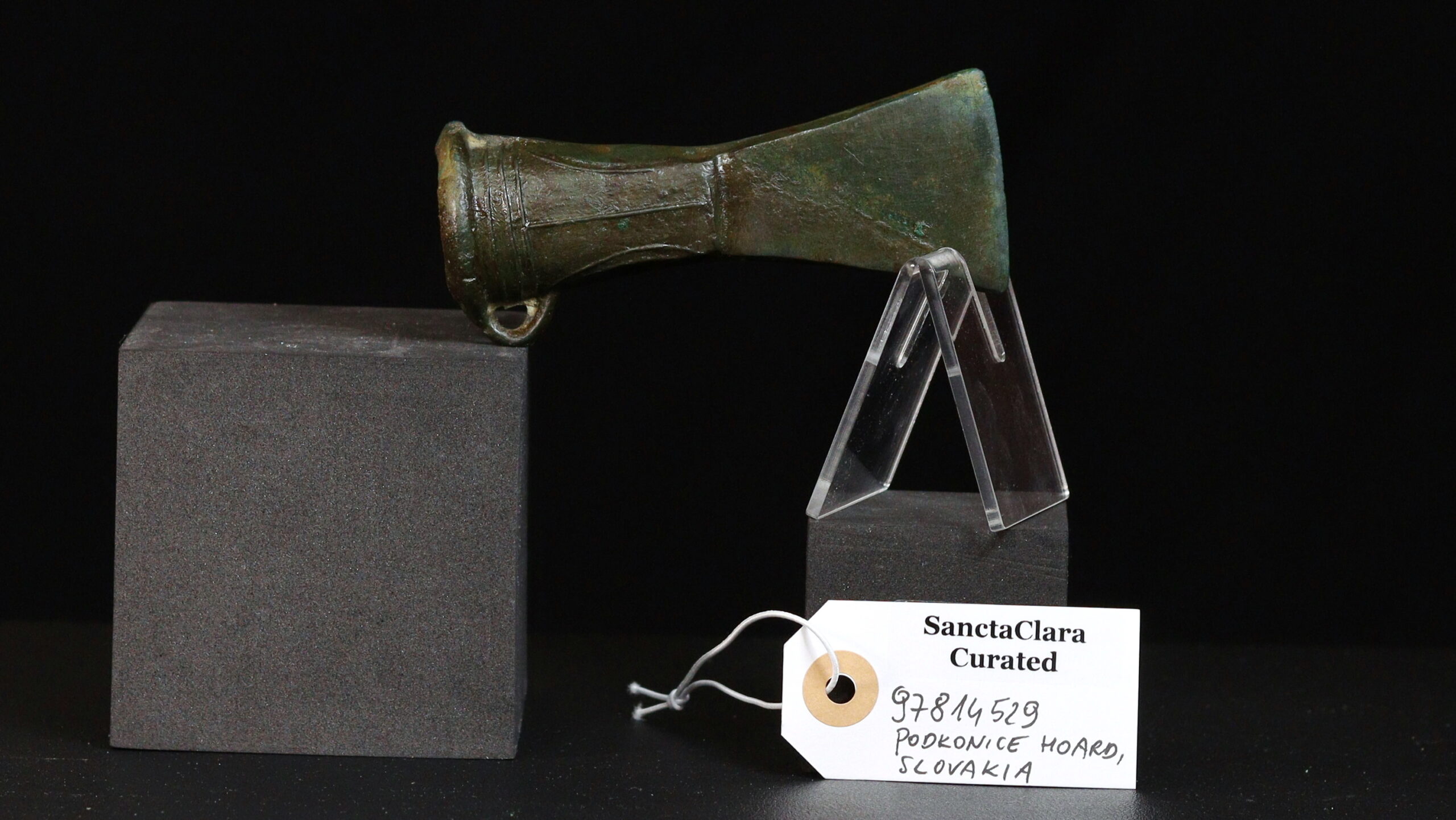 Visit the page Bronze Age (Urnfield Culture) – Large Decorated Socketed Axe Head with Loop A perfectly preserved socketed axe form the famous Podkonice Hoard in Slovakia. Collared and decorated socket with mounting loop. High precision cast. Does not bear signs of use.
-
 Visit the page Bronze sword blade with flat midrib and hook tail rivet tang. A substantial cast bronze sword, preserved through its full blade and the complete core of its grip. The 521 mm measured here is the surviving length: it carries the blade and the tang, but it does not account for the perished organic grip that was built up over the tang, nor for any pommel that capped its end. The complete weapon as wielded would have been longer — and at this surviving length already a true sword, well beyond the reach of the dirks and long daggers, intended for the cut as much as the thrust. Form and construction The piece is cast in a single pour, blade and tang continuous. The blade is long and sturdy with a flattened, wide raised midrib that runs almost the full length of the weapon, fading only near the point. This is not the high, sharp keel of a stabbing rapier but a broad, low ridge — a deliberate compromise that stiffens the blade against flexion while leaving generous flats on either side to take an edge. The resulting cross-section is lenticular with a thickened spine: the profile of a weapon meant to both thrust and cut. What survives of the hilt is the tang — and it is essential to understand that the tang is the structural core of the grip, not a separate appendage to it. Around this flat strap of bronze the smith built the actual handle from organic material — wood, bone, or horn — which has long since perished. The sword therefore reaches us as its own skeleton: blade and grip-core intact, the soft cladding and any pommel gone. This is the normal condition in which such weapons come down to us, and it is no defect; it is simply what remains when only the metal endures. The tang is of the hook-tail type and bears the weapon’s most distinctive feature: a small hook finished with a button knob, projecting from the side of the grip rather than from its terminal. This lateral hook-and-button is a functional hafting device. Set against the side of the organic grip, it anchored the binding or grip-cladding and resisted the tendency of the handle to work loose under the shock of a blow — a positive catch built into the grip-core to lock the perishable handle to the enduring metal. Such side hooks are a recurring solution in the Near Eastern bronze tradition to the perennial weakness of all early swords: the union of blade and grip. At the hilt shoulders, where blade meets tang, sit two rivet half-holes — semicircular notches opening laterally from each shoulder edge. These took the rivets that pinned the organic grip-plates against the flat of the tang, working together with the side hook to hold the handle fast. That they survive as open half-holes rather than fully enclosed perforations reflects a construction economical of bronze, the seats cut at the very margin of the metal. Cultural attribution The morphology places this firmly within the Western Asiatic / Near Eastern sphere of the Bronze Age. The flat broad midrib, the integral strap-tang forming the grip-core, and the side hook-and-button are features that recur across the Iranian plateau and the northern Zagros — the metallurgical world that produced the Luristan bronzes — and find echoes in the contemporary blades of the Levant and the eastern Aegean. The hook-and-button principle in particular is a hafting signature shared with several of the spear- and javelin-heads in this Collection, where a comparable hook secures the head to its shaft; the same idea is applied here to lock a grip to a sword. I attribute the piece to the broad Near Eastern tradition, circa 1500–1000 BC, with the Iranian / Luristan workshops the most probable origin on the present evidence. The length and the deliberate edge geometry argue for a place well within the era of the mature bronze sword. Metallurgy and surface The weapon is cast bronze — a copper–tin alloy — and the surface tells the expected story of three millennia of burial. A stable, well-developed patina covers the piece in mottled greens, from deep malachite to paler verdigris, broken by warmer reddish-brown passages where cuprite (the red cuprous oxide that forms first directly on the metal) shows through the malachite skin. Earthen encrustations remain across both faces, undisturbed. The patina is layered and adherent rather than powdery, with no sign of the bright, active light-green spotting that would signal “bronze disease” — the corrosion is mature and at rest. The texture and stratification of these layers are exactly what one hopes to read on an authentic excavated bronze; for the principles behind that reading, see The Language of Patina. Condition Excellent and stable for the type. The blade is complete from point to shoulder, the midrib intact along its run. The tang — the grip-core — survives whole, retaining both the side hook with its button and the two shoulder rivet-notches. The organic grip and any pommel that once dressed the tang are lost, as is invariably the case. Minor losses and chipping to the cutting edges are consistent with ancient use and age. The survival of the complete grip-core with its hook and rivet seats intact is what distinguishes this example from the many broken-tanged blades on the market.
 -
 Visit the page Western Asiatic Bronze Large Sword blade with long tang Western Asiatic Bronze sword. Perfectly preserved sword with a long full tang. The blade’s shoulders are round at hilt, blade with a wide flat tang merging into a triangular midrib at half of blades length. There is a round shadow of hilt guard on the forte, and a patch of organic glue on the neck shows under UV light.
 -
 Visit the page Leaf shaped bronze sword with short tang Bronze Age Mycenaean type Short Sword category: Tang-hilted blades, characteristic of the Near East and the Eastern Mediterranean during the late 3rd to early 2nd millennium BCE. Short tang with single mounting hole. Splayed square shoulders and concave blade geometry. Hilt mounting shape visible. Culture/Region: Likely Levantine (Canaanite) or Anatolian tradition. It shares significant similarities with weapons from the Amorite or Early Phoenician spheres. Time Period: Middle Bronze Age I–II (approx. 2000–1700 BCE). Morphological Type: This is a Square-Shouldered blade with a simple piercing on the tang for a rivet. The Shoulders: The splayed square shoulders are a key diagnostic feature. In the Middle Bronze Age, the transition from the blade to the hilt was often the weakest point. Square shoulders provided a wide surface area for a separate hilt (likely made of organic material like wood, bone, or ivory) to be seated firmly against the metal. Profile: The blade has a slow, elegant taper toward the point. This design suggests a weapon balanced for both thrusting and slicing. At 471 mm (approx. 18.5 inches), it sits right on the border between a long dagger and a short sword (dirk). Short Tang: The narrow, projecting tang would have been inserted into a slotted handle. Mounting Hole: The single mounting hole is designed for a bronze or silver rivet that would pass through the handle and the tang to lock the assembly in place. Weight (346 g): This is exceptionally light for its length, suggesting a high-quality tin-bronze alloy that allowed for a thinner, more flexible blade without sacrificing lethal strength. The surface displays a mottled, stable crusty green patina (malachite) with flecks of azurite (blue). This noble patina indicates the artifact was buried in a relatively stable environment for millennia. There are no obvious signs of notched edges (battle damage), which, combined with the elegant form, suggests it may have been a status symbol or a funerary accompaniment for a high-ranking individual.
 -
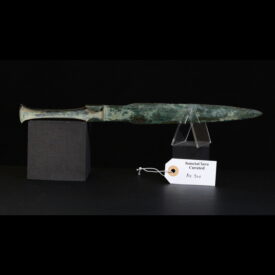 Visit the page Bronze Dagger with flanged inlaid hilt A bronze dirk or short sword: The blade and hilt cast in one piece, flanged hilt with a rectangular guard and semi-circular lappets on both sides which were used to secure the inlay, which would have been of ivory or bone. Fine condition, the metal stable with an olive green patina over much of the weapon, a few light accretions in places. Length 34.4 cms (13.5 ins), 156 gr, timesancient.com](http:// Times Ancient Gallery, Invoice AI2024/01, 25.04.2024 Iron Age Near East : circa 1000-800 BC. Litehookure: Cf. Item 48, Catalogue of the Ancient Persian Bronzes in the Ashmoleon Museum: P.R.S. Moorey.
 -
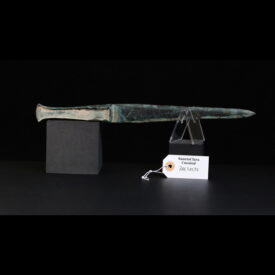 Visit the page Bronze Dagger with flanged inlaid hilt A bronze dirk or short sword: The blade and hilt cast in one piece, flanged hilt with a rectangular guard and semi-circular lappets on both sides which were used to secure the inlay, which would have been of ivory or bone.
 -
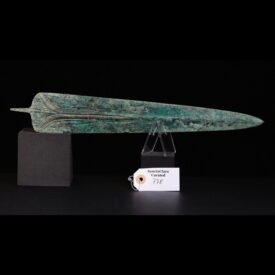 Visit the page Ornamented Mycenaean Bronze Short Sword Mycenaean/Aegean, Ca. 1700 – 1200 BC A striking example of a two-edged bronze blade with a leaf-shaped design and a small tang providing a secure attachment to the sword hilt. The blade boasts a corrugated midrib that extends to the tip and flares at the shoulder. This type of blade is often wrongly characterized as a spear blade, which is contradicted by very short tang and faded traces of wide organic hilt guard left sometimes on the shoulders of such blades.
 -
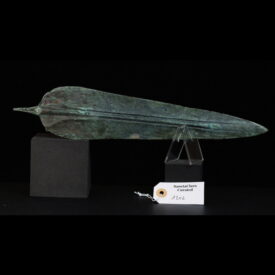 Visit the page Ornamented Egyptian bronze sword blade Bronze age, decorated bronze short sword blade of Ur type. North West Persian or Egyptian 2nd-1st millennium BC. A bronze short sword with short tang to be inserted into an organic hilt, the slightly concave blade is showing multiple ornamental grooves which form a pronounced mid-rib spanning roughly three-quarters of the blade.
 -
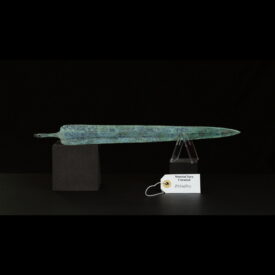 Visit the page Bronze Age Bronze Sword Blade with flat mid ridge Ancient Bronze Age Bronze Sword Blade with a strong flat central ridge and one rivet hole int the short tang. Wide ridge merging into single high rib. Shoulder square, rounded at corners. Variant A
 -
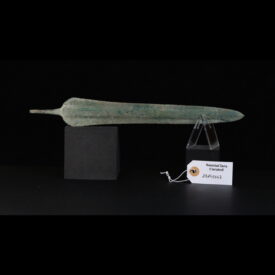 Visit the page Bronze Sword Blade, concave and splayed at the shoulders Bronze Short Sword Blade, dating to about 1000 B.C. Mycenaean or Western Asiatic. A wide flat rib, narrowing toward the tip. Shoulder widening like the Mycenaean and Cycladic blades. Remains of round incuse hilt mount. Thick green patina under some mineral incrustations. Blade intact. Original lenght with organic hilt estimated at 430 mm.
 -
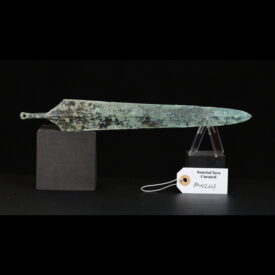 Visit the page Egyptian Elite Straight Bronze Sword Blade A stunning condition Bronze Age Bronze Sword or dagger blade with a strong central ridge and one rivet loophole at the end of a short tang. Trapezoidal, thick blade cross-section with round hilt mount shadow visible. Blade slightly concave in shape, with magnificent obsidian black, vitreous shiny chalcocite and cassiterite patina. Blade grinded and meticulously polished to perfection after being cast in antiquity. Original length with organic hilt estimated at 420 mm.
 -
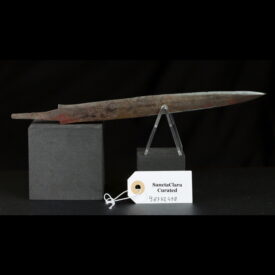 Visit the page Greek Hoplite Iron Dagger Encheiridion Greek Hoplite Iron Dagger. This fine iron dagger blade is long and slightly leaf shaped, widening at the square shoulders. Blade waisted elegantly near the shoulders and thickened along the midline for rigidity, transitions to the rectangular tang designed for an organic hilt glued to the tang with bone glue. No rivet holes on ang indicates an earlier design.
 -
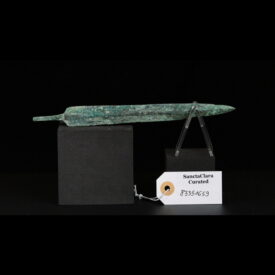 Visit the page Cypriot Bronze Age Bronze Large Dagger A very good condition Ancient Bronze Age Bronze Dagger, larger size. Cypriot Rapier type D41 type (F. Petrie)
 -
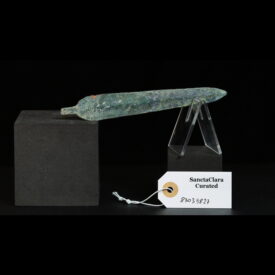 Visit the page Copper dagger A finely cast and hammered copper alloy blade. The piece features a long leaf-shaped blade with a central midrib, and a short, flattened, broken tang. The surface is covered with very thick azurite patination with some earth encrustations remaining. There are some small chips along the edges of the blade and the surface. Copper blade with extremely thick mineral patina in layers, first crystalized red patina, later green malachite and blue azurite patina. Metal almost entirely mineralized, only a few millimeters of the core left. Before 1600 BC. Alloy with minute iron content, lightly magnetic
 -
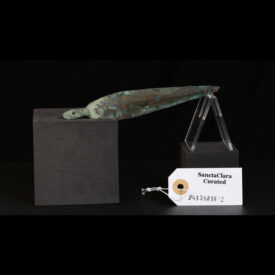 Visit the page Chalcolithic era copper dagger flat tang, almost flat blade with a weakly pronounced midrib in narrow part. Remains of incuse round hilt mounting
 -
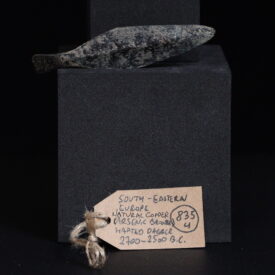 Visit the page Luristan Copper and Bronze Age Dagger Copper arrowhead or knife blade, REF: Early Bronze Age bronze knife or dart-head 2700-2500 B.C. South-Eastern Europe Cast and hammered. Double-edged, rhomboidal shaped blade. Narrow and slightly thicker haft with rectangular cross section.
 -
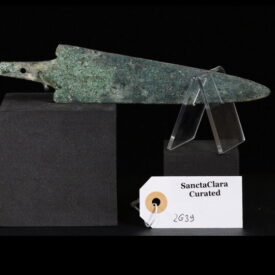 Visit the page Western Asiatic Bronze Dagger with Incised Shoulder A bronze dagger blade with shoulders formed at negative angle. 3 rivet holes with 2 rivets.
 -
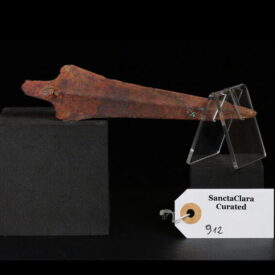 Visit the page Cypriot Ferrite copper alloy dagger with concave blade Mediterranean Ferrite copper (Black Copper) alloy dagger, reddish iron oxide patina indicates minimal iron content. Nonmagnetic. Mediterranean, Cyprus. Cast and hammered. Double-edged, rhomboidal shaped blade. Narrow and slightly thicker haft with rectangular cross section. Tang hammered and polished in antiquity. 1 rivet hole with Cypriot Bronze Age 2400 – 2201
 -
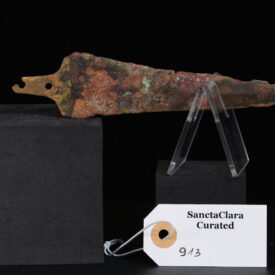 Visit the page Ferrite Copper Cypriot Dagger Copper alloy dagger blade, Mediterranean, Near East. 2 rivet holes. Round wide hilt mark visible. Reddish patina indicates minimal iron content. Nonmagnetic.
 -
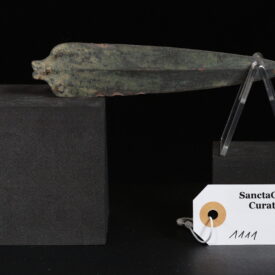 Visit the page Chalcolitic Age copper riveted dagger with convex blade Chalcolitic Age hammered copper dagger with copper rivets. Blade convex in shape, concave in cross section. 3 rivets and 4 rivet holes, tang broken in antiquity. Alloy with minute iron content, lightly magnetic – Ferrite copper. South- Eastern Europe
 -
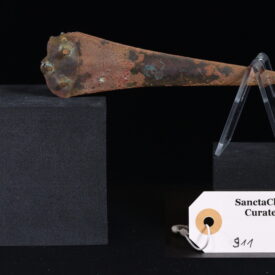 Visit the page Minoan Ferrit Copper dagger with no tang and concave blade Ancient EBA ferrite copper (Black Copper) dagger, 3 rivets, round shaft hilt mark visible, rusty patina indicating iron content in copper alloy, very slightly magnetic.
 -
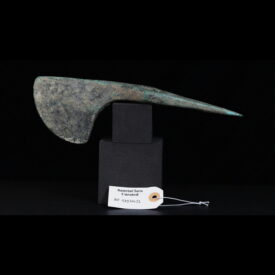 Visit the page Copper “Old Europe” Axe – Adze Sagaris Copper axe with spiked butt (Sagaris). This artifact is an extraordinarily significant piece of Chalcolithic metalwork, representing a high concentration of wealth, power, and long-distance trade. Mugeni or Siria Type Hammer-Axe/Adze (Plocnik/Vidra family), typology by Schubert 1965, p. 276, morphological type described as Battle axe (Patay 1984). Alternatively Jaszladany A1 type due to high weight for a Mugeni type. Material: Copper, with natural trace arsenic content Period Early Chalcolithic (Eneolithic), Late 5th to Earlier 4th Millennium BC (∼4500−3800 BC) Cultural Sphere: Danube Civilization, Vinća, Varna or Polgár Cultural Complex and the Kodžadermen-Gumelnița-Karanovo VI (KGK VI) Complex (Carpathian Basin Origin) Dimensions Length: 27.0 cm. Weight: 1211 g, volume 139 ml, density (average including patina) 8,71 g/cm3 (indicating copper with natural arsenic content from Carpatian mines). Probable Function: Specialized two-handed Battle-Pick and ultimate Prestige Symbol. The axe’s design illustrates the pivotal transition from stone to metal technology, where the aesthetics of power dictated form even when metallurgy allowed for more efficient shapes. Design and Prototype: This axe is a prime example of technological emulation (skueomorphism). Its massive, angular profile and substantial bulk around the hafting hole (18 mm socket wall thickness) are metallurgically unnecessary for copper (which would save material if thinner). However, this bulk was structurally required for its Late Neolithic stone hammer-axe predecessors. By retaining this costly, massive form, the copper axe deliberately transferred the established symbolic authority of the old stone weapon to the new metal medium. Form and Function: The head is a single-piece casting that combines a broad, crescent-shaped cutting blade with a long, sharply tapered spike butt. This configuration defines it as a dual-purpose Axe-Adze or Battle Pick. This design maximizes the massive 1040 g weight into devastating kinetic energy upon striking, particularly with the spike. Hafting: The overall mass strongly dictates its use as a two-handed weapon to ensure control and maximize impact force. The short metal tunnel required a robust wooden haft (likely Ash or Oak) reinforced against lateral shock.
 -
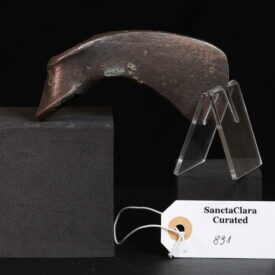 Visit the page Eneolithic Copper Shaft-Hole Battle Axe (Epirus/Kurgan/Veselinovo Type) Late Chalcolithic/Early Bronze Age Shaft-Hole Battle Axe (Circumpontic Type) Object: Copper / Arsenical Copper Shaft-Hole Battle Axe (Lightweight Variant) Date: Late Eneolithic/Early Bronze Age (c. 3000 — 2600 BC) Origin: Circumpontic Metallurgical Sphere — Western Georgia (Colchis) or Northern Greece (**Epirus**/Macedonia). A finely cast arsenic copper shaft-hole axe characterized by a distinct drooping or downward-curved blade profile. The blade is notably flat and slender in cross-section, expanding symmetrically from the socket to a convex cutting edge. The hafting hole features a circular shaft hole with reinforced, thickened collars at both the upper and lower margins, at 45 deg angle. The butt end (poll) is marked by a prominent vertical ridge or seam-like protrusion running down the center of the back side, a diagnostic mark of bivalve (two-part) stone mold casting.
 -
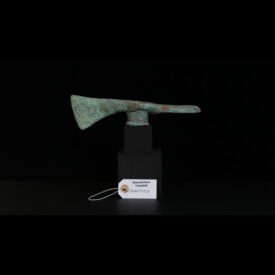 Visit the page Copper axe -adze w/collar socket mount Carpathianaxe – adze. Carpathian Basin / Transylvanian or Middle Danubian metallurgical tradition. Large copper alloy axe — adze (dolabra) with 2 perpendicular wide blades, an axe blade of 67 mm and an adze blade of 82 mm wide. Sturdy construction with shoulders widened at the socket, with additional collar at the lower end of the socket. Upper part of the axe blade cast with a deep recess. Probable Scope of Use Given the weight (950 g) and sturdy construction: Primary: Heavy-duty woodworking and carpentry within a settled agricultural community. Secondary: A prestige weapon. Such complex castings were symbols of status and authority. Ritual: Many such large, high-quality bronze items were never intended for daily labor but were cast specifically for ritual burial (hoarding) to demonstrate the wealth of a clan or to appease deities. The weight of nearly 1 kg is substantial for the period, this was an industrial-strength implement of its time, likely owned by a master craftsman or a high-ranking warrior-leader.
 -
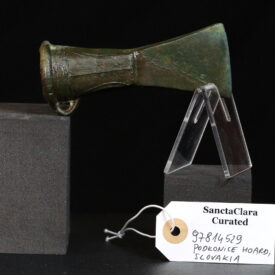 Visit the page Bronze Age (Urnfield Culture) – Large Decorated Socketed Axe Head with Loop A perfectly preserved socketed axe form the famous Podkonice Hoard in Slovakia. Collared and decorated socket with mounting loop. High precision cast. Does not bear signs of use.
Iconic Bronze Cultural Artifacts Defining Ancient Europe and Near East
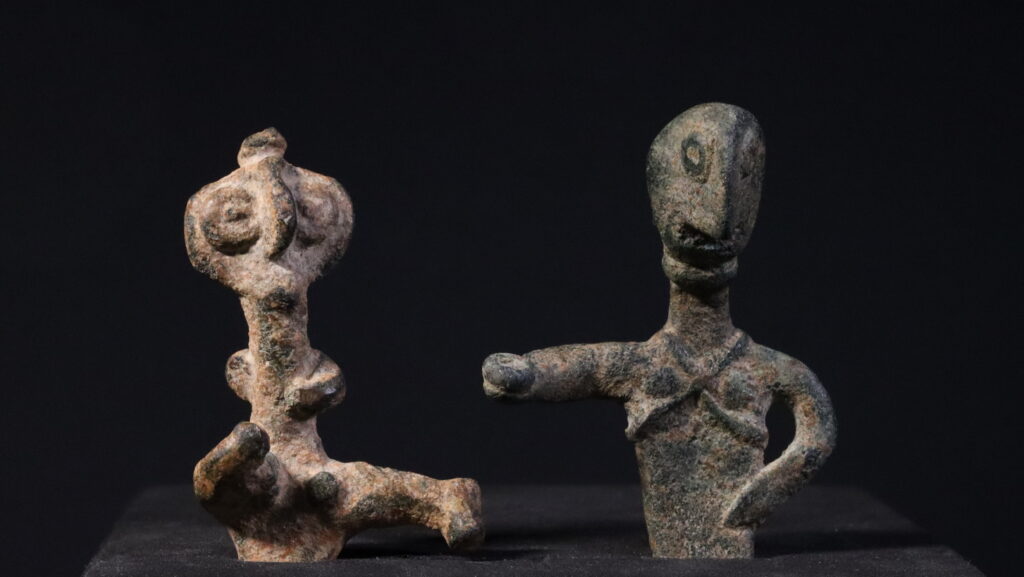
Explore the ancient heritage, including Eneolithic, Bronze Age and Early Iron Age art and ritual objects, including bronze votive figurines, Bronze Age jewelry and everyday objects. Some pottery specimens are included for comparative studies.
Bronze Artifacts Blog
Explore a rich collection of articles and research highlighting ancient bronze artifacts, their historical context, and cultural significance.
-
Evolution of the ancient axe morphology
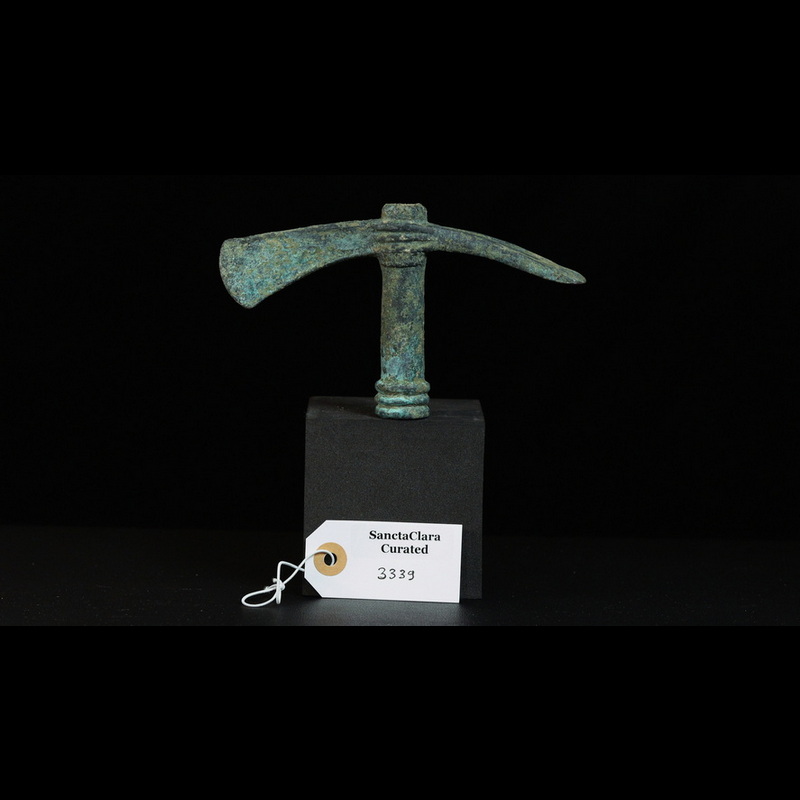
Forging the Edge: The Long Evolution of the Ancient Axe The axe is the oldest…
-
Bronze Age Horned Helmets: The Sardinia–Scandinavia Horned Warrior Mystery
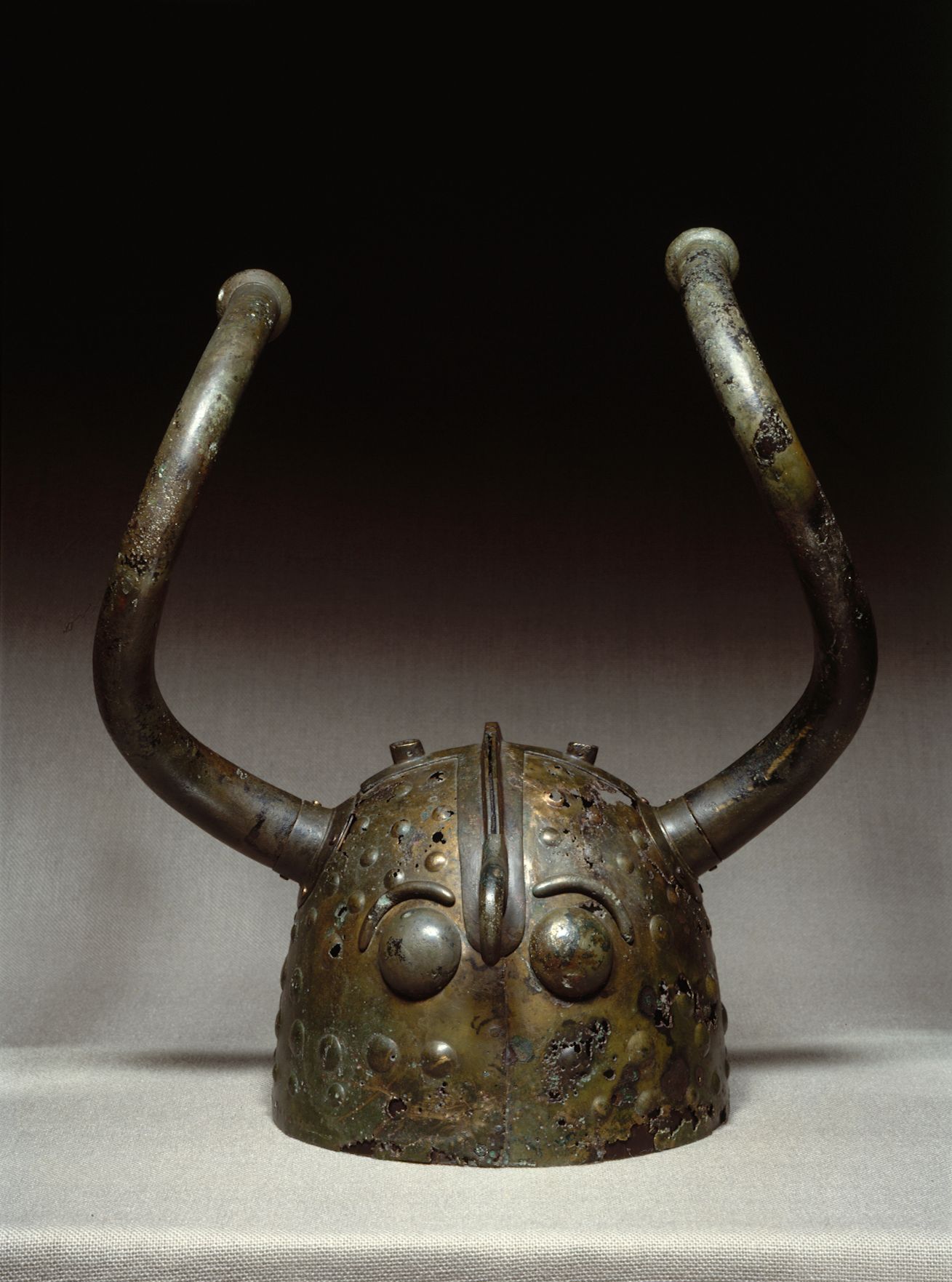
The Horned Warriors of Two Seas: The Nuragic Bronzetti and the Veksø Horned Helmet Connection…
-
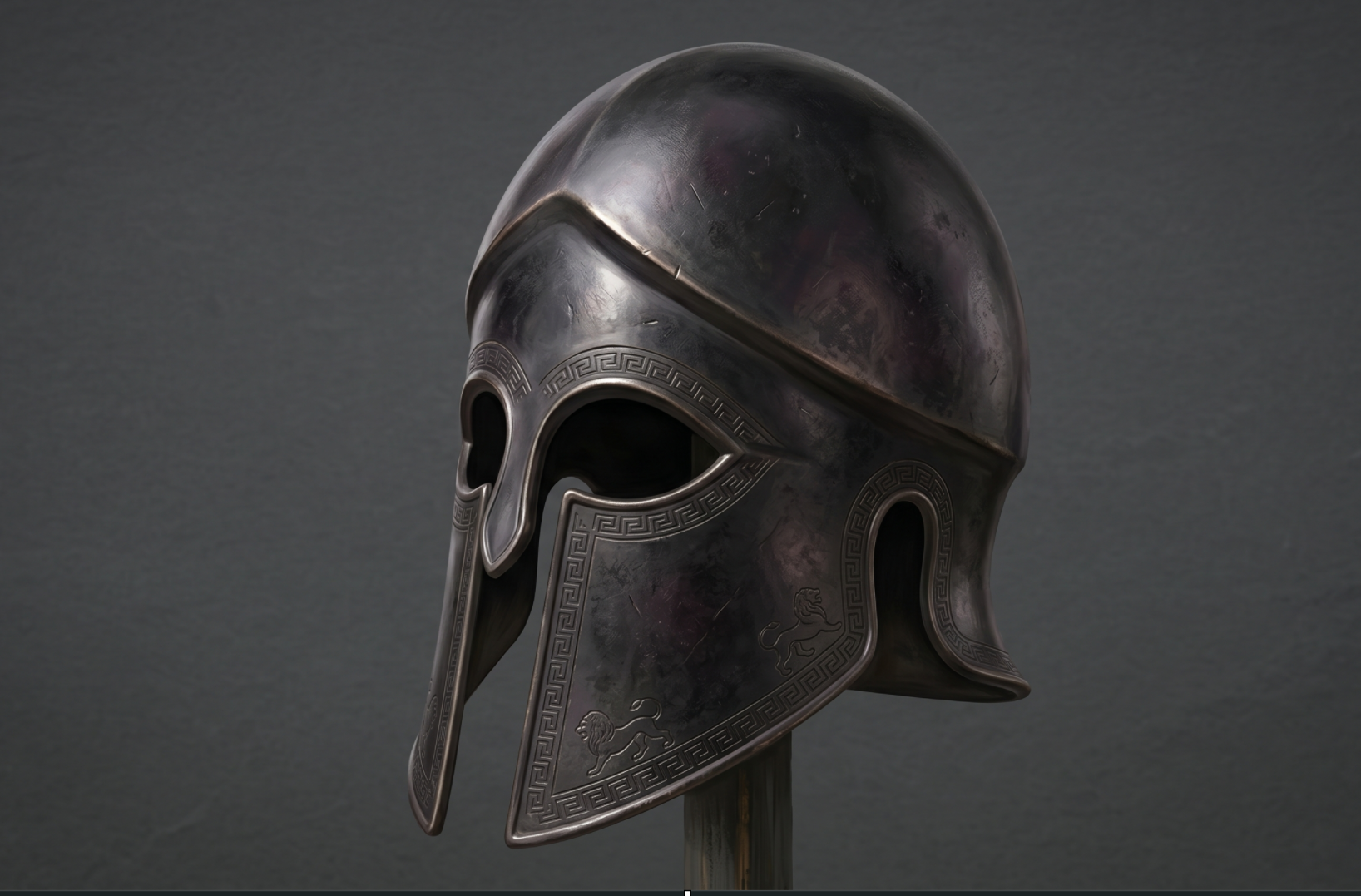
Black Bronze: Corinthian Bronze, Hepatizon, and How the Ancients Coloured Metal
The Black Gold of the Alchemists: Corinthian Bronze, Hepatizon, and the Art of Intentional Patina…
-
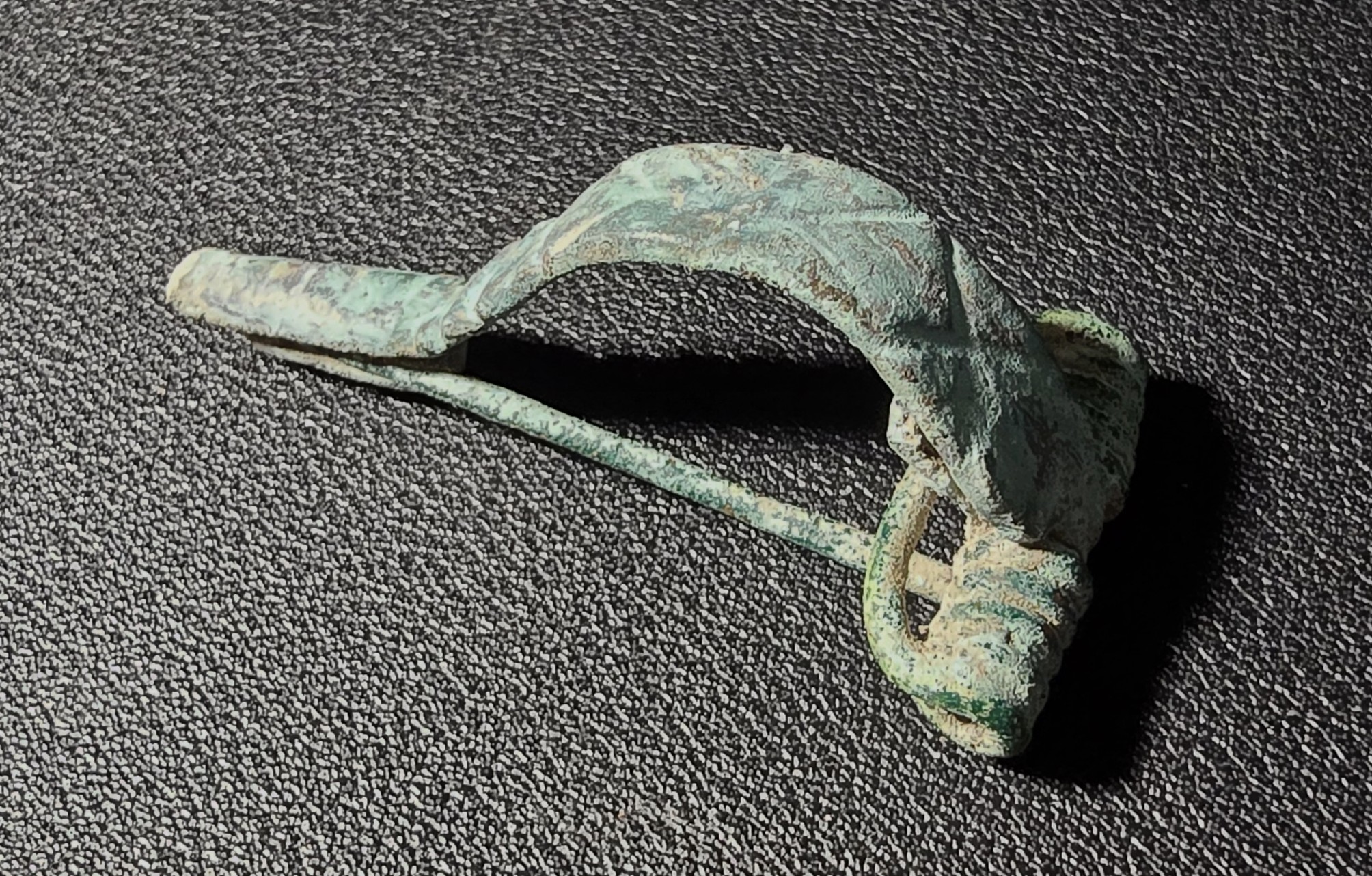
Ancient Fibula Identification: A Field Guide to Bronze Brooches and Belt Hooks
The Clasp of Civilisation: A Field Guide to Ancient Fibulae and Garment Hooks For the…
-
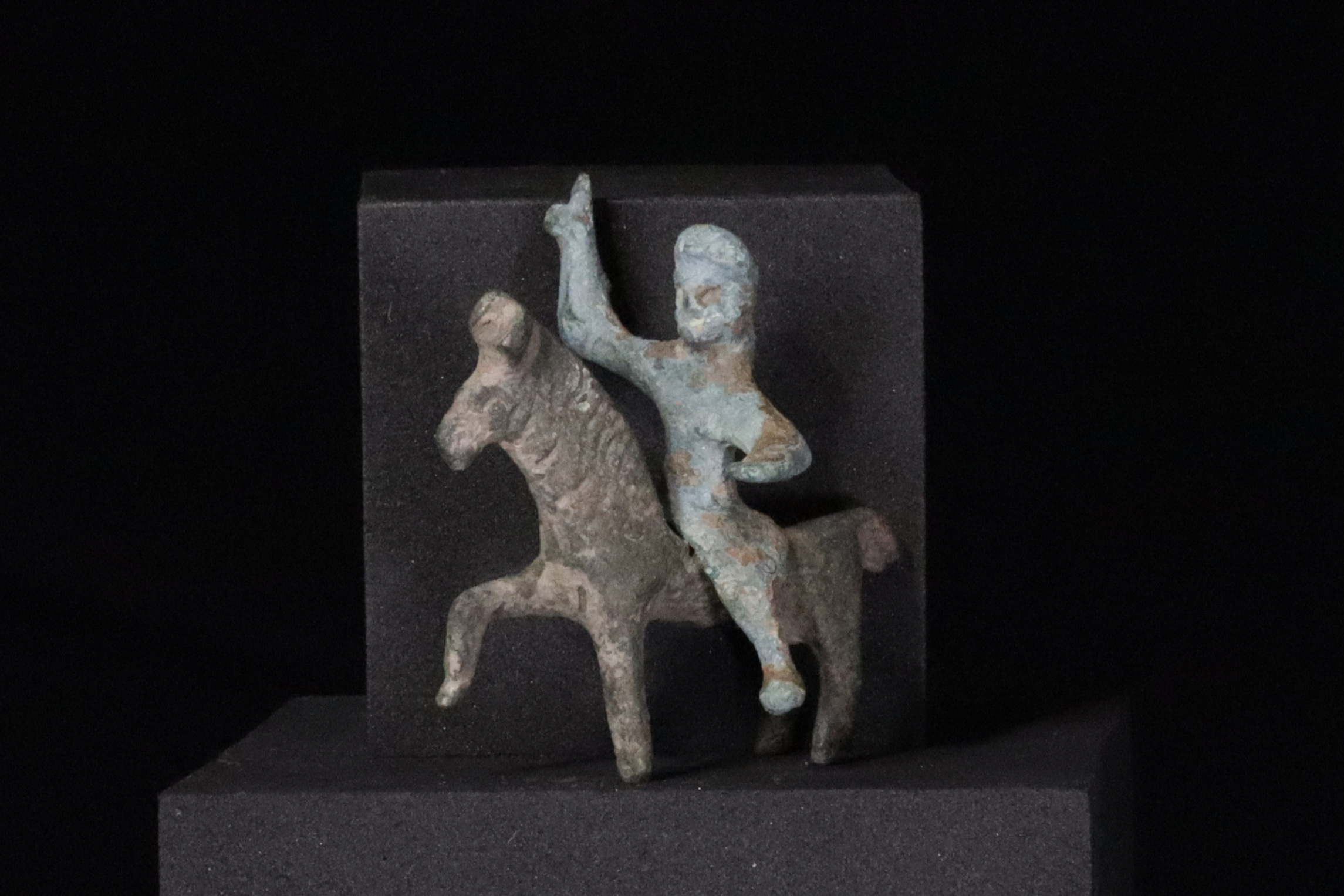
The Lost Bronze Age God: The Sky Father
The Sworn Blade: The Sky Father and the Weapons of the Oath There is a…
-
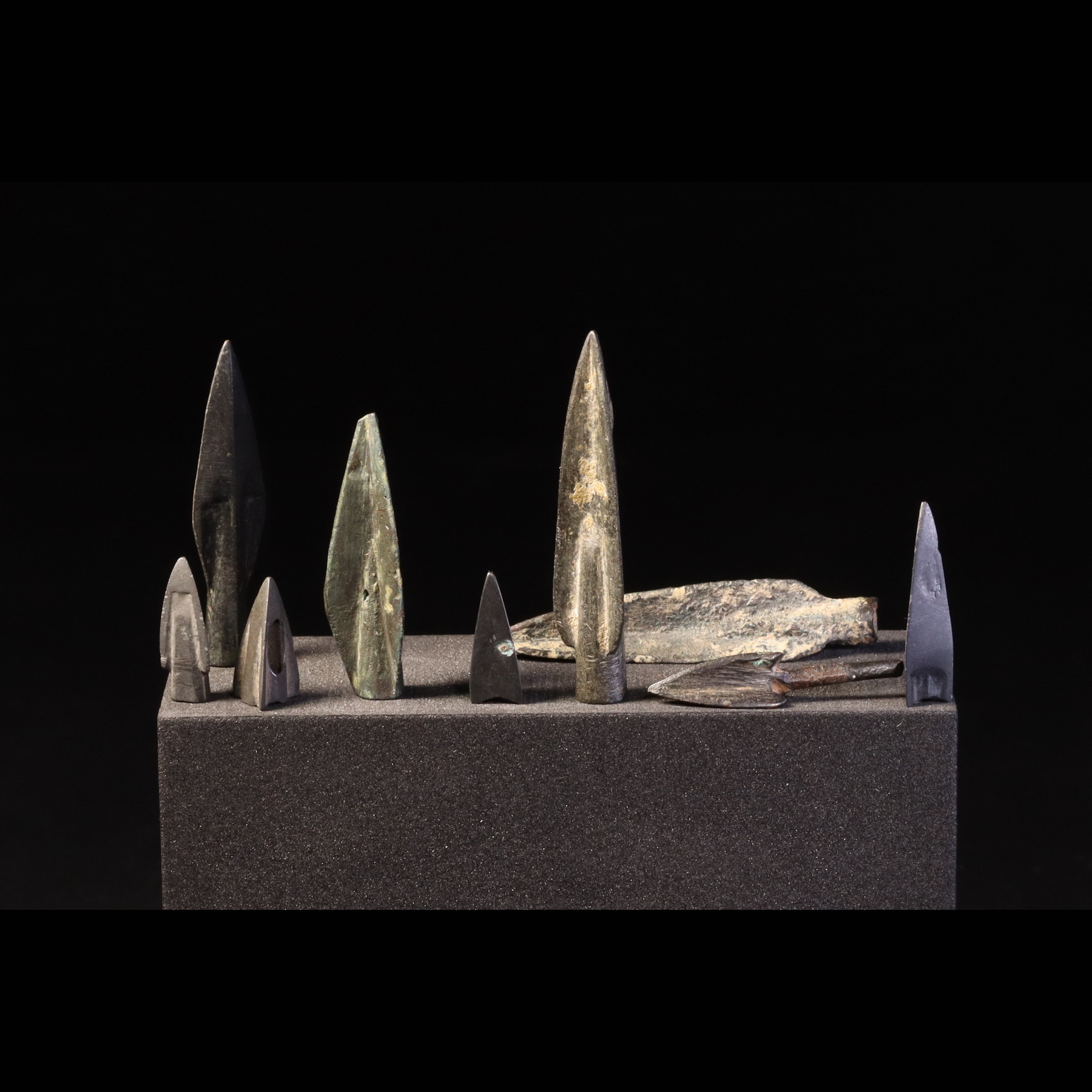
Scythian Bronze Arrowheads
The Steppe Archers: Scythian Bronze Arrowheads and the Technology of Mounted Warfare There is a…
-
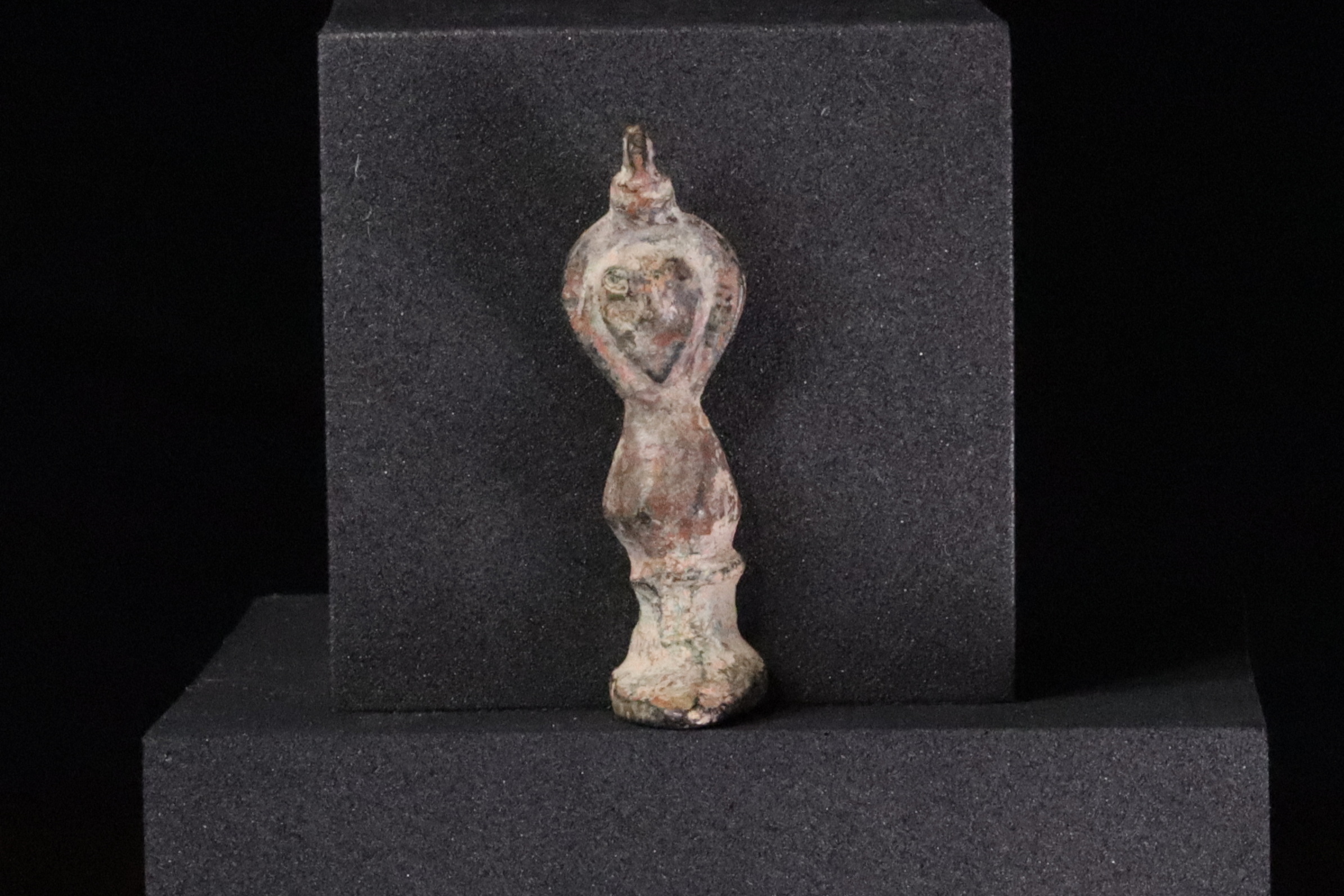
Gods in the Hand: Ancient Bronze Figurines, Votives, and the Personal Sacred Sphere
We have to begin by unlearning a word. When we look at a small ancient…
-
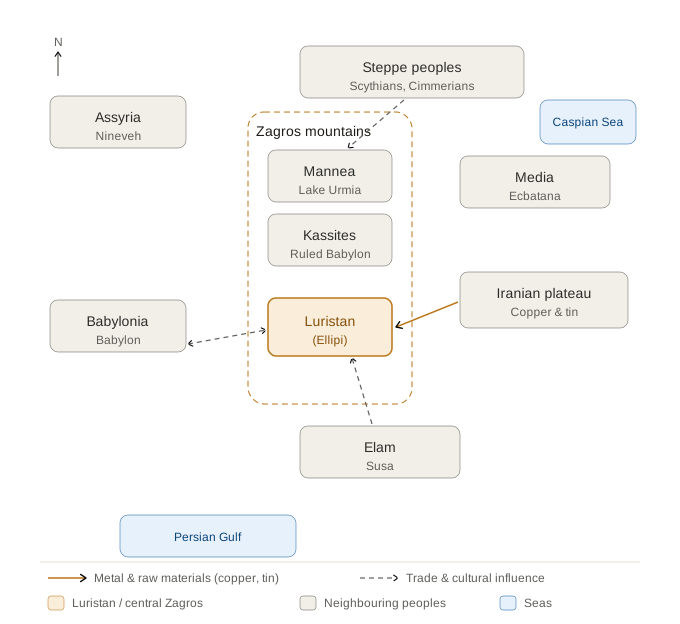
The Tin Roads: How a Scarce Metal Built and Broke the Bronze Age
9 parts copper 1 part tin Bronze has a secret, and the secret is tin.…

Ancient Bronze Artifacts in World History
Discover a curated catalog of bronze relics, supporting research and study in metallurgy and archaeology.


Explore Timeless Bronze Artifacts
Find clear, concise answers to frequent questions about ancient bronze collections and their historical significance.
What time periods do the bronze artifacts cover?
Our catalog features items spanning from the Chalcolithic through the Early Iron Age.
How can I use this catalog for research?
Use the comparative study tools to analyze artifacts and their cultural contexts effectively.
Where do these bronze artifacts originate from?
They come from historic European collections, showcasing a range of ancient metallurgical traditions.
Are the artifacts authentic and verified?
Yes, all items are verified by experts and come from reputable historical sources.
Can enthusiasts contribute or suggest items?
Currently, contributions are curated by our team to maintain accuracy and quality.
What insights does the catalog provide?
It offers perspectives on ancient metallurgy, warfare, and ritual practices reflected in bronze artifacts.
-
Visit the page Copper “Old Europe” Axe – Adze Sagaris Copper axe with spiked butt (Sagaris). This artifact is an extraordinarily significant piece of Chalcolithic metalwork, representing a high concentration of wealth, power, and long-distance trade. Mugeni or Siria Type Hammer-Axe/Adze (Plocnik/Vidra family), typology by Schubert 1965, p. 276, morphological type described as Battle axe (Patay 1984). Alternatively Jaszladany A1 type due to high weight for a Mugeni type. Material: Copper, with natural trace arsenic content Period Early Chalcolithic (Eneolithic), Late 5th to Earlier 4th Millennium BC (∼4500−3800 BC) Cultural Sphere: Danube Civilization, Vinća, Varna or Polgár Cultural Complex and the Kodžadermen-Gumelnița-Karanovo VI (KGK VI) Complex (Carpathian Basin Origin) Dimensions Length: 27.0 cm. Weight: 1211 g, volume 139 ml, density (average including patina) 8,71 g/cm3 (indicating copper with natural arsenic content from Carpatian mines). Probable Function: Specialized two-handed Battle-Pick and ultimate Prestige Symbol. The axe’s design illustrates the pivotal transition from stone to metal technology, where the aesthetics of power dictated form even when metallurgy allowed for more efficient shapes. Design and Prototype: This axe is a prime example of technological emulation (skueomorphism). Its massive, angular profile and substantial bulk around the hafting hole (18 mm socket wall thickness) are metallurgically unnecessary for copper (which would save material if thinner). However, this bulk was structurally required for its Late Neolithic stone hammer-axe predecessors. By retaining this costly, massive form, the copper axe deliberately transferred the established symbolic authority of the old stone weapon to the new metal medium. Form and Function: The head is a single-piece casting that combines a broad, crescent-shaped cutting blade with a long, sharply tapered spike butt. This configuration defines it as a dual-purpose Axe-Adze or Battle Pick. This design maximizes the massive 1040 g weight into devastating kinetic energy upon striking, particularly with the spike. Hafting: The overall mass strongly dictates its use as a two-handed weapon to ensure control and maximize impact force. The short metal tunnel required a robust wooden haft (likely Ash or Oak) reinforced against lateral shock.
-
Visit the page Eneolithic Copper Shaft-Hole Battle Axe (Epirus/Kurgan/Veselinovo Type) Late Chalcolithic/Early Bronze Age Shaft-Hole Battle Axe (Circumpontic Type) Object: Copper / Arsenical Copper Shaft-Hole Battle Axe (Lightweight Variant) Date: Late Eneolithic/Early Bronze Age (c. 3000 — 2600 BC) Origin: Circumpontic Metallurgical Sphere — Western Georgia (Colchis) or Northern Greece (**Epirus**/Macedonia). A finely cast arsenic copper shaft-hole axe characterized by a distinct drooping or downward-curved blade profile. The blade is notably flat and slender in cross-section, expanding symmetrically from the socket to a convex cutting edge. The hafting hole features a circular shaft hole with reinforced, thickened collars at both the upper and lower margins, at 45 deg angle. The butt end (poll) is marked by a prominent vertical ridge or seam-like protrusion running down the center of the back side, a diagnostic mark of bivalve (two-part) stone mold casting.
-
Visit the page Copper axe -adze w/collar socket mount Carpathianaxe – adze. Carpathian Basin / Transylvanian or Middle Danubian metallurgical tradition. Large copper alloy axe — adze (dolabra) with 2 perpendicular wide blades, an axe blade of 67 mm and an adze blade of 82 mm wide. Sturdy construction with shoulders widened at the socket, with additional collar at the lower end of the socket. Upper part of the axe blade cast with a deep recess. Probable Scope of Use Given the weight (950 g) and sturdy construction: Primary: Heavy-duty woodworking and carpentry within a settled agricultural community. Secondary: A prestige weapon. Such complex castings were symbols of status and authority. Ritual: Many such large, high-quality bronze items were never intended for daily labor but were cast specifically for ritual burial (hoarding) to demonstrate the wealth of a clan or to appease deities. The weight of nearly 1 kg is substantial for the period, this was an industrial-strength implement of its time, likely owned by a master craftsman or a high-ranking warrior-leader.
-
Visit the page Bronze Age (Urnfield Culture) – Large Decorated Socketed Axe Head with Loop A perfectly preserved socketed axe form the famous Podkonice Hoard in Slovakia. Collared and decorated socket with mounting loop. High precision cast. Does not bear signs of use.
-
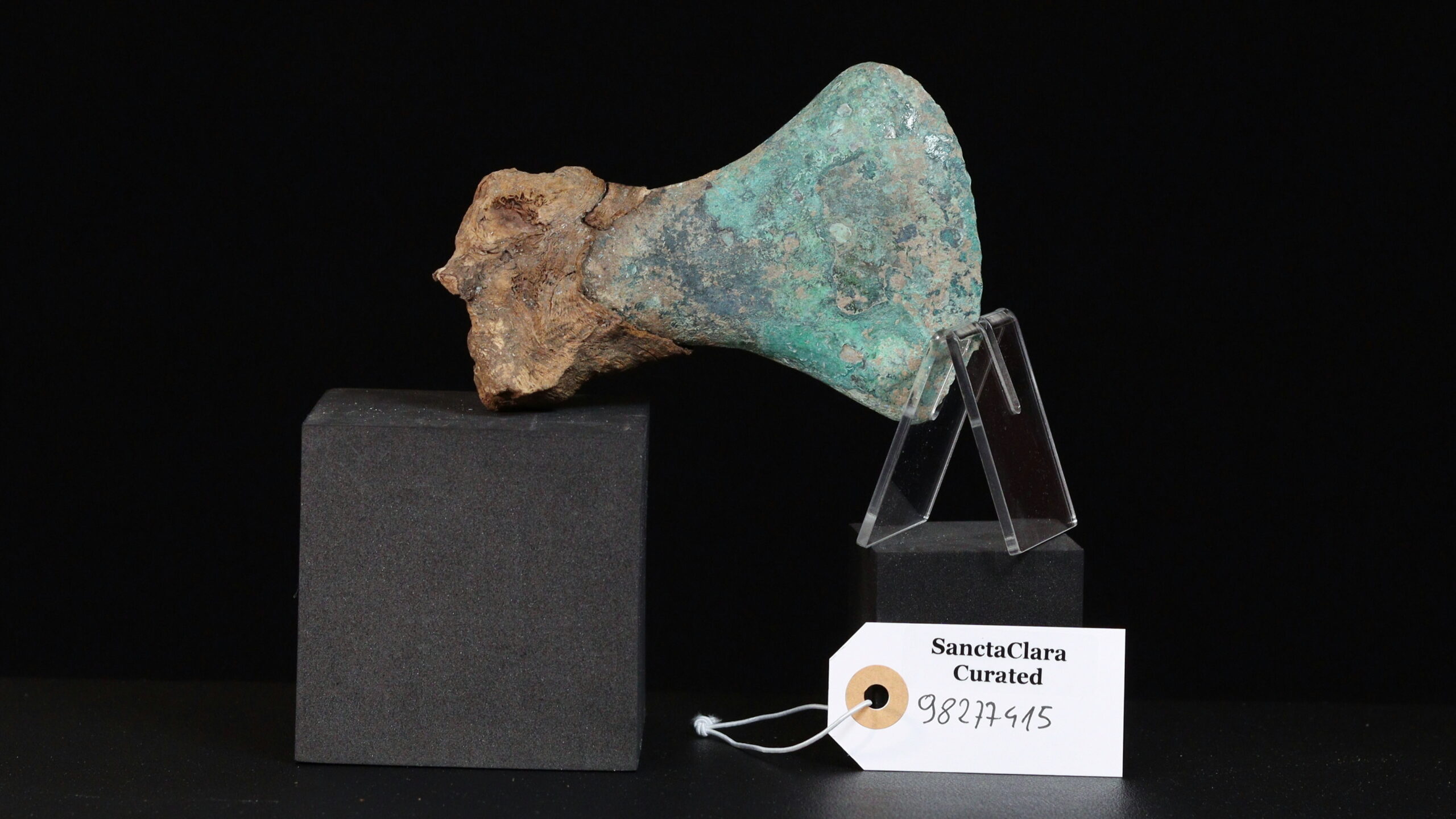 Visit the page Dong Son culture (Cambodia, Vietnam) bronze axe Magnificent bronze axe blade with very rare remains of wood from the handle. Precise geometry, expert craftsmanship. Dates from the Dong Son period. The Dong Son culture was a Bronze Age culture centered in ancient Vietnam (Red River Valley) and Cambodia from approximately 1000 BC to 1st century AD, with significant influence extending throughout Southeast Asia, including Maritime Southeast Asia like Indonesia. Dongson Bronze axes, often ceremonial in nature, are characteristic artifacts of the Dong Son culture, and examples have been found extensively in Java and other parts of Indonesia. These axes, reflect the advanced bronze working techniques and cultural practices of the period.
 -
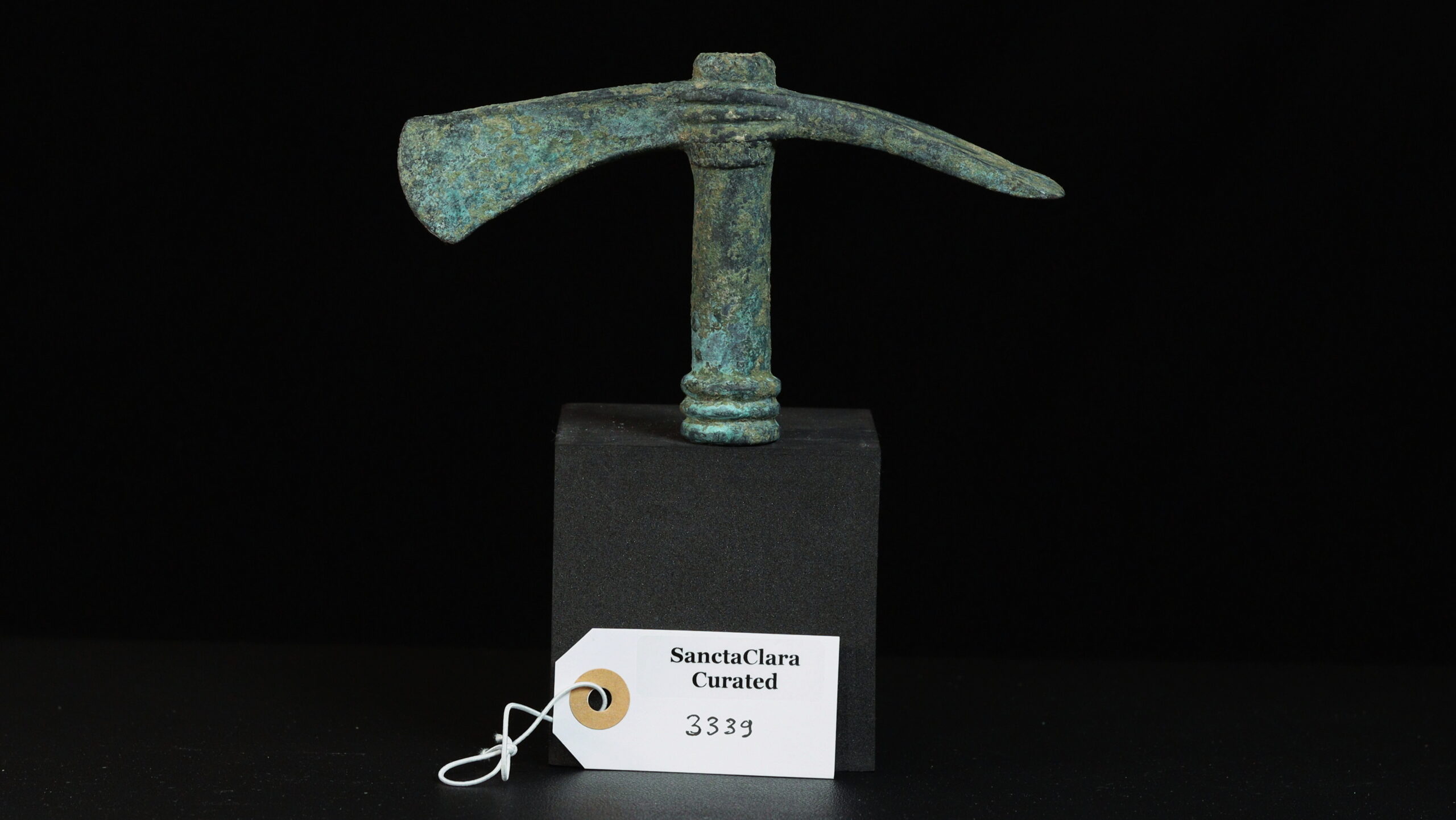 Visit the page Bronze Decorated Shaft-Hole Axe-Adze Bronze Decorated Shaft-Hole Axe-Adze Ribbed Decoration: You can clearly see raised ribs or rings at the top and bottom of the socket (and a decorative band in the center). This is a classic example of skeuomorphism—a design feature where a new material (bronze) mimics the construction of an older one. These ridges likely represent the leather thongs or rope lashings that would have been used to bind earlier stone or simple metal heads to a wooden shaft. In bronze, these lashings become structural reinforcement hoops. Late Bronze Age to Early Iron Age (approx. 1200 — 800 BC)
 -
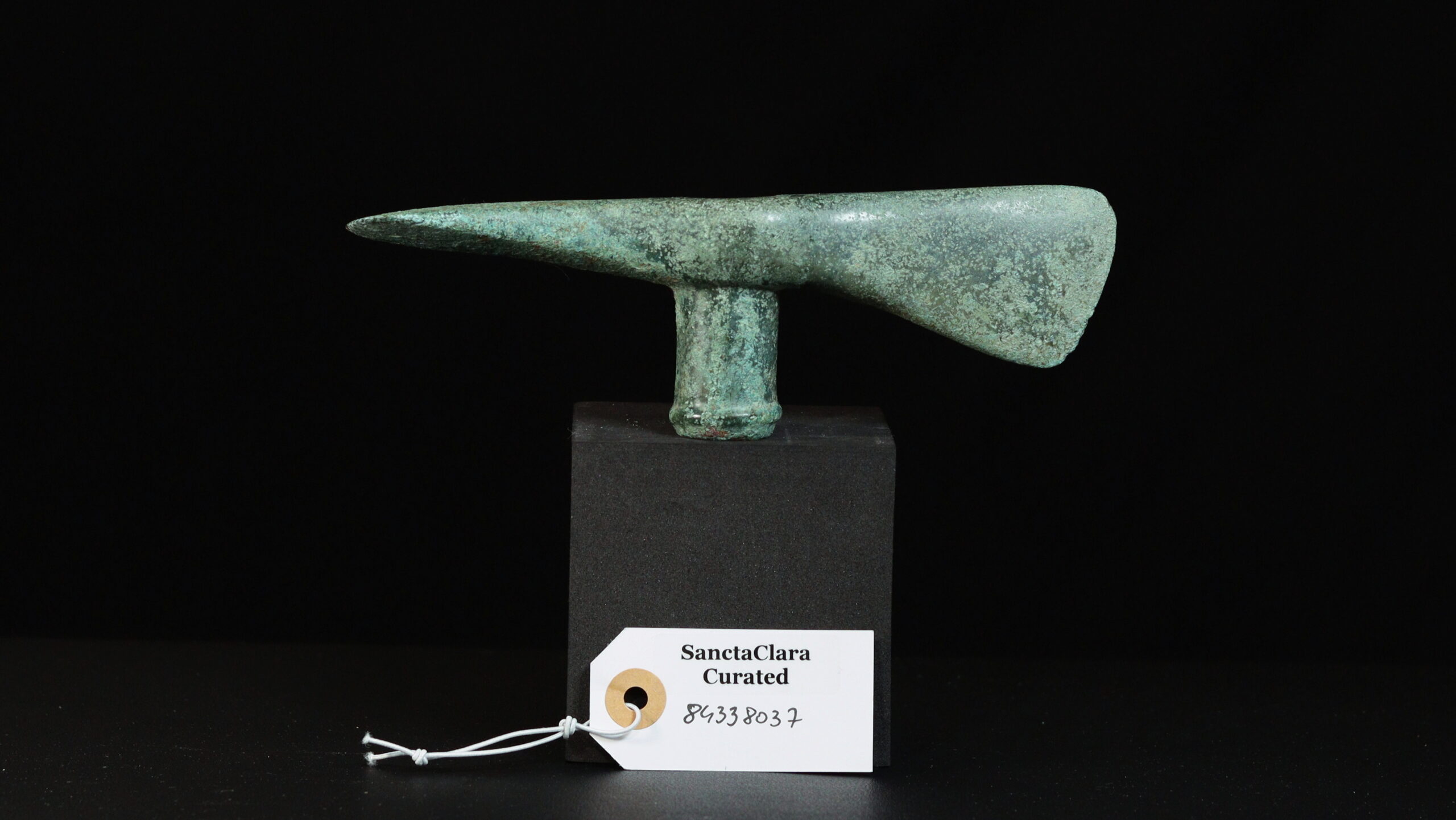 Visit the page Luristan Bronze Adze-Axe head A Luristan bronze adze-axehead featuring a cylindrical shaft hole, a flattened top with a vertical blade with sides that broaden out towards the convex cutting edge and a horizontal blade to the back. Ring at the base of the shaft socket. Inclined convex blade indicates military use. The adze axe was a fundamental axe of many Bronze Age ancient cultures the world over. Its form was one that lends itself to dual purposes – for war and peace. As a tool, it functions to shape wood in fabricating a variety of objects or even wooden beams for construction. As a weapon, its heavy mass and compact form made it a very deadly striking and chopping weapon, even able to defeat light armour. Beautiful light and dark green patina, no damage.
 -
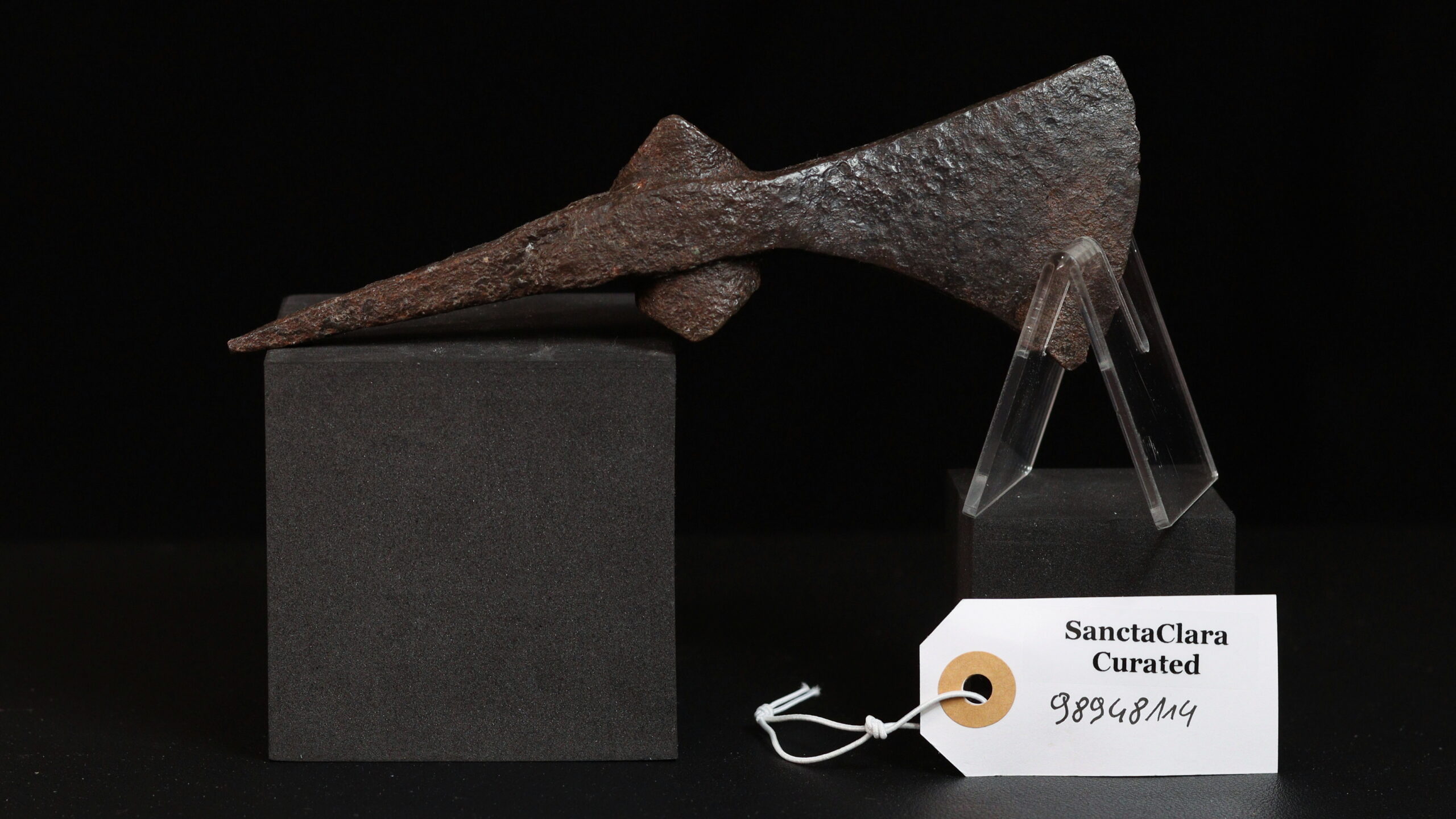 Visit the page Hallstatt Iron Pick Axe This impressive iron axe–adze head features a broad flaring axe blade on one side, the opposite arm forged as a long, tapering adze/pick with a straight back and acute point, a thick central body with an oval hafting eye and paired lugs above and below. Sagaris type.
 -
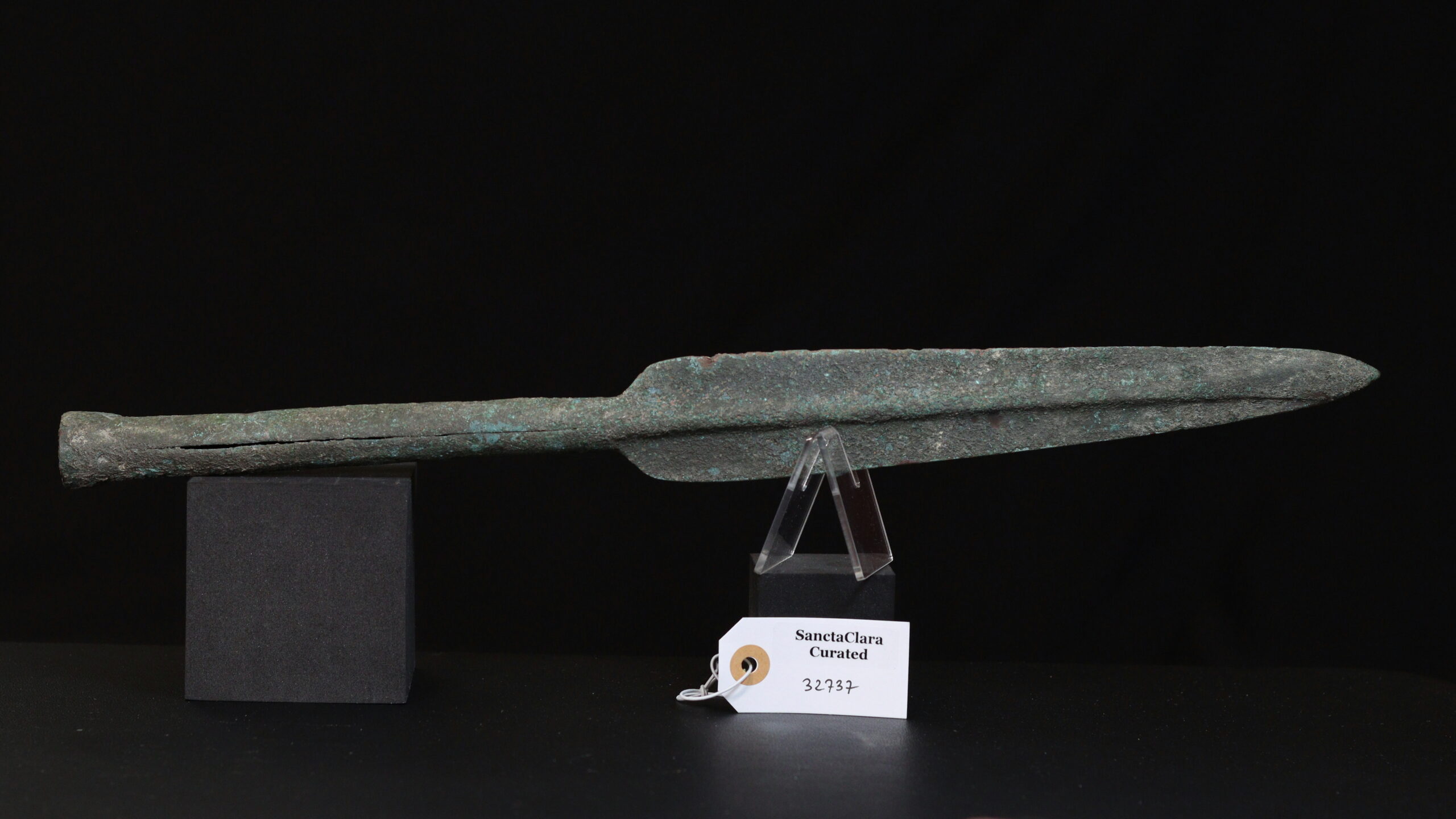 Visit the page Large MBA Bronze Split Socket Pike A large and imposing split-socket pike with a pronounced, rounded midrib and a ringed, enlarged socket neck. The blade is elegantly symmetrical with a willow-leaf profile. The strong, heavy build suggests possible anti-cavalry or formation-warfare use. The split-socket hafting method represents a sophisticated early joining technique where bronze was folded and secured around a wooden shaft. Kassiterite patina level under malachite patina.
 -
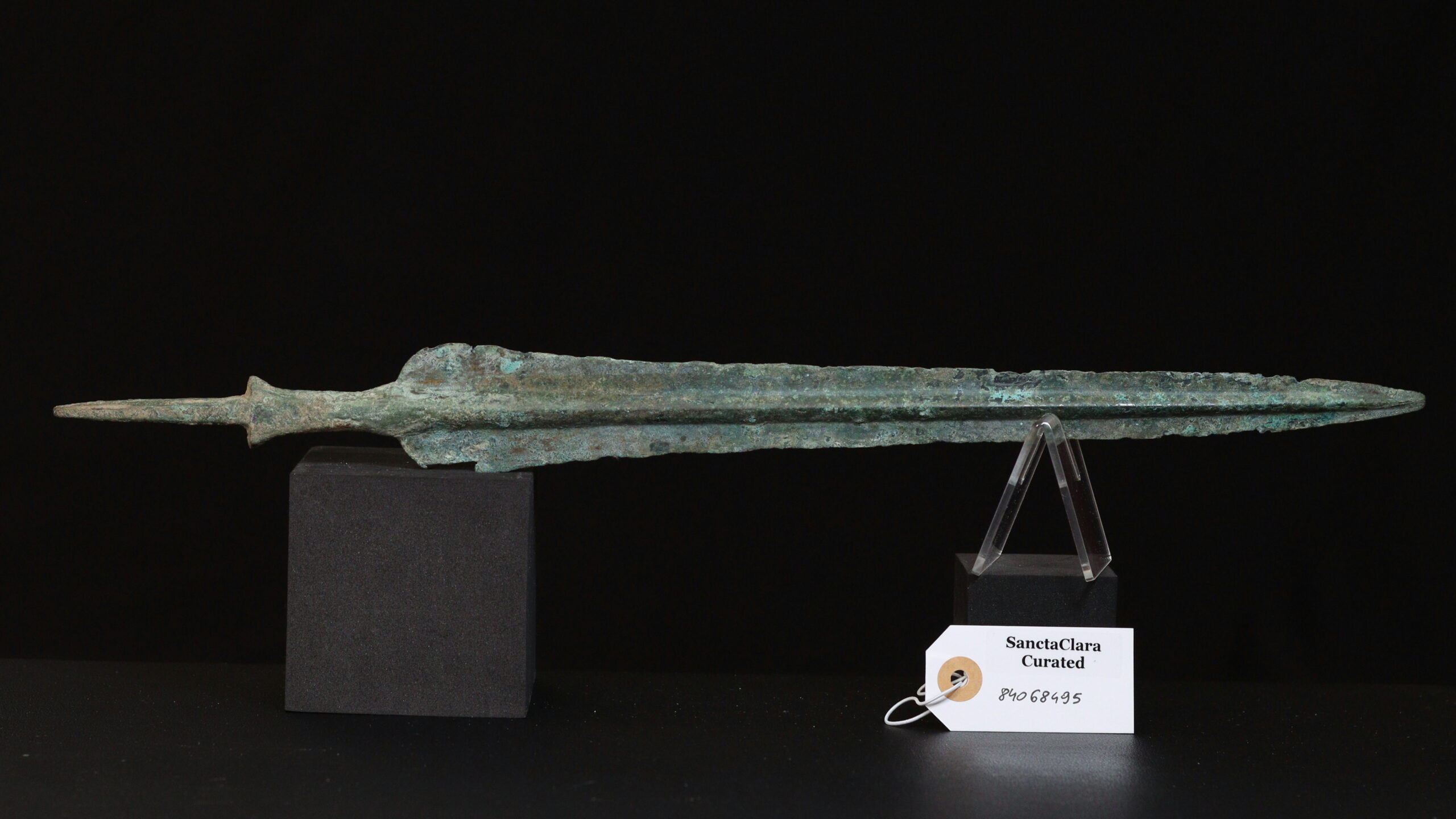 Visit the page Long Bronze Concave Edge Spearhead with Wide Stop Ridge A finely cast Luristan bronze blade of exceptional length with a long triangular blade with concave edges, and prominent midrib. Very wide and sturdy stop ridge between neck and tang. Widening rounded shoudlers. Beautiful green and brown patination with earthen encrustations. Minor chips to blade edges consistent with age and possible ancient use. At 45.6 cm (nearly 18 inches) in length, this is a formidable weapon. While occasionally categorized alongside dirks or short swords due to its size, the morphology—specifically the long neck, stop ridge, and thin tang—strongly points to its use as a heavy spearhead or pike blade. – The Midrib: The prominent, raised midrib running down the center of the blade is a critical engineering feature. Bronze, while durable, can bend under heavy stress. The midrib dramatically increases the cross-sectional strength of the blade, preventing it from buckling when thrusting into a target (such as a shielded or armored opponent). – The Stop Ridge & Tang: The tang was designed to be driven into a hollowed or split wooden shaft. The wide stop ridge is perhaps the most important functional element for a polearm of this size. When a warrior thrust this pike with full force, the stop ridge absorbed the massive kinetic energy of the impact, preventing the heavy blade from driving deeper into the wooden shaft and splitting it down the middle. – Blade is slightly waisted, and flares wider at the shoulders. The most famous example of this geometry is the classical Greek Xiphos. We also see early iterations of this waisting in Late Bronze Age Mycenaean swords and the famous Naue II type swords that swept across Europe and the Aegean during the Bronze Age collapse. Comparative Analysis When evaluating this blade against similar artifacts from museum collections and excavations across the Near East, several patterns emerge: Tanged vs. Socketed: In many parts of Bronze Age Europe and the Near East, socketed spearheads (where the wood fits inside a metal cone) eventually became the dominant style. However, in the Iranian plateau (Luristan, Amlash, and Marlik cultures), heavy tanged spearheads with pronounced stop ridges remained highly popular and effective well into the Early Iron Age.
 -
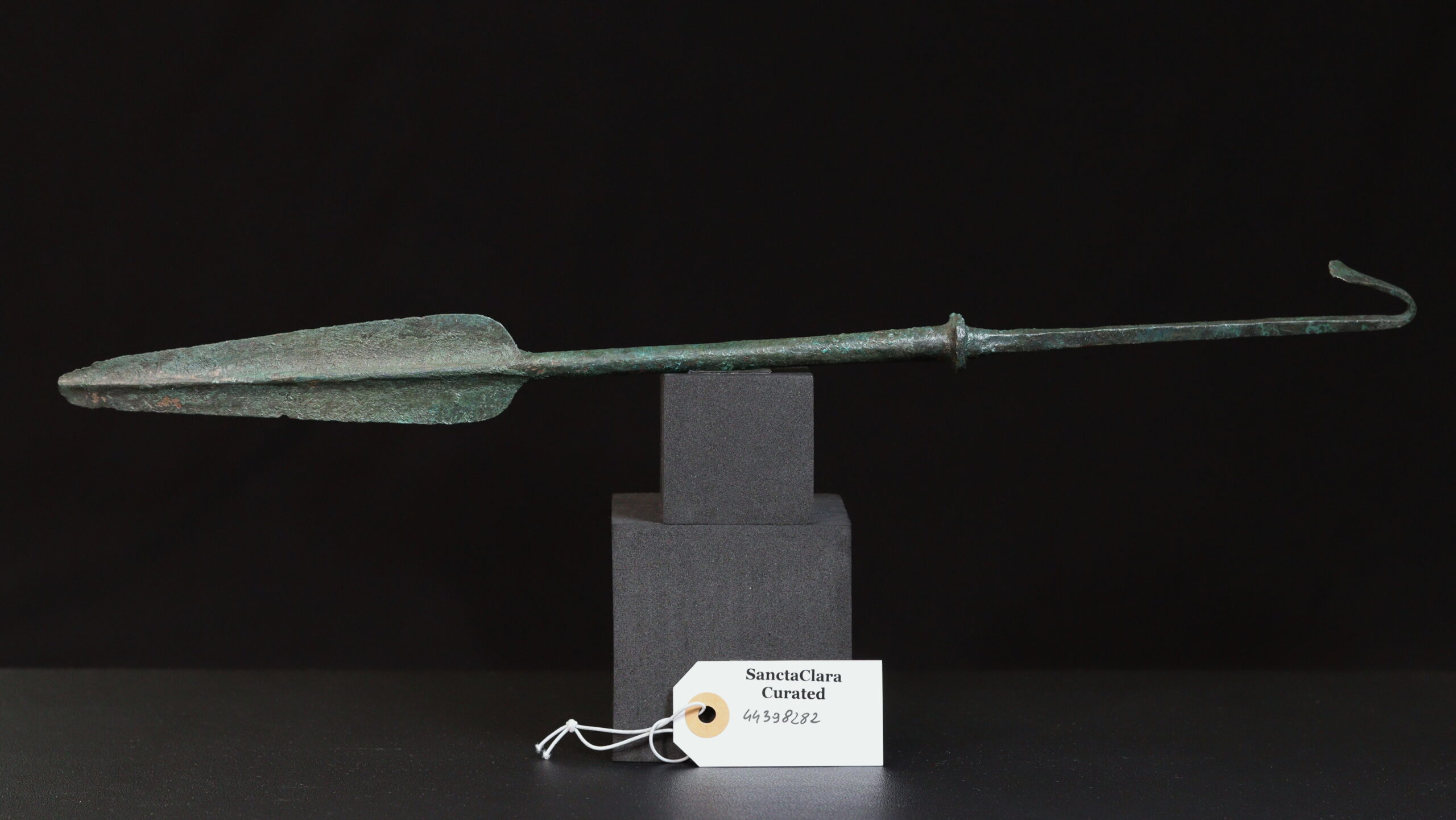 Visit the page Bronze Massive Spearhead with stp ridge and Hook-Tang A very long spear tip with a narrow, rounded central ridge, elongated neck area, and a square shaft eye (socket). The overall proportions suggest a heavy thrusting weapon designed for use from horseback or chariot. At 45.6 cm (nearly 18 inches) in length, this is a formidable weapon. While occasionally categorized alongside dirks or short swords due to its size, the morphology—specifically the long neck, stop ridge, and thin tang—strongly points to its use as a heavy spearhead or pike blade. – The Midrib: The prominent, raised midrib running down the center of the blade is a critical engineering feature. Bronze, while durable, can bend under heavy stress. The midrib dramatically increases the cross-sectional strength of the blade, preventing it from buckling when thrusting into a target (such as a shielded or armored opponent). – The Stop Ridge & Tang: The tang was designed to be driven into a hollowed or split wooden shaft. The wide stop ridge is perhaps the most important functional element for a polearm of this size. When a warrior thrust this pike with full force, the stop ridge absorbed the massive kinetic energy of the impact, preventing the heavy blade from driving deeper into the wooden shaft and splitting it down the middle. – Blade is slightly waisted, and flares wider at the shoulders. The most famous example of this geometry is the classical Greek Xiphos. We also see early iterations of this waisting in Late Bronze Age Mycenaean swords and the famous Naue II type swords that swept across Europe and the Aegean during the Bronze Age collapse.
 -
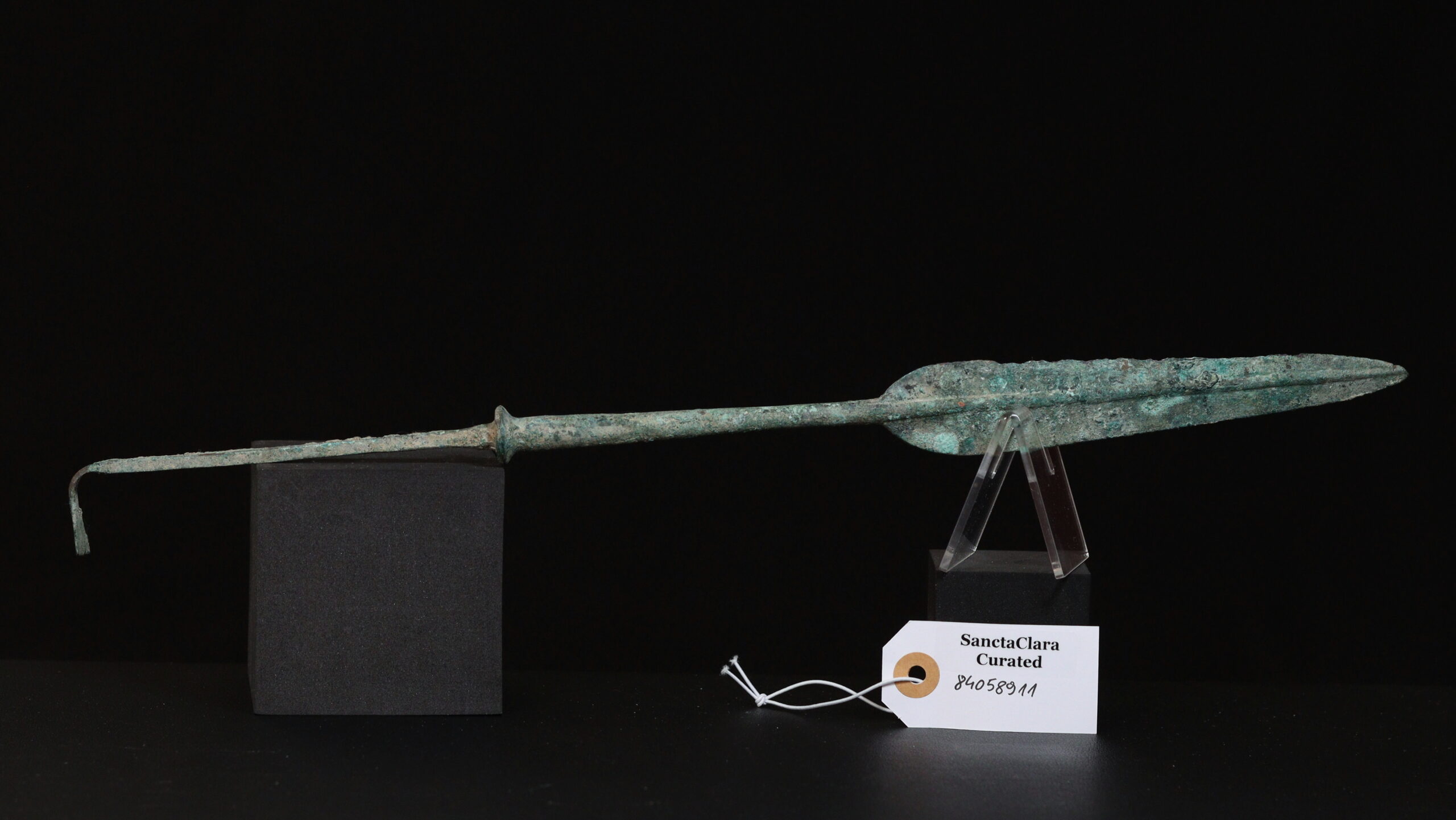 Visit the page Bronze Leaf-Shaped Spearhead with hook-Tail Tang and stop rigde A fine Luristan spearhead with a leaf-shaped blade, a raised midrib, and a distinctive ‘hook-tail’ tang that curves and flares at its terminal end. The blade sits on a tubular section transitioning into the tang past a decorative stop-ridge. One side displays multiple ancient strike marks indicating extensive combat use. Earthy encrustations and green patination cover the surface.
 -
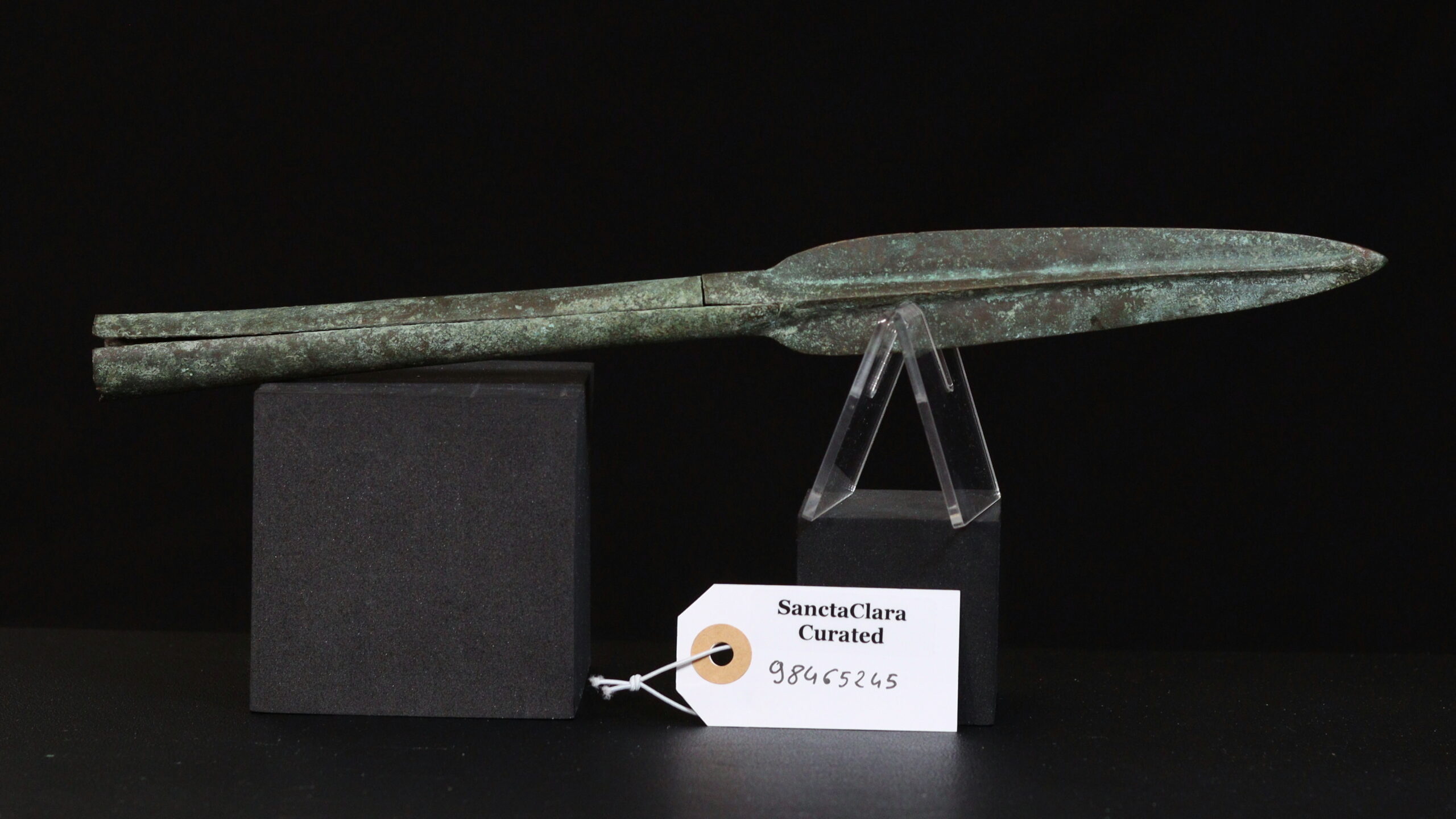 Visit the page Bronze Age Large Socketed Spearhead or Pike A large, massive bronze socketed spearhead with a wide central ridge. Green patina with shades of brown and interesting crystalline formations. This is a folded-socket (or split-socket) spearhead, and it is one of my absolute favorite typologies to study and recreate because it captures ancient smiths in the very act of problem-solving. Culture and Period Culture: Most commonly associated with the early Levantine, Anatolian, and Mesopotamian cultures, though similar techniques appeared briefly in the Early European Bronze Age (like the Unetice culture). Period: Early to Middle Bronze Age (roughly 2500 BCE – 1800 BCE). This weapon represents the “missing link” in spearhead evolution. It sits squarely between the era of tanged weapons (like Cypriot/Levantine examples) and the later, fully seamless core-cast socketed spears of the Late Bronze Age. The Split Socket The most diagnostic feature of this artifact is the “split and folded” socket. To understand why this is so important, we have to look at it through the eyes of an ancient bronze smith. Creating a seamless, hollow socket requires core casting—suspending a fragile clay cone perfectly in the center of a two-part stone mold so the bronze flows around it. This is highly complex. To bypass this, the smiths of this era invented the folded socket: The Flat Cast: The smith cast the spearhead completely flat in a simple, open-face or basic bivalve mold. The blade looked normal, but the base consisted of a wide, flat rectangular or trapezoidal sheet of bronze instead of a tang. Forging the Socket: Once the bronze cooled slightly, the smith reheated the flat base (annealing it to make it workable) and carefully hammered those flat metal “wings” around a conical wooden or bronze mandrel. The Split Line: The wings were hammered until they met in the center, forming a tube to hold the wooden shaft. Because they couldn’t easily weld bronze, the seam—the “split line” at the shoulder and down the socket—remained visible, exactly as we see in your photographs. Probable Use At 32.2 cm long and weighing only 143 g, this is an exceptionally light and fast weapon. Agile Skirmishing: This low weight suggests it was not meant for the crushing, heavy impact of a massed infantry phalanx. Instead, it was an agile throwing javelin or a light skirmishing spear. The Triangular Central Ridge: Because the blade lobes (the cutting edges) are described as flat and thin, the blade would be prone to bending. The triangular central ridge acts as a rigid spine, providing the structural integrity needed to penetrate a target without buckling, compensating for the thinness of the cutting edges. Hafting: To secure this to a shaft, the wooden pole would be whittled into a cone, and the bronze socket tapped firmly over it. Often, smiths would punch a single small hole through the overlapping bronze at the base of the socket, driving a wooden peg or bronze rivet horizontally through the metal and the wood to prevent the head from flying off.
 -
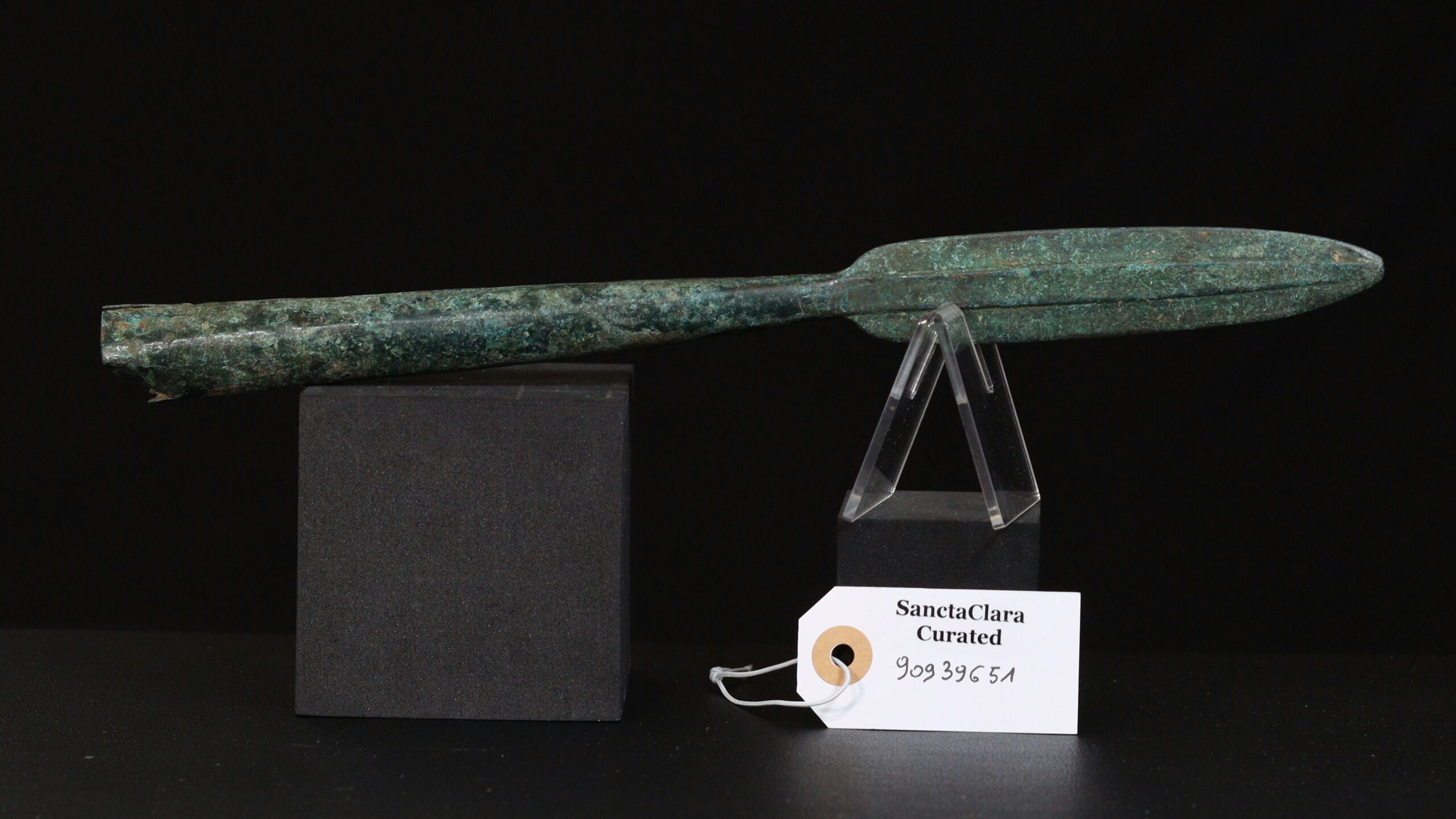 Visit the page Bronze Socketed Spearhead, Ugarit Type A cast bronze spearhead with a leaf-shaped blade and sloping shoulders. A slightly raised central midrib leads to the elongated socket. The folding seam is visible down the socket’s length. Three rivet holes at socket end. Blade tip and socket end show ancient damage. Beautiful patina with earthen encrustations.
 -
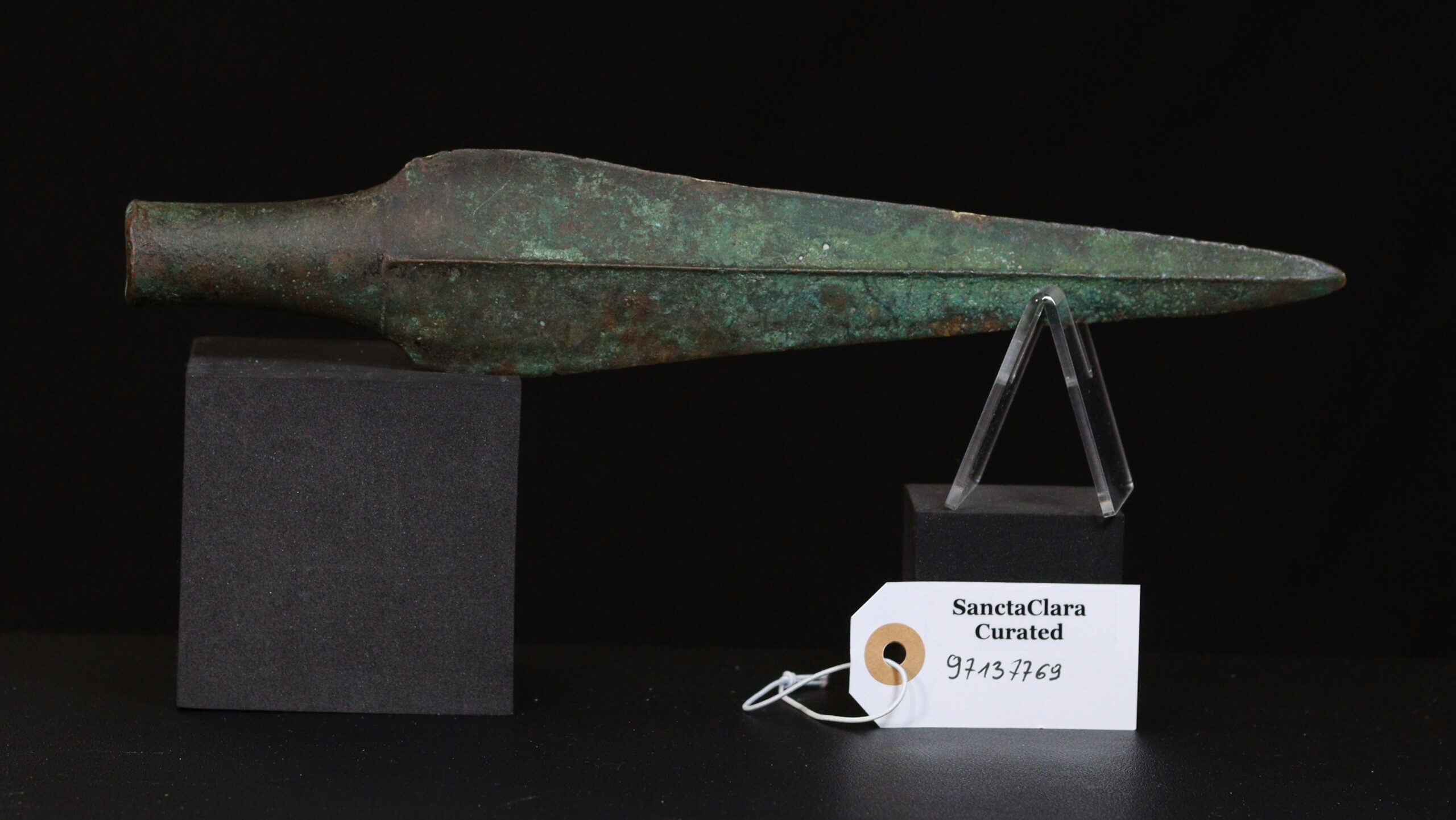 Visit the page Large Bronze Socketed Spearhead, European Urnfield / Atlantic Type A large bronze socketed spearhead with a pronounced narrow midrib. Bivalve mould casting line visible at socket neck. Perfect condition with green patina, brown shading, and crystalline formations.
 -
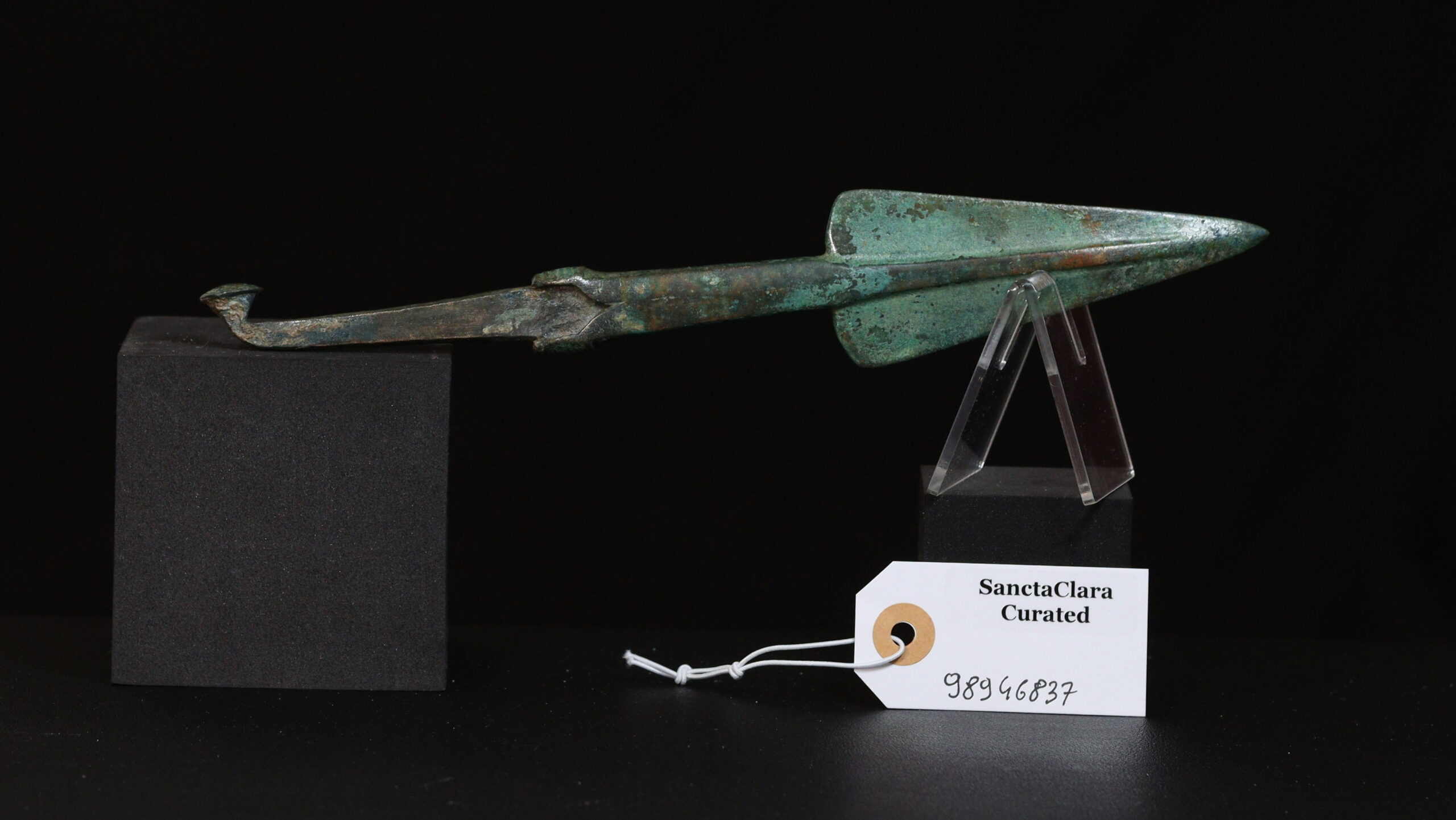 Visit the page Early Greek Bronze Spearhead with Hook Tang An exceptionally sturdy spearhead cast in one piece. Triangular blade with wide flat midrib and wide square shoulders. The shoulder flanges are decorated with incised stripes (skeuomorphism). A strong neck ends in a splayed decorative stop-ridge. The tang terminates in a hammered spherical ‘button-ended hook’ for secure hafting.
 -
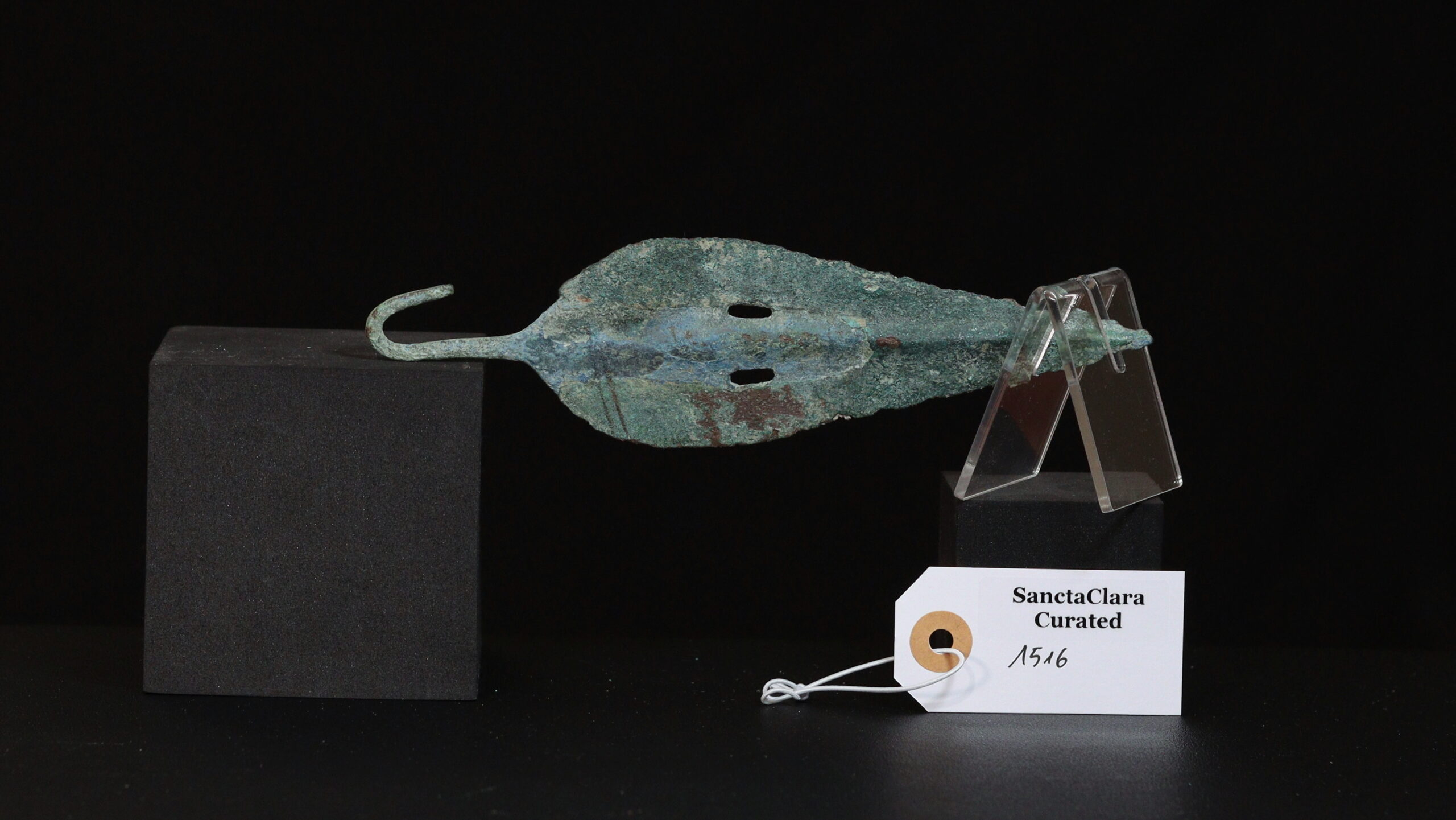 Visit the page Copper Wide Spearhead with Hook-Tail Tang A wide copper spear point of Cycladic origin. The blade has a broad, leaf-shaped profile. A wooden shaft mounting mark is visible on the tang, along with elongated attachment holes for binding.
 -
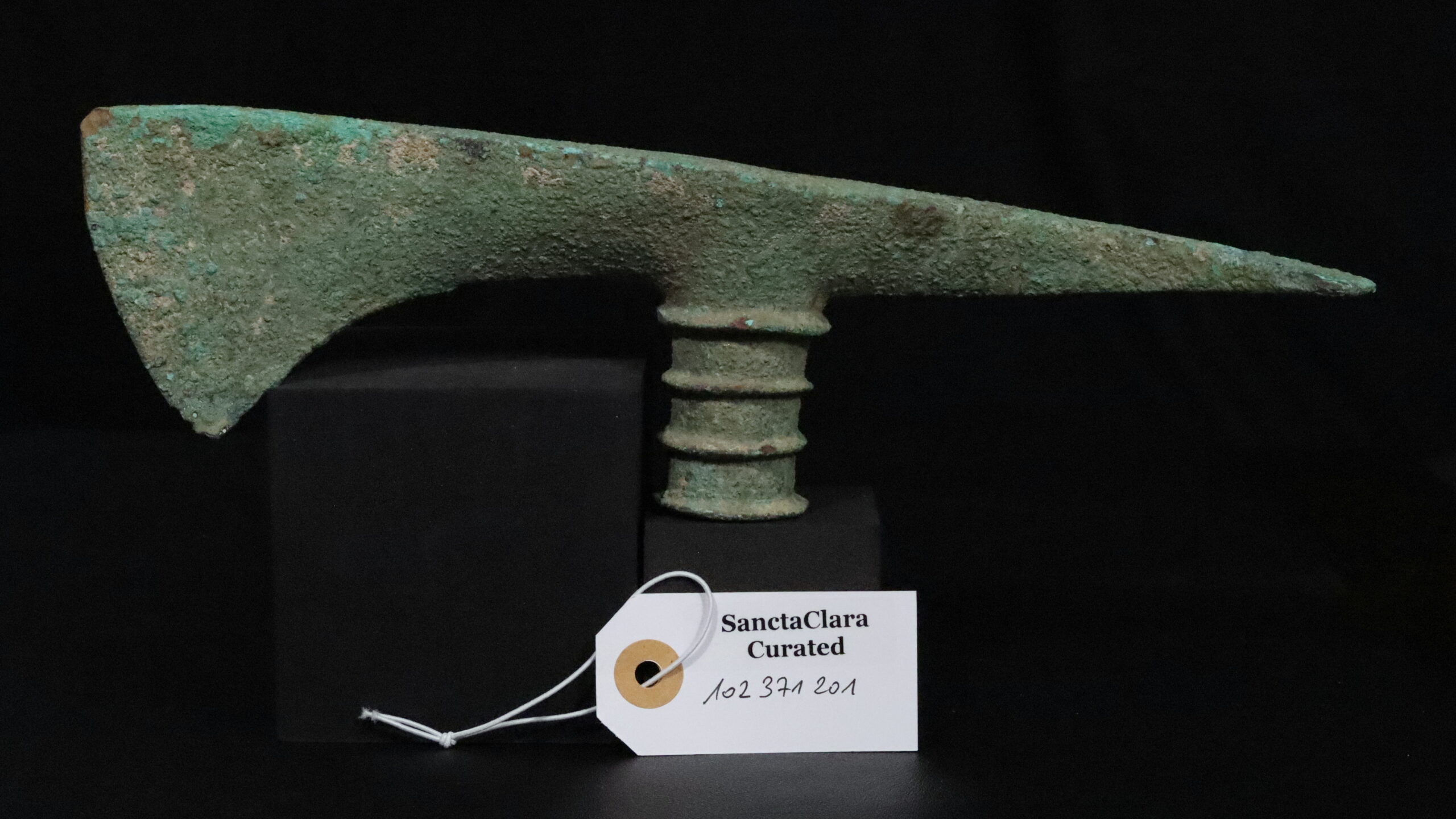 Visit the page Giant Oxus copper Axe – adze Enormous Axe – adze with unique geometry. Bactria – Margiana Complex (OXUS Civilization). Four round collars on the shaft tunnel. Classification: Flat-topped shaft-hole Axe-Adze. Probable Culture/Region: Central Asia (Bactria-Margiana Archaeological Complex / Oxus Civilization) or the greater Iranian Plateau (early Elamite / Luristan precursors). Period: Middle Bronze Age, approximately 2200 BCE – 1700 BCE. This specific combination—a perfectly straight, flat upper profile, a vertical axe blade paired with a horizontal adze blade, and a pronounced, downward-pointing tubular socket with multiple ribbed collars—is a hallmark of the Bactria-Margiana Archaeological Complex (BMAC), though closely related forms were traded into or produced in neighboring regions of the Near East. The Flat Upper Surface: This geometry is highly diagnostic. By keeping the top edge perfectly straight, the ancient bronzesmith lowered the center of mass relative to the strike axis. This improves the balance of the weapon/tool during a heavy swing, preventing the head from twisting in the hand. The Four Collars (Ribbed Socket): The 78 mm downward-pointing shaft tunnel is essential for stabilizing such a massive head on a wooden handle. The four collars are not merely decorative, they are structural reinforcements. Casting a 1.36 kg head puts immense stress on the relatively thin walls of the socket hole. The raised ribs provide crucial tensile strength to prevent the socket from splitting apart under the extreme torsional and lateral shear forces generated upon impact. The Tapered Shaft Hole: The inside diameter tapers slightly from 24 mm at the top to 23 mm at the bottom. This draft angle allows the wooden haft to be pressure-fitted (often wedged from the top or secured with hide glue and bindings), ensuring that centrifugal force during a downward swing actually pulls the axe head tighter onto the handle. The Weight (1364 g): At nearly 1.4 kilograms, this is an incredibly massive piece for a one-handed tool. Most standard Bronze Age battle axes weigh between 300 and 600 grams. This weight demands a dense, shock-absorbing hardwood haft (like oak, ash, or cornelian cherry) to prevent the handle from snapping upon impact. Probable Use: Given its massive proportions and geometry, this artifact likely served one of three primary purposes (or a combination thereof). Heavy Woodworking and Forestry: The axe-adze is the ultimate shipwright’s or carpenter’s tool. The axe blade is used for felling and rough-hewing timber, while the horizontal adze blade is used for planing, smoothing, and hollowing out logs (such as in dugout canoe construction). The sheer weight suggests it was used for heavy-duty material removal rather than fine finishing. Military / Breaching: In a martial context, an axe of this weight is an armor-defeating weapon. While perhaps too heavy for swift infantry skirmishing, it would be a devastating weapon for heavy shock troops or as a breaching tool designed to smash through shields, rudimentary armor, or defensive palisades. Prestige and Status: In the Bronze Age, metal was wealth. Committing over 1.3 kg of precious bronze to a single object was a massive display of economic power. It may have been a prestige item owned by an elite tradesman or a chieftain, blending functional utility with undeniable status.
 -
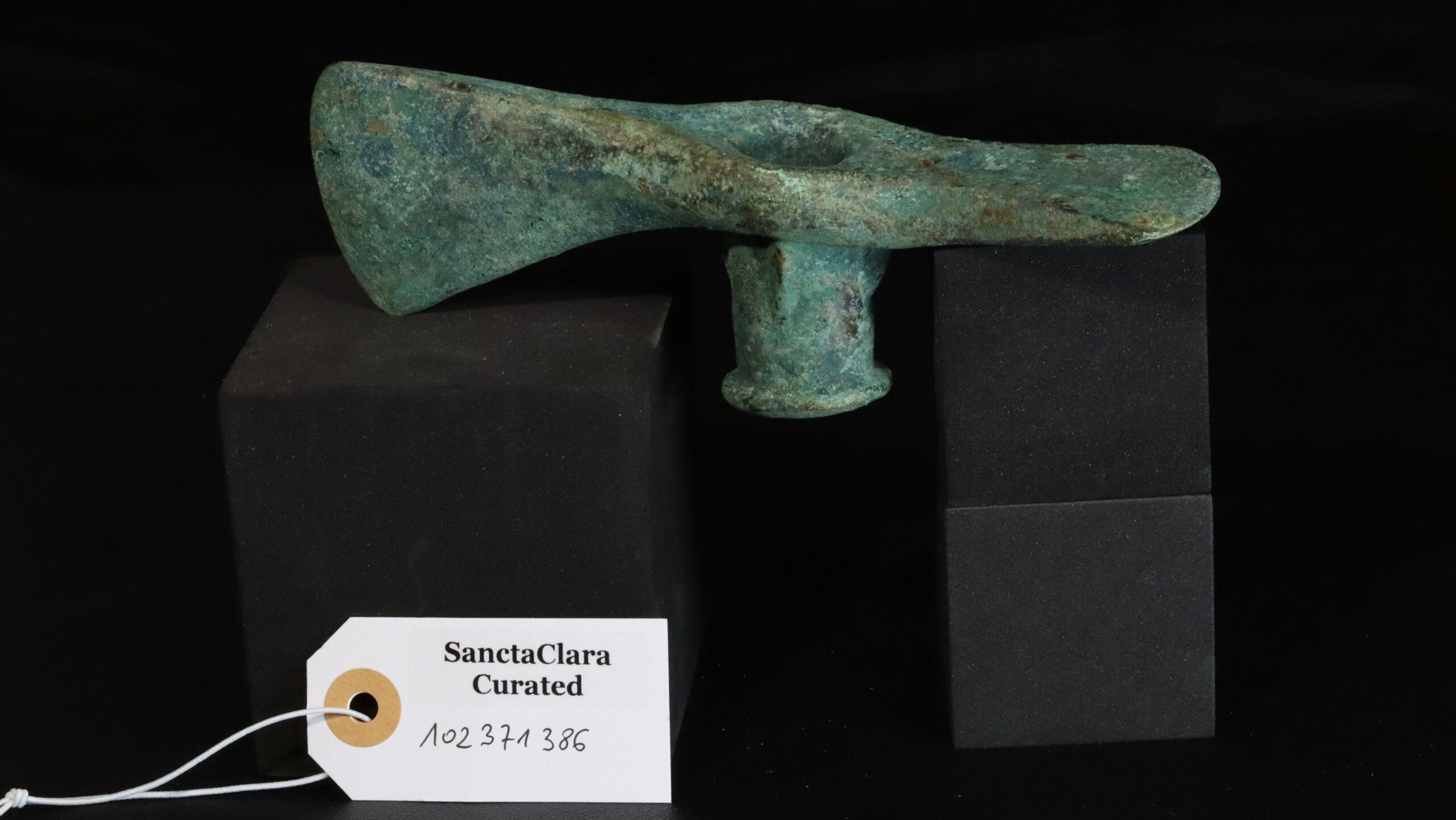 Visit the page Danubian Collared Shaft-Hole Axe-Adze with Structural Buttresses and Fullers. Collared Shaft-Hole Axe-Adze with Structural Buttresses. Copper alloy axe – adze with socket tunnel and collar. Probable Culture/Region: The Carpathian Basin (modern-day Hungary, Romania/Transylvania) or the wider Balkan-Danubian region. There are also strong parallels in the Pontic-Caspian Steppe and the Koban Culture of the Caucasus. Alternative assignation: The Colchian and Koban Cultures (Caucasus Mountains, c. 1200–400 BCE): The smiths of the Koban culture were arguably the greatest bronze casters of antiquity. Their axes are famous for intricate, lace-like cutouts, deep fullers, and hollowed-out sections that look impossible to cast. They frequently used split spines to anchor their heavily decorated blades to the sockets. Period: Middle Bronze Age, approximately 2000 BCE – 1200 BCE. This artifact represents a highly evolved phase of metallurgy where bronzesmiths were actively engineering solutions to mechanical stress. There is a distinct longitudinal line or crease along the upper ridge of the axe blade. What is visible along the upper and lower spine of the blade, particularly in the transitional zone where it emerges from the socket housing, is a thin longitudinal crevice — almost a slit — that gives the impression of two thin metal sheets pressed together along a central ridge. The feature is too thin and too clean to have been achieved by direct casting alone, yet the object is clearly a single casting, not an assembly of sheets. Structural buttresses or struts: When a tool with a central socket strikes a target (wood or armor), massive shear forces and torsional strain are placed on the junction where the blade meets the thin-walled tubular socket. To prevent the blades from snapping off the central tube, the Transylvanian and Caucasian smiths developed these triangular buttresses to distribute the kinetic shock across a wider surface area of the socket. The “depression” (the saddle-like dip in the top profile) is a deliberate design choice: it removes unnecessary weight from the top of the axe while allowing the metal to wrap structurally around the stress-points of the shaft hole. The Weight (618 g): This piece is a perfect, nimble weight. At roughly 600 grams, it is light enough to be swung swiftly with one hand for extended periods without exhausting the user, yet heavy enough to deliver a lethal blow or bite deep into timber. The Collar: The pronounced, flared lip at the top and bottom of the socket tunnel serve a vital purpose. They reinforce the opening of the socket, preventing the bronze from splitting outward when the wooden handle (haft) swells with moisture or takes the shock of a heavy impact. Probable Use: This is a true multi-tool, equally at home in the hands of a master carpenter, a shipwright, or a warrior. The axe blade would be used for felling or combat, while the adze blade was meant for shaping, hollowing, and planing wood. Given the refined engineering, it was likely an elite tool.
 -
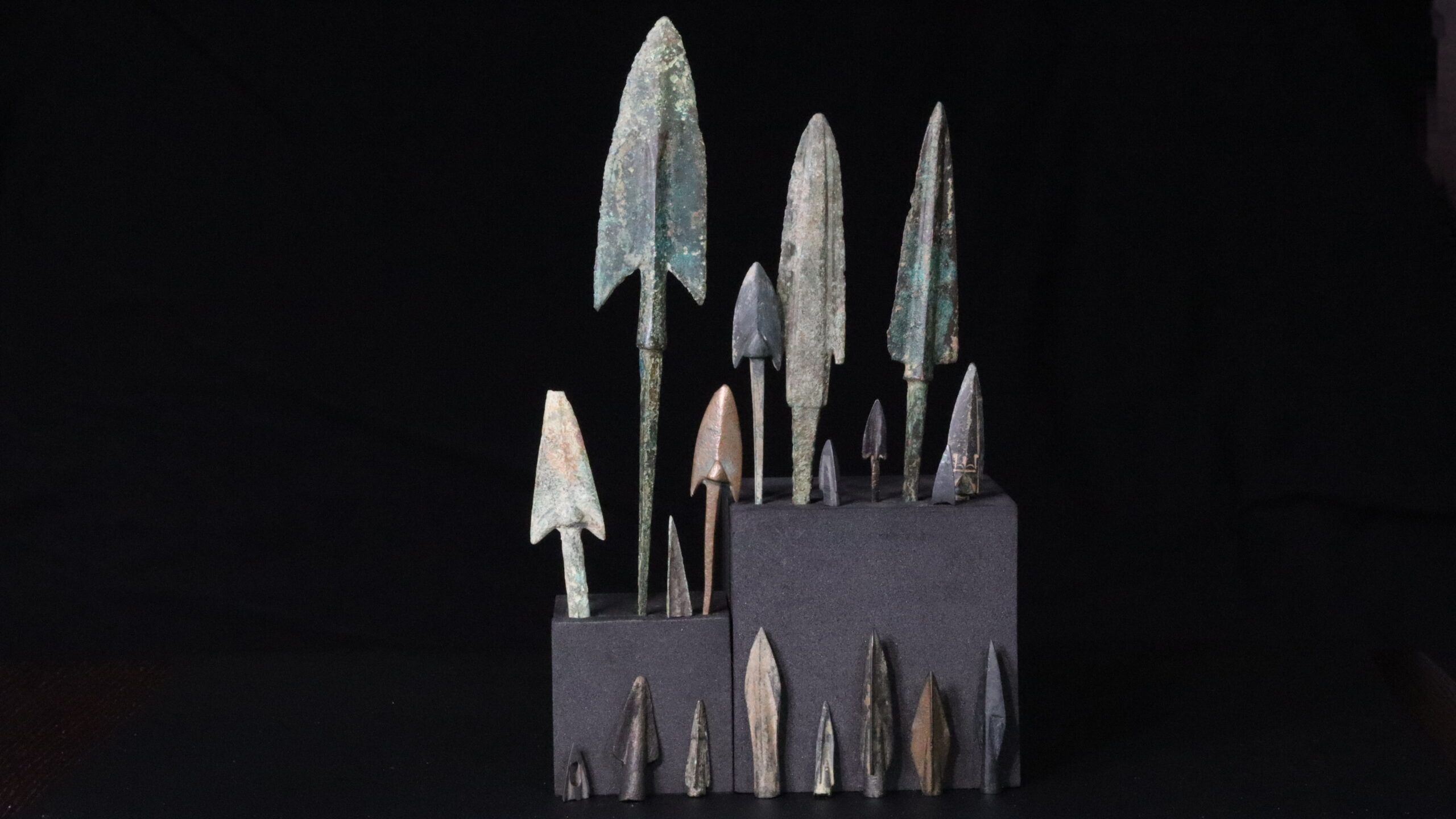 Visit the page Elaborate Bronze Javelin Head Bronze javelin head. Very precise workmanship. Blade lobes hammered flat after casting. Triangular mid-rib continues as initially square, then rounded tang-neck. Short tang neck ends in a pronounced stop-ridge and continues as a long, square, thinning tang. Extremely thin and sharp edges, hammered after casting, tang square at 30 deg to blade. Beautiful azurite and malachite mineral patina on cassiterite layer on the blade.
-
Visit the page Copper “Old Europe” Axe – Adze Sagaris Copper axe with spiked butt (Sagaris). This artifact is an extraordinarily significant piece of Chalcolithic metalwork, representing a high concentration of wealth, power, and long-distance trade. Mugeni or Siria Type Hammer-Axe/Adze (Plocnik/Vidra family), typology by Schubert 1965, p. 276, morphological type described as Battle axe (Patay 1984). Alternatively Jaszladany A1 type due to high weight for a Mugeni type. Material: Copper, with natural trace arsenic content Period Early Chalcolithic (Eneolithic), Late 5th to Earlier 4th Millennium BC (∼4500−3800 BC) Cultural Sphere: Danube Civilization, Vinća, Varna or Polgár Cultural Complex and the Kodžadermen-Gumelnița-Karanovo VI (KGK VI) Complex (Carpathian Basin Origin) Dimensions Length: 27.0 cm. Weight: 1211 g, volume 139 ml, density (average including patina) 8,71 g/cm3 (indicating copper with natural arsenic content from Carpatian mines). Probable Function: Specialized two-handed Battle-Pick and ultimate Prestige Symbol. The axe’s design illustrates the pivotal transition from stone to metal technology, where the aesthetics of power dictated form even when metallurgy allowed for more efficient shapes. Design and Prototype: This axe is a prime example of technological emulation (skueomorphism). Its massive, angular profile and substantial bulk around the hafting hole (18 mm socket wall thickness) are metallurgically unnecessary for copper (which would save material if thinner). However, this bulk was structurally required for its Late Neolithic stone hammer-axe predecessors. By retaining this costly, massive form, the copper axe deliberately transferred the established symbolic authority of the old stone weapon to the new metal medium. Form and Function: The head is a single-piece casting that combines a broad, crescent-shaped cutting blade with a long, sharply tapered spike butt. This configuration defines it as a dual-purpose Axe-Adze or Battle Pick. This design maximizes the massive 1040 g weight into devastating kinetic energy upon striking, particularly with the spike. Hafting: The overall mass strongly dictates its use as a two-handed weapon to ensure control and maximize impact force. The short metal tunnel required a robust wooden haft (likely Ash or Oak) reinforced against lateral shock.
-
Visit the page Eneolithic Copper Shaft-Hole Battle Axe (Epirus/Kurgan/Veselinovo Type) Late Chalcolithic/Early Bronze Age Shaft-Hole Battle Axe (Circumpontic Type) Object: Copper / Arsenical Copper Shaft-Hole Battle Axe (Lightweight Variant) Date: Late Eneolithic/Early Bronze Age (c. 3000 — 2600 BC) Origin: Circumpontic Metallurgical Sphere — Western Georgia (Colchis) or Northern Greece (**Epirus**/Macedonia). A finely cast arsenic copper shaft-hole axe characterized by a distinct drooping or downward-curved blade profile. The blade is notably flat and slender in cross-section, expanding symmetrically from the socket to a convex cutting edge. The hafting hole features a circular shaft hole with reinforced, thickened collars at both the upper and lower margins, at 45 deg angle. The butt end (poll) is marked by a prominent vertical ridge or seam-like protrusion running down the center of the back side, a diagnostic mark of bivalve (two-part) stone mold casting.
-
Visit the page Copper axe -adze w/collar socket mount Carpathianaxe – adze. Carpathian Basin / Transylvanian or Middle Danubian metallurgical tradition. Large copper alloy axe — adze (dolabra) with 2 perpendicular wide blades, an axe blade of 67 mm and an adze blade of 82 mm wide. Sturdy construction with shoulders widened at the socket, with additional collar at the lower end of the socket. Upper part of the axe blade cast with a deep recess. Probable Scope of Use Given the weight (950 g) and sturdy construction: Primary: Heavy-duty woodworking and carpentry within a settled agricultural community. Secondary: A prestige weapon. Such complex castings were symbols of status and authority. Ritual: Many such large, high-quality bronze items were never intended for daily labor but were cast specifically for ritual burial (hoarding) to demonstrate the wealth of a clan or to appease deities. The weight of nearly 1 kg is substantial for the period, this was an industrial-strength implement of its time, likely owned by a master craftsman or a high-ranking warrior-leader.
-
Visit the page Bronze Age (Urnfield Culture) – Large Decorated Socketed Axe Head with Loop A perfectly preserved socketed axe form the famous Podkonice Hoard in Slovakia. Collared and decorated socket with mounting loop. High precision cast. Does not bear signs of use.
-
 Visit the page Dong Son culture (Cambodia, Vietnam) bronze axe Magnificent bronze axe blade with very rare remains of wood from the handle. Precise geometry, expert craftsmanship. Dates from the Dong Son period. The Dong Son culture was a Bronze Age culture centered in ancient Vietnam (Red River Valley) and Cambodia from approximately 1000 BC to 1st century AD, with significant influence extending throughout Southeast Asia, including Maritime Southeast Asia like Indonesia. Dongson Bronze axes, often ceremonial in nature, are characteristic artifacts of the Dong Son culture, and examples have been found extensively in Java and other parts of Indonesia. These axes, reflect the advanced bronze working techniques and cultural practices of the period.
 -
 Visit the page Bronze Decorated Shaft-Hole Axe-Adze Bronze Decorated Shaft-Hole Axe-Adze Ribbed Decoration: You can clearly see raised ribs or rings at the top and bottom of the socket (and a decorative band in the center). This is a classic example of skeuomorphism—a design feature where a new material (bronze) mimics the construction of an older one. These ridges likely represent the leather thongs or rope lashings that would have been used to bind earlier stone or simple metal heads to a wooden shaft. In bronze, these lashings become structural reinforcement hoops. Late Bronze Age to Early Iron Age (approx. 1200 — 800 BC)
 -
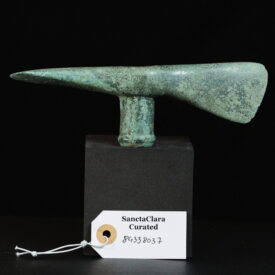 Visit the page Luristan Bronze Adze-Axe head A Luristan bronze adze-axehead featuring a cylindrical shaft hole, a flattened top with a vertical blade with sides that broaden out towards the convex cutting edge and a horizontal blade to the back. Ring at the base of the shaft socket. Inclined convex blade indicates military use. The adze axe was a fundamental axe of many Bronze Age ancient cultures the world over. Its form was one that lends itself to dual purposes – for war and peace. As a tool, it functions to shape wood in fabricating a variety of objects or even wooden beams for construction. As a weapon, its heavy mass and compact form made it a very deadly striking and chopping weapon, even able to defeat light armour. Beautiful light and dark green patina, no damage.
 -
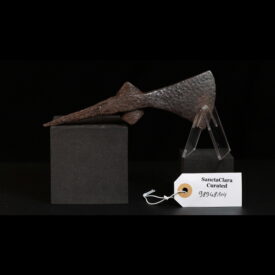 Visit the page Hallstatt Iron Pick Axe This impressive iron axe–adze head features a broad flaring axe blade on one side, the opposite arm forged as a long, tapering adze/pick with a straight back and acute point, a thick central body with an oval hafting eye and paired lugs above and below. Sagaris type.
 -
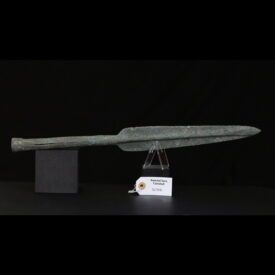 Visit the page Large MBA Bronze Split Socket Pike A large and imposing split-socket pike with a pronounced, rounded midrib and a ringed, enlarged socket neck. The blade is elegantly symmetrical with a willow-leaf profile. The strong, heavy build suggests possible anti-cavalry or formation-warfare use. The split-socket hafting method represents a sophisticated early joining technique where bronze was folded and secured around a wooden shaft. Kassiterite patina level under malachite patina.
 -
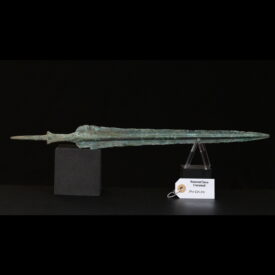 Visit the page Long Bronze Concave Edge Spearhead with Wide Stop Ridge A finely cast Luristan bronze blade of exceptional length with a long triangular blade with concave edges, and prominent midrib. Very wide and sturdy stop ridge between neck and tang. Widening rounded shoudlers. Beautiful green and brown patination with earthen encrustations. Minor chips to blade edges consistent with age and possible ancient use. At 45.6 cm (nearly 18 inches) in length, this is a formidable weapon. While occasionally categorized alongside dirks or short swords due to its size, the morphology—specifically the long neck, stop ridge, and thin tang—strongly points to its use as a heavy spearhead or pike blade. – The Midrib: The prominent, raised midrib running down the center of the blade is a critical engineering feature. Bronze, while durable, can bend under heavy stress. The midrib dramatically increases the cross-sectional strength of the blade, preventing it from buckling when thrusting into a target (such as a shielded or armored opponent). – The Stop Ridge & Tang: The tang was designed to be driven into a hollowed or split wooden shaft. The wide stop ridge is perhaps the most important functional element for a polearm of this size. When a warrior thrust this pike with full force, the stop ridge absorbed the massive kinetic energy of the impact, preventing the heavy blade from driving deeper into the wooden shaft and splitting it down the middle. – Blade is slightly waisted, and flares wider at the shoulders. The most famous example of this geometry is the classical Greek Xiphos. We also see early iterations of this waisting in Late Bronze Age Mycenaean swords and the famous Naue II type swords that swept across Europe and the Aegean during the Bronze Age collapse. Comparative Analysis When evaluating this blade against similar artifacts from museum collections and excavations across the Near East, several patterns emerge: Tanged vs. Socketed: In many parts of Bronze Age Europe and the Near East, socketed spearheads (where the wood fits inside a metal cone) eventually became the dominant style. However, in the Iranian plateau (Luristan, Amlash, and Marlik cultures), heavy tanged spearheads with pronounced stop ridges remained highly popular and effective well into the Early Iron Age.
 -
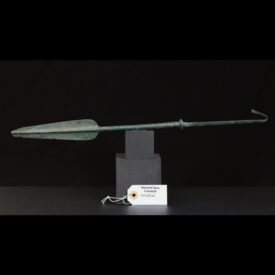 Visit the page Bronze Massive Spearhead with stp ridge and Hook-Tang A very long spear tip with a narrow, rounded central ridge, elongated neck area, and a square shaft eye (socket). The overall proportions suggest a heavy thrusting weapon designed for use from horseback or chariot. At 45.6 cm (nearly 18 inches) in length, this is a formidable weapon. While occasionally categorized alongside dirks or short swords due to its size, the morphology—specifically the long neck, stop ridge, and thin tang—strongly points to its use as a heavy spearhead or pike blade. – The Midrib: The prominent, raised midrib running down the center of the blade is a critical engineering feature. Bronze, while durable, can bend under heavy stress. The midrib dramatically increases the cross-sectional strength of the blade, preventing it from buckling when thrusting into a target (such as a shielded or armored opponent). – The Stop Ridge & Tang: The tang was designed to be driven into a hollowed or split wooden shaft. The wide stop ridge is perhaps the most important functional element for a polearm of this size. When a warrior thrust this pike with full force, the stop ridge absorbed the massive kinetic energy of the impact, preventing the heavy blade from driving deeper into the wooden shaft and splitting it down the middle. – Blade is slightly waisted, and flares wider at the shoulders. The most famous example of this geometry is the classical Greek Xiphos. We also see early iterations of this waisting in Late Bronze Age Mycenaean swords and the famous Naue II type swords that swept across Europe and the Aegean during the Bronze Age collapse.
 -
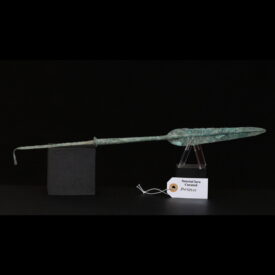 Visit the page Bronze Leaf-Shaped Spearhead with hook-Tail Tang and stop rigde A fine Luristan spearhead with a leaf-shaped blade, a raised midrib, and a distinctive ‘hook-tail’ tang that curves and flares at its terminal end. The blade sits on a tubular section transitioning into the tang past a decorative stop-ridge. One side displays multiple ancient strike marks indicating extensive combat use. Earthy encrustations and green patination cover the surface.
 -
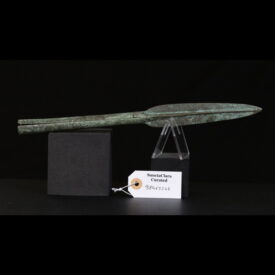 Visit the page Bronze Age Large Socketed Spearhead or Pike A large, massive bronze socketed spearhead with a wide central ridge. Green patina with shades of brown and interesting crystalline formations. This is a folded-socket (or split-socket) spearhead, and it is one of my absolute favorite typologies to study and recreate because it captures ancient smiths in the very act of problem-solving. Culture and Period Culture: Most commonly associated with the early Levantine, Anatolian, and Mesopotamian cultures, though similar techniques appeared briefly in the Early European Bronze Age (like the Unetice culture). Period: Early to Middle Bronze Age (roughly 2500 BCE – 1800 BCE). This weapon represents the “missing link” in spearhead evolution. It sits squarely between the era of tanged weapons (like Cypriot/Levantine examples) and the later, fully seamless core-cast socketed spears of the Late Bronze Age. The Split Socket The most diagnostic feature of this artifact is the “split and folded” socket. To understand why this is so important, we have to look at it through the eyes of an ancient bronze smith. Creating a seamless, hollow socket requires core casting—suspending a fragile clay cone perfectly in the center of a two-part stone mold so the bronze flows around it. This is highly complex. To bypass this, the smiths of this era invented the folded socket: The Flat Cast: The smith cast the spearhead completely flat in a simple, open-face or basic bivalve mold. The blade looked normal, but the base consisted of a wide, flat rectangular or trapezoidal sheet of bronze instead of a tang. Forging the Socket: Once the bronze cooled slightly, the smith reheated the flat base (annealing it to make it workable) and carefully hammered those flat metal “wings” around a conical wooden or bronze mandrel. The Split Line: The wings were hammered until they met in the center, forming a tube to hold the wooden shaft. Because they couldn’t easily weld bronze, the seam—the “split line” at the shoulder and down the socket—remained visible, exactly as we see in your photographs. Probable Use At 32.2 cm long and weighing only 143 g, this is an exceptionally light and fast weapon. Agile Skirmishing: This low weight suggests it was not meant for the crushing, heavy impact of a massed infantry phalanx. Instead, it was an agile throwing javelin or a light skirmishing spear. The Triangular Central Ridge: Because the blade lobes (the cutting edges) are described as flat and thin, the blade would be prone to bending. The triangular central ridge acts as a rigid spine, providing the structural integrity needed to penetrate a target without buckling, compensating for the thinness of the cutting edges. Hafting: To secure this to a shaft, the wooden pole would be whittled into a cone, and the bronze socket tapped firmly over it. Often, smiths would punch a single small hole through the overlapping bronze at the base of the socket, driving a wooden peg or bronze rivet horizontally through the metal and the wood to prevent the head from flying off.
 -
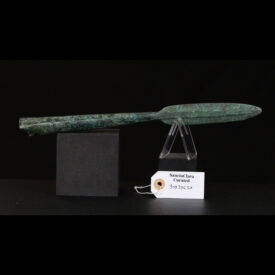 Visit the page Bronze Socketed Spearhead, Ugarit Type A cast bronze spearhead with a leaf-shaped blade and sloping shoulders. A slightly raised central midrib leads to the elongated socket. The folding seam is visible down the socket’s length. Three rivet holes at socket end. Blade tip and socket end show ancient damage. Beautiful patina with earthen encrustations.
 -
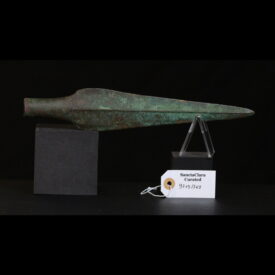 Visit the page Large Bronze Socketed Spearhead, European Urnfield / Atlantic Type A large bronze socketed spearhead with a pronounced narrow midrib. Bivalve mould casting line visible at socket neck. Perfect condition with green patina, brown shading, and crystalline formations.
 -
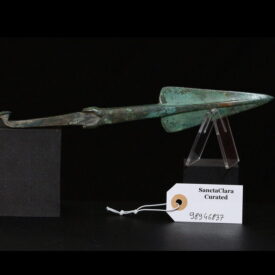 Visit the page Early Greek Bronze Spearhead with Hook Tang An exceptionally sturdy spearhead cast in one piece. Triangular blade with wide flat midrib and wide square shoulders. The shoulder flanges are decorated with incised stripes (skeuomorphism). A strong neck ends in a splayed decorative stop-ridge. The tang terminates in a hammered spherical ‘button-ended hook’ for secure hafting.
 -
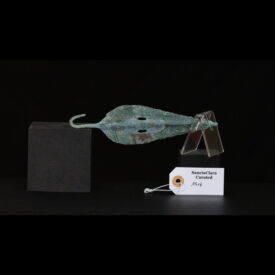 Visit the page Copper Wide Spearhead with Hook-Tail Tang A wide copper spear point of Cycladic origin. The blade has a broad, leaf-shaped profile. A wooden shaft mounting mark is visible on the tang, along with elongated attachment holes for binding.
 -
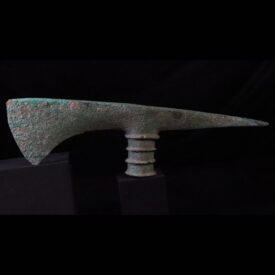 Visit the page Giant Oxus copper Axe – adze Enormous Axe – adze with unique geometry. Bactria – Margiana Complex (OXUS Civilization). Four round collars on the shaft tunnel. Classification: Flat-topped shaft-hole Axe-Adze. Probable Culture/Region: Central Asia (Bactria-Margiana Archaeological Complex / Oxus Civilization) or the greater Iranian Plateau (early Elamite / Luristan precursors). Period: Middle Bronze Age, approximately 2200 BCE – 1700 BCE. This specific combination—a perfectly straight, flat upper profile, a vertical axe blade paired with a horizontal adze blade, and a pronounced, downward-pointing tubular socket with multiple ribbed collars—is a hallmark of the Bactria-Margiana Archaeological Complex (BMAC), though closely related forms were traded into or produced in neighboring regions of the Near East. The Flat Upper Surface: This geometry is highly diagnostic. By keeping the top edge perfectly straight, the ancient bronzesmith lowered the center of mass relative to the strike axis. This improves the balance of the weapon/tool during a heavy swing, preventing the head from twisting in the hand. The Four Collars (Ribbed Socket): The 78 mm downward-pointing shaft tunnel is essential for stabilizing such a massive head on a wooden handle. The four collars are not merely decorative, they are structural reinforcements. Casting a 1.36 kg head puts immense stress on the relatively thin walls of the socket hole. The raised ribs provide crucial tensile strength to prevent the socket from splitting apart under the extreme torsional and lateral shear forces generated upon impact. The Tapered Shaft Hole: The inside diameter tapers slightly from 24 mm at the top to 23 mm at the bottom. This draft angle allows the wooden haft to be pressure-fitted (often wedged from the top or secured with hide glue and bindings), ensuring that centrifugal force during a downward swing actually pulls the axe head tighter onto the handle. The Weight (1364 g): At nearly 1.4 kilograms, this is an incredibly massive piece for a one-handed tool. Most standard Bronze Age battle axes weigh between 300 and 600 grams. This weight demands a dense, shock-absorbing hardwood haft (like oak, ash, or cornelian cherry) to prevent the handle from snapping upon impact. Probable Use: Given its massive proportions and geometry, this artifact likely served one of three primary purposes (or a combination thereof). Heavy Woodworking and Forestry: The axe-adze is the ultimate shipwright’s or carpenter’s tool. The axe blade is used for felling and rough-hewing timber, while the horizontal adze blade is used for planing, smoothing, and hollowing out logs (such as in dugout canoe construction). The sheer weight suggests it was used for heavy-duty material removal rather than fine finishing. Military / Breaching: In a martial context, an axe of this weight is an armor-defeating weapon. While perhaps too heavy for swift infantry skirmishing, it would be a devastating weapon for heavy shock troops or as a breaching tool designed to smash through shields, rudimentary armor, or defensive palisades. Prestige and Status: In the Bronze Age, metal was wealth. Committing over 1.3 kg of precious bronze to a single object was a massive display of economic power. It may have been a prestige item owned by an elite tradesman or a chieftain, blending functional utility with undeniable status.
 -
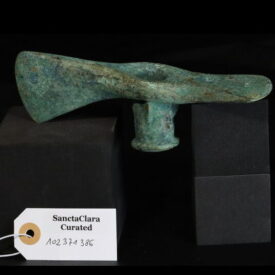 Visit the page Danubian Collared Shaft-Hole Axe-Adze with Structural Buttresses and Fullers. Collared Shaft-Hole Axe-Adze with Structural Buttresses. Copper alloy axe – adze with socket tunnel and collar. Probable Culture/Region: The Carpathian Basin (modern-day Hungary, Romania/Transylvania) or the wider Balkan-Danubian region. There are also strong parallels in the Pontic-Caspian Steppe and the Koban Culture of the Caucasus. Alternative assignation: The Colchian and Koban Cultures (Caucasus Mountains, c. 1200–400 BCE): The smiths of the Koban culture were arguably the greatest bronze casters of antiquity. Their axes are famous for intricate, lace-like cutouts, deep fullers, and hollowed-out sections that look impossible to cast. They frequently used split spines to anchor their heavily decorated blades to the sockets. Period: Middle Bronze Age, approximately 2000 BCE – 1200 BCE. This artifact represents a highly evolved phase of metallurgy where bronzesmiths were actively engineering solutions to mechanical stress. There is a distinct longitudinal line or crease along the upper ridge of the axe blade. What is visible along the upper and lower spine of the blade, particularly in the transitional zone where it emerges from the socket housing, is a thin longitudinal crevice — almost a slit — that gives the impression of two thin metal sheets pressed together along a central ridge. The feature is too thin and too clean to have been achieved by direct casting alone, yet the object is clearly a single casting, not an assembly of sheets. Structural buttresses or struts: When a tool with a central socket strikes a target (wood or armor), massive shear forces and torsional strain are placed on the junction where the blade meets the thin-walled tubular socket. To prevent the blades from snapping off the central tube, the Transylvanian and Caucasian smiths developed these triangular buttresses to distribute the kinetic shock across a wider surface area of the socket. The “depression” (the saddle-like dip in the top profile) is a deliberate design choice: it removes unnecessary weight from the top of the axe while allowing the metal to wrap structurally around the stress-points of the shaft hole. The Weight (618 g): This piece is a perfect, nimble weight. At roughly 600 grams, it is light enough to be swung swiftly with one hand for extended periods without exhausting the user, yet heavy enough to deliver a lethal blow or bite deep into timber. The Collar: The pronounced, flared lip at the top and bottom of the socket tunnel serve a vital purpose. They reinforce the opening of the socket, preventing the bronze from splitting outward when the wooden handle (haft) swells with moisture or takes the shock of a heavy impact. Probable Use: This is a true multi-tool, equally at home in the hands of a master carpenter, a shipwright, or a warrior. The axe blade would be used for felling or combat, while the adze blade was meant for shaping, hollowing, and planing wood. Given the refined engineering, it was likely an elite tool.
 -
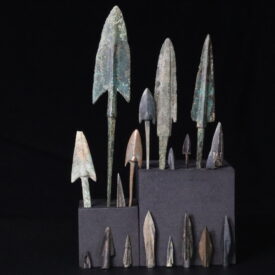 Visit the page Elaborate Bronze Javelin Head Bronze javelin head. Very precise workmanship. Blade lobes hammered flat after casting. Triangular mid-rib continues as initially square, then rounded tang-neck. Short tang neck ends in a pronounced stop-ridge and continues as a long, square, thinning tang. Extremely thin and sharp edges, hammered after casting, tang square at 30 deg to blade. Beautiful azurite and malachite mineral patina on cassiterite layer on the blade.