
Document
Attachments

SCC-891-2
Metadata
Title
Eneolithic Copper Shaft-Hole Battle Axe (Epirus/Kurgan/Veselinovo Type)
Description
Late Chalcolithic/Early Bronze Age Shaft-Hole Battle Axe (Circumpontic Type)
Copper / Arsenical Copper Shaft-Hole Battle Axe (Lightweight Variant)
Date: Late Eneolithic/Early Bronze Age (c. 3000 -- 2600 BC) Origin: Circumpontic Metallurgical Sphere -- Western Georgia (Colchis) or Northern Greece (**Epirus**/Macedonia). Alternatively Maikop culture.
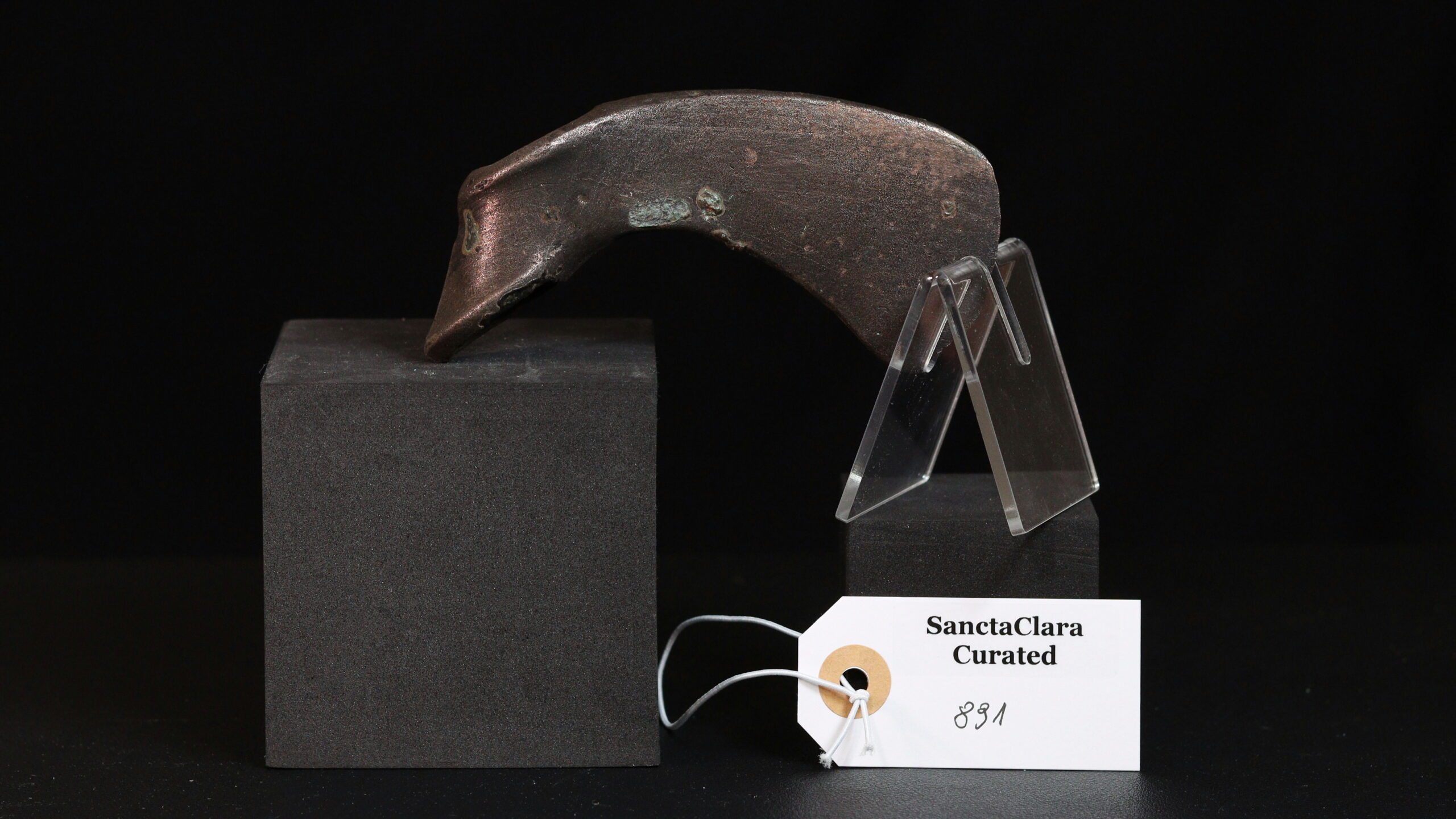
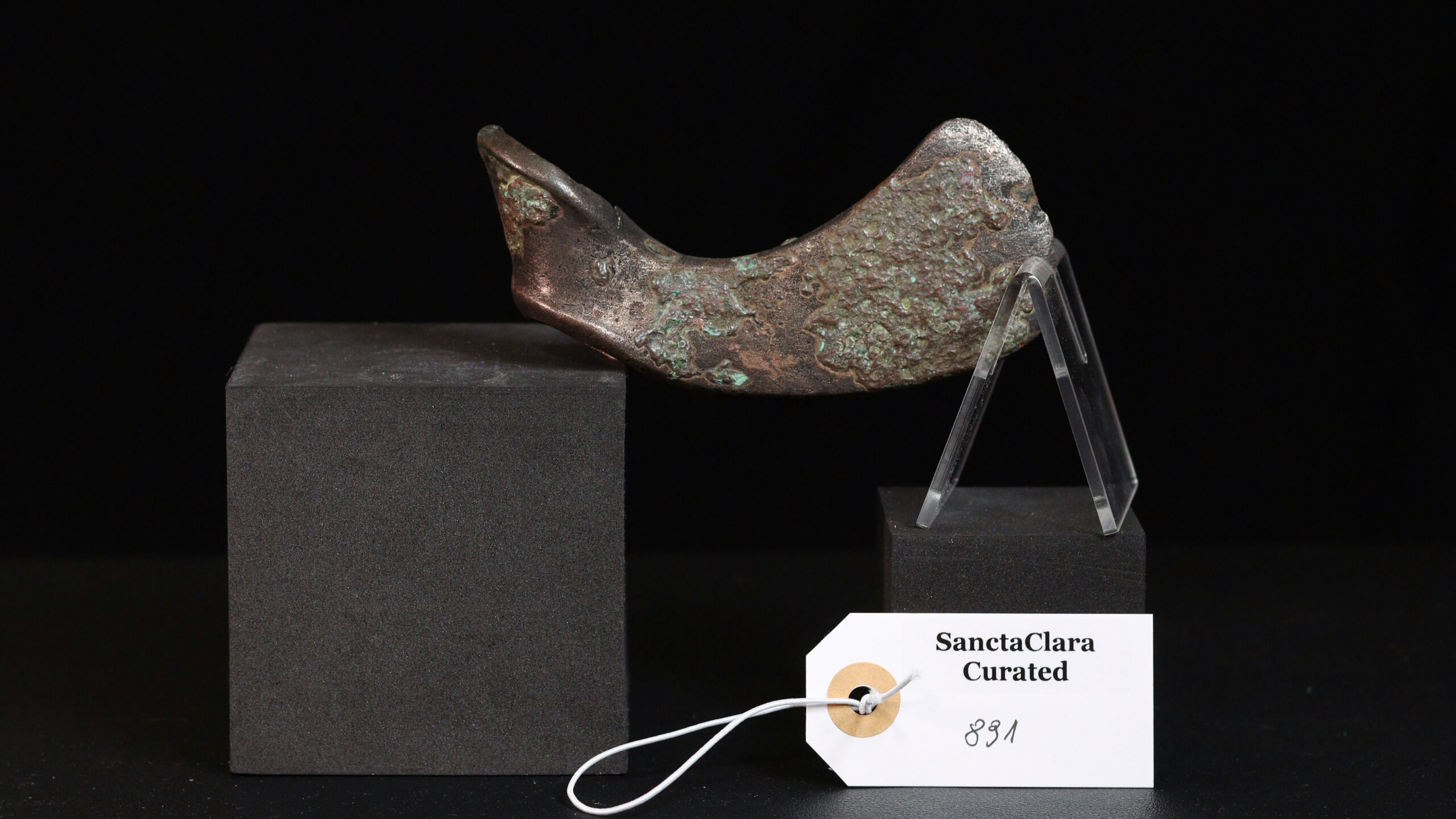
A finely cast arsenic copper shaft-hole axe characterized by a distinct drooping or downward-curved blade profile. The blade is notably flat and slender in cross-section, expanding symmetrically from the shaft hole tunnel to a convex cutting edge. The hafting tunnel features a circular shaft hole with reinforced, thickened rim lips at both the upper and lower margins, at 45 deg angle to the axis of the tunnel.
The butt end (poll) is marked by a prominent vertical ridge or seam-like protrusion running down the center of the back side, a diagnostic mark of bivalve (two-part) stone mold casting or skeuomorphic remnant of such technique.
Sparse localized patination suggests river bed deposition.
Copper / Arsenical Copper Shaft-Hole Battle Axe (Lightweight Variant)
Date: Late Eneolithic/Early Bronze Age (c. 3000 -- 2600 BC) Origin: Circumpontic Metallurgical Sphere -- Western Georgia (Colchis) or Northern Greece (**Epirus**/Macedonia). Alternatively Maikop culture.
A finely cast arsenic copper shaft-hole axe characterized by a distinct drooping or downward-curved blade profile. The blade is notably flat and slender in cross-section, expanding symmetrically from the shaft hole tunnel to a convex cutting edge. The hafting tunnel features a circular shaft hole with reinforced, thickened rim lips at both the upper and lower margins, at 45 deg angle to the axis of the tunnel.
The butt end (poll) is marked by a prominent vertical ridge or seam-like protrusion running down the center of the back side, a diagnostic mark of bivalve (two-part) stone mold casting or skeuomorphic remnant of such technique.
Sparse localized patination suggests river bed deposition.
Catalogue Number
891
Category
Period
c 3000 -- 2600 BCE
Culture
Circumpontic Eneolithic, Chalcolithic
Material
Copper
Dimensions and weight
L: 123 mm, weight: 232 g, shaft hole diam. 21mm
Curator Rating
5.0
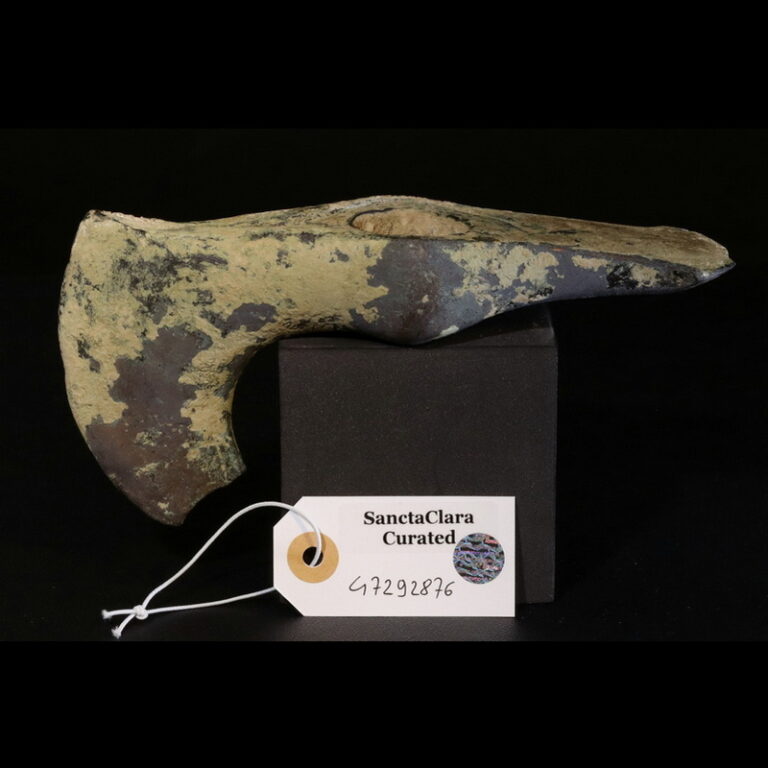
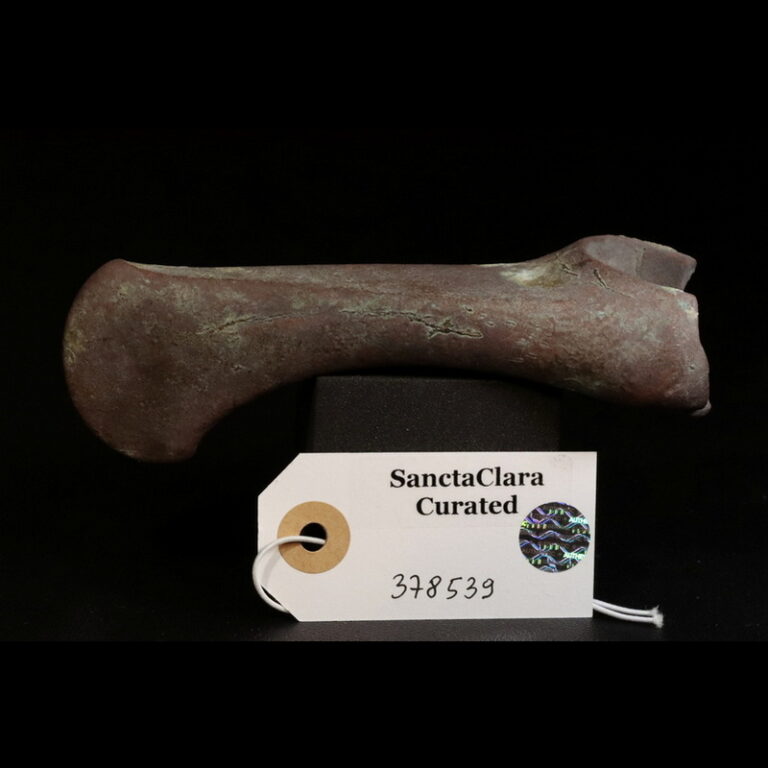
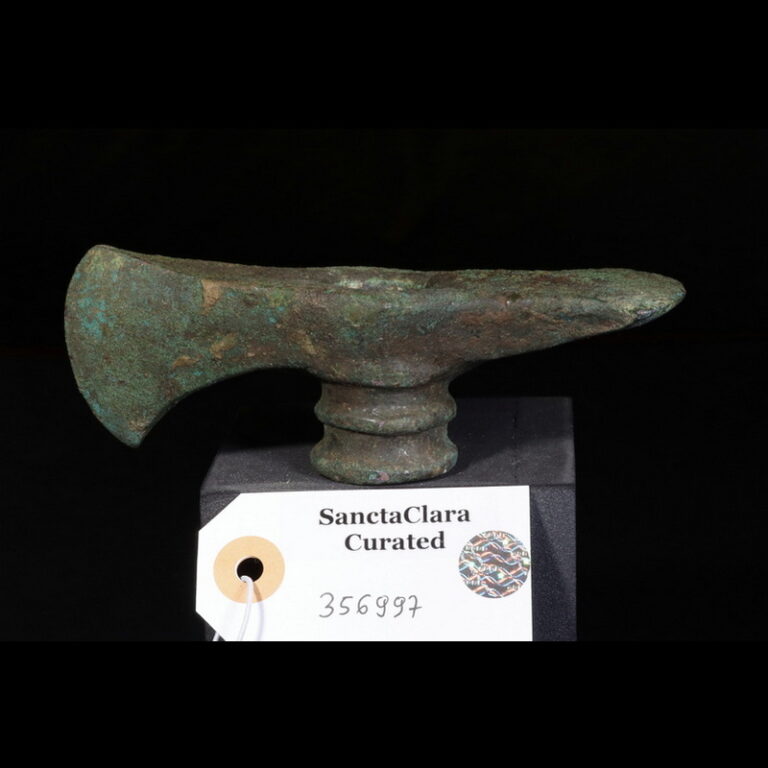
Comparative Examples
Typology and Comparative Analysis:
This artifact represents a specialized weapon form belonging to the Circumpontic Metallurgical Province, showing distinct hybrid features of two specific regional traditions: The Caucasian Connection (Blade Profile): The blade's slender, downward-curving geometry is a near-exact morphological match to the axes from the Zeda Ilemi Hoard (Western Georgia), dated to the first half of the 3rd Millennium BC. Like the Zeda Ilemi specimens (and those from Saqasria), this axe is designed for agility and precision hookher than heavy percussive force. The Balkan/Aegean Connection (Socket Features): Unlike the standard Zeda Ilemi type, this specimen features pronounced socket collars (thickened edges) and a casting seam/rib on the rear. These are diagnostic features of the Veselinovo Type (Fajsz Variant) axes found in Epirus (Rodotopi Hoard) and the broader Central Balkan region. Attribution & Function The combination of the Caucasian blade profile with the Balkan socket construction places this object within the interaction zone of the Black Sea littoral. While heavy axes of this shape (800g+) served as tools or ingots, the light weight (233 g) and thin cross-section of this artifact identify it definitively as a Battle-Axe. It was designed as a fast, armor-piercing sidearm or a votive weapon, likely dating to the Martkopi / **Early Kurgan** period in the East or the EBA II--III period in the West.
This artifact represents a specialized weapon form belonging to the Circumpontic Metallurgical Province, showing distinct hybrid features of two specific regional traditions: The Caucasian Connection (Blade Profile): The blade's slender, downward-curving geometry is a near-exact morphological match to the axes from the Zeda Ilemi Hoard (Western Georgia), dated to the first half of the 3rd Millennium BC. Like the Zeda Ilemi specimens (and those from Saqasria), this axe is designed for agility and precision hookher than heavy percussive force. The Balkan/Aegean Connection (Socket Features): Unlike the standard Zeda Ilemi type, this specimen features pronounced socket collars (thickened edges) and a casting seam/rib on the rear. These are diagnostic features of the Veselinovo Type (Fajsz Variant) axes found in Epirus (Rodotopi Hoard) and the broader Central Balkan region. Attribution & Function The combination of the Caucasian blade profile with the Balkan socket construction places this object within the interaction zone of the Black Sea littoral. While heavy axes of this shape (800g+) served as tools or ingots, the light weight (233 g) and thin cross-section of this artifact identify it definitively as a Battle-Axe. It was designed as a fast, armor-piercing sidearm or a votive weapon, likely dating to the Martkopi / **Early Kurgan** period in the East or the EBA II--III period in the West.