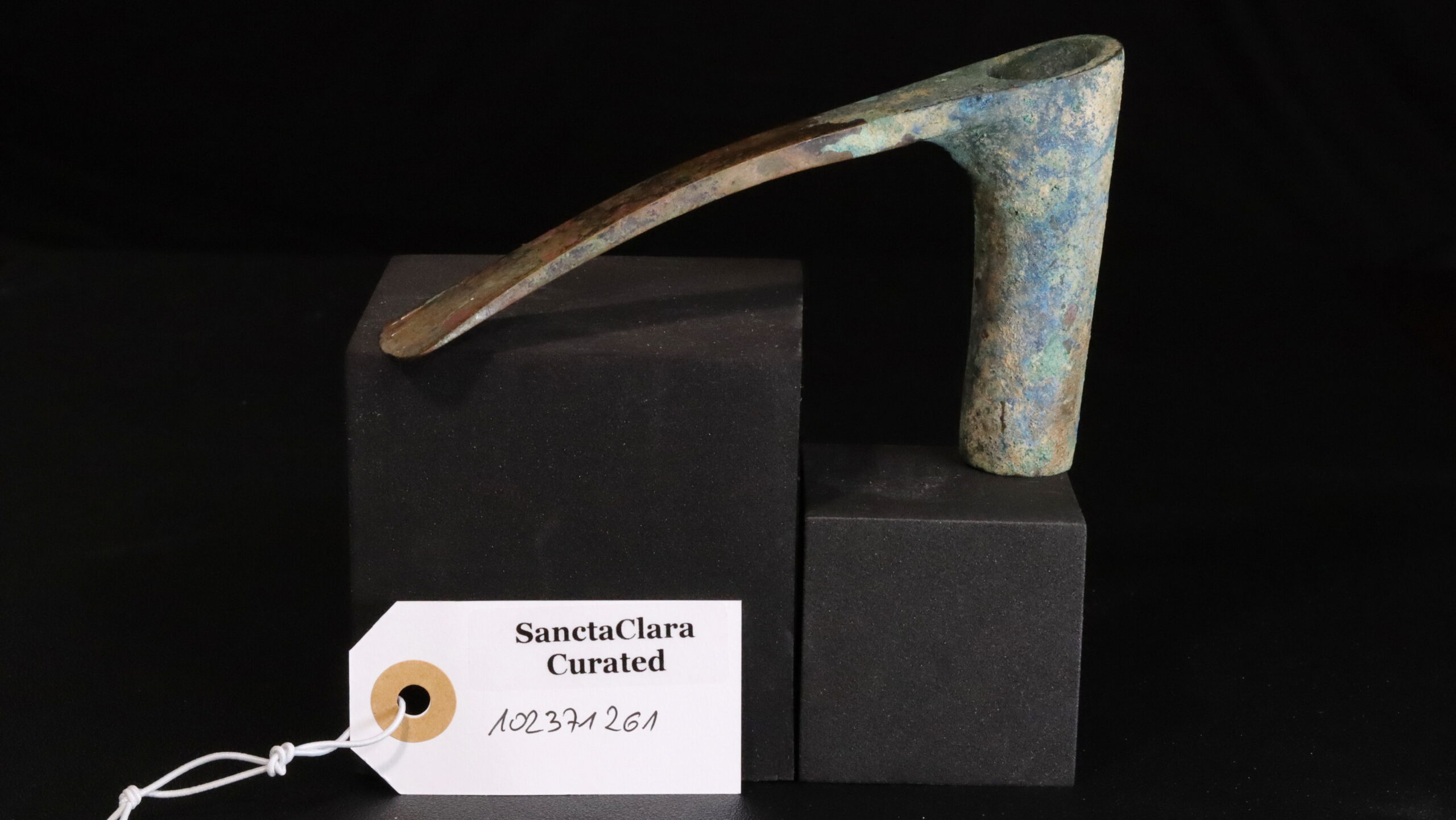
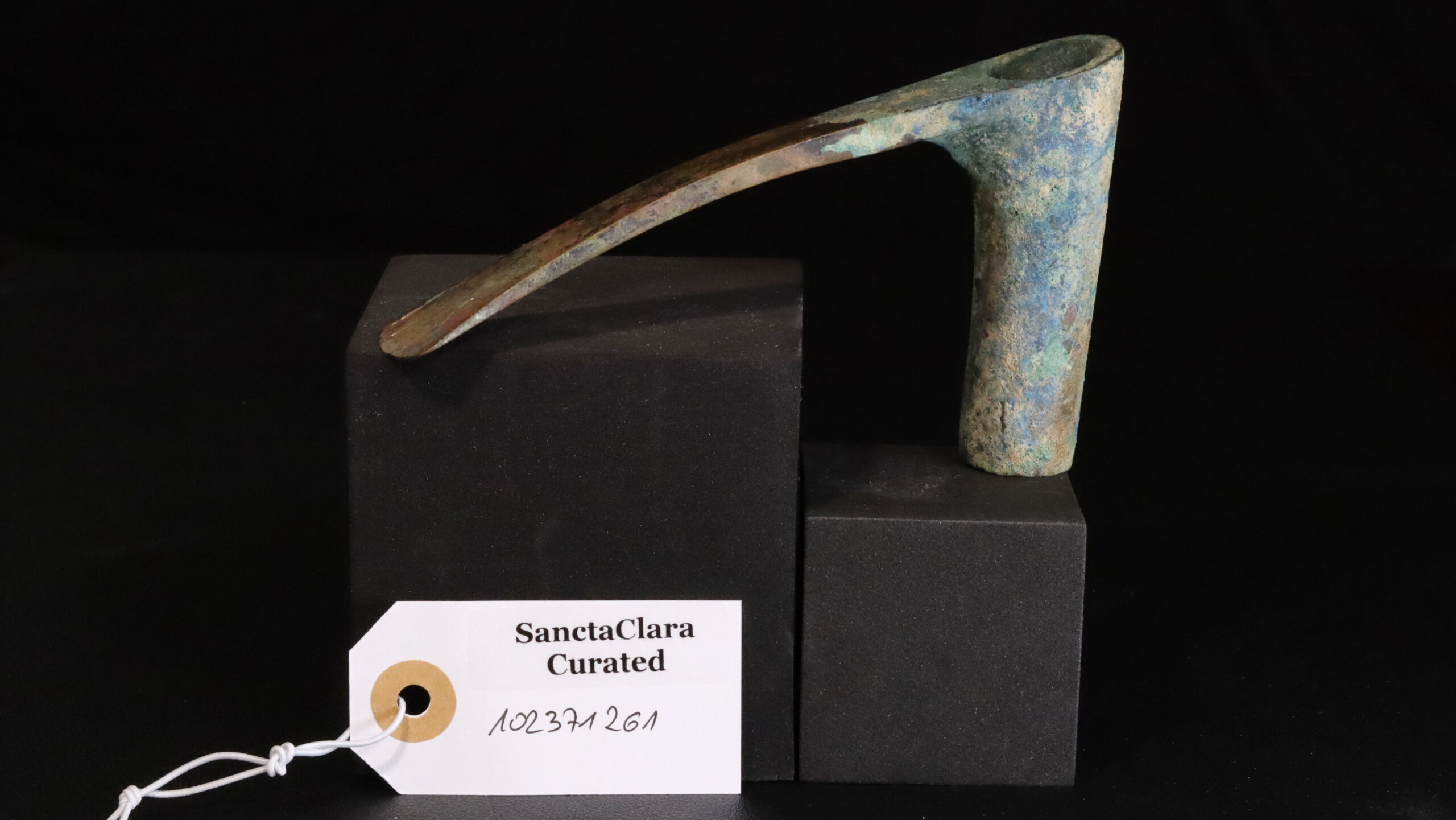
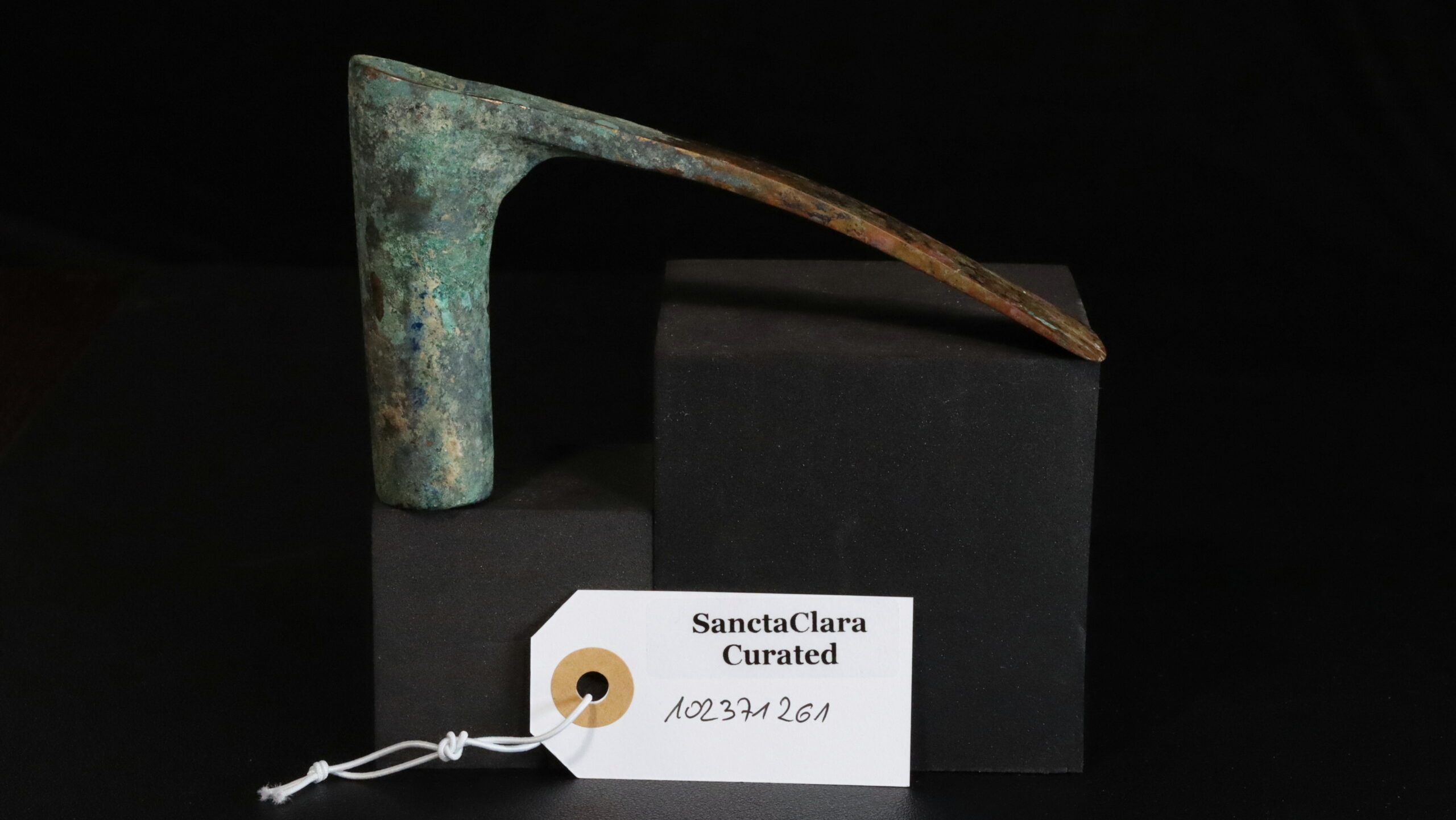
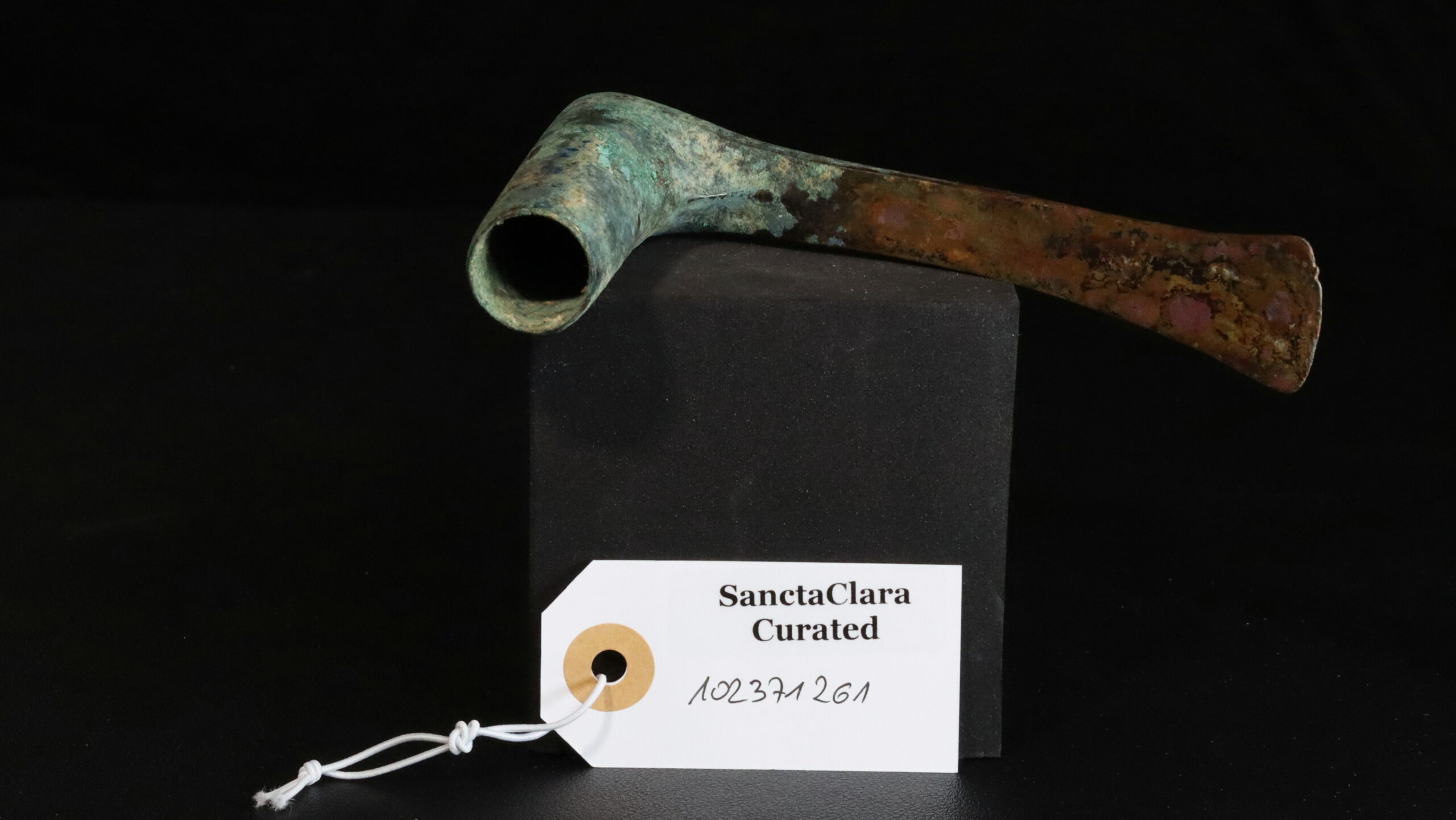
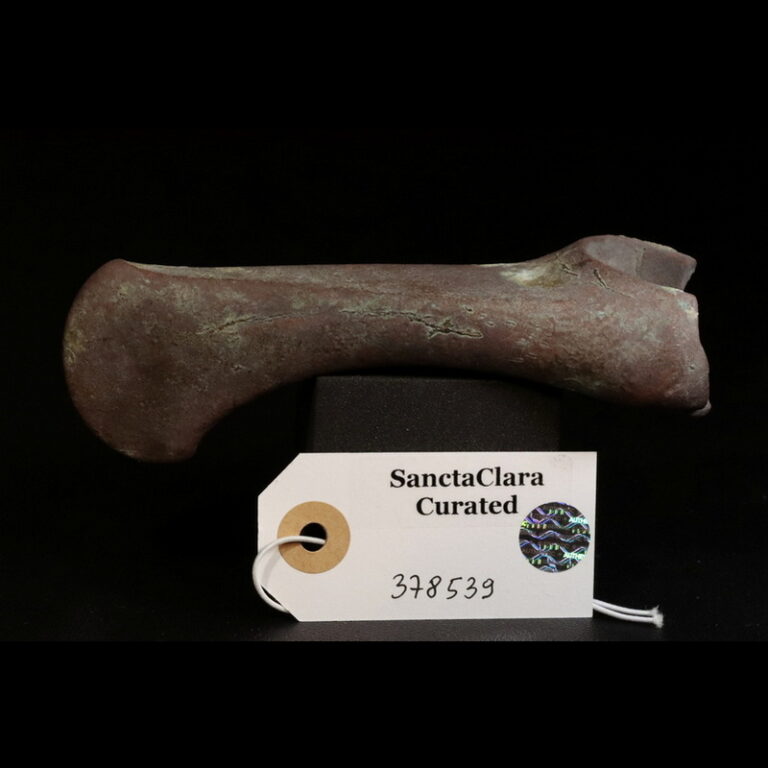
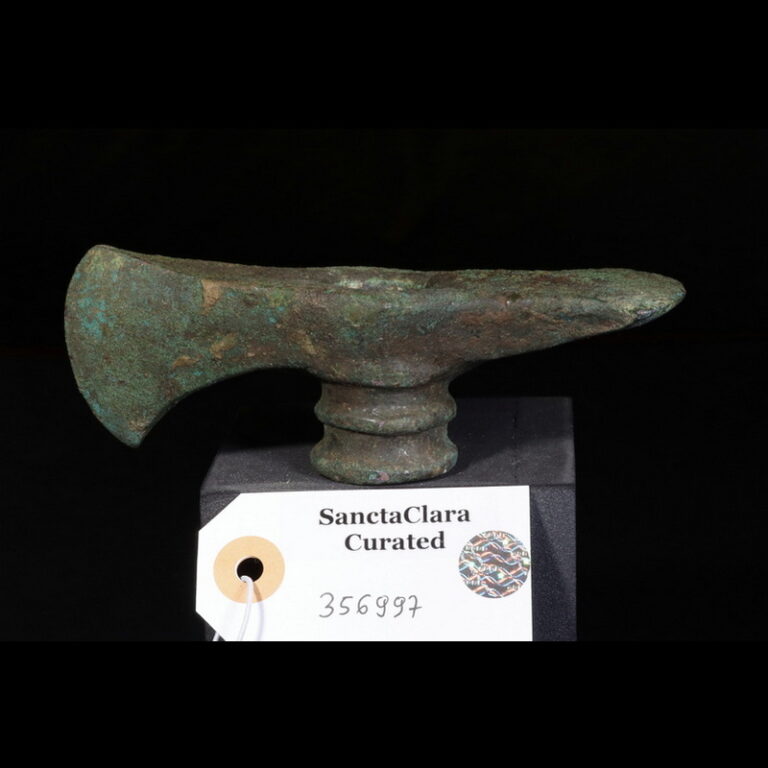
L-shaped Shaft-Hole Adze (sometimes classified as a socketed hoe or transverse axe).
This elegantly simple L-shaped geometry, featuring an unornamented, elongated tubular socket transitioning smoothly into a downward-curving, horizontally oriented blade, is incredibly characteristic of Near Eastern utilitarian metallurgy. This is a dedicated, precision tool.
The L-Shape Geometry: The adze blade is set perpendicular to the handle. This means the force of the swing is directed back toward the user, making it ideal for scraping, hollowing, and leveling. The Elongated Socket (81 mm): The long, simple tubular socket is designed to distribute the stress of impact over a larger surface area of the wooden haft. Given the relatively narrow inner diameter (~18-20 mm), the wooden handle would have been quite slender. The long socket prevents that slender handle from snapping at the neck during repetitive striking. The Narrow Blade (26 mm): A working edge of roughly one inch indicates this is not a tool for felling timber or broad surface leveling. It is a precision implement.
Probable Use: This is definitively a fine woodworking tool. An adze of this scale would be used by a Bronze Age carpenter or shipwright for hollowing out wooden bowls, shaping the interior of dugout watercraft, or finishing joints in furniture. The socket exhibits a superb, thick, and highly complex ancient patina—a mixture of green malachite, potentially some blue azurite, and earthy encrustations. However, starting midway down the neck, this crust abruptly vanishes, exposing pitted, reddish metal (cuprite) and bare bronze that has been highly polished. Tools were occasionally found and repurposed in later antiquity (a phenomenon known as "heirloom" or secondary use).
L:146 mmm Height: 81 mm, Adze: 26 mm, Tunnel: 22 mm, inner diam: 18-20 top, 19 bottom, Weight: 185 g
Curator Rating
4
Comparative Examples
Comparative Analysis:
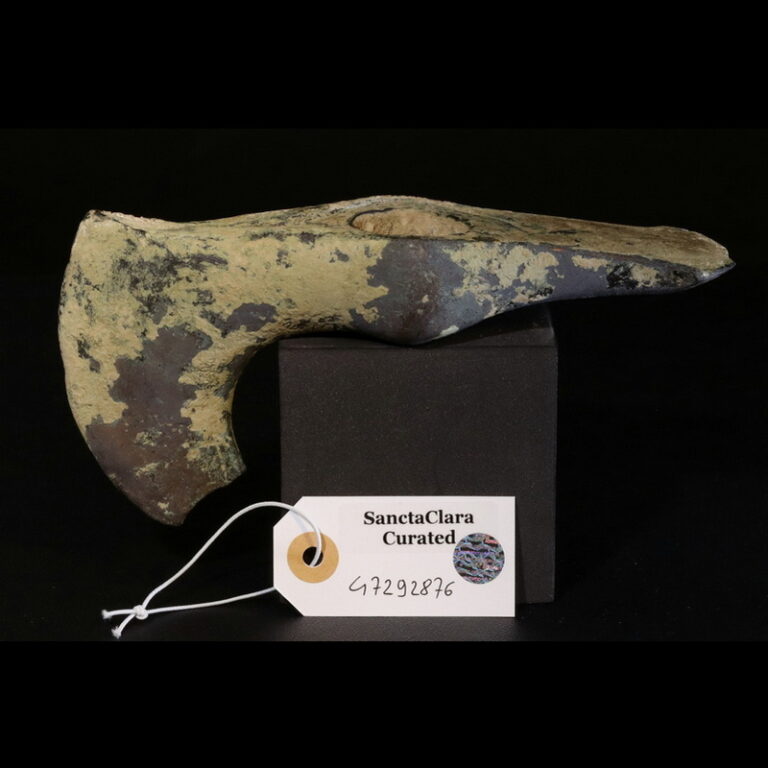
Vs. Luristan "Simple" Adzes: this piece is a textbook match for the unornamented utilitarian adzes found in Luristan graves and hoards. While Luristan is famous for its elaborate, zoomorphic bronzes, the daily working tools of the region matched the exact pragmatic proportions seen here.
Vs. Levantine / Canaanite Adzes: Levantine adzes from the same period often lack the pronounced, elongated tubular socket, favoring shorter collars or even socketless, flat-tanged designs that had to be lashed to a knee-shaped wooden handle.
Vs. Mesopotamian Foundation Pegs: The shape is somewhat reminiscent of the divine "foundation peg" deities of Sumeria and Akkad, which were modeled after the shape of the builder's peg and the terrestrial hoe.