
Document
Attachments
-
 SCC 102371201 1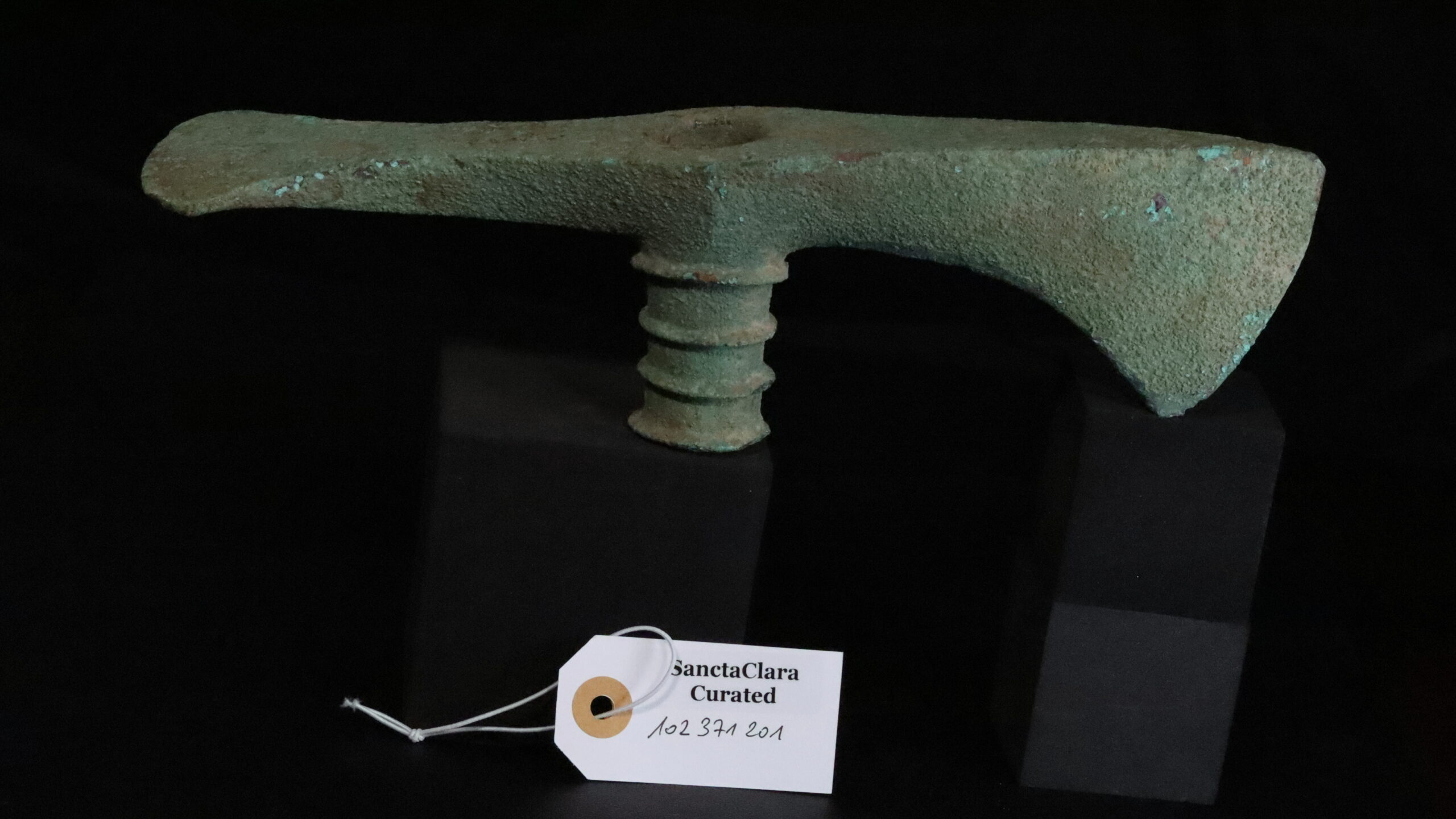
-
 SCC 102371201 2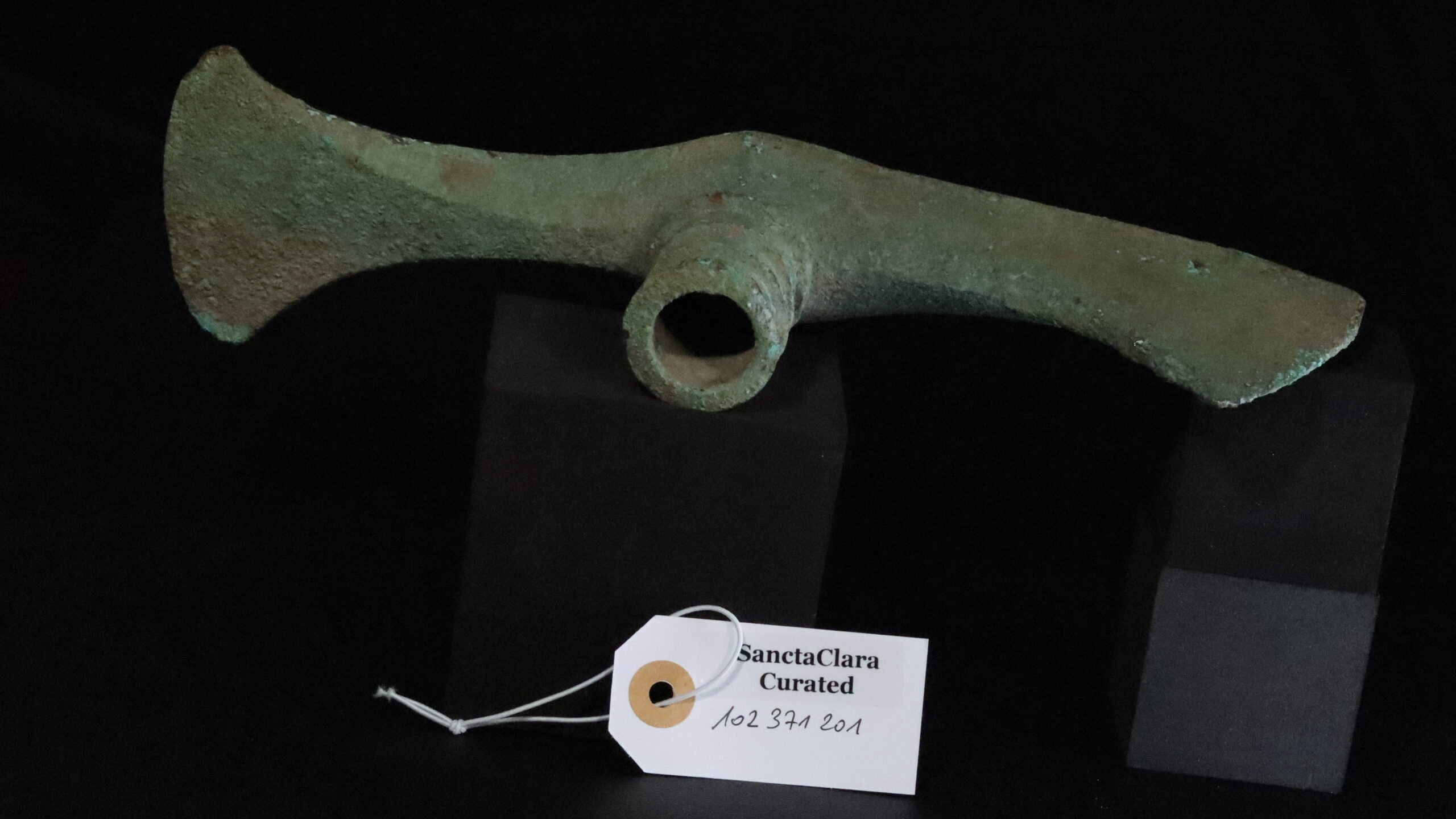
-
 SCC 102371201 3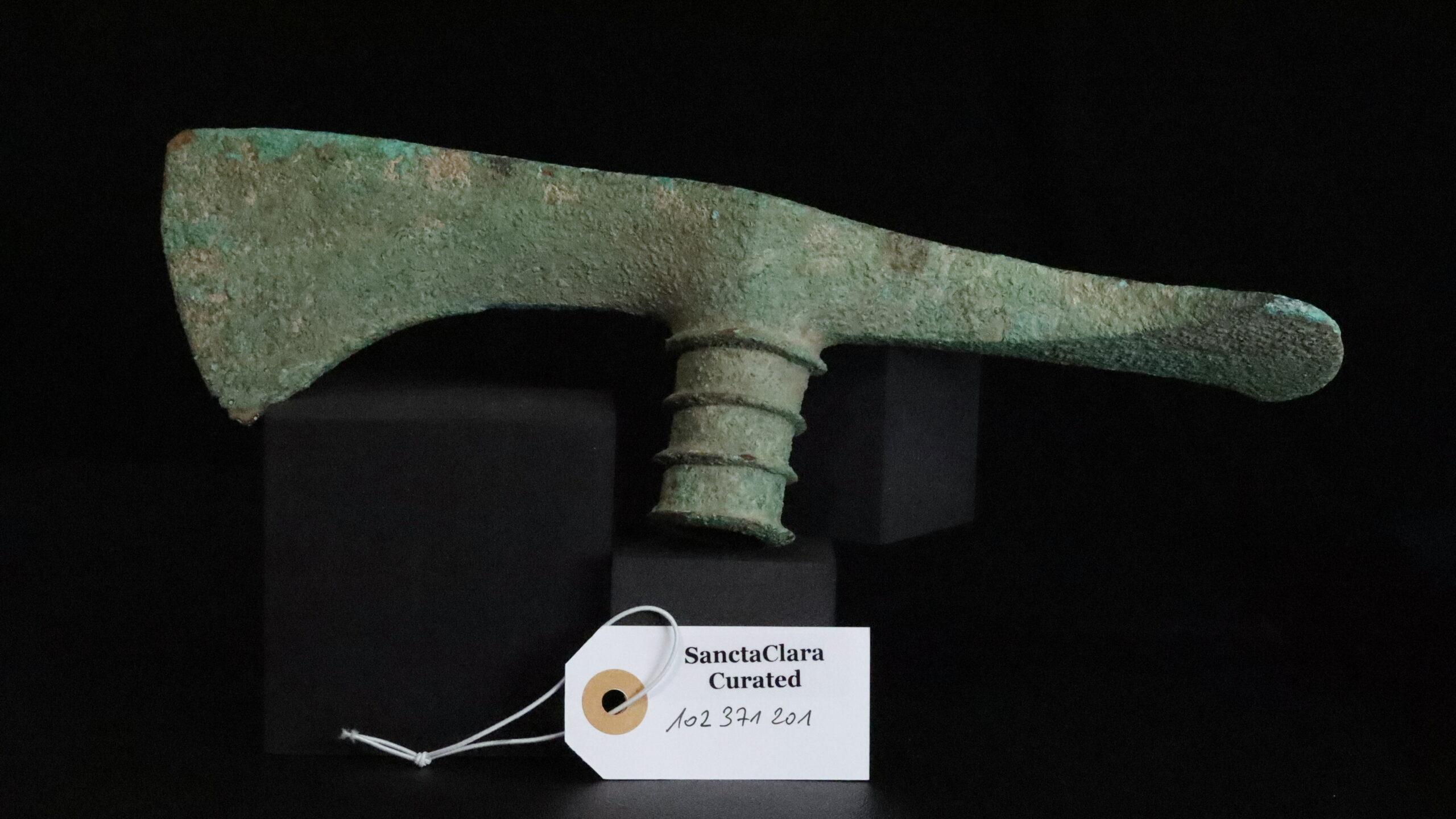
-
 SCC 102371201 4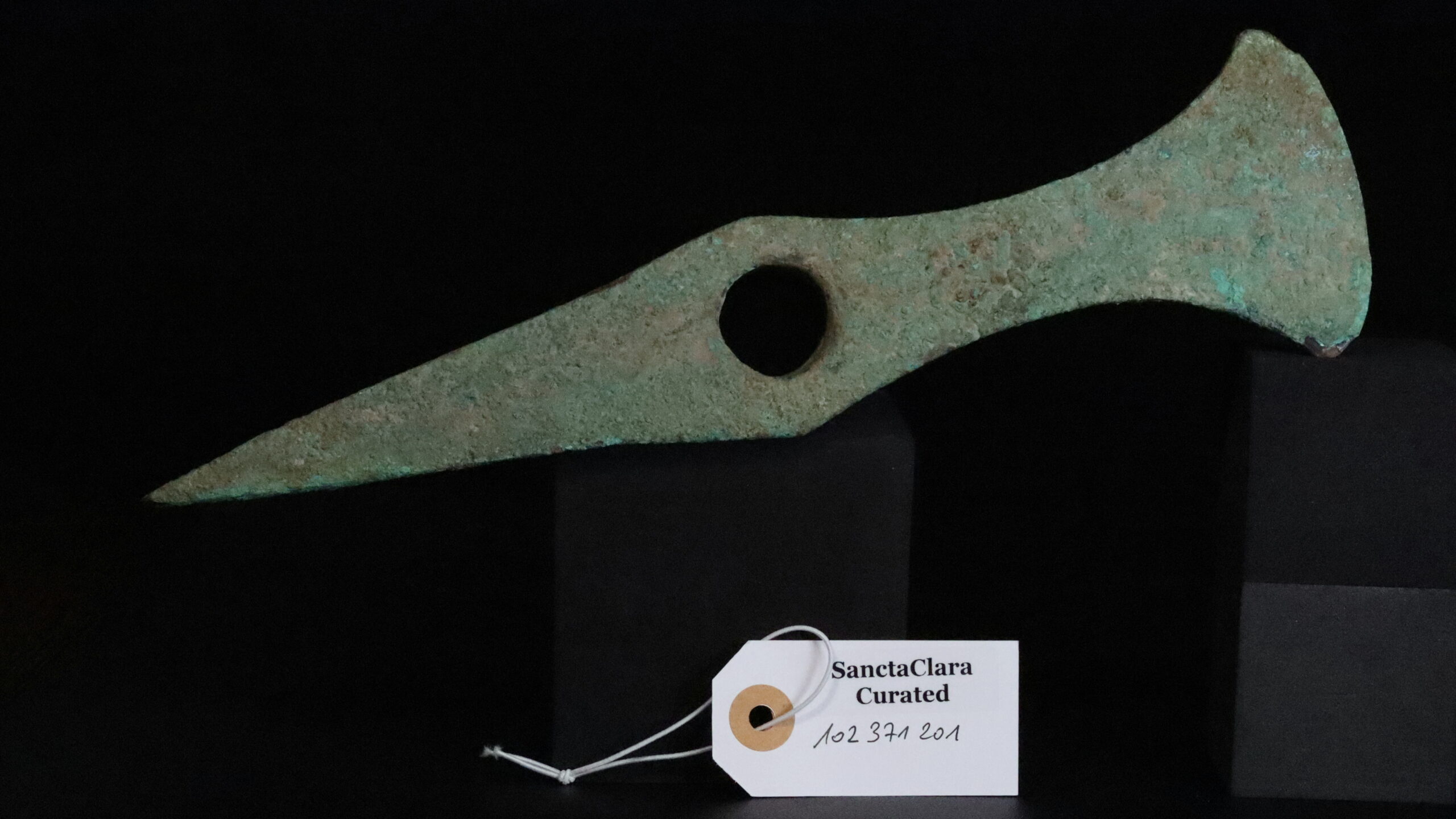
-
 SCC 102371201 5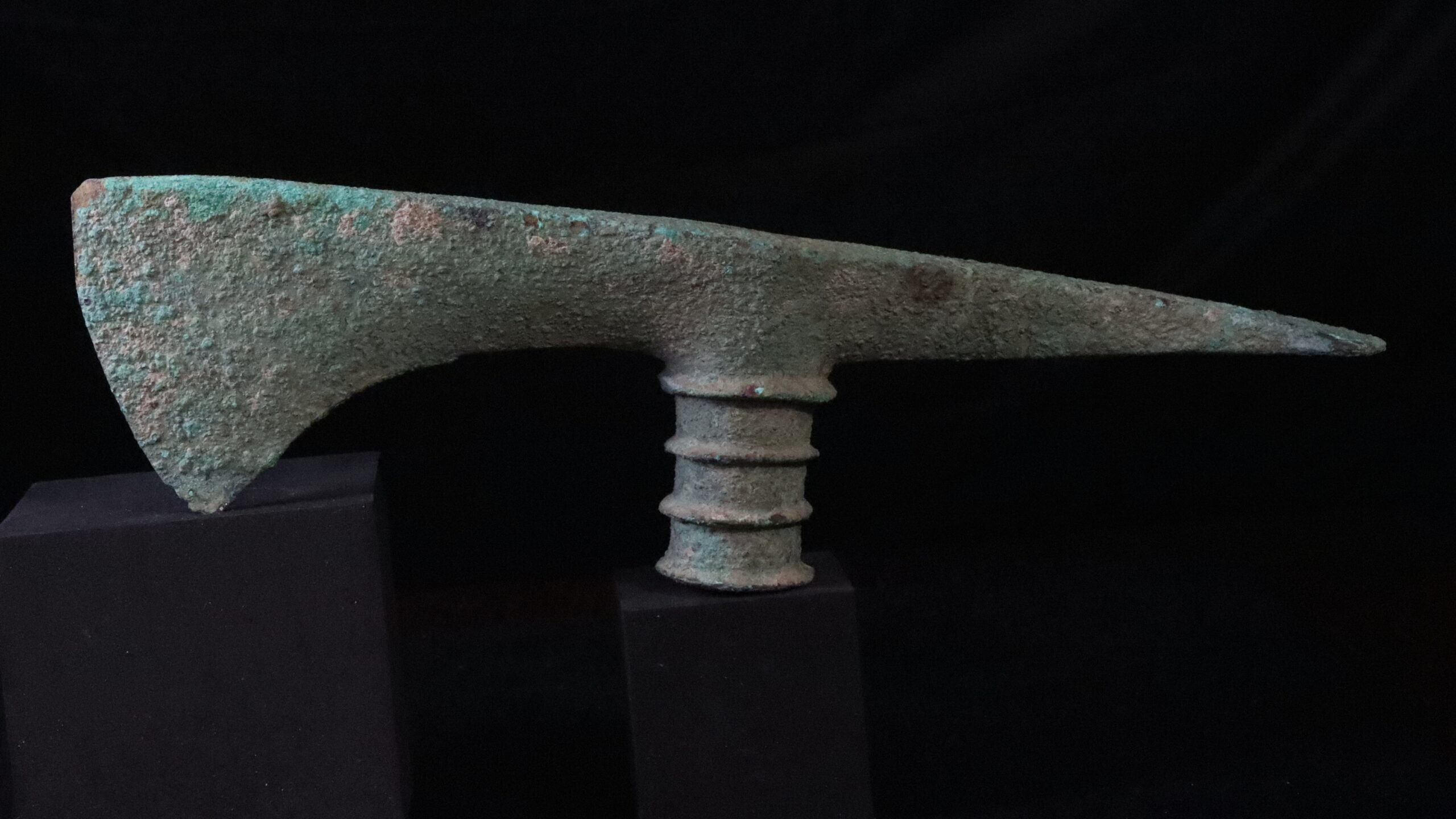
Metadata
Title
Giant Oxus copper alloy Axe - adze
Description
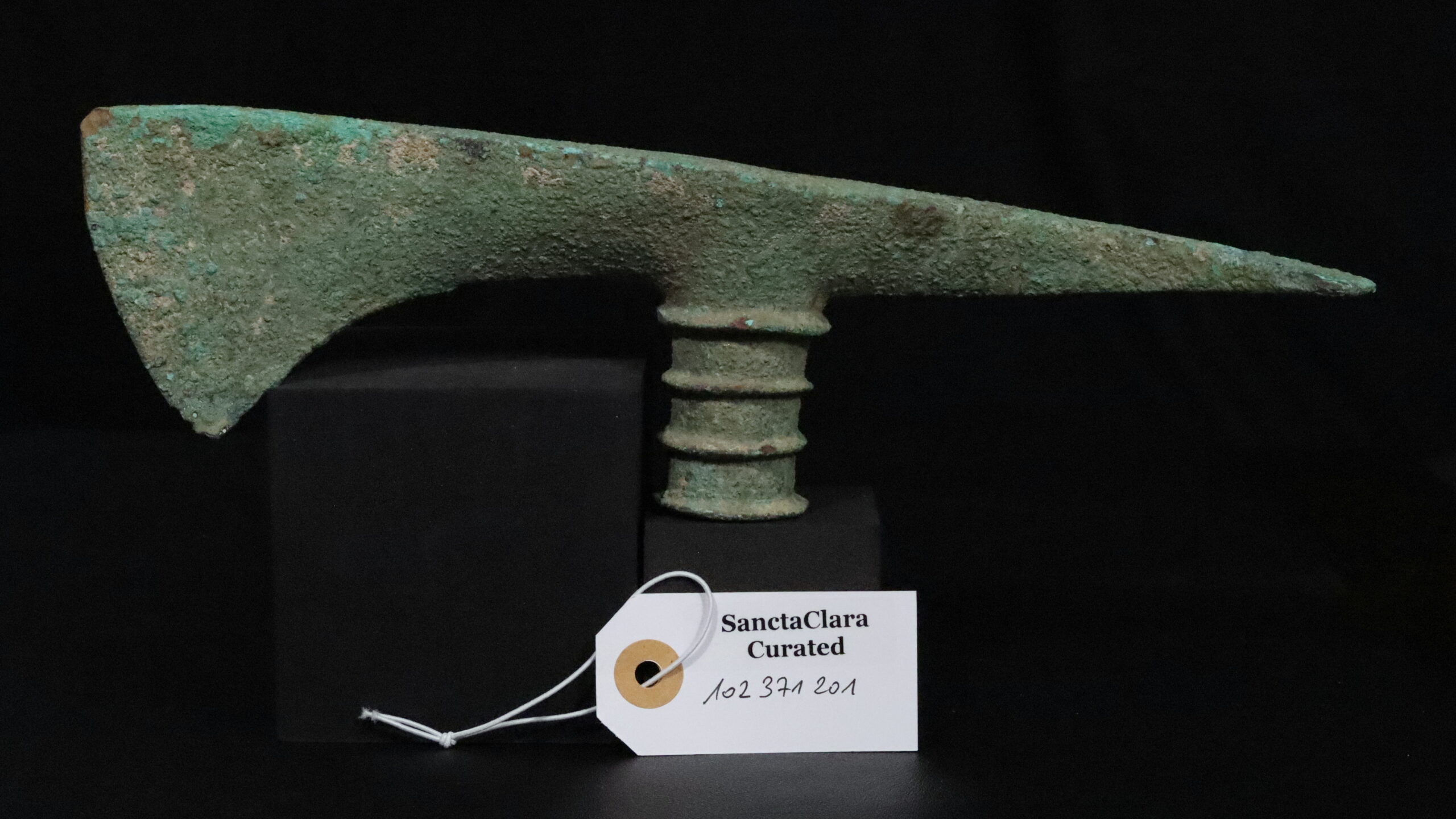
Enormous Axe – adze with unique geometry. Bactria - Margiana Complex BMAC (or OXUS Civilization). Four round reinforcing rings (collars) on the shaft tunnel.
Classification: Flat-topped shaft-hole Axe-Adze.
Probable Culture/Region: Central Asia (Bactria-Margiana Archaeological Complex / Oxus Civilization) or the greater Iranian Plateau (early Elamite / Luristan precursors).
Period: Middle Bronze Age, approximately 2200 BCE – 1700 BCE.
This specific combination—a perfectly straight, flat upper profile, a vertical axe blade paired with a horizontal adze blade, and a pronounced, downward-pointing tubular shaft tunnel with multiple ribbed collars—is a hallmark of the Bactria-Margiana Archaeological Complex (BMAC), though closely related forms were traded into or produced in neighboring regions of the Near East.
The Flat Upper Surface: This geometry is highly diagnostic. By keeping the top edge perfectly straight, the ancient bronzesmith lowered the center of mass relative to the strike axis. This improves the balance of the weapon/tool during a heavy swing, preventing the head from twisting in the hand.
The Four Collars (Ribbed Socket): The 78 mm downward-pointing shaft tunnel is essential for stabilizing such a massive head on a wooden handle. The four collars are not merely decorative, they are structural reinforcements. Casting a 1.36 kg head puts immense stress on the relatively thin walls of the socket hole. The raised ribs provide crucial tensile strength to prevent the socket from splitting apart under the extreme torsional and lateral shear forces generated upon impact.
The Tapered Shaft Hole: The inside diameter tapers slightly from 24 mm at the top to 23 mm at the bottom. This draft angle allows the wooden haft to be pressure-fitted (often wedged from the top or secured with hide glue and bindings), ensuring that centrifugal force during a downward swing actually pulls the axe head tighter onto the handle. The Weight (1364 g): At nearly 1.4 kilograms, this is an incredibly massive piece for a one-handed tool. Most standard Bronze Age battle axes weigh between 300 and 600 grams. This weight demands a dense, shock-absorbing hardwood haft (like oak, ash, or cornelian cherry) to prevent the handle from snapping upon impact.
Probable Use: Given its massive proportions and geometry, this artifact likely served one of three primary purposes (or a combination thereof). Heavy Woodworking and Forestry: The axe-adze is the ultimate shipwright's or carpenter's tool. The axe blade is used for felling and rough-hewing timber, while the horizontal adze blade is used for planing, smoothing, and hollowing out logs (such as in dugout canoe construction). The sheer weight suggests it was used for heavy-duty material removal rather than fine finishing.
Military / Breaching: In a martial context, an axe of this weight is an armor-defeating weapon. While perhaps too heavy for swift infantry skirmishing, it would be a devastating weapon for heavy shock troops or as a breaching tool designed to smash through shields, rudimentary armor, or defensive palisades. Prestige and Status: In the Bronze Age, metal was wealth. Committing over 1.3 kg of precious bronze to a single object was a massive display of economic power. It may have been a prestige item owned by an elite tradesman or a chieftain, blending functional utility with undeniable status.
Classification: Flat-topped shaft-hole Axe-Adze.
Probable Culture/Region: Central Asia (Bactria-Margiana Archaeological Complex / Oxus Civilization) or the greater Iranian Plateau (early Elamite / Luristan precursors).
Period: Middle Bronze Age, approximately 2200 BCE – 1700 BCE.
This specific combination—a perfectly straight, flat upper profile, a vertical axe blade paired with a horizontal adze blade, and a pronounced, downward-pointing tubular shaft tunnel with multiple ribbed collars—is a hallmark of the Bactria-Margiana Archaeological Complex (BMAC), though closely related forms were traded into or produced in neighboring regions of the Near East.
The Flat Upper Surface: This geometry is highly diagnostic. By keeping the top edge perfectly straight, the ancient bronzesmith lowered the center of mass relative to the strike axis. This improves the balance of the weapon/tool during a heavy swing, preventing the head from twisting in the hand.
The Four Collars (Ribbed Socket): The 78 mm downward-pointing shaft tunnel is essential for stabilizing such a massive head on a wooden handle. The four collars are not merely decorative, they are structural reinforcements. Casting a 1.36 kg head puts immense stress on the relatively thin walls of the socket hole. The raised ribs provide crucial tensile strength to prevent the socket from splitting apart under the extreme torsional and lateral shear forces generated upon impact.
The Tapered Shaft Hole: The inside diameter tapers slightly from 24 mm at the top to 23 mm at the bottom. This draft angle allows the wooden haft to be pressure-fitted (often wedged from the top or secured with hide glue and bindings), ensuring that centrifugal force during a downward swing actually pulls the axe head tighter onto the handle. The Weight (1364 g): At nearly 1.4 kilograms, this is an incredibly massive piece for a one-handed tool. Most standard Bronze Age battle axes weigh between 300 and 600 grams. This weight demands a dense, shock-absorbing hardwood haft (like oak, ash, or cornelian cherry) to prevent the handle from snapping upon impact.
Probable Use: Given its massive proportions and geometry, this artifact likely served one of three primary purposes (or a combination thereof). Heavy Woodworking and Forestry: The axe-adze is the ultimate shipwright's or carpenter's tool. The axe blade is used for felling and rough-hewing timber, while the horizontal adze blade is used for planing, smoothing, and hollowing out logs (such as in dugout canoe construction). The sheer weight suggests it was used for heavy-duty material removal rather than fine finishing.
Military / Breaching: In a martial context, an axe of this weight is an armor-defeating weapon. While perhaps too heavy for swift infantry skirmishing, it would be a devastating weapon for heavy shock troops or as a breaching tool designed to smash through shields, rudimentary armor, or defensive palisades. Prestige and Status: In the Bronze Age, metal was wealth. Committing over 1.3 kg of precious bronze to a single object was a massive display of economic power. It may have been a prestige item owned by an elite tradesman or a chieftain, blending functional utility with undeniable status.
Catalogue Number
102371201
Category
Period
2200 - 1700 BCE
Culture
Bactria Margiana
Material
Arsenical copper or Copper alloy
Dimensions and weight
L: 283 mm, axe 71 mm, adze 78 mm, Width at shaft 50 mm, Shaft Length 78 mm, collars diameter 40 mm. Shaft hole top 24 mm, bottom 23mm . Weight 1364 g. Volume: 165 ml, Density (w/patina): 8,27 g/cm3
Curator Rating
5
Comparative Examples
Comparative Analysis: To contextualize this piece, we must compare it against other known Bronze Age and Chalcolithic axe-adze typologies: Vs. The Carpathian Basin (e.g., Jászládány Type, Copper Age, c. 4000 BCE): Carpathian axe-adzes are famously massive, but they feature a central, thick, often un-collared socket with a very pronounced cross-like symmetry. They completely lack the elongated, downward-projecting tubular socket and the perfectly straight, flat upper profile seen on your artifact. Vs. Luristan / Iron Age Iranian Bronzes (c. 1500–500 BCE): While Luristan metalsmiths were famous for ribbed tubular shaft tunnels (often seen on their halberds and pick-axes), their designs tend to be highly swept, with curved backs, spiked butts, or elaborate zoomorphic elements. The austere, strictly horizontal flat top of your piece points away from classical Iron Age Luristan and toward earlier Middle Bronze Age BMAC forms. Vs. Mesopotamian Pick-Axes (Akkadian / Sumerian): Mesopotamian types generally feature a vertical axe blade on one side and taper to a simple, heavy point on the other (a pick), rather than a wide horizontal adze blade.