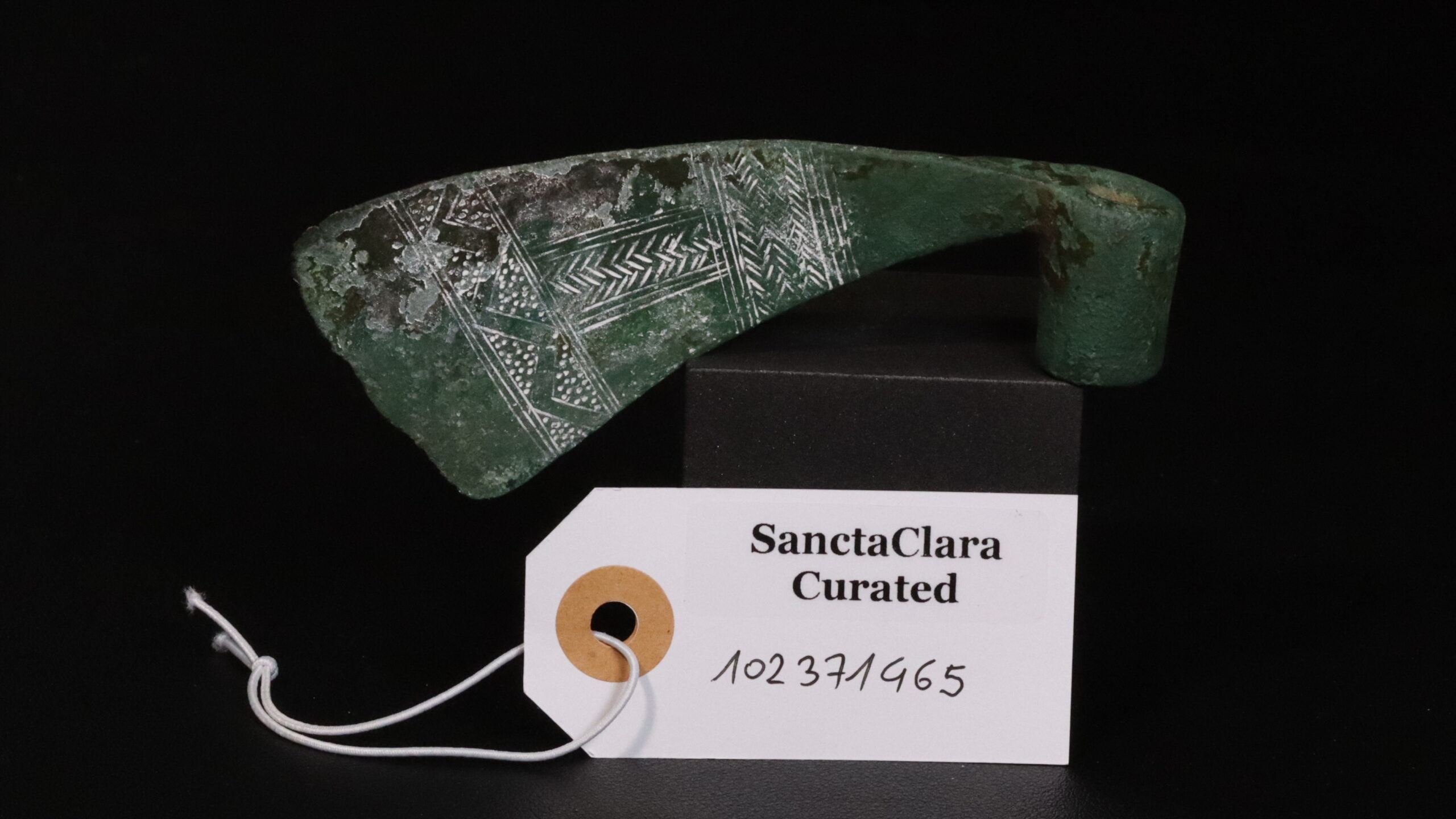
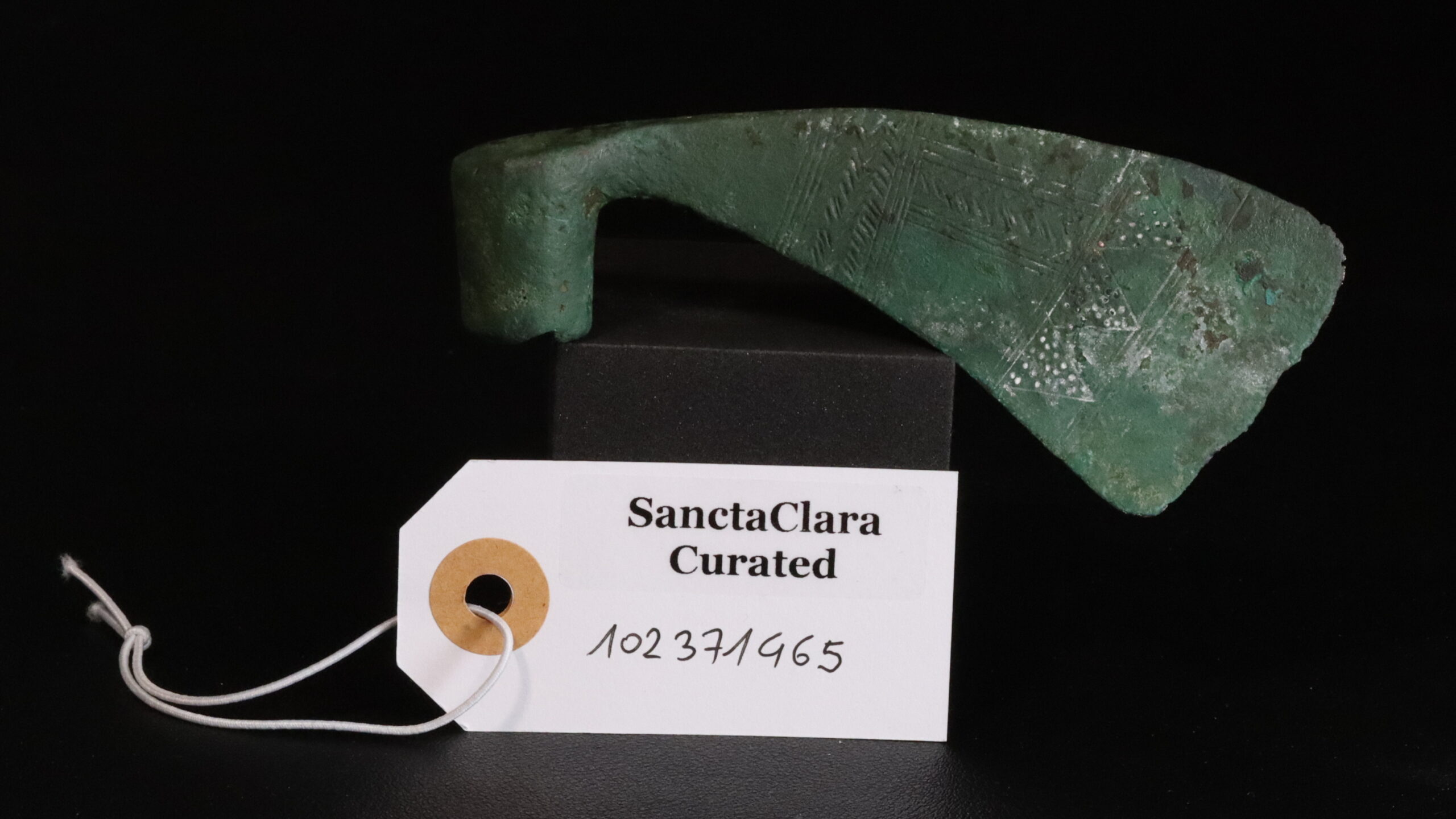
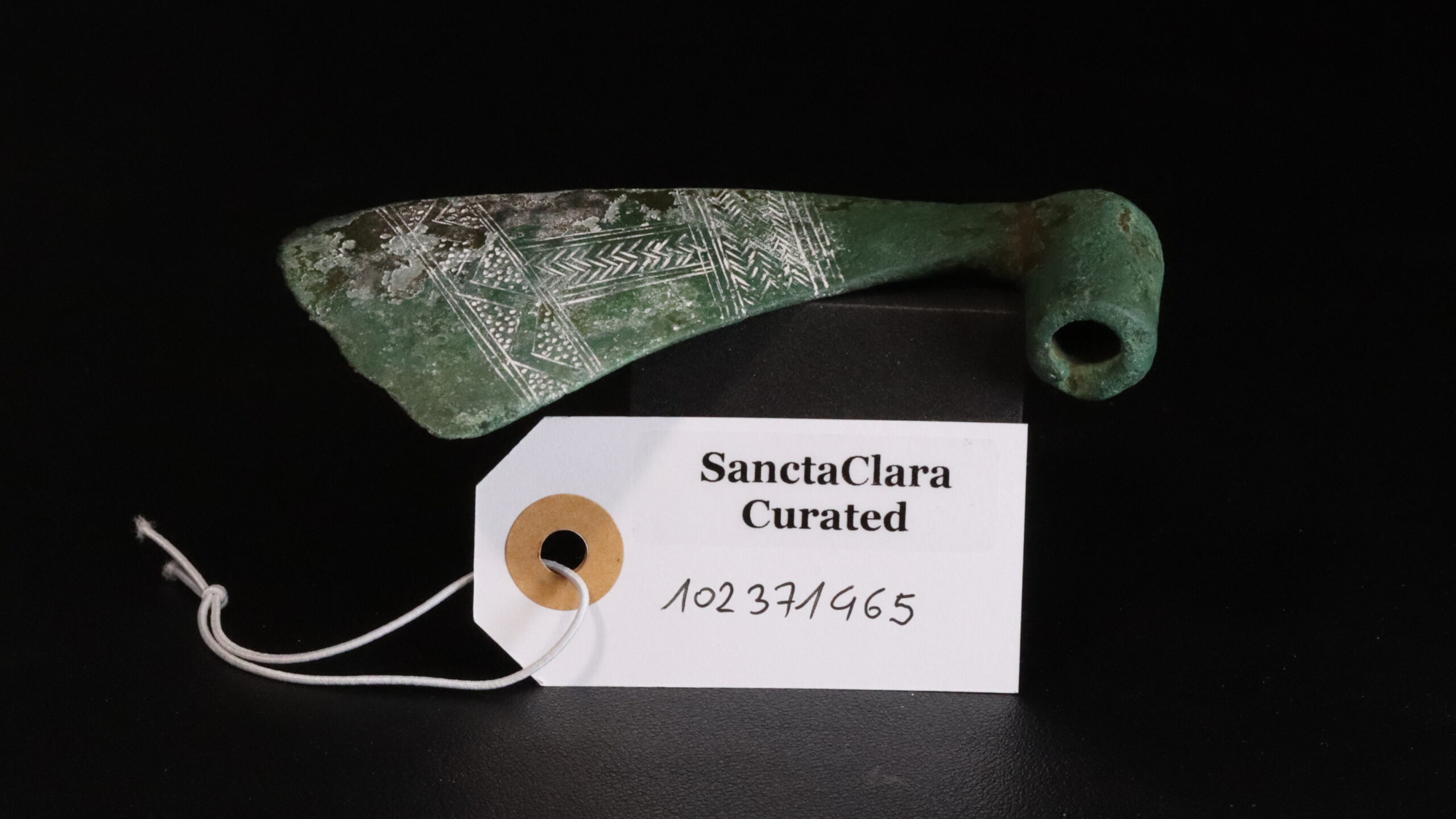
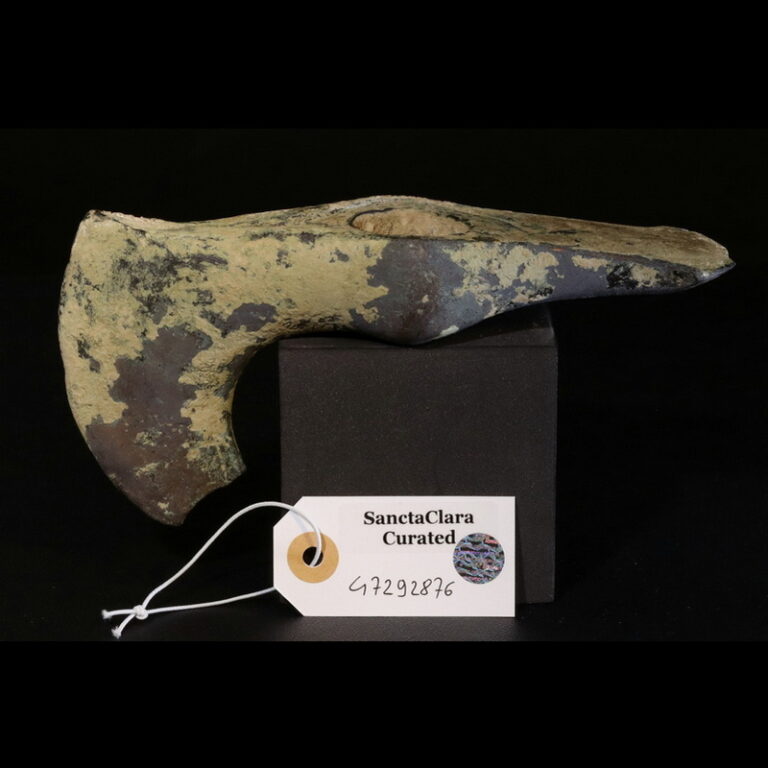
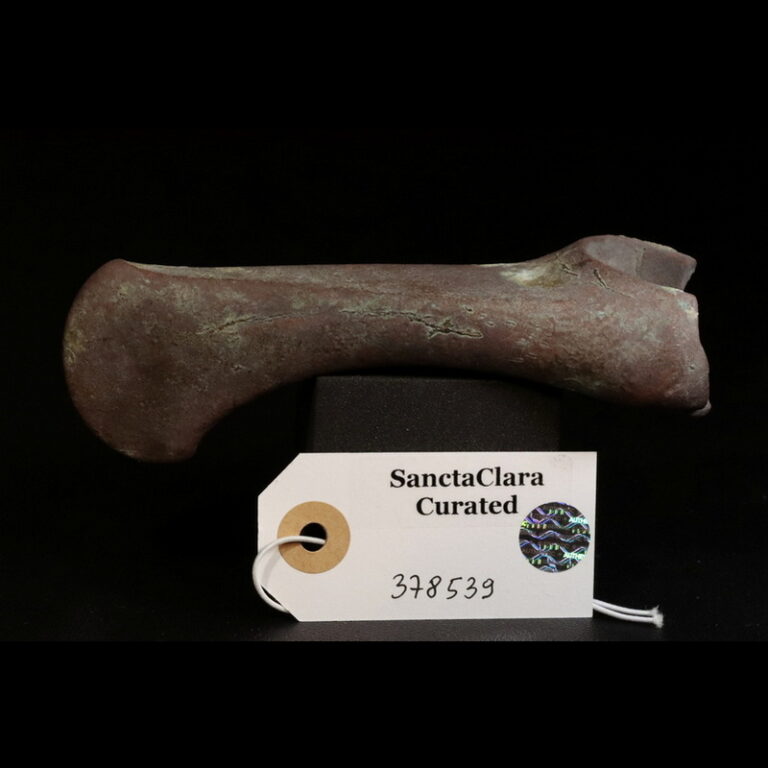
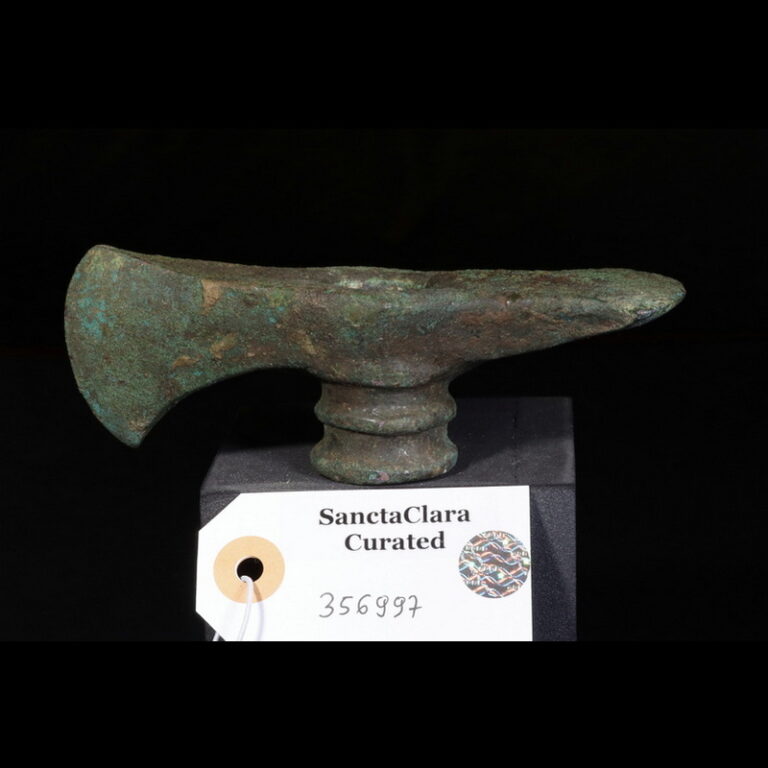
These specific zig-zag, chevron, and stippled motifs belong to the Koban culture (closely intertwined with the neighboring Colchian culture). Primary Culture: Koban Culture (Northern and Central Caucasus). Timeline: Late Bronze Age to Early Iron Age (approximately 11th to 7th century BCE). Artistic Significance: The Koban culture is world-renowned among archaeologists for its exceptionally high level of bronze metallurgy. They did not just cast functional items, they treated bronze as a canvas for intricate, highly standardized geometric art. Analysis of the Engraved Motifs The enhanced images reveal a masterclass in Late Bronze Age chasing and engraving. The artisan used hardened bronze (or early iron) tools to cut these designs into the axe head after it was cast and polished. Chevrons and Herringbone Bands: The central vertical and horizontal bands filled with interlocking V-shapes (chevrons) are a hallmark of Koban design. Archaeologists often interpret these as skeuomorphs—designs mimicking other materials, such as woven textiles, basketry, or even stylized representations of snake scales, which held mythological significance in the region. Stippled Triangles: The nested triangles filled with punched dots (stippling) are perhaps the single most diagnostic feature of this region's metalwork. This specific geometric filling technique is found almost exclusively on high-status Koban and Colchian bronzes. Framing Lines: The deep, parallel linear borders deliberately follow the swooping, drooping contour of the axe blade, showing that the decoration was custom-tailored to accentuate the weapon's specific geometry.
Probable Use and Context The sheer amount of labor required to incise these patterns reinforces the artifact's purpose. Elite Status Symbol: This was not a mundane wood-chopping tool. While the bronze is fully capable of holding a lethal edge, the elaborate decoration marks this as a prestige weapon for a chieftain or elite warrior.
L: 112 mm, W: 44 mm, Shaft tunnel 44x17 mm, shaft hole 10 mm top, 9m bottom, Weight: 80 g
Historical Significance
Ceremonial or Votive Use: Weapons of this quality were frequently paraded during ceremonies and ultimately deposited as high-status grave goods in burial mounds (kurgans) to accompany the warrior into the afterlife.