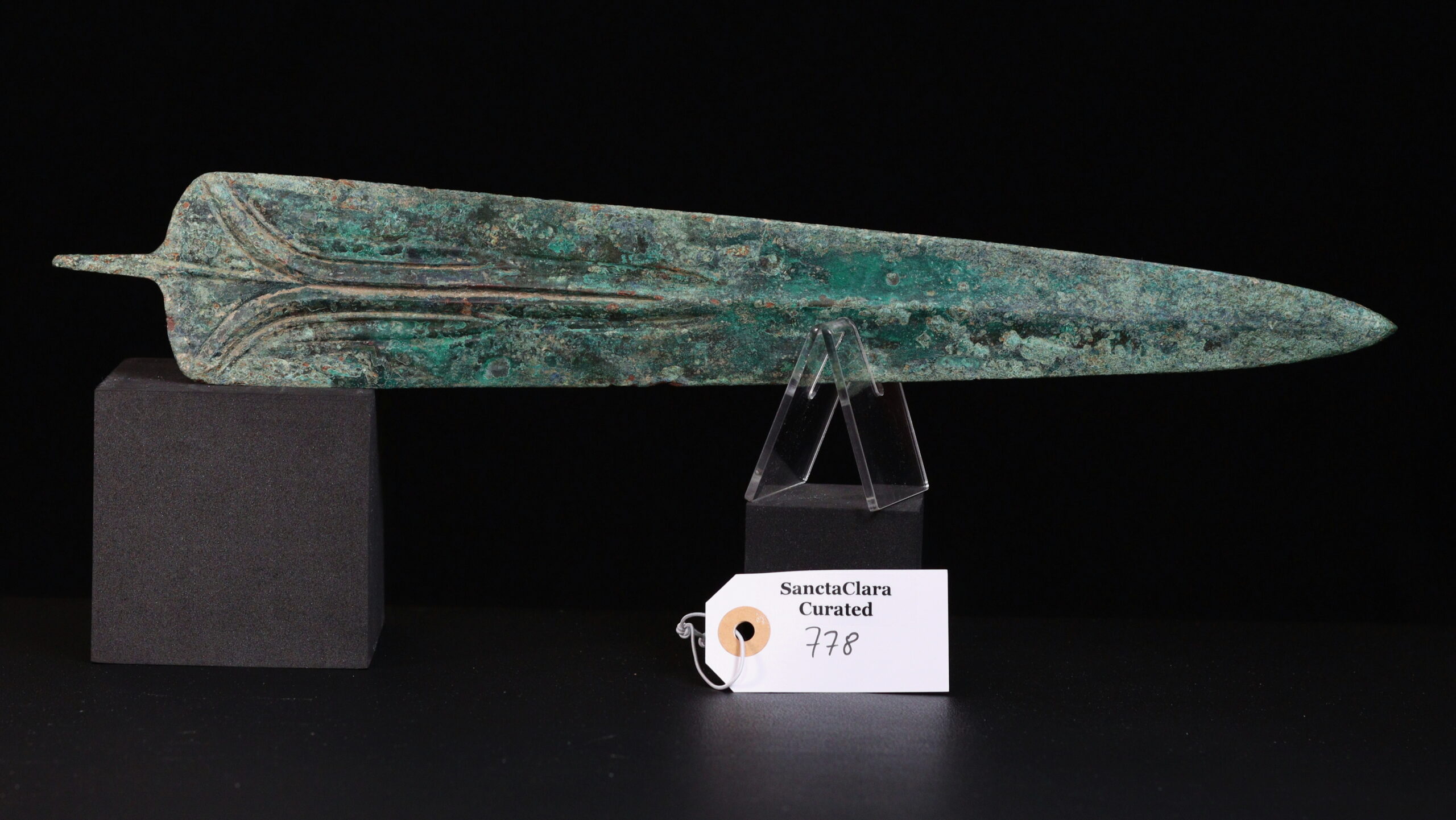
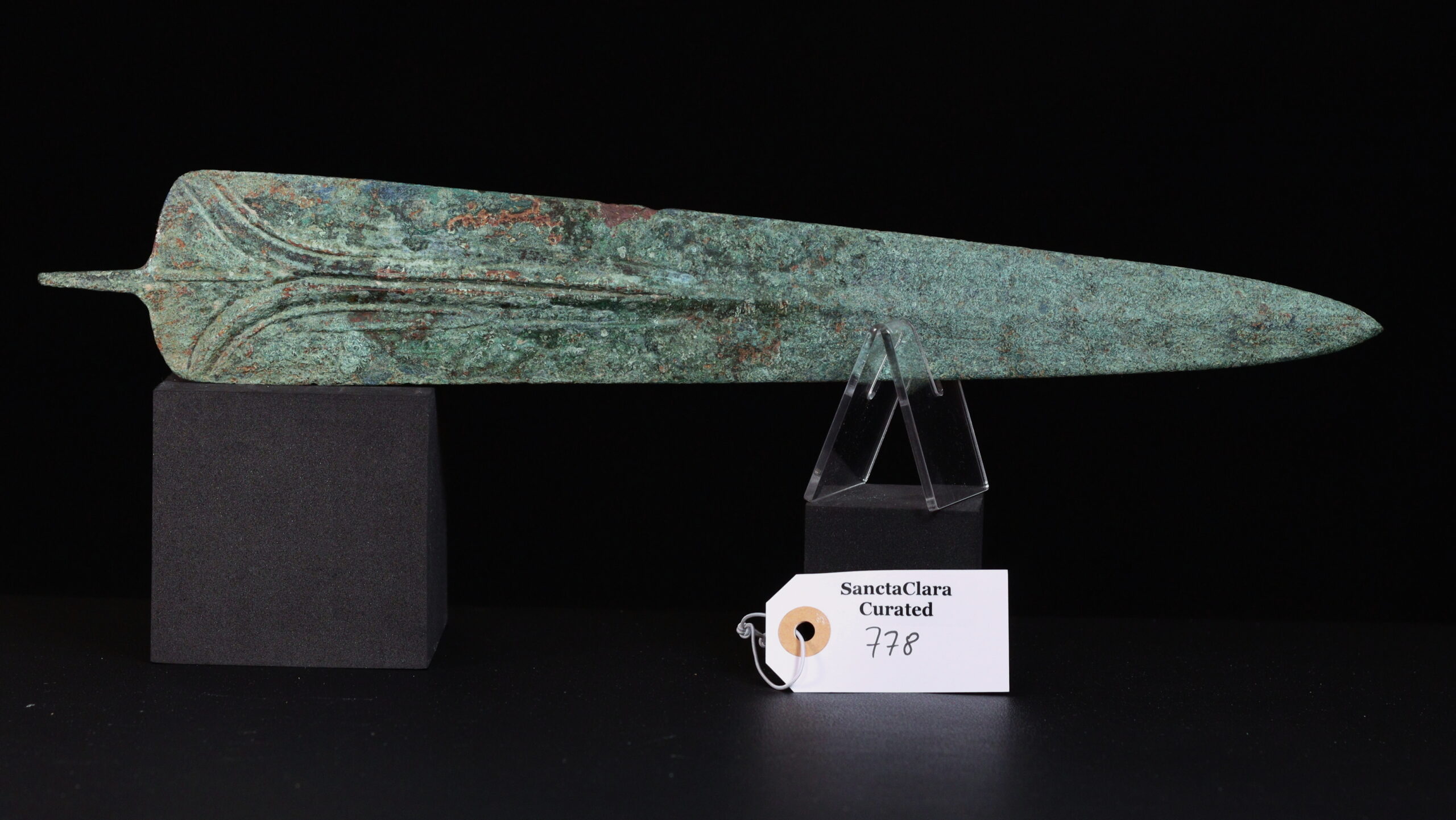
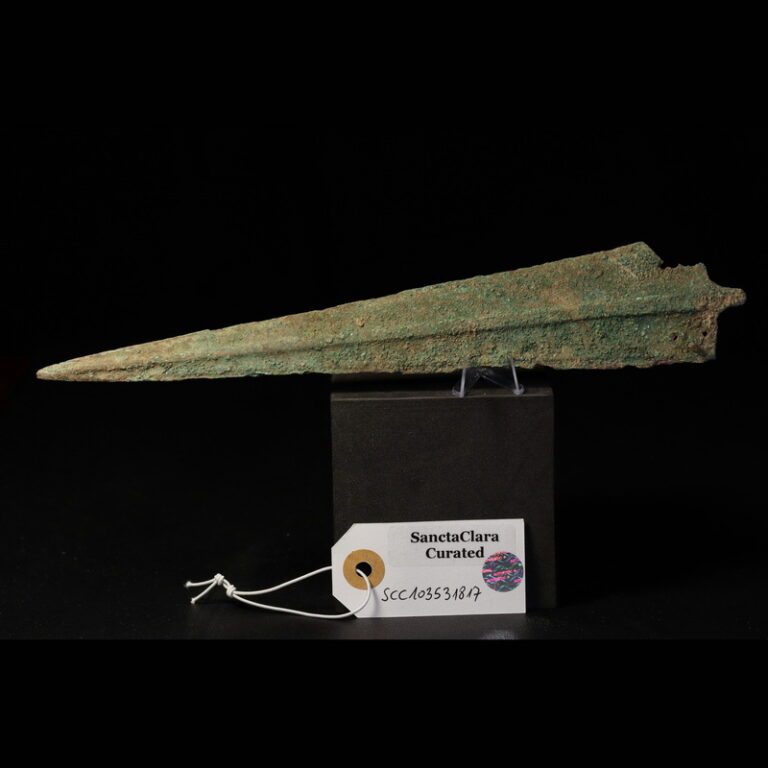
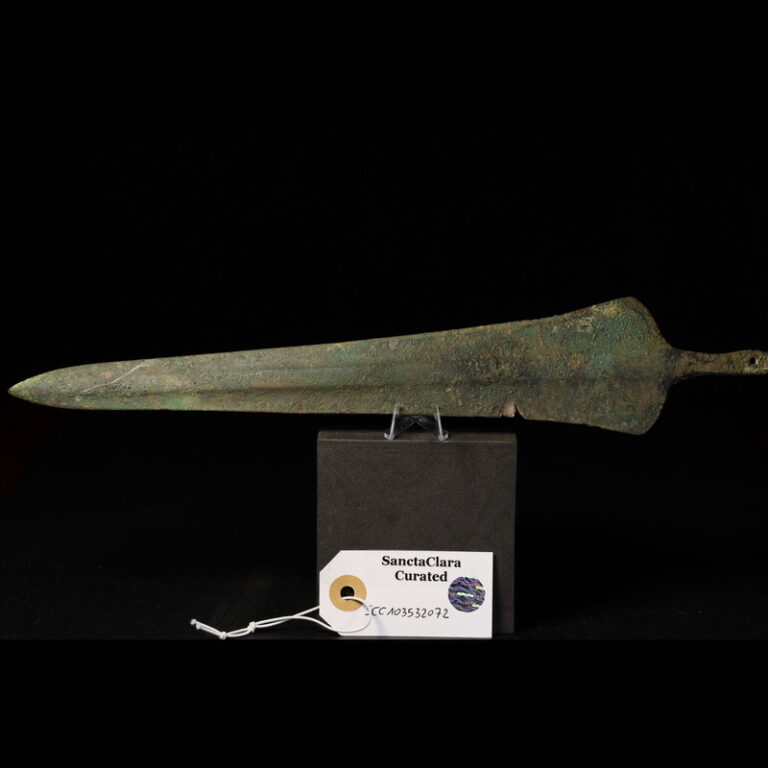
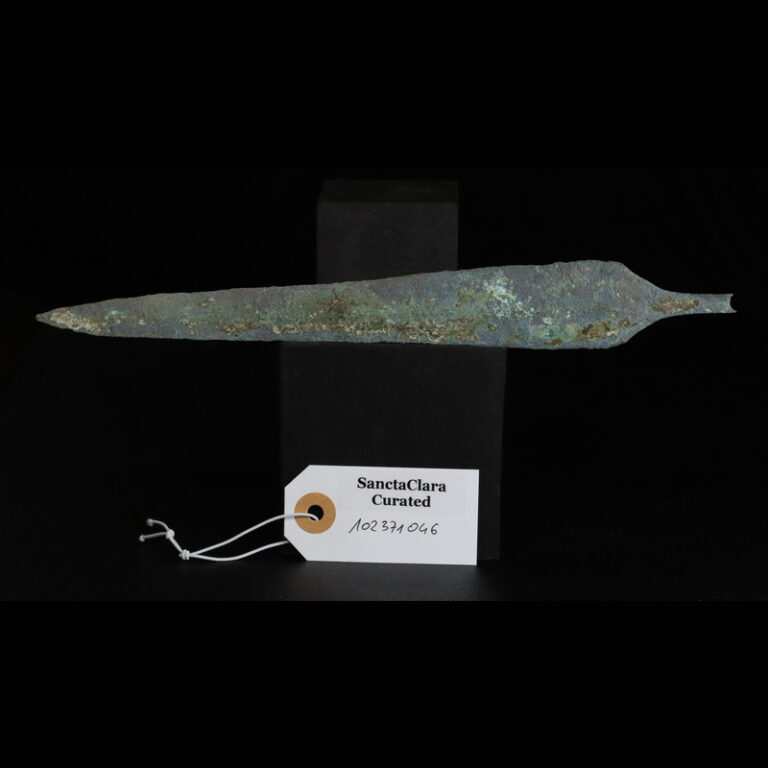
Mycenaean/Aegean, Ca. 1700 - 1200 BC A striking example of a two-edged bronze blade with a leaf-shaped design and a small tang providing a secure attachment to the sword hilt. The blade boasts a corrugated midrib that extends to the tip and flares at the shoulder. This type of blade is often wrongly characterized as a spear blade, which is contradicted by very short tang and faded traces of wide organic hilt guard left sometimes on the shoulders of such blades.
For similar see: Christie's, Live Auction 9482, The Art of Warfare, The Axel Guttmann collection part I, Lot. 24. Size: 390mm x 65mm, Weight: 380g an old Canadian collection formed in the 1980s. Mycenaean decorative motive, bronze with rich patina and thick mineralized incrustations, expected total length with hilt and handle 530 mm Late Helladic IIB 1480/1470--1420/1410 BCE
Myceanean sword in Hattusa, offered to god by Tudhaliya II -- similar decoration: B Germany, site unknown. Montelius (1900) xxxi. 75. Bastian & Voss, xiii. 1. Imperial Museum, Berlin. Naue (1903) xix. 3
Historical Significance
The Mycenaean civilisation (c. 1600-1100 BC) developed a warrior aristocracy whose military equipment became legendary. Mycenaean bronze smiths achieved alloy compositions and blade geometries unsurpassed until the development of tempered steel. Their weapons reflect the martial culture celebrated in Homeric epic.