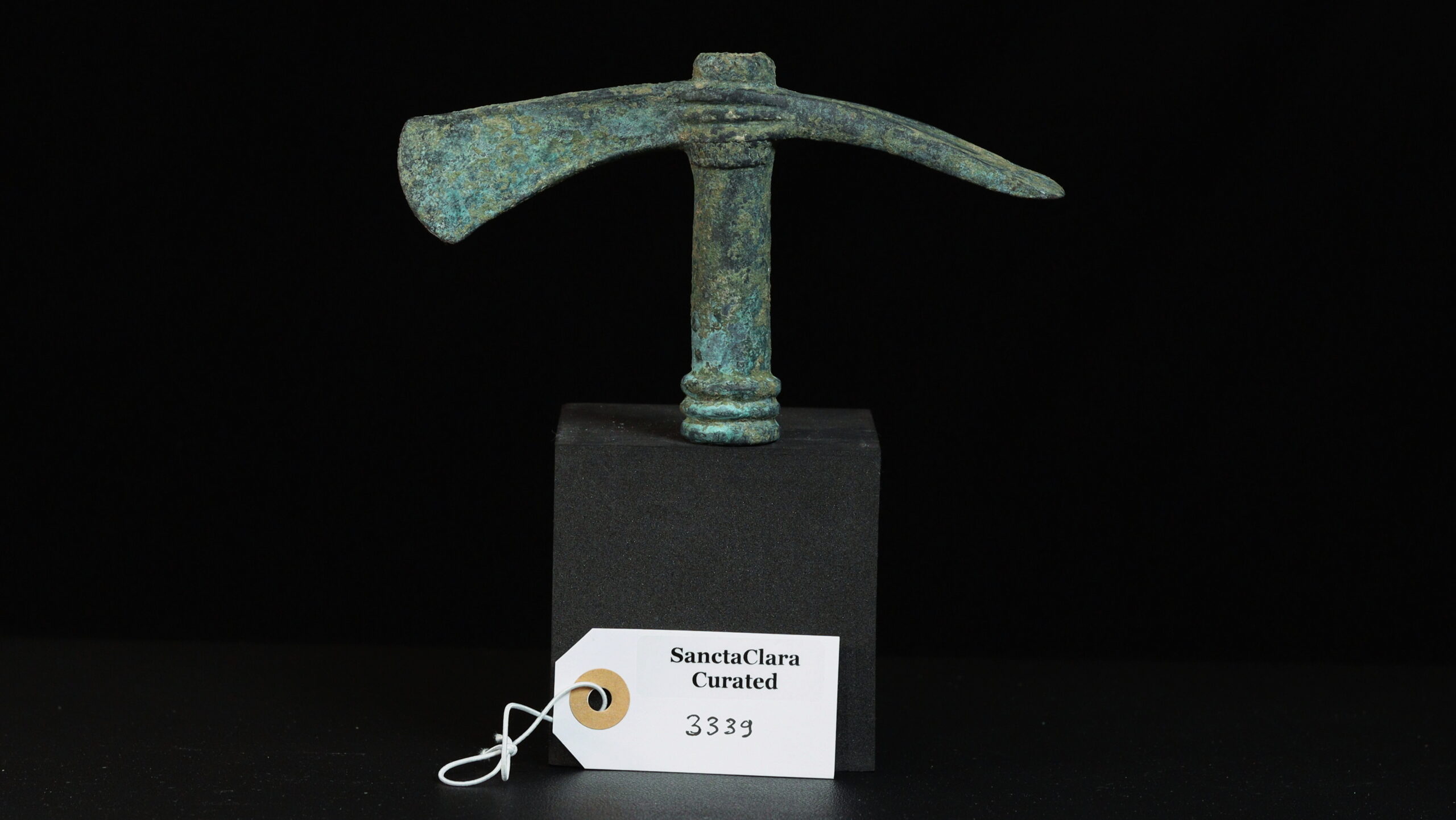
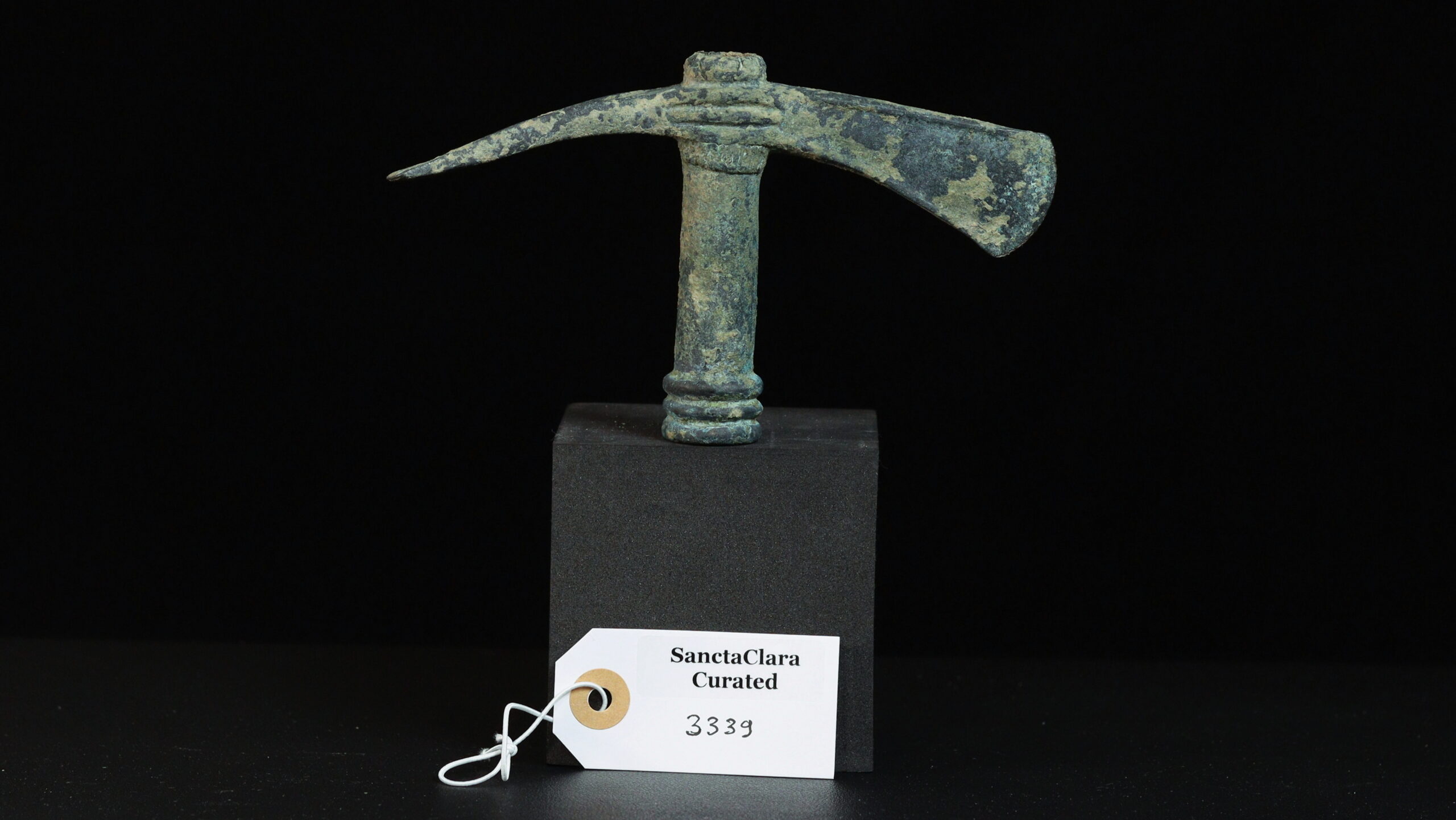
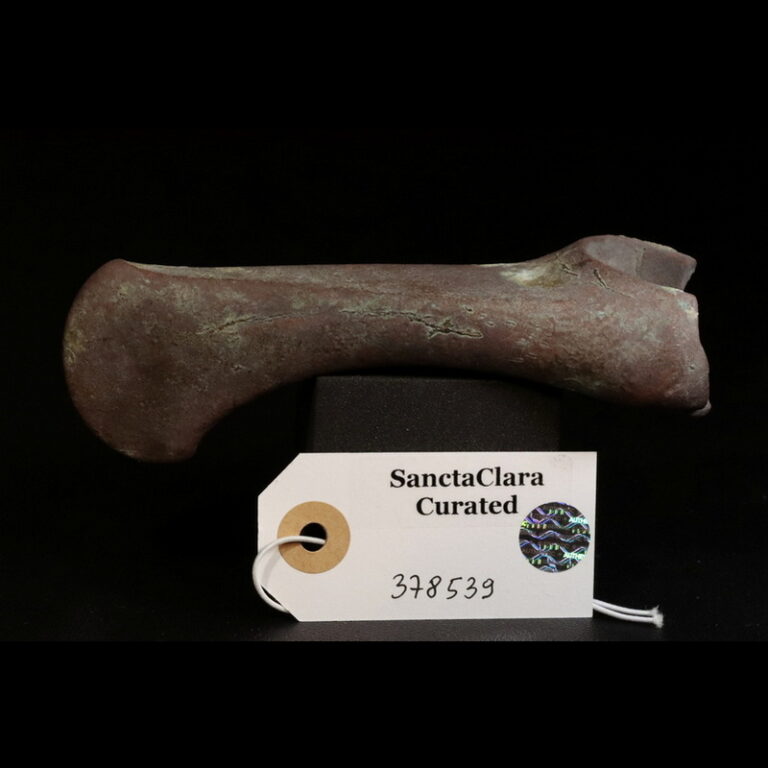
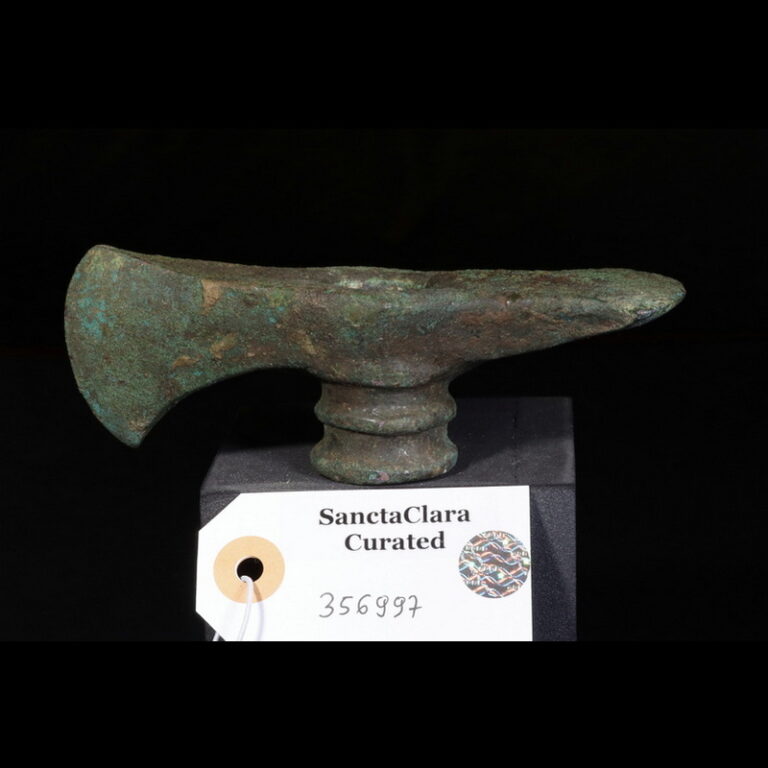
Bronze Decorated Shaft-Hole Axe-Adze
Ribbed Decoration:
You can clearly see raised ribs or rings at the top and bottom of the socket (and a decorative band in the center). This is a classic example of skeuomorphism---a design feature where a new material (bronze) mimics the construction of an older one. These ridges likely represent the leather thongs or rope lashings that would have been used to bind earlier stone or simple metal heads to a wooden shaft. In bronze, these lashings become structural reinforcement hoops. Late Bronze Age to Early Iron Age (approx. 1200 -- 800 BC)
L: 166mm, height 95 mm, shaft hole diam. 15-13mm, Weight: 293 g
Historical Significance
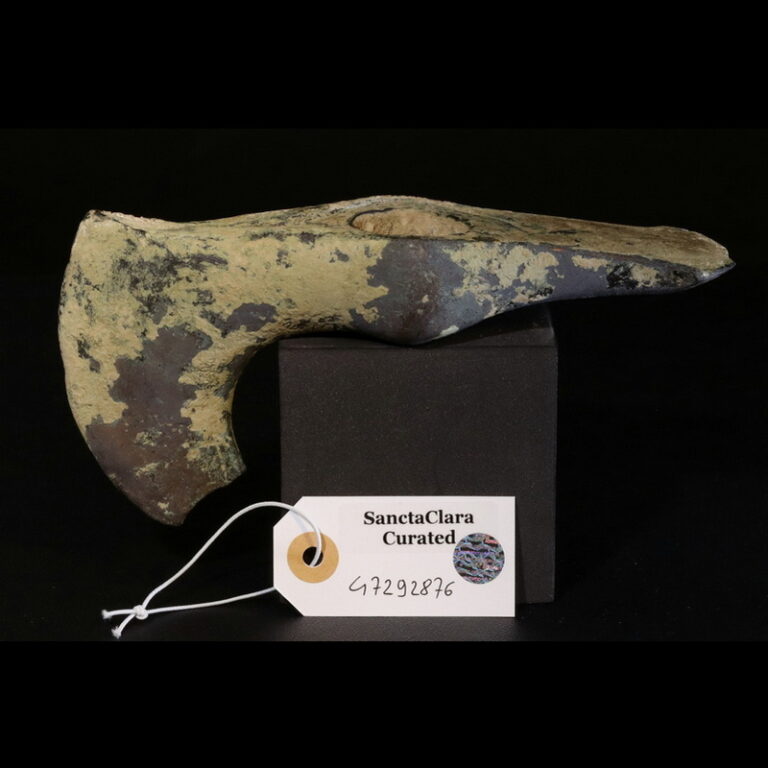
Shaft-hole axes represent a major technological innovation. Casting or drilling a hole directly through the axe head created a far stronger tool than lashing methods. This required sophisticated mould design with a removable core, a significant leap in metallurgical capability.