
Document
Attachments

SCC-84068495-2
Metadata
Title
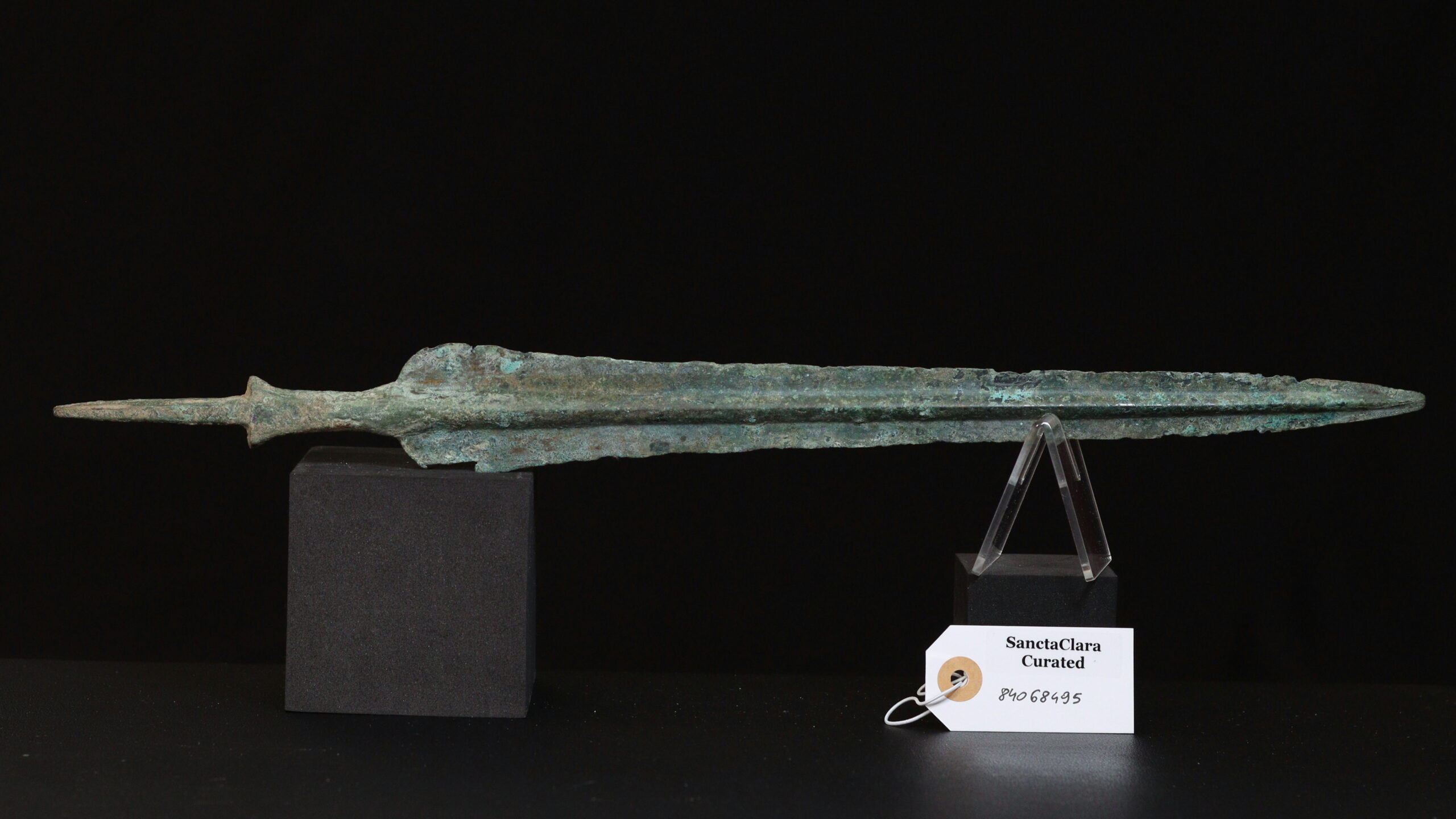
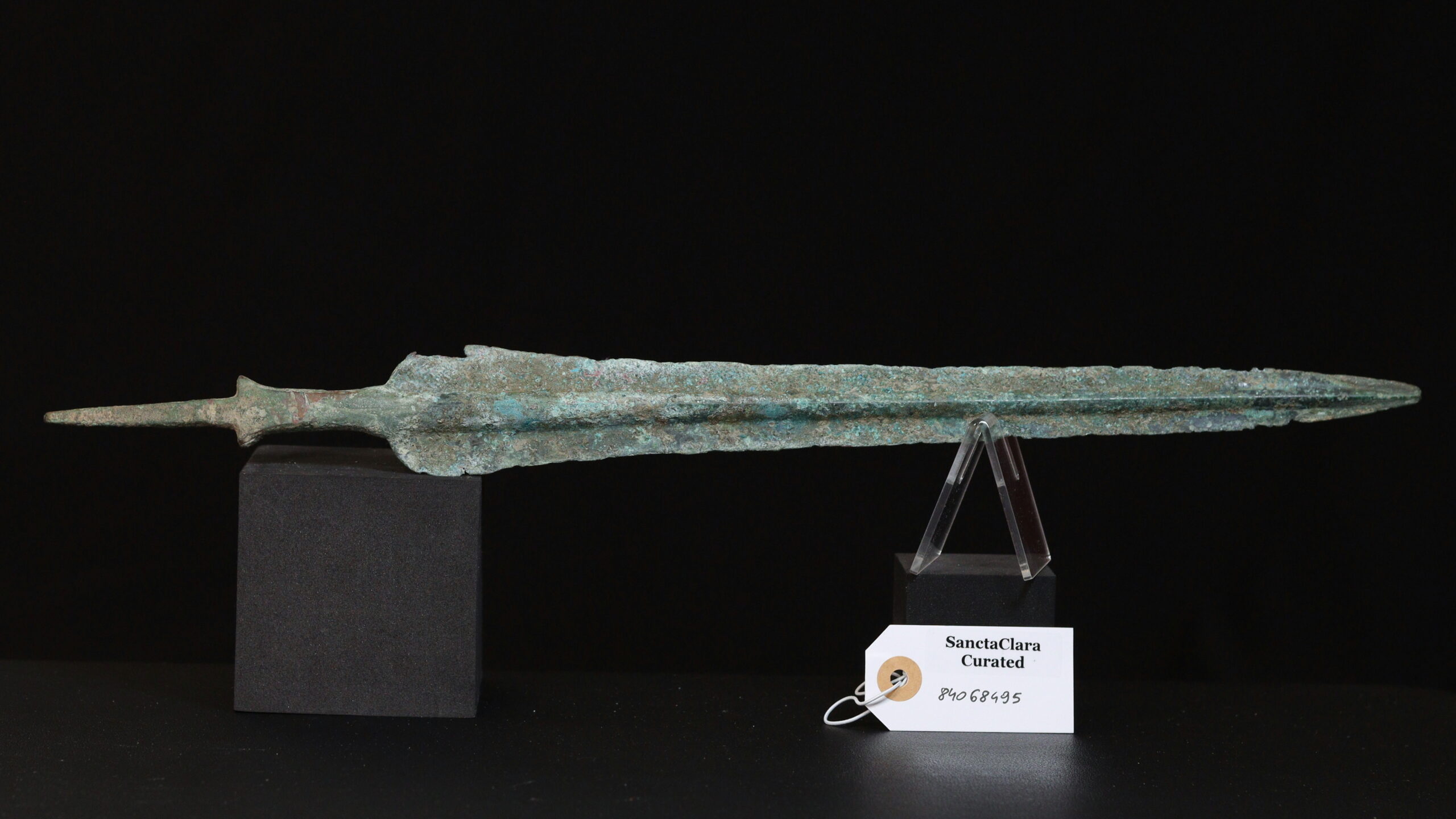
Long Bronze Concave Edge Spearhead with Wide Stop Ridge
Description
A finely cast Luristan bronze blade of exceptional length with a long triangular blade with concave edges, and prominent midrib. Very wide and sturdy stop ridge between neck and tang. Widening rounded shoudlers. Beautiful green and brown patination with earthen encrustations. Minor chips to blade edges consistent with age and possible ancient use. At 45.6 cm (nearly 18 inches) in length, this is a formidable weapon. While occasionally categorized alongside dirks or short swords due to its size, the morphology—specifically the long neck, stop ridge, and thin tang—strongly points to its use as a heavy spearhead or pike blade. - The Midrib: The prominent, raised midrib running down the center of the blade is a critical engineering feature. Bronze, while durable, can bend under heavy stress. The midrib dramatically increases the cross-sectional strength of the blade, preventing it from buckling when thrusting into a target (such as a shielded or armored opponent). - The Stop Ridge & Tang: The tang was designed to be driven into a hollowed or split wooden shaft. The wide stop ridge is perhaps the most important functional element for a polearm of this size. When a warrior thrust this pike with full force, the stop ridge absorbed the massive kinetic energy of the impact, preventing the heavy blade from driving deeper into the wooden shaft and splitting it down the middle. - Blade is slightly waisted, and flares wider at the shoulders. The most famous example of this geometry is the classical Greek Xiphos. We also see early iterations of this waisting in Late Bronze Age Mycenaean swords and the famous Naue II type swords that swept across Europe and the Aegean during the Bronze Age collapse. Comparative Analysis When evaluating this blade against similar artifacts from museum collections and excavations across the Near East, several patterns emerge: Tanged vs. Socketed: In many parts of Bronze Age Europe and the Near East, socketed spearheads (where the wood fits inside a metal cone) eventually became the dominant style. However, in the Iranian plateau (Luristan, Amlash, and Marlik cultures), heavy tanged spearheads with pronounced stop ridges remained highly popular and effective well into the Early Iron Age.
Catalogue Number
84068495
Category
Period
c 1200-700 BCE
Culture
Mediterranean or Luristan
Material
Bronze
Dimensions and weight
L 45.6 cm x W 4.4 cm, weight 346 g
Reference Items
Comparison to Marlik Weapons: Excavations at Marlik Tepe (northern Iran) have yielded very similar long-bladed, tanged spearheads, often buried in warrior elite tombs. These weapons share the leaf-like profile and structural midrib seen in this artifact. Elamite Parallels: Similar blade profiles are also seen in the armories of the neighboring Elamite empire, suggesting this highly effective design was widely traded and copied across the ancient Near East. Tanged vs. Socketed: In many parts of Bronze Age Europe and the Near East, socketed spearheads (where the wood fits inside a metal cone) eventually became the dominant style. However, in the Iranian plateau (Luristan, Amlash, and Marlik cultures), heavy tanged spearheads with pronounced stop ridges remained highly popular and effective well into the Early Iron Age.
Historical Significance
The bronzes of Luristan are famous worldwide for their high-quality casting and distinct typologies. The artisans of this region were master metallurgists, producing everything from intricate horse tack and finials to highly effective weaponry like this blade. The transition from the Late Bronze Age into the Early Iron Age in this region was marked by heavy militarization, leading to the mass production of specialized polearms and swords.
Curator Rating
5.0