
Document
Metadata
Title
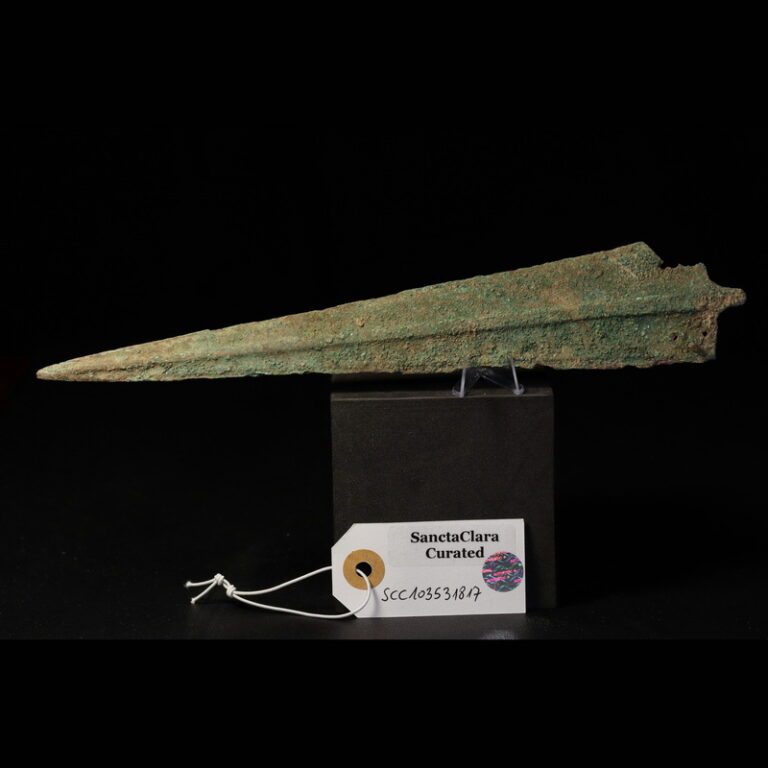
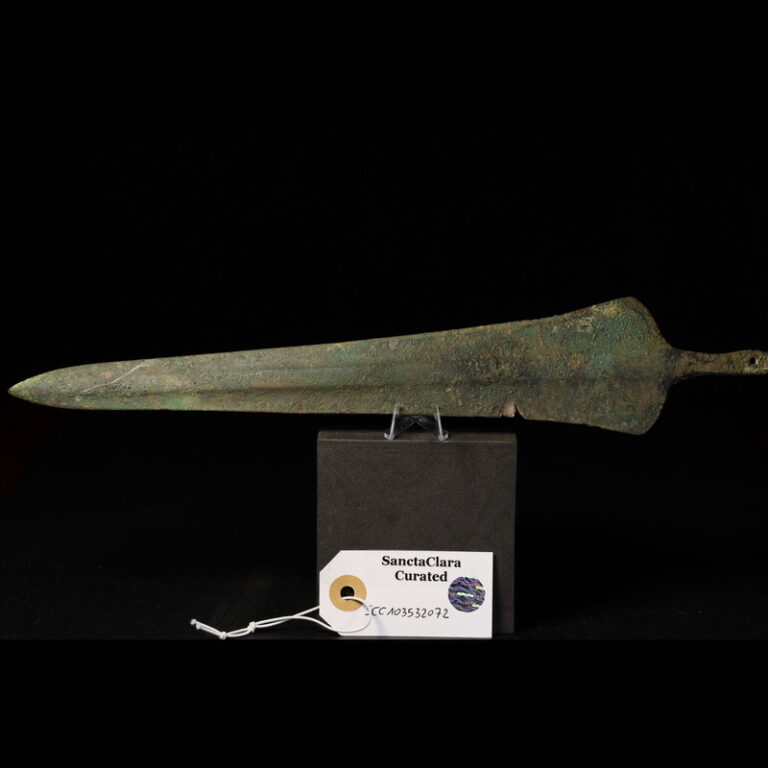
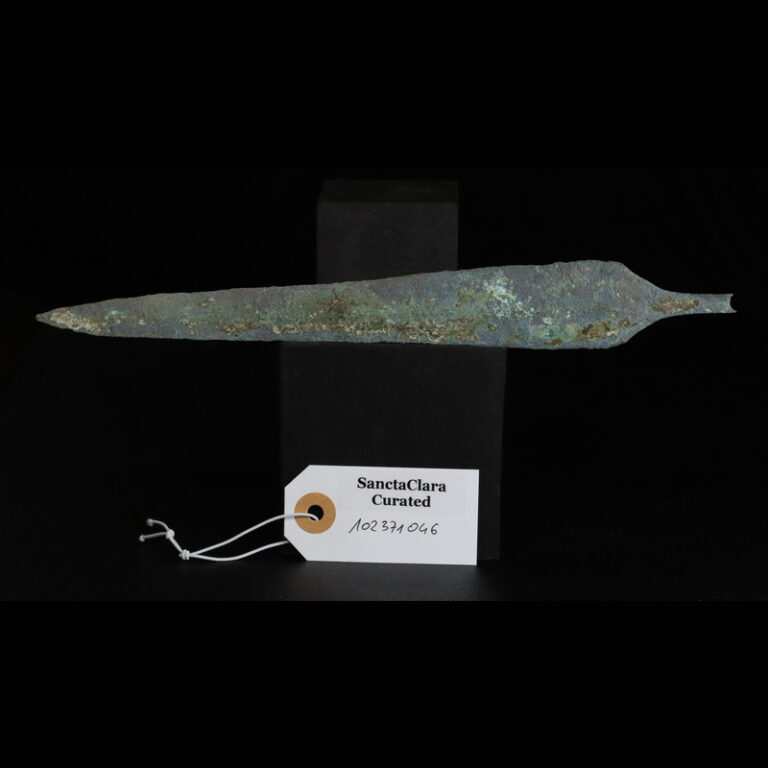
Luristan Copper and Bronze Age Dagger
Description
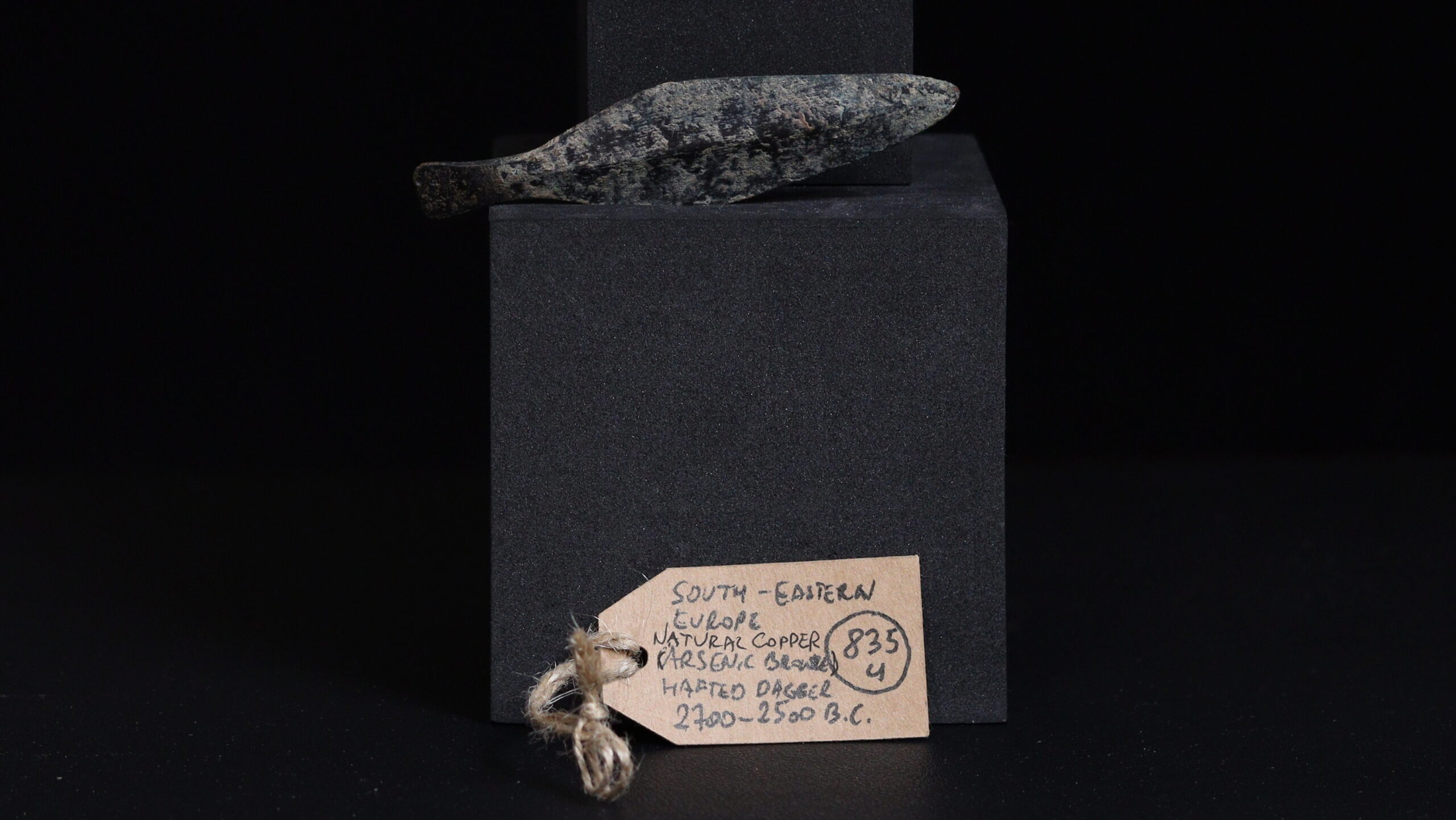
Copper arrowhead or knife blade, REF: Early Bronze Age bronze knife or dart-head 2700-2500 B.C. South-Eastern Europe Cast and hammered. Double-edged, rhomboidal shaped blade. Narrow and slightly thicker haft with rectangular cross section.
Catalogue Number
843758354
Category
Period
2450-2200 BCE
Culture
Elamite, Chalcolithic or South Eastern Europe
Material
Bronze
Dimensions and weight
L: 87mm W: 23 mm D: 4,1 mm. Weight: 19,67 g
Reference Items
Early Bronze Age bronze knife or dart-head 2700-2500 B.C. South-Eastern Europe Cast and hammered. Double-edged, rhomboidal shaped blade. Narrow and slightly thicker haft with rectangular cross section. South-Eastern Europe Length 3.5" (8.9 cm). Height 0.1” (0.3 cm). Width 1.2” (3.1 cm). For similar published archaeological examples see: - Bhookchenko S.N. Donetska katakombna kultura rannyogo etapu. Vol.2. Fig. plates. Lugansk, 2001, fig.71. - N. V. Ryndina, A. D. Degtyareva, Non-ferrous Metal of the Yamnaya Cultural-Historical Area from Sites of Ukraine: morphology and production technology, Sthookum plus. 2, 2018, fig. 3. - Klochko V. I., Weaponry of societies of the Northern Pontic culture circle: 5000-700 BC. Poznań : Adam Mickiewicz University, Institute of Eastern Studies, Institute of Prehistory, 2001, Fig. 43: 9
Historical Significance
Luristan bronzes represent one of the most distinctive metalworking traditions of the ancient Near East. The Lorestan Province of western Iran was renowned for sophisticated lost-wax casting and alloy control. The semi-nomadic peoples of the Zagros Mountains produced weapons of remarkable quality combining functional utility with artistic expression.
Curator Rating
5.0