
The Category Error at the Heart of “Civilisation”: Why Our Definitions Undervalue Egalitarian Complexity And Why Archaeology Still Measures Progress by the Size of the Palace
There is a question I have come back to repeatedly while handling the copper and early bronze material in this collection, and it is not a question about metallurgy. It is this: why do we describe a society of twenty thousand people, living in planned streets, casting metal to a consistent standard and trading across a thousand kilometres, as less advanced than a society half its size that happened to keep a king?
The answer, when you trace it back, is not archaeological. It is definitional. We built the hierarchy into the measuring instrument, and then we were surprised to find hierarchy everywhere we measured.
This article is about that circularity — and about what it has cost us. Because if the standard against which we judge human achievement quietly encodes a ruling class as a criterion of success, then every society that solved the problem of living together without one has been filed, for a century, under failure.
I. Childe’s List, and What It Actually Says
Every undergraduate meets the checklist. V. Gordon Childe’s 1950 paper “The Urban Revolution,” published in the Town Planning Review, set out ten diagnostic traits of civilisation and became one of the most-cited articles ever written by an archaeologist. It is worth reading the list not as a neutral description but as the political document it is.
Childe’s criteria include settlements denser than any before; full-time craft specialists; monumental public buildings; writing; predictive sciences; naturalistic art; long-distance trade; and membership based on residence rather than kinship. So far, so descriptive.
But then there are numbers three and five. Criterion three requires that the primary producers’ surplus be concentrated as tithe or tax paid to a deity or a divine king. Criterion five requires a ruling class — priests, civil and military officers — exempt from manual labour.
Read those again. They are not observations about what complex societies happen to contain. They are requirements. Under Childe’s definition, a society cannot be a civilisation unless somebody is extracting a surplus from somebody else, and unless a group of people has been excused from producing anything. Extraction is not a side-effect of the model; extraction is the model.
This has been noticed before. Michael E. Smith’s centenary reassessment in the same journal (Town Planning Review 80, 2009) documents both the paper’s extraordinary influence and the long-standing complaint — going back to Robert McCormick Adams in 1966 and Paul Wheatley in 1972 — that the ten criteria are a shopping list of logically unrelated traits rather than a coherent theory. But the criticism has generally been that the list is untidy. My argument is narrower and, I think, sharper: three of the ten items are not diagnostic traits at all. They are a description of a specific extractive arrangement, elevated to the status of a universal.
Childe did not discover that civilisation requires a parasitic elite. He defined civilisation as the presence of one, and archaeology has been confirming his definition back to him ever since.
II. The Ladder, and the Alternative
The problem hardened rather than softened in the decades that followed. Elman Service’s Primitive Social Organization (1962) and Morton Fried’s The Evolution of Political Society (1967) gave the discipline its ladders: band → tribe → chiefdom → state, and egalitarian → ranked → stratified → state. Both are unilinear. Both treat the accumulation of vertical rungs as the axis of development. And in both, “complexity” is operationalised almost entirely as vertical complexity — the number of tiers of authority, the depth of bureaucracy, the sharpness of class division.
A society may possess dense exchange networks, sophisticated craft transmission, elaborate councils, formal settlement planning and a functioning body of common law. If it lacks tiers of command, the ladder registers it as politically primitive. Horizontal complexity is invisible to the instrument.
The corrective exists, and it is not new. Carole Crumley introduced heterarchy to archaeology in 1979 (“Three Locational Models,” Advances in Archaeological Method and Theory 2:141–173), developed it through the 1980s, and gave it its canonical statement in Ehrenreich, Crumley and Levy’s Heterarchy and the Analysis of Complex Societies (Archaeological Papers of the American Anthropological Association no. 6, 1995). There, heterarchy is defined as the relation of elements to one another when they are unranked, or when they possess the potential for being ranked in a number of different ways.
Two things about Crumley’s formulation deserve emphasis, because both are routinely lost in secondary summary.
First, the volume’s own framing is explicit that heterarchy arose from dissatisfaction with the Service model — the concept was built as a critique, not as a footnote. Second, Crumley insists heterarchy is not the mirror-image of hierarchy. Hierarchies can be nested inside heterarchies; a society can rank people by age in one context, by skill in another, by lineage in a third, with no single ranking dominating. The term itself she borrowed from Warren McCulloch’s 1945 work on nervous nets, where circuits produce coherent behaviour without a controlling centre.
That is a considerably better description of most human societies that have ever existed than the ladder is.
III. Trypillia: Three Hundred Hectares, No Palace
The strongest European test case sits in the forest-steppe of the Dnieper–Southern Bug interfluve, c. 4100–3400 BC. The Cucuteni–Trypillia complex produced settlements on a scale that has no contemporary parallel: Taljanky at roughly 320 hectares, Nebelivka at around 238, Maidanetske at about 200, with Tomashivka and Dobrovody in the 150–250 hectare range. Geophysical survey at Nebelivka mapped some 1,445 structures.
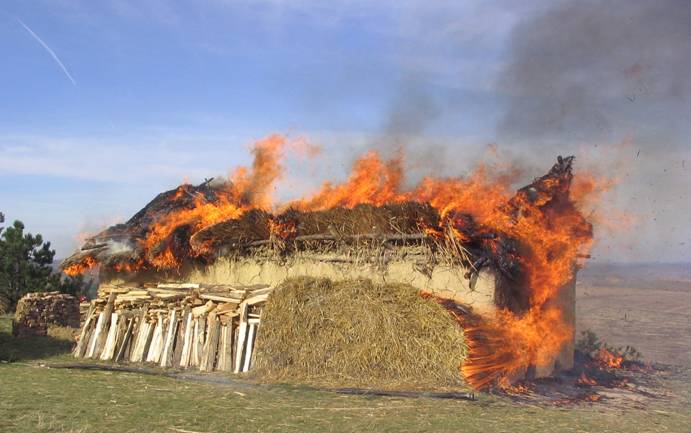
The layout is the striking part. Houses are arranged in vast concentric ellipses, with a substantially empty interior, radial pathways, and periodically an outsized building — the “mega-structure” or assembly house — set at intervals around the circuits. And what is not there is more striking still: no palace, no citadel, no central storage complex, no temple precinct, no fortification. House sizes cluster tightly. Nobody is living conspicuously better than their neighbours.
I want to be careful here, because this is a live and quite bad-tempered debate, and honest handling of it strengthens rather than weakens the argument.
On population, there is no settled figure and anyone quoting one is overreaching. The Kiel school — Johannes Müller, Knut Rassmann, René Ohlrau — works from building counts and floor-area-per-person assumptions to reach something like 12,000 to 46,000 at Maidanetske, with a working average near 29,000. The Anglo-Ukrainian project led by John Chapman and Bisserka Gaydarska argues from several converging lines of evidence for far smaller resident populations, possibly seasonal, and has proposed distributed governance, assembly and pilgrimage models in which the mega-sites functioned as periodic aggregation centres rather than permanently occupied cities.
My own assessment, offered as inference rather than fact: the minimalist case is stronger on the specific question of permanent residence, the maximalist case is stronger on peak aggregation, and the disagreement matters less to the present argument than either side supposes. Whether twenty-nine thousand people lived at Maidanetske year-round or six thousand lived there with tens of thousands assembling seasonally, the organisational achievement is comparable and the absence of a governing apparatus is identical in both readings.
The quantitative work is where this becomes hard to dismiss. Robert Hofmann, Nils Müller-Scheeßel and Johannes Müller, writing in Antiquity (98:398, 2024, pp. 380–400) under the title “Trypillia mega-sites: a social levelling concept?”, computed Gini coefficients from approximately 7,000 house floor-areas across 38 sites. Their finding is that inequality was temporarily reduced at the mega-sites relative to what came before and after — and that differentiation re-emerged only after several generations, plausibly in connection with the sites’ abandonment. Their conclusion is worth stating plainly: an increase in the complexity of a society does not necessarily go hand in hand with an increase in vertical social differentiation, and large aggregations of population can, for a time at least, find mechanisms to reduce inequality.
That sentence, published in Antiquity, is the empirical death of Childe’s fifth criterion.
IV. Harappa: A Civilisation That Left No Portrait of Its Ruler
The Indus material is the single strongest case, chiefly because the sample is enormous and the excavation history is nearly a century deep.
Adam S. Green’s “Killing the Priest-King: Addressing Egalitarianism in the Indus Civilization” (Journal of Archaeological Research 29, 2020, pp. 153–202) is the pivotal recent synthesis. Green’s argument is that after roughly a hundred years of investigation, clear evidence for a ruling class of managerial elites has still not materialised — and that John Marshall’s original 1931 impression of relative egalitarianism was, in its essentials, correct.
The supporting observations are familiar but rarely assembled with their full force:
- No royal tombs. Not modest ones — none identified at all, across the major urban centres, after a century of looking.
- No palaces, no throne rooms, no unambiguous temples. The Great Bath at Mohenjo-daro is monumental and probably ritual, but it is a shared facility, not a residence or a treasury.
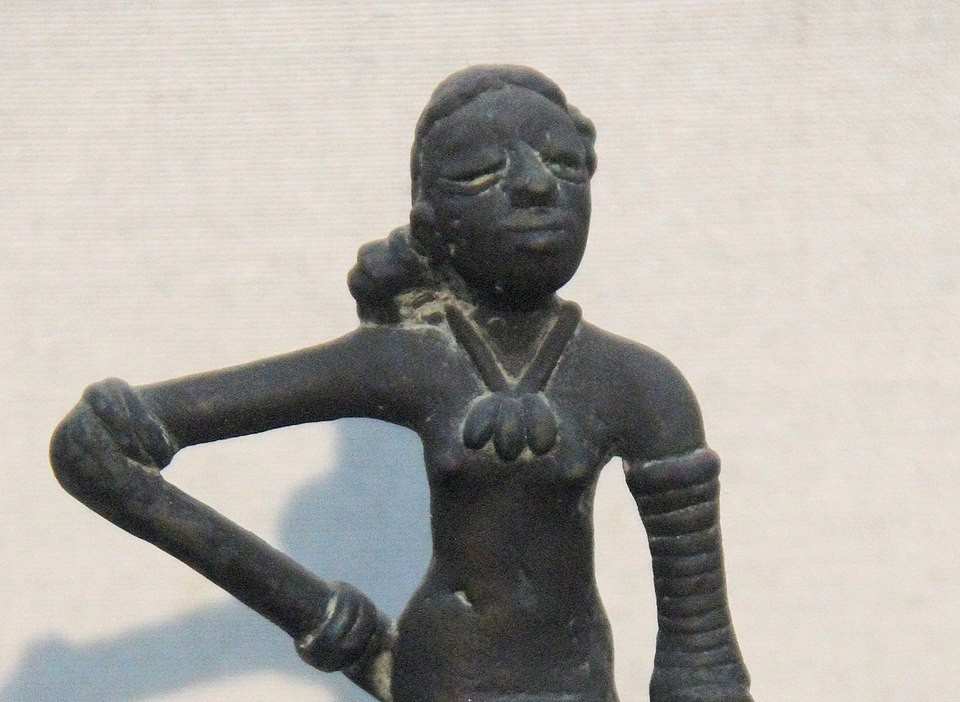
- No ruler iconography. The so-called “Priest-King” figurine is a modern label attached to a small stone bust; Green’s title is a deliberate provocation against it.
- Standardised weights and fired bricks across a territory larger than Egypt and Mesopotamia combined — evidence of coordination, and evidence that coordination does not require a coordinator with a crown.
- Sanitation distributed across ordinary housing, rather than concentrated in an elite quarter. This is perhaps the most telling single datum. Drains and wells serve the general housing stock. Compare the distribution of amenity in almost any contemporaneous state.
- A script that has resisted decipherment — and which, whatever it encodes, conspicuously lacks the monumental royal inscription that dominates the Egyptian and Mesopotamian record. There are no king-lists, no conquest annals, no “I built this” declarations carved into stone.
Green’s formulation is the one to hold onto: a ruling class is not a prerequisite for social complexity.
But the Indus was not a paradise, and the article that says it was is dishonest. Gwen Robbins Schug and colleagues, in “A peaceful realm? Trauma and social differentiation at Harappa” (International Journal of Paleopathology 2, 2012, pp. 136–147), found interpersonal violence at Harappa structured along lines of gender and community membership, with cranial trauma rising through time. In the urban phase roughly 4% of the skeletal population showed evidence of interpersonal violence; in the post-urban, climate-stressed phase that figure rose to around 30%. Robbins Schug has been pointed about the interpretive stakes, rejecting what she describes as an unrealistic myth of the Indus as an exceptionally peaceful prehistoric urban civilisation.
Both things are true. Absence of a ruling class is not absence of domination. The Indus record shows a society that distributed wealth and infrastructure remarkably evenly and concentrated violence on marginalised groups, particularly during collapse. Any honest account holds both.
V. Varna: The Case That Resists the Argument
Now the difficult one — and I want to handle it carefully, because the popular version of the Varna story is being told in a way the evidence does not support, and I would rather lose a rhetorical point than repeat it.
The Varna I necropolis on the Bulgarian Black Sea coast, c. 4600–4200 BC, was found in 1972 by an excavator operator, Raycho Marinov, and excavated by Mihail Lazarov and then Ivan Ivanov over the following two decades. It produced more than 3,000 gold artefacts in some 28 types, weighing around 6.5 kilograms in total. Grave 43 alone — an adult male, reported at roughly 40 to 50 years of age, though you will find figures as high as sixty in secondary sources, and the discrepancy is worth noting — contained about 990 gold objects weighing approximately 1.5 kilograms.
The claim that has travelled furthest is curator Vladimir Slavchev’s: that the Varna gold exceeds by several times the combined weight and number of all gold artefacts recovered from every excavated site of the same millennium, roughly 5000–4000 BC, anywhere in the world, Mesopotamia and Egypt included. That is a real scholarly claim, but it is a bounded superlative — a specific epoch, a specific excavated dataset — and it should be stated as such rather than as an absolute.
Here is the problem for the thesis of this article. Varna is not evidence of complexity without concentration. It is the earliest clear evidence of extreme wealth concentration in Europe. Iain Mathieson and colleagues, publishing the genomic history of southeastern Europe in Nature (555, 2018), described Varna as one of the first places in the world with evidence of extreme wealth inequality. Chapman, Higham, Slavchev, Gaydarska and Honch, in the European Journal of Archaeology (2006), read the cemetery as documenting the emergence of social differentiation. The mainstream reading — emergent chiefdom, or the first documented complex society in Europe — is not a failure of imagination. It is what a kilo and a half of gold in one grave ordinarily means.
So does Varna sink the argument? I do not think so, but it changes its shape, and the changed shape is more interesting.
The smith hypothesis
There is a live proposal that the Grave 43 individual was himself a working metalworker. Raiko Krauß and colleagues (2014) argued from the skeleton that the absence of pronounced upper-arm muscle robusticity is difficult to reconcile with a warrior, while heavy lower-arm development is consistent with sustained work on soft metals — copper and gold. On that reading, the wealthiest burial in the prehistoric world belonged to a man whose authority derived from what his hands could do.
I find this attractive. I also have to report that it is contested. Verena Leusch, Barbara Zäuner, Vladimir Slavchev, Raiko Krauß, Barbara Armbruster and Ernst Pernicka revisited the question in “‘Rich metallurgists'(?) graves from the Varna I cemetery: re-discussing the social role of the earliest metalworkers” (in Brysbaert and Gorgues, eds., Artisans versus Nobility?, Sidestone Press, 2017). Their conclusion is sceptical: the same osteological markers are equally consistent with other activities, notably prolonged travel associated with long-distance trade, and confidently identifying any Varna grave as a metalworker’s — whether from grave goods or from bones — is not currently possible.
That same review, however, produced a detail I regard as the most quietly devastating in the entire Varna literature. The famous “gold penis sheath” was, according to the original excavation documentation, positioned beside the right thigh, not on the genitals. And it may not be a sheath at all: following Lichardus, the authors suggest it is a gilded imitation of a tuyère — the ceramic nozzle through which air is blown into a furnace to raise smelting temperature.
Consider what that reframing does. The single most sexualised object in European prehistory, endlessly reproduced as an emblem of chiefly virility, may in fact be a gold-plated model of a piece of furnace equipment. Not a symbol of the man’s body. A symbol of his craft.
What Varna actually supports
My reading, offered explicitly as my own framework rather than as consensus: Varna documents concentration of wealth without an architecture of control. There is gold in quantity. There is no palace, no citadel, no fortification, no evident settlement hierarchy of the kind that a chiefdom model would predict, and no administrative apparatus. The gold is in the ground, not in a treasury; it is expended, not accumulated.
That is a genuinely different structure from a Mesopotamian temple economy, and calling both “stratification” flattens the distinction. The most defensible version of the Varna argument is not that the man in Grave 43 was an ordinary fellow among equals — he was manifestly not — but that the basis of his standing may have been productive and transformative skill rather than inherited office or coercive capacity. Metalworking in early societies is characteristically an ambivalent, quasi-sacred vocation; the smith who takes green stone and returns bright metal is doing something that looks like transformation of the world’s substance. Authority earned that way is not the same institution as authority collected as tax.
I hold that reading at moderate confidence, and I flag that a determined critic can reasonably reply: gold is gold, and 1.5 kilograms of it in one grave is what an elite looks like at the moment it forms. That reply deserves a hearing.
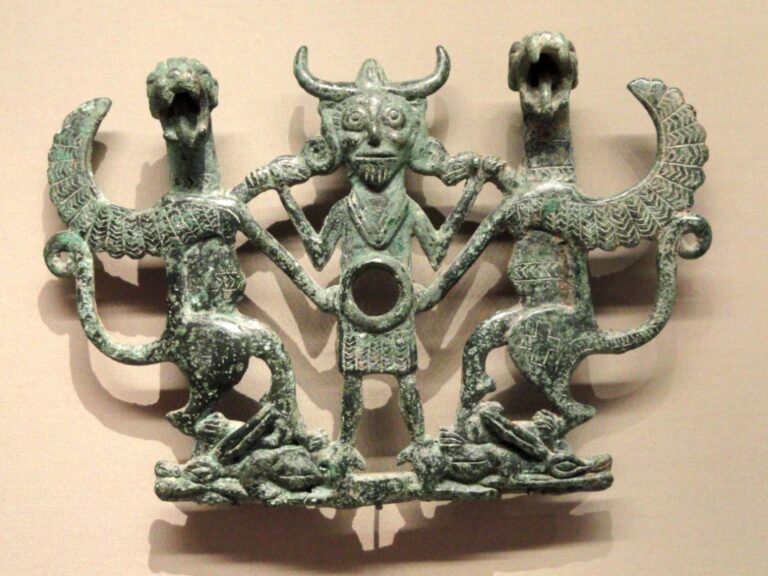
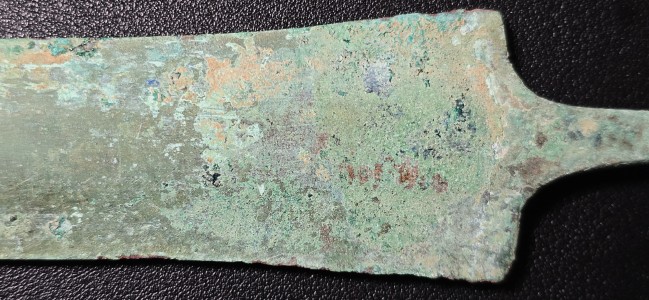
The collection holds material from precisely this Old European copper horizon — among them the copper axe-adze catalogued here as Lot 43951422, attributed to around 4300 BC, and the Eneolithic shaft-hole battle axe Lot 891. These are, in the most literal sense, the products of the tradition the Varna man belonged to: shaft-hole casting in copper at a scale and quality that Old Europe reached well before the Aegean or the Levant. Whatever else the Varna necropolis records, it records a society that took metalworking seriously enough to bury a kilo and a half of gold with someone who may have practised it.
VI. The Wider Pattern
The cases do not stand alone, and they vary considerably in how well they bear the weight. My assessment of each, with confidence stated:
| Case | Approx. date | What it demonstrates | Strength for the argument |
|---|---|---|---|
| Indus / Harappan | 2600–1900 BC | Urban scale, standardisation, distributed infrastructure; no royal tombs or ruler iconography | High. Best-evidenced case; century-deep excavation record |
| Cucuteni–Trypillia | 4100–3400 BC | 150–320 ha settlements, uniform housing, measurable Gini reduction | High. Quantified in Antiquity 2024; population figures unresolved |
| Teotihuacan | 100 BC–AD 550 | Standardised multi-family apartment compounds; no royal tomb found despite decades of search; Linda Manzanilla’s collective co-rulership model | Good. Reading shifts after c. AD 350 |
| Tlaxcallan | Late Postclassic | Described by Fargher, Blanton and Heredia Espinoza as among the most collective states in human history; part of Blanton and Fargher’s collective-action theory (2008) | Good |
| Poverty Point / Watson Brake | 1700–1100 BC / c. 3500 BC | Monumental earthworks — roughly 750,000 m³ of soil moved at Poverty Point, basket by basket — built by non-agricultural societies | Good. Monumentality without agriculture or state |
| Göbekli Tepe | 9600–8200 BC | Monumental enclosures raised before farming | Qualified. Recent evidence of domestic structures and cisterns complicates both the “pure sanctuary” and “simple egalitarian” readings |
| Caral / Norte Chico | 3000–1800 BC | Monumentality with little evidence of warfare | Moderate |
| Çatalhöyük | 7100–5700 BC | Large aggregated settlement without evident hierarchy | Weak. Recent work suggests differentiation increasing over time |
| Minoan Crete | 2000–1450 BC | The “no fortifications” argument | Weak. Heavily and fairly criticised; avoid |
| Varna | 4600–4200 BC | Extreme wealth concentration without architecture of control | Counter-case, valuable precisely because it resists |
VII. A Hundred Generations
If the individual cases can be argued away one at a time — and they can, by a sufficiently motivated critic — the aggregate data cannot.
Timothy Kohler, Michael E. Smith, Amy Bogaard, Gary Feinman and colleagues published “Greater post-Neolithic wealth disparities in Eurasia than in North America and Mesoamerica” in Nature (551, 2017, pp. 619–622), computing Gini coefficients from house-size distributions across 63 sites. Their medians: 0.17 for hunter-gatherers, 0.27 for horticulturalists, 0.35 for larger-scale agricultural societies, rising to a modelled Old World peak around 0.48 at approximately AD 1. They attributed the sharper Eurasian trajectory to the availability of large domesticable mammals — which permitted agricultural extensification and, in time, a mounted warrior elite.
The follow-up is the decisive publication. The GINI Project’s special feature in PNAS (vol. 122, issue 16, 22 April 2025) scaled the method dramatically. The flagship paper — Kohler, Bogaard, Ortman, Crema and colleagues, “Economic inequality is fueled by population scale, land-limited production, and settlement hierarchies across the archaeological record” — draws on a sample of more than 1,100 sites and more than 47,000 residential units, spanning over 10,000 years. Its central finding is that persistent wealth inequality typically lags the onset of plant cultivation by more than a millennium, is tied to land-limited production and to hierarchies of settlement size — and that settlements not enmeshed in those systems remain relatively egalitarian even long after plant and animal domestication.
The companion paper, by Kerig, Crema, Birch, Feinman, Green, Gronenborn, Lawrence, Petrie, Roscoe, Thompson and Kohler, is titled: “100 generations of wealth equality after the Neolithic transitions.”
A hundred generations. Two and a half thousand years of farming societies that did not produce a ruling class, documented across more than a thousand sites. That is not a handful of curiosities filed under exceptions. It is a substantial fraction of the settled human past, and the checklist has no place to put it.
VIII. What I Am Not Claiming
An argument of this shape attracts a particular kind of romanticism, and I would rather pre-empt it than be accused of it.
“No evidence of elites” is partly an argument from silence. Trypillia has almost no burial record at all — that is a preservation and practice gap, not a demonstration. The Indus script remains undeciphered, so we cannot say what it does not say with full confidence. Absence of proof is not proof of absence, and any account that does not concede this is doing advocacy rather than archaeology.
Egalitarian does not mean non-coercive. The defensible claim is the absence of a hereditary, surplus-extracting ruling class. It is not the absence of domination. Small and mid-scale societies enforce conformity through gossip, ostracism, ritual sanction and gendered hierarchy, and these can be brutal. The periodic burning of Trypillian houses, whatever else it was, was not obviously a gentle institution.
Several of these societies did not last. The Trypillia mega-sites were abandoned. The Indus cities were abandoned. If a critic wishes to argue that non-hierarchical organisation fails to scale in time as well as in population, the abandonment record gives them material, and the honest response is that we do not yet know whether governance failure, climate, disease or something else drove it.
The popular synthesis is contested. David Graeber and David Wengrow’s The Dawn of Everything (2021) put much of this material before a general audience, drawing directly on Chapman and Gaydarska for Trypillia and on the Teotihuacan literature, and attacking the Hobbes-versus-Rousseau framing that structures most public discussion. I think the book performs a real service. I also think readers should know that the academic pushback is substantial: Chris Knight and Camilla Power have argued forcefully that it abandons strong evidence for our species’ egalitarian evolutionary origins and selects its cases; a Hunter Gatherer Research special issue (8:3–4, 2022) collects those critiques; Walter Scheidel disputes its handling of evolutionary approaches; and Ian Morris (“Against Method,” American Journal of Archaeology 126:3, 2022) challenges its treatment of the Poverty Point and Trypillia data specifically. Notably, the Trypillia specialists Graeber and Wengrow rely upon are more cautious about population and permanence than Graeber and Wengrow are.
Marshall Sahlins’s “original affluent society” (in Stone Age Economics, 1972) is frequently invoked in these discussions and has been substantially criticised for selective use of ethnographic data. Cite it with that caveat or not at all.
I would also name the benchmarks that would change my mind. If ancient DNA or newly located burials revealed concealed hereditary elites at Trypillia or in the Indus cities; if the GINI dataset’s egalitarian signal proved to be a preservation artefact of which structures survive; or if the Trypillia abandonment were shown to follow from a governance failure intrinsic to non-hierarchical scale — any one of those would materially weaken the case made here. I do not expect them, but I would rather say in advance what would count against me.
IX. Why This Is Not an Antiquarian Question
Here is where I stop being careful and say what I actually think.
We are living inside the late stage of the arrangement Childe made definitional. The World Inequality Report 2022 — Lucas Chancel, Thomas Piketty, Emmanuel Saez and Gabriel Zucman, for the World Inequality Lab — found that the richest 10% of the world’s population take 52% of global income and own 76% of all wealth, while the poorest half own 2%. Of all additional wealth accumulated since the mid-1990s, the top 1% captured 38%; the bottom half captured 2%. I use these figures rather than the more dramatic annual billionaire comparisons, because the latter mix gross assets against net household wealth and inflate the ratio; the WIR numbers are conservative and hold up.
Peter Turchin’s cliodynamic work — Secular Cycles (2009, with Sergey Nefedov) and End Times (2023) — models what happens next: elite overproduction, in which more aspirants compete for elite positions than exist, running alongside a “wealth pump” that moves income upward and immiserates the population, producing political disintegration on roughly two-generation cycles. Turchin predicted around 2010 that instability in the United States would peak near 2020. Walter Scheidel’s The Great Leveler (2017) supplies the grim complement: historically, once entrenched, inequality has been reduced only by catastrophic levellers — mass-mobilisation war, transformative revolution, state collapse, lethal pandemic. Joseph Tainter’s The Collapse of Complex Societies (1988) adds that complexity itself delivers diminishing returns until maintaining it costs more than it yields.
That is the trajectory, and it is not a conspiracy theory. It is the mainstream quantitative literature, read consecutively.
Now hold that against Kerig and colleagues’ title: a hundred generations of wealth equality after the Neolithic transitions. Two and a half millennia in which people farmed, built, traded, cast metal, and did not produce a class that lived off them.
The reason this matters is not nostalgia. Nobody is proposing that we return to the Dnieper forest-steppe in 3800 BC. The reason it matters is that we cannot build what we cannot imagine, and our imagination has been systematically pruned. If every model of a large, successful, sophisticated society available to us contains a ruling class as a structural component — because we defined it that way in 1950 and taught it that way ever since — then extraction will keep appearing as the price of civilisation rather than as one contingent way of organising it. We will keep treating the elite share as weather.
The archaeological record says otherwise. It says that scale did not automatically produce stratification; that the two came apart for a very long time; that people built cities without kings, standardised weights without a treasury, and mastered metal without a priesthood to license it. And it says that when a man who may have spent his life at a furnace was buried with more gold than anyone else on earth possessed, there was still no palace anywhere near him.
We should want to know how they did that. Not because the past offers a template — it does not — but because the range of what humans have actually accomplished is wider than the range we currently permit ourselves to consider. Every year we spend without a serious model of a society organised around production rather than extraction is another year in which the existing arrangement takes its share, and the share grows, and we call it inevitable.
It was not inevitable. It was a definition. Definitions can be rewritten.
Transparency Note
This article distinguishes between three kinds of claim, and readers are entitled to know which is which.
Established and well-evidenced: Childe’s ten criteria and their content; Crumley’s formulation of heterarchy; the Trypillia site sizes and the Antiquity 2024 Gini findings; Green’s synthesis of the Indus evidence and Robbins Schug’s trauma data; the Varna gold quantities and their find circumstances; the Kohler 2017 Nature Gini values and the 2025 PNAS GINI Project sample sizes and conclusions; the World Inequality Report 2022 figures.
Argued inference, contested among specialists: Trypillia population estimates (maximalist and minimalist positions both defensible; no settled figure); the identification of the Varna Grave 43 individual as a practising metalworker (Krauß et al. 2014 for; Leusch et al. 2017 sceptical); the tuyère reinterpretation of the “penis sheath”; the collective-governance readings of Teotihuacan; the causes of Trypillian abandonment.
My own framework, offered as such: the reading of Varna as wealth concentration without an architecture of control, and the associated claim that skill-based charismatic authority is a structurally different institution from tax-based office; the characterisation of Childe’s criteria three and five as a category error rather than merely an untidy list; and the closing normative argument about imagination and extraction.
Where mainstream and heterodox readings diverge, I have named both. Where the evidence contradicts a position I would prefer to hold — Varna most of all — I have said so.
Andrzej M. Izyk is the curator of the Sancta Clara Collection and the author of The Sky Father: The Lost Bronze Age God Behind Zeus, Jupiter, Tyr, and Deus and Abandoned Children of the Gods: Still Waiting for the Return.
© AncientBronzes.com — Sancta Clara Collection. All artefacts illustrated are from the collection unless otherwise stated.