
Understanding bronze aging
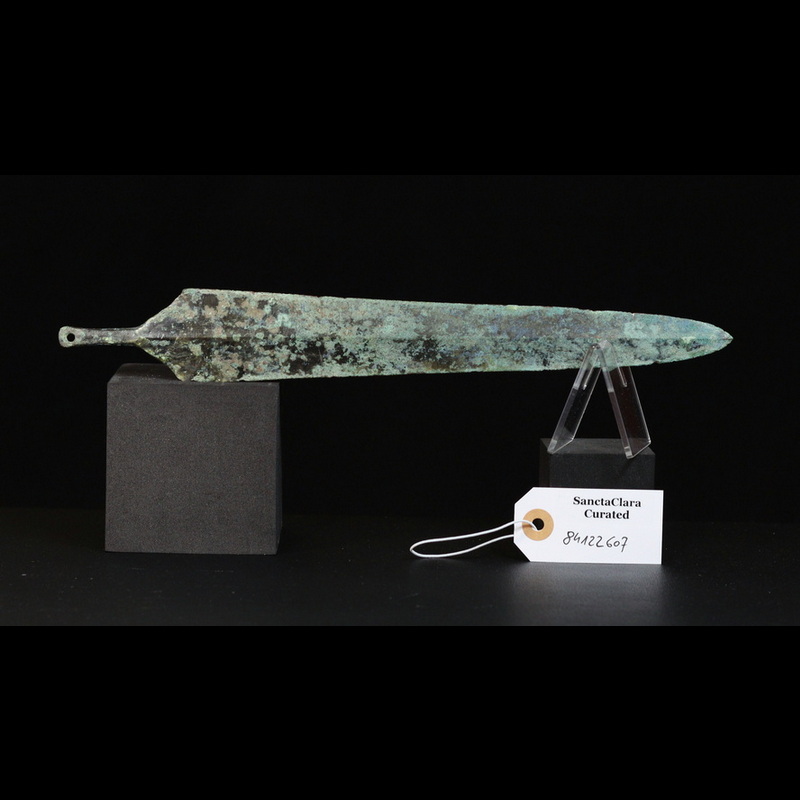
After handling hundreds of ancient bronze weapons, tools, and ritual objects spanning from the Chalcolithic through the Classical periods, one learns to read patina the way a geologist reads strata. Every layer tells a story — of burial environment, of chemical interaction over millennia, of the slow transformation of metal into mineral. For the collector, the curator, and the scholar, patina is not merely surface decoration. It is the artifact’s autobiography, written in copper carbonates, oxides, and chlorides across two, three, or four thousand years.
This article examines the principal corrosion products found on ancient copper alloy and bronze artifacts, the conditions under which they form, their visual characteristics, and their critical role in authentication.
The Structure of Ancient Patina: Reading Layers from the Inside Out
Before examining individual minerals, it is essential to understand that genuine ancient patina is not a single coating. It is a stratified system — a series of chemically distinct layers that form sequentially over centuries, each one reflecting the changing microenvironment at the metal surface as corrosion progresses inward.
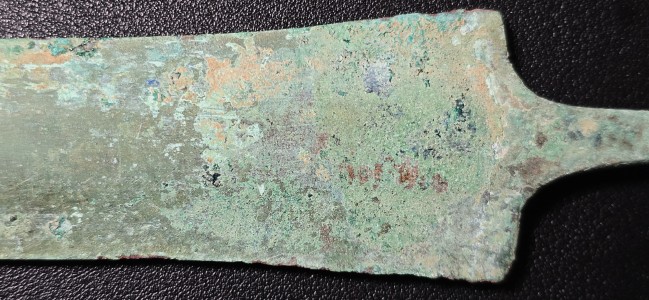
On a well-preserved bronze artifact excavated from a stable burial context, the typical cross-section from the metal core outward is roughly as follows: a thin inner layer of cuprite (red copper oxide) sits directly against the surviving metal. Above that, a thicker layer of green or blue copper carbonates — malachite and sometimes azurite — forms the dominant visual patina. On tin-rich bronzes, patches or veins of cassiterite (tin oxide) may appear as dark, glassy inclusions within or beneath these layers. The outermost surface often carries encrustations of calcium carbonate, silica, iron oxides, or clay minerals absorbed from the surrounding soil.
This layered structure is the single most important indicator of authenticity. It cannot be convincingly replicated in a workshop over a period of weeks or months. The chemical gradients, the interlocking crystal growth between layers, the way corrosion follows grain boundaries in the original cast metal — these features require deep time and cannot be faked by anyone who understands what a trained eye is looking for.
Cuprite: The Foundation Layer
Cuprite (Cu₂O), red copper oxide, is almost always the first corrosion product to form on a copper alloy surface. It develops through direct oxidation of the metal, and on ancient artifacts it typically appears as a thin, dense, adherent layer ranging in colour from deep brick-red to a dark brownish-crimson. On polished cross-sections examined under magnification, cuprite often has a distinctive translucent, glassy quality.
This mineral forms under conditions of limited oxygen availability — exactly the conditions found in most burial environments once the soil has settled around the object and oxygen diffusion is restricted. It does not require moisture in the way that carbonate patinas do; even in relatively dry desert burials, a cuprite layer will develop over sufficient time.
Cuprite is significant for several reasons. First, it is the foundation upon which all subsequent corrosion layers build. When you see a genuine ancient patina, the cuprite layer is bonded at a molecular level to the metal substrate below it and to the carbonate or chloride layers above it. Second, cuprite is thermodynamically stable. Once formed, it persists essentially indefinitely under burial conditions. Third, its presence directly beneath a malachite layer is one of the hallmarks of authentic, naturally developed patina.
On many artifacts in the Sancta Clara Collection — particularly the Luristan spearheads and the Mycenaean dagger blades — the cuprite layer is visible where surface patina has flaked or been abraded, appearing as a warm reddish-brown undertone beneath the dominant green.
Malachite: The Green Signature of Antiquity
Malachite (Cu₂CO₃(OH)₂), basic copper carbonate, is the mineral most people associate with ancient bronze. It is responsible for the rich green patina that has become virtually synonymous with archaeological metalwork.
Formation Conditions
Malachite forms when copper ions released from the corroding metal react with water, dissolved carbon dioxide, and carbonate ions in the surrounding soil moisture. The reaction requires three things: available copper (supplied continuously as the metal corrodes), moisture (even trace amounts of groundwater or soil humidity), and a source of carbonate — typically dissolved CO₂ from the atmosphere or from the decomposition of organic matter in the burial environment.
The process is not rapid. Under typical burial conditions in temperate or Mediterranean soils, a visually significant malachite layer takes centuries to develop. In arid conditions with minimal moisture, the process is slower still, producing thinner but often exceptionally well-crystallized patinas. In waterlogged or acidic soils, malachite may be partially dissolved or replaced by other corrosion products.
Soil pH plays a critical role. Malachite is most stable in mildly alkaline to neutral conditions (pH approximately 6.5 to 8.5). In strongly acidic soils — such as those found in heavily forested or peat-rich regions — malachite tends to dissolve, and the patina may be dominated instead by cuprite or by amorphous copper compounds.
Appearance and Position
On ancient artifacts, malachite patina ranges from a pale, almost sage green to a deep, saturated emerald. The colour depends on crystal size, layer thickness, and the presence of trace impurities. Thin malachite layers over cuprite often appear as a warm olive-green, because the red of the cuprite shows through. Thicker deposits tend toward a cooler, more vivid green.
Under magnification, genuine ancient malachite displays a characteristic botryoidal (grape-like) or fibrous crystal habit. The crystals grow outward from the metal surface in radiating fans or concentric layers, producing a banded or layered appearance in cross-section. This growth pattern is a direct consequence of slow, sustained crystallization over long periods and is extremely difficult to replicate artificially.
Malachite occupies the middle zone of the patina stratigraphy — above the cuprite foundation and below any outer soil encrustations. On artifacts buried in calcareous soils, malachite crystals are often intergrown with calcium carbonate, creating a tough, composite crust that adheres tenaciously to the underlying metal.
Malachite on Luristan and Levantine Bronzes
The Luristan bronzes in the collection offer particularly instructive examples of malachite formation. Many of these pieces were buried in the alkaline, calcium-rich soils of western Iran — ideal conditions for malachite development. The result is typically a thick, hard, brilliant green patina with a slightly waxy lustre, often showing the characteristic banded structure when viewed in raking light. On spearheads with deep sockets, the interior surfaces frequently preserve an even more pristine malachite layer, protected from mechanical abrasion by the enclosed geometry.
Azurite: The Blue Companion
Azurite (Cu₃(CO₃)₂(OH)₂) is chemically related to malachite — both are basic copper carbonates — but azurite contains a higher proportion of carbonate relative to hydroxyl groups. It is the mineral responsible for the vivid blue patches and streaks sometimes seen on ancient bronzes.
Formation Conditions
Azurite forms under conditions broadly similar to malachite but with one critical difference: it requires a higher concentration of dissolved CO₂ in the groundwater. This condition is most commonly met in burial environments rich in decomposing organic matter (which generates CO₂ as it breaks down) or in areas with CO₂-rich geological formations such as limestone karst.
Azurite is thermodynamically less stable than malachite. Over very long periods, azurite slowly converts to malachite through a process called pseudomorphism — the crystal structure of azurite is gradually replaced by malachite while retaining the original crystal shape. This means that azurite is more commonly found on artifacts from relatively dry or sealed burial contexts where the conversion process has been arrested, or on artifacts that have been excavated relatively recently from CO₂-rich environments.
Appearance and Position
Azurite ranges from a deep, almost navy blue to a brilliant azure. On ancient bronzes, it typically appears as isolated patches, veins, or crystal clusters rather than as a continuous layer. It may occur within the malachite zone, often at interfaces where the local chemical environment favoured its formation — for instance, near organic residues (remnants of wooden hafts, leather bindings, or textile wrappings) that provided a localized source of CO₂.
When azurite and malachite co-occur on the same artifact, the visual effect is striking — vivid blue islands in a green field. This combination is not only beautiful but also diagnostically useful, as it indicates a complex, evolving burial chemistry that is very difficult to simulate artificially.
The Azurite-to-Malachite Transition as a Time Indicator
The presence of significant azurite on a bronze artifact is actually informative about post-excavation history. Because azurite slowly converts to malachite under normal atmospheric conditions, a piece with substantial well-preserved azurite has either been excavated relatively recently (within the past century or so), or has been stored in conditions that slowed the conversion — such as a dry, sealed collection environment. Conversely, an artifact that shows pseudomorphic malachite after azurite (malachite crystals retaining the tabular habit of azurite) has been exposed to normal atmospheric conditions for an extended period after excavation. This kind of observation can help reconstruct an artifact’s collection history and provenance.
Chrysocolla: The Silicate Alternative in Arid Burials
The malachite-azurite carbonate system described above is the dominant pattern of copper patina chemistry in most burial environments, but it is not the only one. In arid contexts — and particularly in the silica-rich soils of Egypt, the Sinai, and parts of the more desert-dominated Iranian Plateau — a quite different mineral can take over as the principal copper corrosion product: chrysocolla, a hydrated copper silicate with the approximate formula Cu₂H₂Si₂O₅(OH)₄·nH₂O. Where carbonate patinas form when copper meets dissolved CO₂ in soil moisture, chrysocolla forms when copper meets dissolved silica. The two chemistries are alternatives rather than competitors, and which one dominates on a given artifact is largely a matter of where the object spent its centuries underground.
The conditions chrysocolla requires are reasonably specific. Dissolved silica in pore water needs to be concentrated enough to precipitate as a copper-silicate phase, and that condition is met principally in arid environments where high evaporation drives silica concentration upward at the corroding metal surface. In humid or waterlogged soils, silica is constantly being flushed away by groundwater, and significant chrysocolla rarely develops. The mineral is therefore strongly associated with Egyptian, Sinai, and southern Levantine bronzes — and, to a lesser extent, with pieces from the more arid parts of Iran and Cyprus. On Mesopotamian river-valley material, on European Bronze Age pieces from temperate burials, and on Mediterranean coastal artifacts, chrysocolla is uncommon to rare. Among the Sancta Clara holdings, the Egyptian arrowhead group — pieces such as Lot 11491 (an 18th–19th Dynasty bilobate arrowhead with knob), Lot 1828 (the early Thebes arrowhead of 1550–1458 BC), and Lot 83681809 (the early Egyptian copper arrowheads of 1550–1479 BC) — are the most likely candidates to display chrysocolla components in their patinas, alongside or partially in place of the more familiar malachite.
Visually, chrysocolla is distinctive once one has trained the eye to it. The colour ranges from a pale sky blue through cyan to a slightly greenish blue, and the lustre is porcelaneous, vitreous, or faintly waxy — never the crystalline sparkle of azurite or the radiating fibrous habit of malachite. Crystal form is typically nodular, botryoidal, or simply smooth coatings; the mineral is often poorly crystalline or genuinely amorphous, and under a loupe the surface frequently looks more like fine enamel or glazed porcelain than like a conventional crystalline patina. The distinction from azurite is the easiest call — azurite is deeper and more saturated, often approaching navy, and shows crystal faces under magnification. The distinction from malachite is also reliable: chrysocolla is bluer, never reaching the true green of mature malachite, and its lustre is glassy where malachite’s is fibrous. For the collector, the diagnostic implication is twofold: the presence of chrysocolla provides reasonably strong evidence of an arid burial environment and is therefore useful corroboration of a stated Egyptian or Sinai provenance, while its conspicuous absence on a piece purporting to be Egyptian may warrant a closer look.
Cassiterite and Tin Oxide Corrosion: The Dark Transformation
Cassiterite (SnO₂), tin dioxide, is a corrosion product specific to true bronze — alloys containing a significant proportion of tin (typically 8 to 12 percent in ancient weapons and tools). Its formation and behaviour are among the most fascinating aspects of ancient bronze corrosion, and its presence is a powerful indicator of both alloy composition and burial history.
The Electrochemistry of Selective Corrosion
To understand why tin bronze develops the dramatic two-layer corrosion structure that it does, one has to begin with the electrochemistry. In a freshly cast bronze, copper and tin atoms sit together in a solid solution: from the perspective of any single grain, the two metals are intimately mixed at the atomic scale. Once the object enters a burial environment and moisture penetrates to the surface, an electrochemical cell is established. Both metals begin to oxidize, but the products of those oxidations behave in completely different ways.
The key distinction is solubility, not nobility. Copper ions, once released into the surrounding pore water, are highly mobile and travel readily through the soil moisture and through the developing corrosion crust. Tin, by contrast, oxidizes to SnO₂ — cassiterite — which is one of the most insoluble compounds known in geochemistry. Tin atoms therefore oxidize essentially in place: a tin atom that was sitting in the alloy matrix becomes a cassiterite molecule that sits in almost exactly the same position, locked into the corrosion structure rather than carried away by groundwater.
Over centuries and millennia, this divergent behaviour produces a remarkable stratigraphy. The copper migrates outward, accumulating in the developing malachite and azurite layers above the original metal surface, while the tin remains behind, accumulating as a tin-enriched residual zone that progressively replaces the original alloy. The result is a layered structure that conservation scientists describe as a “two-layer” or “duplex” patina — and which the corrosion scientist Luc Robbiola formalized in his influential typology of bronze surfaces.
The Original Surface and the Marker Horizon
What makes this process so important for the collector and the conservator is its capacity to preserve the original surface of the object. Even on a bronze where the metal has corroded inward by a millimetre or more, the precise location of the original surface — the surface that the smith ground, polished, and inscribed — is preserved as a chemical horizon within the corrosion structure. The cassiterite-enriched zone marks where the alloy used to be, and where the original surface was.
This is not a metaphor. Skilled conservators working on heavily corroded ancient bronzes can carefully strip back the outer malachite and azurite layers and reveal, at the cassiterite horizon, the original tool marks, casting seams, file marks, grinding striations, and even fingerprints left by the ancient metalworker. The patina is not hiding the object beneath it; the patina is the object, transformed, with its original geometry preserved by the immobility of tin. This is why heavily mineralized Bronze Age objects can yield as much information about manufacturing technique as freshly polished modern ones — sometimes more, because the corrosion has stabilized features that would otherwise have worn away through use.
Robbiola’s Two-Type Classification
The Robbiola typology distinguishes two principal patterns of bronze corrosion. Type I patina — sometimes called the “noble” patina — is the well-behaved, layered structure described above, in which the original surface is preserved at the cassiterite horizon and the outer corrosion products form an orderly stratigraphy. Type I patinas are typically smooth, hard, and adherent; they develop in stable burial environments with moderate moisture, neutral to alkaline pH, and limited chloride contamination. They are what collectors most value and what conservators least disturb.
Type II patina, by contrast, develops under more aggressive conditions — particularly in the presence of chloride ions, oxygenated groundwater, or fluctuating moisture. In Type II patinas the orderly two-layer structure breaks down, the cassiterite horizon is disrupted or obliterated, the original surface is no longer preserved, and active corrosion products (most notoriously the copper chlorides discussed below under “bronze disease”) can develop. Type II patinas are typically rougher, more friable, and may show signs of ongoing chemical activity.
The distinction matters in practical terms: a Type I patina is essentially a finished archaeological object, stable enough to handle and display for centuries without intervention. A Type II patina may require active conservation to prevent further loss. Recognizing which type is in front of you is one of the more advanced skills in patina reading, and it almost always rewards the time spent on it.
The Tin-Rich Ghost and the Path to Full Mineralization
In advanced cases, the migrating copper ions travel entirely through the patina and re-precipitate as malachite or azurite on the outer surface, while the interior of the artifact becomes increasingly tin-rich. This is why some heavily corroded ancient bronzes display a paradox: a brilliant green exterior over a dark, almost metallic-looking interior layer that is no longer truly bronze at all but rather a tin oxide pseudomorph — a mineral ghost that preserves the shape of the original metal but has been entirely transformed in composition. On artifacts where this process has progressed significantly, the tin-rich layer can appear as a dark grey, brown-black, or even jet-black band, sometimes with a glassy, almost obsidian-like lustre that is visually stunning.
The logical endpoint of this process is complete mineralization — the total conversion of the original metal to corrosion products. On artifacts buried for three or four thousand years in aggressive soil conditions, this transformation can be nearly complete. The object retains its original form in extraordinary detail — casting marks, tool marks, even fingerprints from the ancient metalworker may be preserved in the mineral structure — but no metallic bronze remains. The entire artifact has become a composite of tin oxide, copper carbonates, and soil minerals.
Fully mineralized bronzes are fragile and require careful handling, but they are among the most scientifically valuable artifacts in any collection. Their corrosion stratigraphy preserves a complete chemical record of the burial environment, and the tin oxide pseudomorph allows metallurgists to determine the original alloy composition even when no metal survives.
In the Sancta Clara Collection, varying degrees of this mineralization process are visible across different pieces. Some of the older copper alloy daggers — particularly those dating to the third millennium BC — show significant tin-oxide transformation in their cross-sections, while later pieces from more stable burial environments retain substantial metal cores beneath their patina. Among the most striking examples is Lot 901, the Marduk-nadin-ahhe rapier of c. 1090 BC, where careful examination of abraded areas reveals exactly the kind of cassiterite-preserved original surface horizon described above — the cast inscription, the stone-ground bevels, and the file-marked tang all sit at the level of the residual tin-rich zone, demonstrating that what we see today is, in a real sense, the surface the Babylonian smith finished thirty centuries ago.
The Arsenical Copper Alternative: A Different Chemistry, A Different Stratigraphy
The cassiterite mechanism described above is specific to tin bronze. It does not operate — or operates only in a much weaker form — on arsenical copper artifacts, which dominate the metallurgical record of the Chalcolithic and Early Bronze Age before tin came into widespread use. Because the Sancta Clara Collection contains a significant number of arsenical copper pieces, particularly from Cypriot, Cycladic, and Anatolian contexts, it is worth treating their distinctive corrosion chemistry on its own terms.
Why Arsenic Behaves Differently from Tin
The fundamental problem, from the perspective of an arsenic atom in a corroding alloy, is that arsenic oxidation products are not insoluble in the way tin oxidation products are. When arsenic oxidizes, it forms arsenites (As³⁺) and arsenates (As⁵⁺) — both of which are perfectly capable of migrating through pore water, and both of which combine readily with mobilized copper ions to form a family of copper arsenate minerals. Arsenic, in other words, does not stay behind to mark the original surface. It migrates outward, in the same direction as the copper, and ends up incorporated into the patina layer itself rather than enriched in a residual zone beneath it.
The consequence is straightforward: arsenical copper artifacts do not develop a cassiterite-like subsurface layer, do not preserve the original surface at a chemical marker horizon, and do not show the dramatic two-layer Robbiola Type I stratigraphy. When you strip back the patina on an arsenical copper piece, you typically find the original alloy beneath it — or, more often, an irregular corrosion front that has eaten unevenly into the metal — rather than the silvery, tin-rich ghost that defines mature tin bronze corrosion.
Copper Arsenate Mineralogy
What you do find on arsenical copper is a distinctive patina mineralogy. The copper arsenate minerals that form in these patinas include olivenite (Cu₂(AsO₄)(OH)), a typically olive-green to greenish-brown mineral with a slightly translucent, somewhat resinous lustre; clinoclase (Cu₃(AsO₄)(OH)₃), which tends toward a deeper, more bluish-green colouration; cornubite, conichalcite (where calcium is present in the burial environment), and several rarer phases. These minerals occur mixed with the more familiar malachite and azurite of ordinary copper corrosion, and to the unaided eye they are easily mistaken for malachite — the colour ranges overlap considerably.
Under a 10× loupe, however, the difference can usually be discerned. Olivenite tends to form equant or short prismatic crystals with a slightly waxy or resinous appearance, while malachite forms the characteristic banded, botryoidal, or fibrous aggregates described earlier. The colour of olivenite, when one trains the eye to it, has a slightly browner, more olive cast than the brighter green of mature malachite — hence the mineral’s name, derived from its resemblance to olive flesh. In cases where the distinction matters analytically, X-ray diffraction or even portable Raman spectroscopy will settle the question definitively.
The presence of copper arsenate phases in a patina is essentially a fingerprint for an arsenical copper substrate, and they are worth looking for whenever a Chalcolithic or Early Bronze Age piece comes up for evaluation. Several pieces in the Sancta Clara Collection — Lot 1516, the Cycladic copper spear-point of c. 2300 BC; Lot 83118347, the Cypriot/Cycladic spearhead with rat-tail tang; and Lot 84058911, the Luristan leaf-shaped spearhead — display patinas with the kind of olive-green colouration and slightly waxy lustre that point to copper arsenate components, consistent with what we know of the metallurgy of their periods and regions.
The Silvery Sheen of Arsenical Copper: A Manufacturing Feature, Not a Corrosion Feature
One important point bears emphasizing, because it is easily confused. Arsenical copper artifacts sometimes display a silvery or pale grey sheen at the surface, particularly on Cypriot and Cycladic Early Bronze Age pieces. This sheen is not an analogue of the cassiterite layer of tin bronze. It is a manufacturing feature, not a burial feature — a consequence of inverse segregation during the original casting and of subsequent surface enrichment through cycles of forging, annealing, and polishing. As the molten alloy cooled in the mould, the arsenic-rich liquid was preferentially squeezed toward the surface; subsequent mechanical and thermal working further concentrated arsenic at the surface skin; and the resulting silvery finish was clearly something Bronze Age smiths exploited deliberately, valuing it as the closest thing to silver that their metallurgy could readily produce.
Because this layer exists from the day the object was made, it can be abraded away without ever returning. It does not regenerate over time, as a cassiterite layer effectively does through ongoing dealloying. And because it sits at the original surface rather than beneath it, abrasion of an arsenical copper artifact does not reveal a deeper silvery layer — it reveals the warm pink-red of the underlying bulk alloy. This distinction is straightforward to demonstrate on a small abraded area under good lighting, and it is one of the more useful diagnostic distinctions for separating tin bronze from arsenical copper when no analysis is to hand.
Lead Bronze and the Cerussite Signature: A Different Kind of Surface
The third significant variant in the corrosion chemistry of ancient copper alloys is lead bronze — alloys in which lead has been deliberately added to a copper-tin matrix, typically in proportions between 5 and 30 percent. Lead bronze is most strongly associated with the Roman period, where its lower melting temperature, superior castability, and reduced cost made it the preferred material for statuary, ornamental fittings, fibulae, and many architectural components. It also appears, less commonly, in Iron Age work — particularly in Hallstatt and La Tène contexts — and in scattered late Bronze Age examples. While the Sancta Clara Collection is centred on the older Near Eastern and Mediterranean traditions in which lead bronze is rare, the later Roman, Celtic, and Byzantine pieces in the collection — the bronze fibulae, the figural and decorative items, the various ornamental fittings — may include lead-bearing compositions, and the distinctive corrosion patterns they display are worth recognizing.
The Microstructure: Why Lead Bronze Is Different from Tin Bronze
The crucial fact about lead in a copper-tin alloy is that it is essentially insoluble in the solid state. Where tin enters a solid solution with copper, distributing itself atom-by-atom through the alloy matrix, lead does not. As the molten alloy solidifies, the lead is rejected by the crystallizing copper-tin phase and ends up as discrete globules of metallic lead, distributed throughout the matrix at scales ranging from the microscopic to the visible under a hand lens. A polished cross-section of an ancient lead bronze, examined under reflected light, shows the characteristic appearance: a copper-tin matrix studded with rounded, darker spots — the lead inclusions, sometimes called “lead lakes” in the conservation literature.
This microstructural inhomogeneity has direct consequences for corrosion. Each lead globule constitutes a microscopic galvanic cell with the surrounding copper-tin matrix, and each globule corrodes on its own terms — independently of the bulk alloy around it. The result is a corrosion pattern that is fundamentally different from the orderly stratigraphy of pure tin bronze.
Cerussite, Hydrocerussite, and the White Patina Signature
When lead oxidizes in a burial environment, the principal corrosion products are lead carbonates: cerussite (PbCO₃), a brilliant white mineral, and hydrocerussite (Pb₃(CO₃)₂(OH)₂), an equally white basic carbonate that often forms in alternation with cerussite depending on local moisture and CO₂ chemistry. Less commonly, lead oxidizes initially to litharge (PbO), an orange-yellow oxide, before progressing to the carbonate stage. In some chloride-rich environments, lead chloride and lead oxychloride species may also appear.
The visual signature of these lead carbonates on an ancient lead bronze is unmistakable once one has seen it. Against the dominant green of the copper patina, the lead-rich zones develop white patches, veins, streaks, or efflorescences that mark the location of corroded lead globules. On heavily corroded pieces, the surface can take on a marbled or mottled appearance — green malachite, blue-green patches, and chalky white lead-carbonate spots intermingled in a pattern that no other alloy produces. On lightly corroded pieces, the lead carbonate may show only as fine white spotting or as a faint white bloom in localized areas.
This pattern is diagnostic. No tin bronze, however heavily corroded, will produce white spotting of this kind. No arsenical copper will. The combination of a green copper-carbonate patina with discrete white lead-carbonate accents is a near-certain indicator that the underlying alloy contained substantial lead, and it is one of the more reliable visual diagnostics in the entire patina toolkit.
Where Lead Bronze Appears in the Collection
Within the Sancta Clara Collection, lead-bearing compositions are most likely to be encountered among the Roman, late Iron Age, and Byzantine items rather than the older Bronze Age pieces that form the core of the holdings. Pieces such as the bronze fibulae, the ornamental rings and pendants, and certain of the figural objects fall into the period range where lead bronze is technologically plausible. Where any such piece shows the characteristic white-spotted patina pattern described above, the collector can be reasonably confident of a leaded composition without needing instrumental analysis.
The older Bronze Age weapons and tools — the Luristan spearheads, the Mycenaean daggers, the Cypriot and Cycladic pieces — were almost certainly cast in unleaded compositions and should not show the white lead-carbonate signature. The presence of significant white spotting on a piece purporting to be Late Bronze Age Near Eastern would be anomalous and worth flagging for further investigation; it might indicate either a much later date than claimed, an unusual leaded composition (rare but not unknown), or the kind of post-burial contamination that suggests a problematic provenance.
A Note on Forgery Implications
Lead bronze patina is in some respects easier to fake than tin bronze patina, because the diagnostic feature — white lead-carbonate spotting — can be applied superficially without the depth of stratigraphy that tin bronze demands. But the genuine signature has structure: the white spots correspond to actual lead inclusions in the underlying alloy, they show a microscale crystal habit characteristic of slow carbonate growth, and they sit in proper relationship to the surrounding green patina rather than floating on top of it. A forger who paints white spots on the surface of a modern bronze to mimic lead corrosion will produce something that looks plausible from across the room but fails immediately under a loupe — the spots have no underlying inclusion to corrode from, no crystal structure, and no integration with the malachite layer they are meant to be growing through.
A Note on Handling
A practical caution worth mentioning: lead carbonates, particularly when present as powdery cerussite efflorescence, are toxic on ingestion or inhalation. Lead bronze artifacts with significant white spotting should be handled with the same care one would extend to any lead-bearing antiquity — clean hands afterwards, no eating or drinking during examination, and avoidance of any procedure (such as ultrasonic cleaning) that might aerosolize the corrosion products. This is not a reason to avoid such pieces; it is simply a reason to treat them with the modest respect their chemistry warrants.
Copper Chlorides and Bronze Disease: The Corrosion That Never Stops
Not all patina is benign. Copper chlorides — principally nantokite (CuCl) and atacamite (Cu₂Cl(OH)₃) — represent an active, destructive form of corrosion commonly known as verdigris or “bronze disease.” Unlike the stable oxide and carbonate patinas discussed above, chloride corrosion is self-sustaining and will continue to destroy an artifact even after excavation unless actively treated.
How Bronze Disease Develops
Chloride ions enter the corrosion system from the burial environment — from salt-rich soils, coastal groundwater, or in some cases from handling by sweaty hands over centuries of use before burial. Once chloride ions reach the metal surface, they react with copper to form nantokite (cuprous chloride), a pale, waxy mineral that is unstable in the presence of moisture and oxygen.
When a buried artifact containing nantokite is excavated and exposed to the atmosphere, the nantokite reacts with moisture and oxygen to form atacamite or its polymorphs (paratacamite, clinoatacamite) — pale green, powdery minerals that erupt through the surface patina as characteristic warty or powdery spots. This reaction releases hydrochloric acid, which attacks fresh metal, producing more nantokite, which in turn produces more atacamite. The cycle is self-perpetuating and will progressively destroy the artifact if left untreated.
Visual Identification
Active bronze disease is recognizable by its characteristic pale green to blue-green powdery eruptions, which contrast sharply with the smooth, hard, adherent texture of stable malachite patina. The powder is often concentrated in pits or along cracks in the patina where moisture can penetrate. On a well-patinated artifact, bronze disease spots look like blisters or boils pushing up through the surface — a visual metaphor that is apt, because the process is indeed one of internal pressure as expanding corrosion products force their way outward.
Collectors and curators must be vigilant for bronze disease, particularly on artifacts from marine or coastal contexts, or on pieces that have been stored in humid conditions without climate control. Treatment typically involves mechanical removal of the chloride-bearing material followed by chemical stabilization — often with benzotriazole (BTA) — and subsequent storage at controlled humidity below 40 percent relative humidity.
Distinguishing Stable Green Patina from Active Chloride Corrosion
The distinction between malachite (stable, desirable) and atacamite (active, destructive) is critical and not always immediately obvious to the untrained eye, as both are green. The key differences are texture, hardness, and behaviour over time. Malachite is smooth, hard, and adherent — it resists scratching with a fingernail and does not transfer powder to a cotton swab. Atacamite is soft, powdery, and friable — it crumbles under gentle pressure and leaves a pale green streak on a swab. Most importantly, malachite is static: it does not change from month to month. Atacamite is dynamic: untreated spots will grow, spread, and produce new eruptions over weeks and months, particularly in humid conditions.
Patina as Authentication: The Expert’s First and Last Line of Defence
For anyone involved in the study, collection, or sale of ancient bronzes, patina analysis is the single most important tool for assessing authenticity. It is not the only tool — stylistic analysis, metallurgical composition, thermoluminescence dating, and provenance research all play roles — but patina is where the investigation begins and where the most decisive evidence is usually found.
Why Genuine Patina Is So Difficult to Fake
The fundamental challenge facing any forger is time. Genuine ancient patina is the product of chemical reactions that proceed at geological timescales — not the timescales of a workshop. The stratified, interlocking crystal structures described above develop over centuries of continuous interaction between the metal and its burial environment. Each layer grows in situ, bonded to the layers above and below it by shared crystal boundaries and chemical gradients.
A forger attempting to simulate this structure faces several insurmountable problems. First, artificially accelerated corrosion — whether by acid treatment, electrochemical methods, or burial in chemically aggressive media — produces corrosion products that are chemically similar to genuine patina but structurally distinct. Accelerated malachite tends to form amorphous or microcrystalline coatings rather than the well-developed crystal fans of natural growth. The crystals are smaller, less organized, and lack the characteristic banding visible in genuine ancient patina under moderate magnification.
Second, the layered stratigraphy of genuine patina — cuprite base, malachite middle, soil encrustations on top, with the cassiterite marker horizon preserving the original surface in the case of tin bronze — is extremely difficult to replicate in sequence. Forgers who apply patina as a single mixed layer or in crude sequential applications leave tell-tale evidence: sharp boundaries between layers rather than gradual transitions, absence of the cuprite foundation layer, no preserved original-surface horizon at the cassiterite level, inconsistent crystal orientation, and lack of the chemical gradient that develops naturally as copper ions migrate outward through the corrosion zone.
Third, soil encrustations on genuine artifacts are not simply surface deposits. Over millennia, minerals from the surrounding soil — calcium carbonate, iron oxides, silica particles, clay minerals — become physically embedded in and chemically bonded to the patina surface. They fill cracks, grow into pores, and form composite structures with the copper carbonates. Artificially applied “dirt” sits on the surface and can usually be removed with a stiff brush or a solvent swab. Genuine encrustations resist removal and, when forcibly detached, bring patina with them.
Painted and Resin-Based Fakes
The crudest category of forgery involves the application of paint or pigmented resin to simulate patina. These fakes are, frankly, trivial to detect for anyone who has handled genuine ancient bronzes. Paint and resin coatings have a uniform, even appearance that lacks the natural variation of genuine corrosion. They do not follow the surface topography of the metal in the way that true patina does — pooling in recesses and thinning on high points according to chemical rather than gravitational logic.
Under magnification, paint shows brushstrokes, roller marks, or spray patterns. Resin coatings have a characteristic organic lustre — slightly waxy or plastic — that differs markedly from the mineral lustre of genuine corrosion products. A simple solvent test (acetone on a cotton swab) will dissolve or soften most organic coatings, producing a coloured streak on the swab, while genuine mineral patina is entirely unaffected by organic solvents.
More sophisticated paint fakes incorporate actual malachite powder or copper carbonate pigment in a binding medium. These can be visually convincing at arm’s length but fail under magnification: the pigment particles are randomly oriented and loosely packed, quite unlike the structured crystal growth of genuine patina. They also lack the cuprite foundation and the chemical bond to the metal surface — a gentle probe with a needle will lift the coating cleanly from the metal rather than encountering the tenacious adhesion of genuine corrosion.
Artificially Aged Patina
A more sophisticated approach involves chemically inducing genuine corrosion products on a modern or recently cast bronze. Treatments with acidified copper salt solutions, ammonia fumes, or burial in chemically treated soil can produce real malachite and cuprite on a metal surface within weeks to months.
These artificially induced patinas are more challenging to detect than paint but still reveal themselves under careful examination. The corrosion products are typically thin and uniform rather than variable in thickness. They lack the deep, multi-layered stratigraphy of ancient patina — particularly the well-developed cuprite foundation layer and the tin-oxide marker horizon that only forms through centuries of selective dealloying. The crystal morphology, when examined under magnification or scanning electron microscopy, shows rapid, disordered growth rather than the slow, structured crystallization of genuine ancient corrosion.
Perhaps most tellingly, artificially patinated objects often show corrosion that is inconsistent with any plausible burial history. Genuine burial corrosion is influenced by the object’s orientation in the soil, by contact with other objects or organic materials, and by variations in soil chemistry over the burial period. This produces a patina that varies naturally across the surface — thicker in some areas, thinner in others, different in colour where the soil chemistry varied or where the artifact was in contact with wood, bone, or textile. An artificially patinated piece tends to show suspiciously uniform corrosion, or corrosion patterns that make no archaeological sense.
What Patina Tells Us Beyond Authenticity
Beyond the binary question of genuine versus fake, patina analysis provides a wealth of information about an artifact’s history. The dominant corrosion products indicate soil chemistry: malachite-dominated patinas point to alkaline, carbonate-rich soils; atacamite suggests proximity to salt or marine environments; heavy iron oxide encrustations indicate iron-rich clay soils. The degree of mineralization correlates roughly (though not precisely) with burial duration and soil aggressiveness. The presence or absence of azurite provides clues about the organic content of the burial environment and the artifact’s post-excavation history. The mineralogy of the patina also fingerprints the alloy itself — a tin-rich subsurface zone identifies a true tin bronze, olive-green copper arsenate phases identify arsenical copper, and white lead carbonate spotting identifies a leaded composition. In this sense the patina is not only the artifact’s autobiography but also its passport: it tells us where the piece has been and what it is made of.
For the serious collector, learning to read patina is not optional. It is the difference between building a collection of genuine antiquity and accumulating expensive reproductions. For the scholar, patina is a primary source — as rich in information as any inscription or stylistic feature. And for anyone who simply appreciates the beauty of ancient metalwork, understanding patina deepens the experience immeasurably. The green of a three-thousand-year-old spearhead is not merely a colour. It is the visible record of a slow, silent transformation — metal becoming mineral, weapon becoming artifact, history becoming tangible.
This article is part of the reference materials published by the Sancta Clara Collection at AncientBronzes.com. Content is provided for educational purposes and reflects observations drawn from direct study of the collection’s holdings. For related discussions, see the companion articles on paleo-metallurgical techniques, Bronze Age forgery identification, ferrian copper and Cypriot daggers, and stone-to-metal transition.