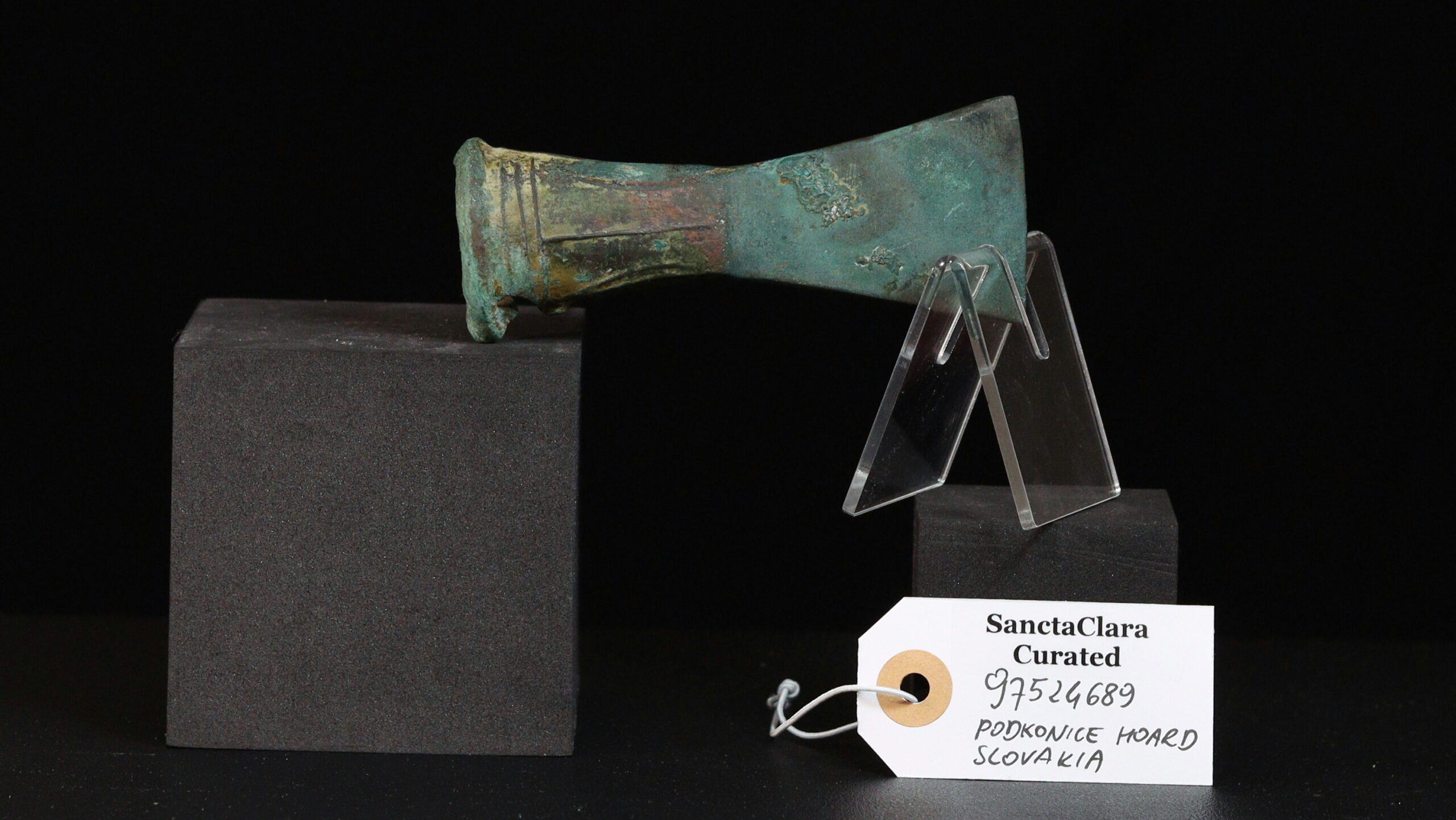
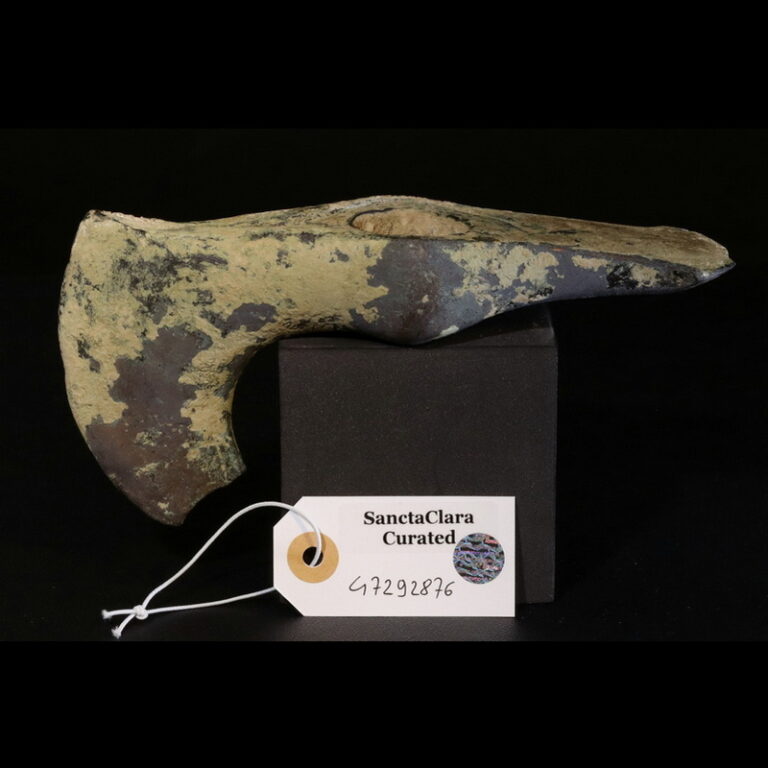
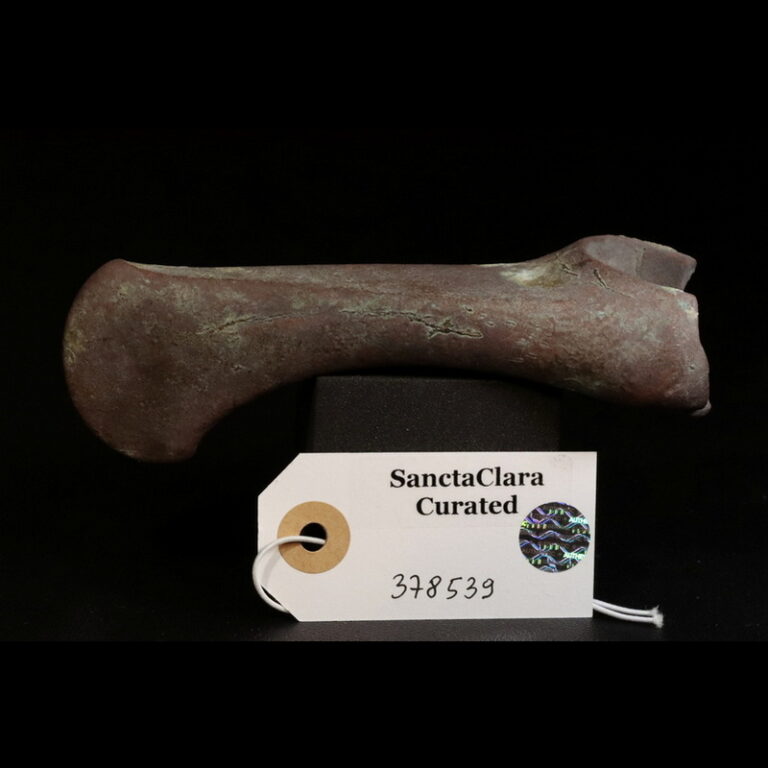
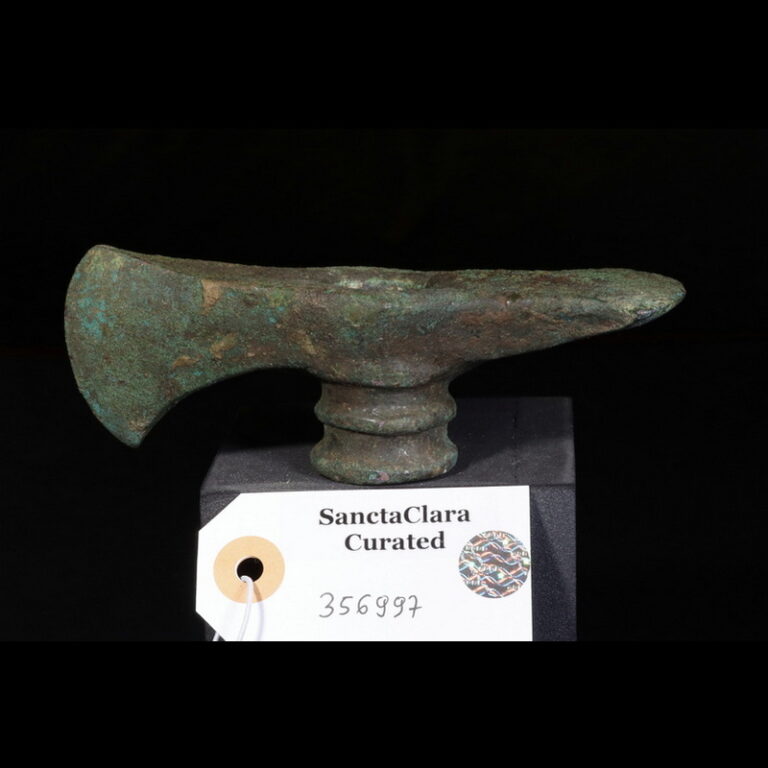
Bronze Age (Urnfield Culture) Large Decorated Axe Head.
This magnificent specimen comes from the famous Podkonice Hoard in Slovakia.
Socketed axe with a missing eyelet; it could not be cast. Socketed axe with eyelet and a distinctly set-off thin cutting edge with a straight edge. The eyelet was meant to be attached below the ring-shaped reinforced mouth. The decoration below the rim consists of three horizontal ribs and below them two side strips or grooves that imitate the lobes. Between them in the middle is a small vertical rib.
Axes are among the most fundamental tools in human history, evolving from stone to copper to bronze to iron. Each transition brought improvements in efficiency and durability. The progression from flat to flanged to palstave to socketed axes is one of the clearest examples of technological evolution.