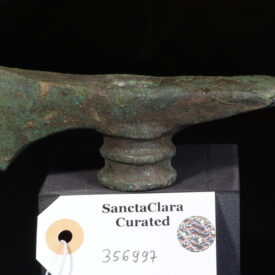
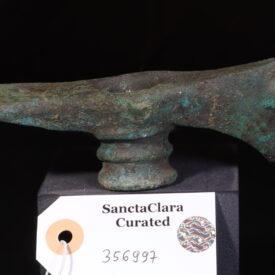
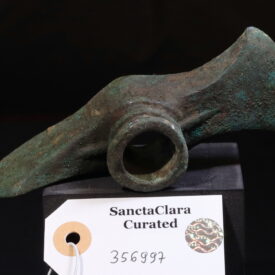
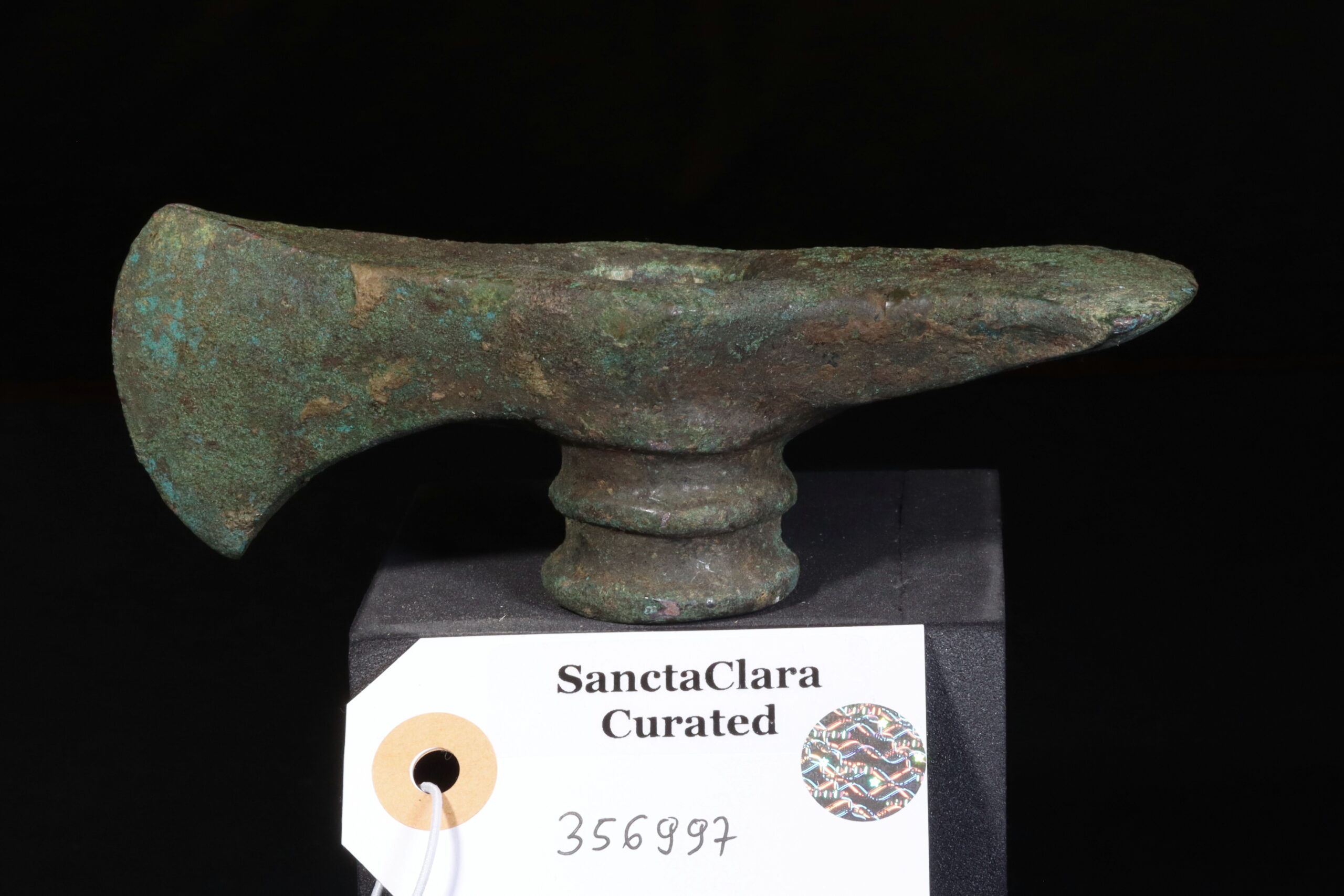
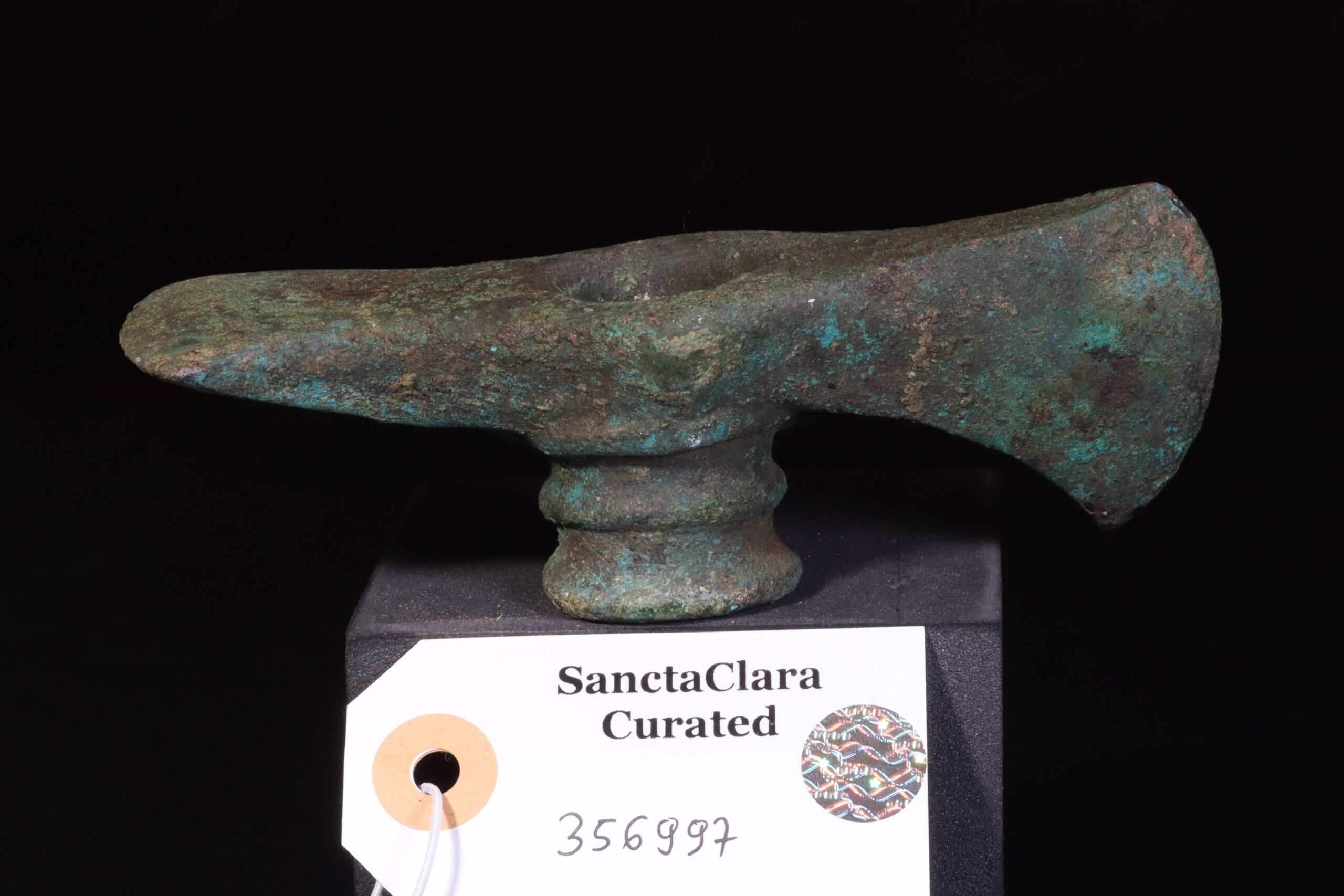
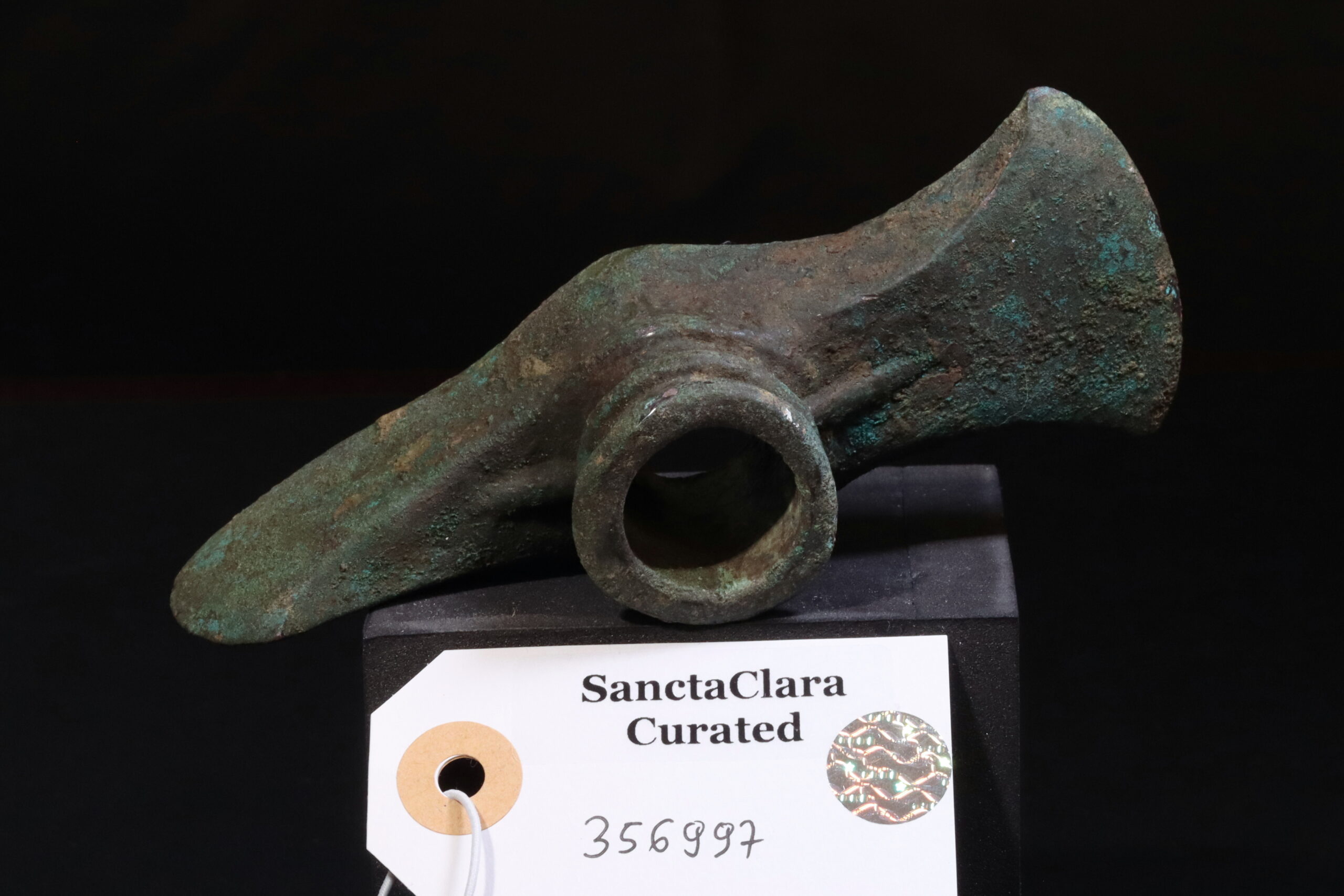
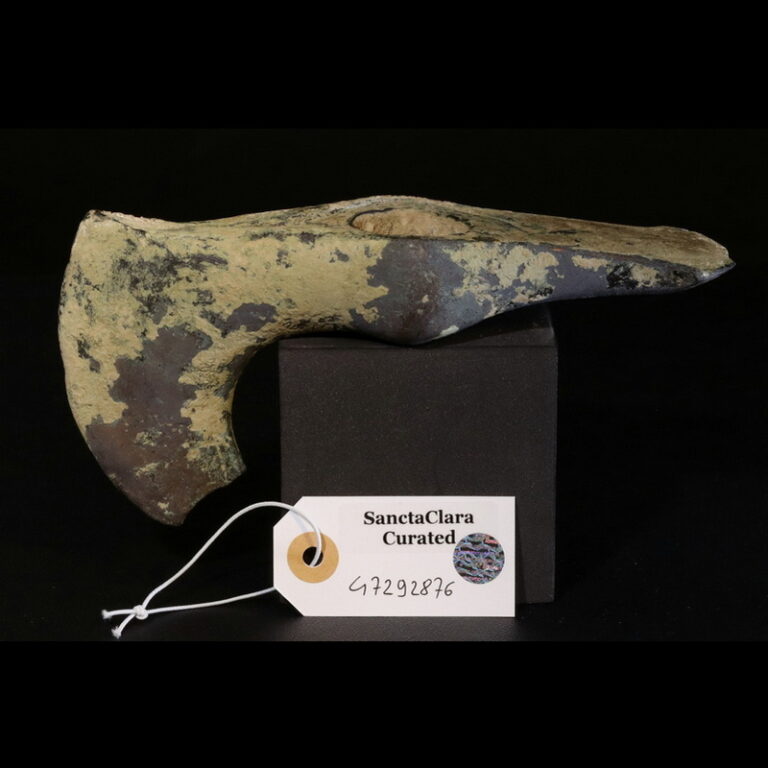
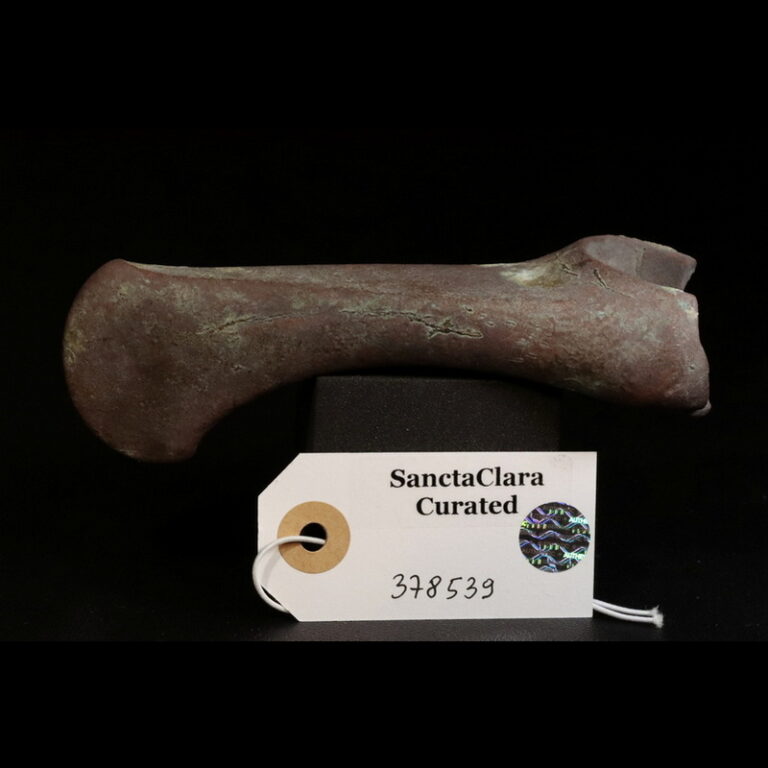
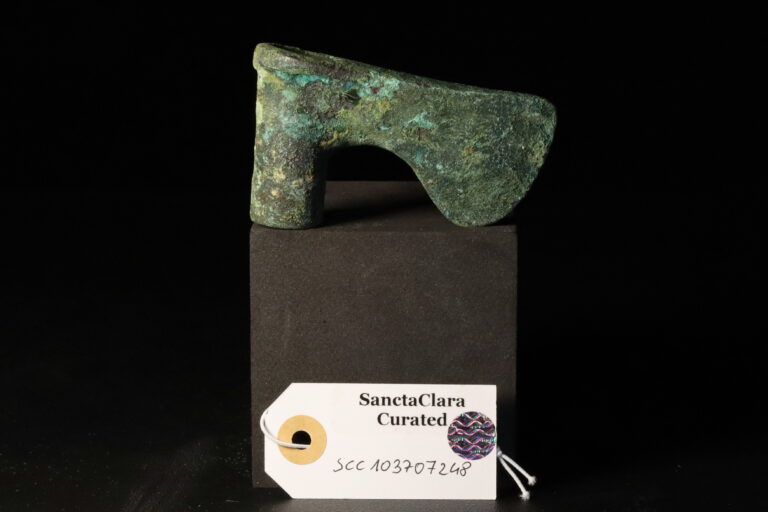
Copper Alloy Axe – Adze
Central Asian (Iranian Plateau), Oxus civilization, BMAC
Greater Iranian plateau / Central Asian sphere, late 3rd–2nd millennium BC, with BMAC and an Elamite/east-Iranian workshop both live
Attribution assessment
Oxus Civilisation (BMAC) or a related east-Iranian workshop, late 3rd–early 2nd millennium BC — plausible on sleeve morphology; not established on type-diagnostic grounds. A cast tubular sleeve with ring mouldings and a flared rim lip is at home in the Oxus Civilisation / greater Iranian-plateau sphere of the late 3rd–early 2nd millennium BC, and collared shaft tunnels are a recurrent feature of the BMAC axe repertoire. Mass (461.3 g) and wall thickness are consistent with the substantial, functionally-proportioned end of that tradition rather than with votive or display production.
Nothing in the morphology is specifically diagnostic of BMAC as against neighbouring Elamite or east-Iranian workshops.
Zagros / Luristan adze-axe — alternative attribution
Iranian adze-axes with a cylindrical socket ringed by horizontal ridges and convex cutting edges perpendicular to each other constitute a formally very close group. Points against: published examples of that group generally carry the socket projecting at both ends with ridges at top and bottom, and run smaller and lighter than 133 mm / 461 g. The one-sided sleeve here is the substantive divergence and is the reason this is ranked second rather than first.
L: 133,4 mm, W at center: 42,6 mm; W at adze blade: 50,3 mm, H: 51 mm, axe blade span 44,4 mm, lower shaft hole sleeve: 22,3 mm; total tunnel length: 42,3 mm, shaft hole diam up: 21,7x22,7 mm, down 21,6 mm: , Weight 461,3 g,
Reference Items
Comparanda of this kind are referenced to Deshayes pl. LXVII, 3 and Moorey 1971, and to Haerinck & Overlaet's Iron Age III grave material from the Aivan plain, with Deshayes pl. LIII no. 3132 also cited for the socketed forms.