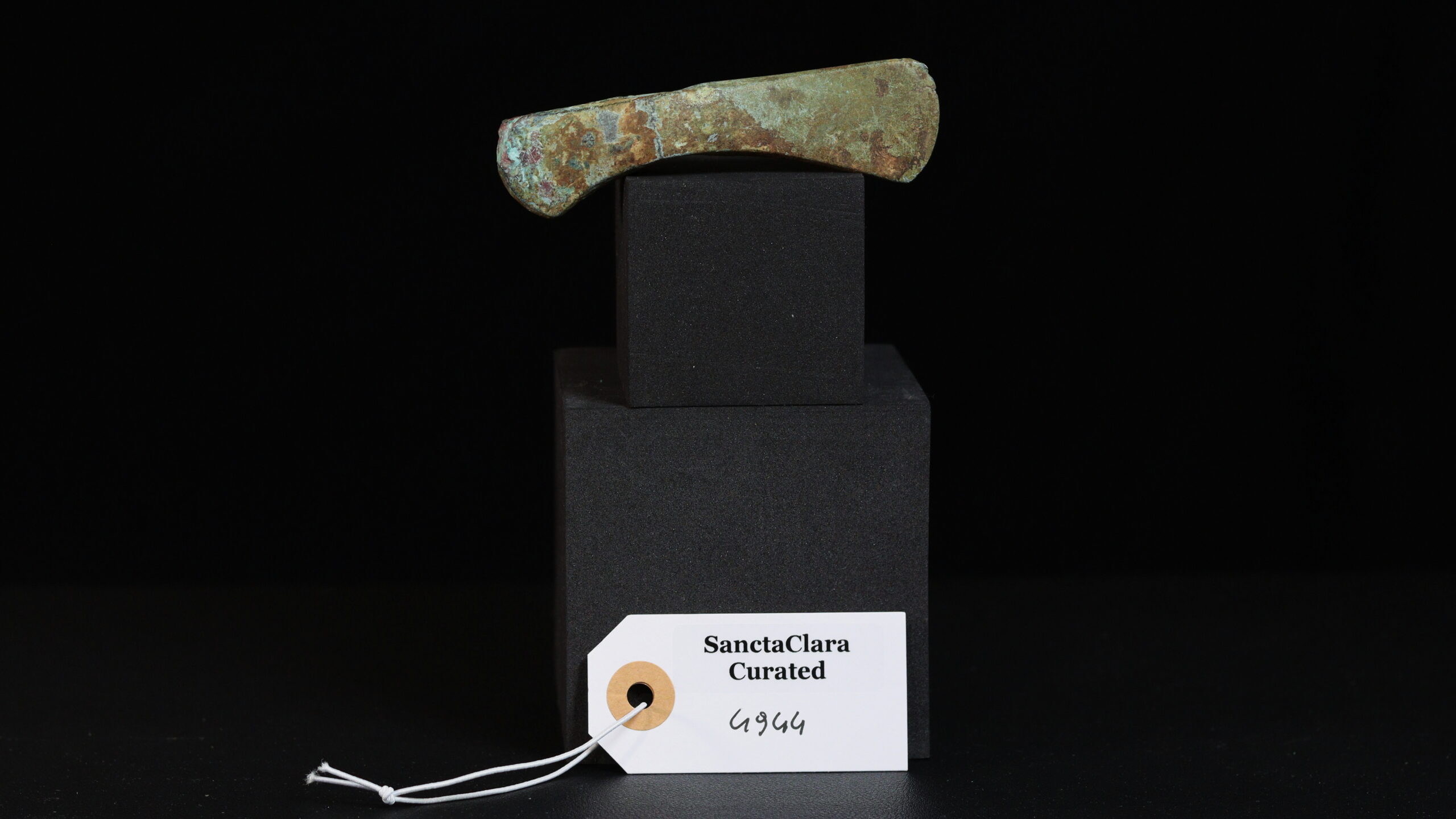
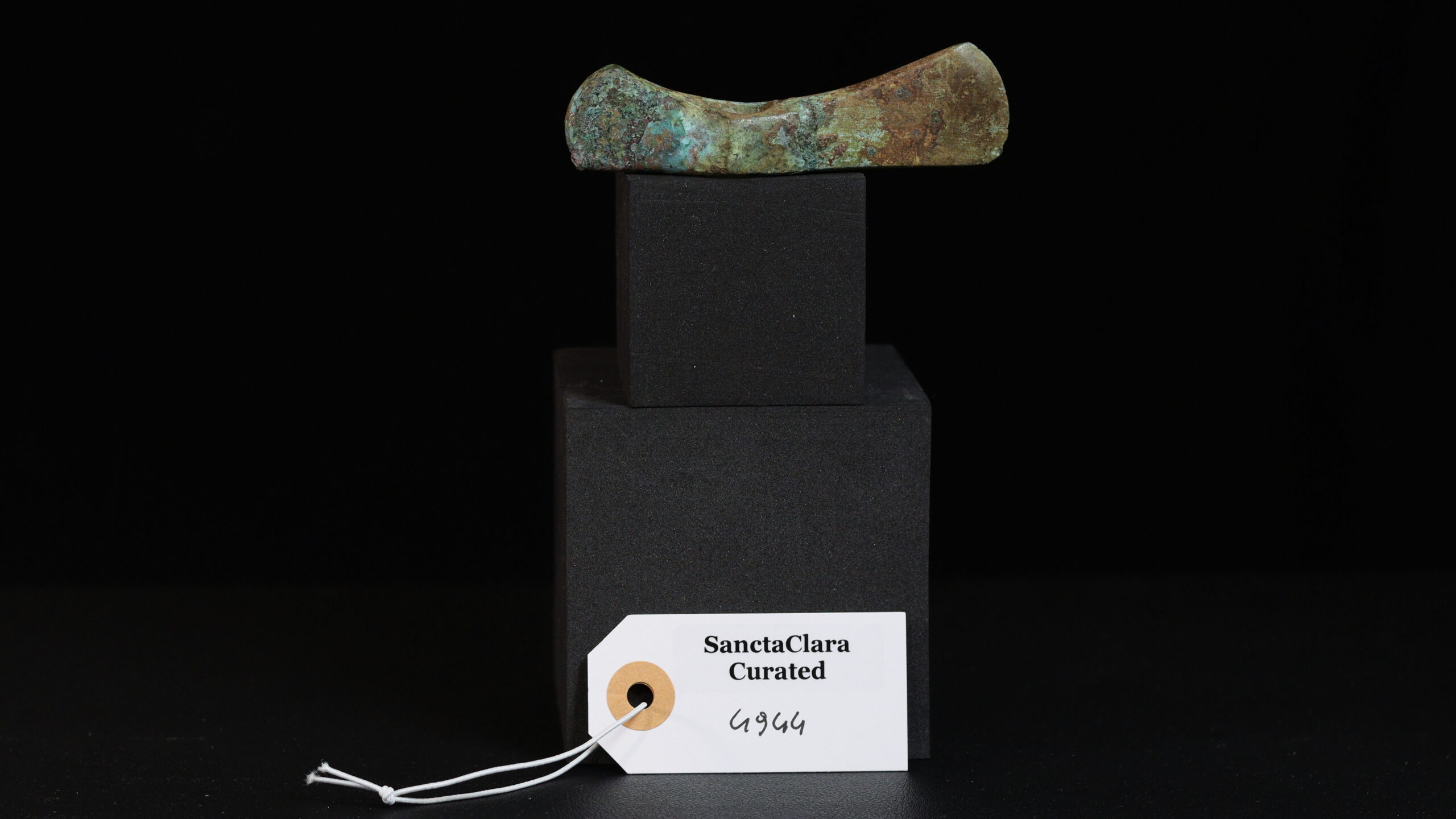
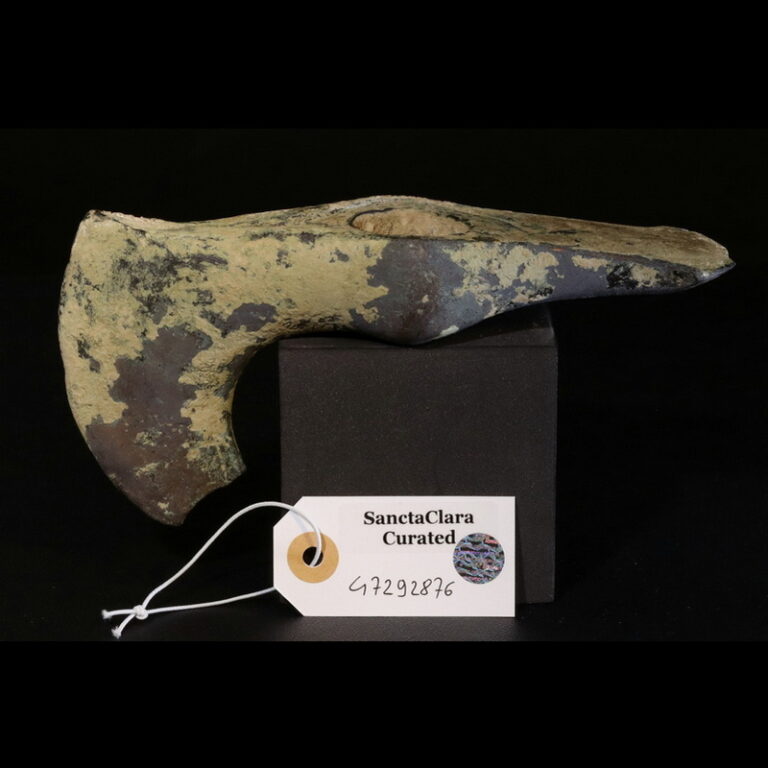
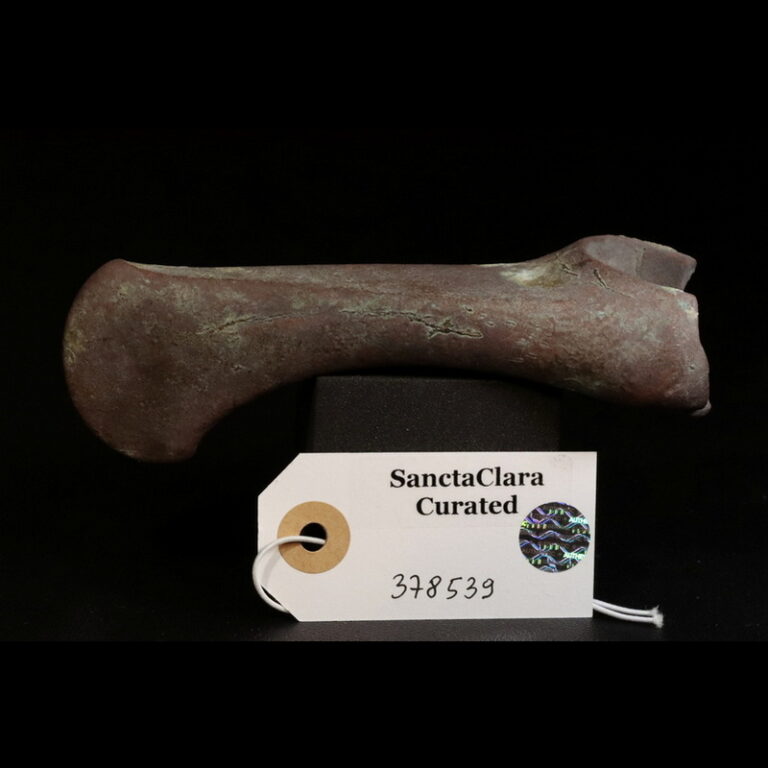
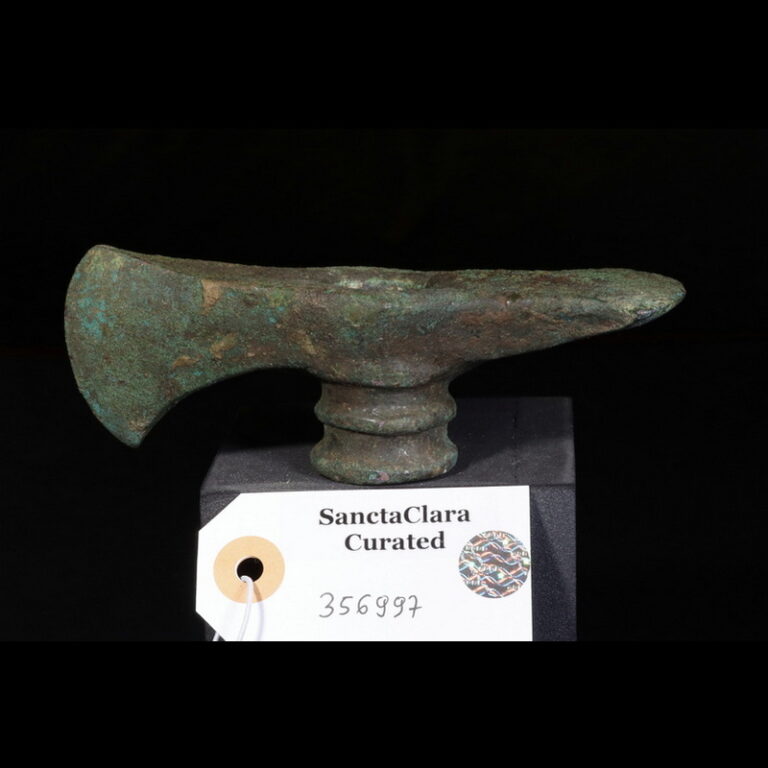
Small arsenic bronze or natural copper double sided axe (Shaft-Hole Axe) with round shaft tunnel and stone axe body form. Round shaft hole is an earlier form of shaft hafting. It features a lozenge shaped expansion around the socket that mimics the Boat-Axe or Battle-Axe culture stone tools, where the stone was drilled for a shaft.
Form looks like a miniature or variant of the Bányabükk or Fajsz type axes found in Hungary, Romania, and Serbia. It is associated with the cultures of the Danube region (e.g., Wietenberg or Otomani cultures),
Small size suggests a precision metalworking tool or alternatively votive or symbolic use.
Carpathian Basin, the Balkans, or the Pontic Steppe
Material
Copper
Dimensions and weight
L: 96mm H: 27 mm W: 22 mm, socket: round, 15 mm Weight: 99.63 g
Historical Significance
Shaft-hole axes represent a major technological innovation. Casting or drilling a hole directly through the axe head created a far stronger tool than lashing methods. This required sophisticated mould design with a removable core, a significant leap in metallurgical capability.