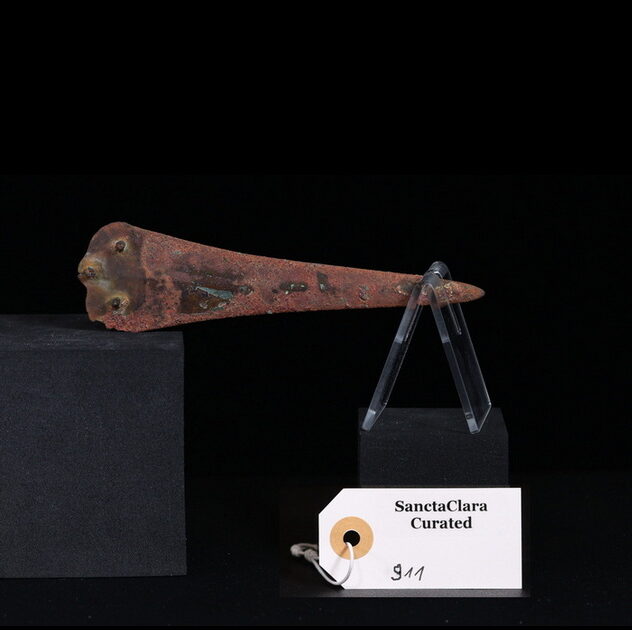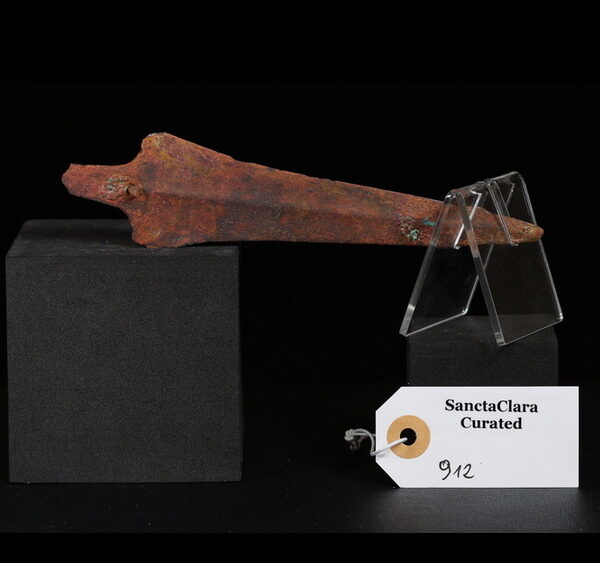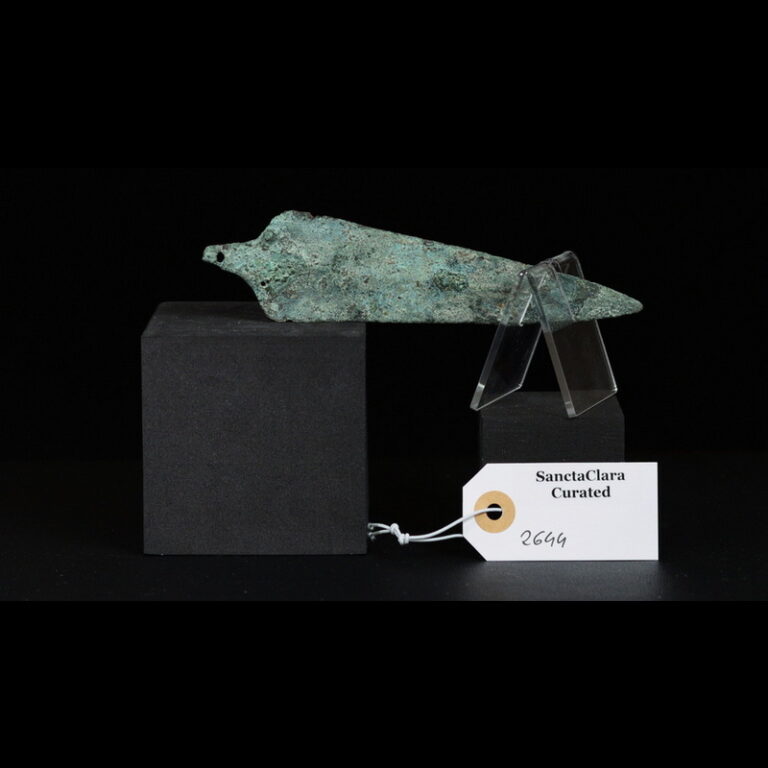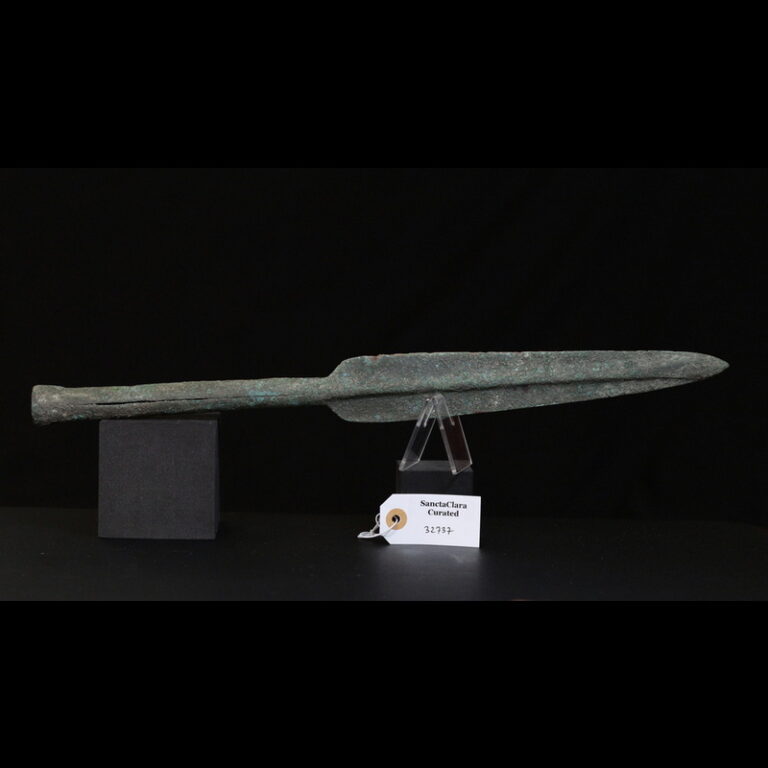
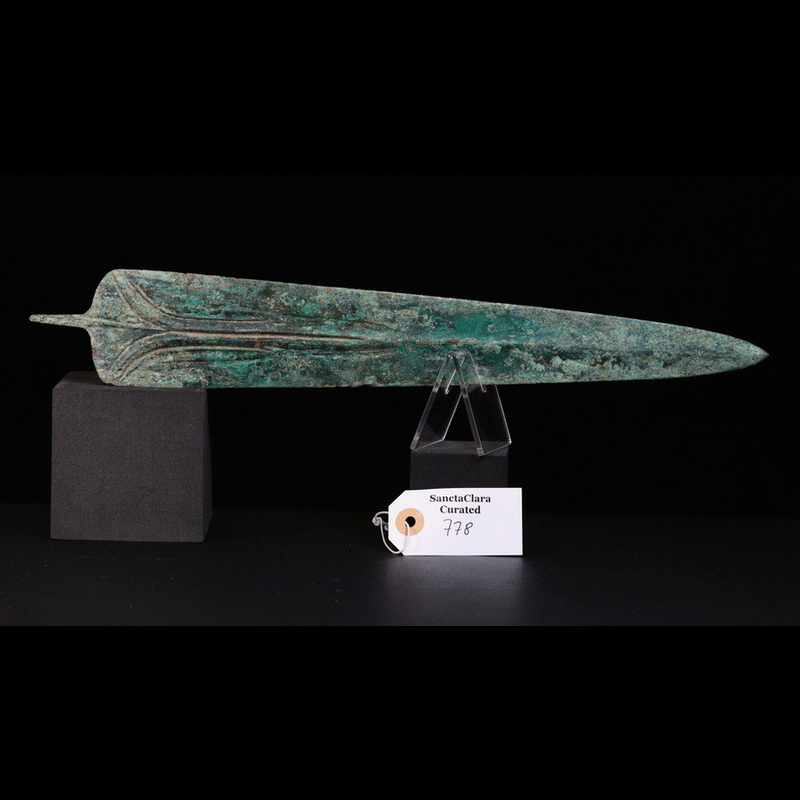

One of the most persistent challenges I encounter — in museum archives, field reports, and private collections alike — is the misattribution of weapon functions. The problem has deep roots. When the transition from stone to metal allowed for unprecedented morphological experimentation, the resulting bronze artifacts often shared similar foundational shapes: leaf-form blades, triangular points, flat tangs. Because the organic components of these weapons — wooden shafts, bone hilts, leather wrappings, sinew bindings, and resin adhesives — rarely survive the millennia, we are frequently left with just the bare metal element, stripped of the very context that defined its purpose.
Without the evidence of hafting, identifying whether a pointed piece of bronze was gripped in the fist, socketed onto a two-metre ash pole, or lashed perpendicular to a swinging shaft becomes a complex puzzle of inference. Careful scrutiny of morphology, mounting evidence, wear patterns, metallurgical composition, and surface preservation is required to correct long-standing misclassifications — errors that, once codified in a catalogue or publication, tend to replicate through the literature for decades.
Below is an in-depth look at three of the most common functional misattributions in Bronze Age armories: the dagger–spearhead overlap, the halberd–dagger confusion, and the deceptive category of so-called “votive” miniatures.
I. The Dagger vs. Spearhead Dilemma
In museum collections and auction catalogues worldwide, you will find relatively flat bronze blades featuring a short tang and either no rivet holes or perhaps just one or two. Historically, a significant number of these have been catalogued as early spearheads. The logic seems straightforward: they are pointed, leaf-shaped or triangular, and look exactly like the tip of a spear. However, functional and morphological analysis frequently reveals these to be dagger blades or short swords — personal sidearms, not pole weapons.
The confusion is understandable. A Cypriot flat-tanged blade of the Early Bronze Age, measuring perhaps 20–28 cm, presents an almost identical silhouette whether it was hafted as a dagger or mounted as a spearhead. The distinguishing evidence lies not in the outline, but in the subtleties of the proximal end and the microscopic biography of the blade’s working life.
2. Evidence for Dagger or Sword Attribution
**Hilt shadows and adhesive traces.** When the proximal end (the base) of a blade is examined under angled raking light or via low-power microscopy, we frequently find a *hilt shadow* — a distinctive band of differential patination or corrosion where an organic hilt once encased the blade’s base. The line is typically crisp, sweeping across the flat faces of the blade in a gentle arc that follows the contour of a hand-fitted grip. In well-preserved specimens — particularly those from dry-cave contexts in Crete or sealed tombs in the Levant — micro-traces of birch-bark tar, pine resin, or other adhesives used to seat the hilt can still be detected through gas chromatography. A spearhead mounted into the split end of a wooden shaft does not leave this distinctive, broad hilt imprint across the blade face; instead, it shows parallel longitudinal marks from the shaft walls gripping the tang.
**Mechanical fragility of the tang.** From a purely functional standpoint, a short, thin tang with minimal riveting is poorly suited for a spear. A spear is a thrusting weapon that transmits enormous kinetic energy upon impact — the product of the wielder’s full body mass accelerating behind the point. A short tang driven into a wooden shaft acts as a wedge. Upon a heavy strike, the compressive force splits the wood longitudinally, exactly the failure mode that led Bronze Age smiths to develop ever longer tangs, and ultimately, the socketed spearhead. When we encounter a blade with a tang only 3–5 cm long and a single rivet hole, the structural logic strongly favours a dagger hilt, where the forces are distributed differently through the grip and wrist.
**Wear patterns.** Edge-wear analysis on these blades — conducted through both optical microscopy and, increasingly, scanning electron microscopy (SEM) — often reveals signatures of *parrying*, *slicing*, and *lateral friction*. These are hallmarks of close-quarters combat with a handheld weapon: the fine, overlapping edge chips from blade-on-blade contact, the polished bevels from drawing a blade across soft tissue or organic material, and the distinctive lateral striations from a blade being wrenched sideways in a wound or against a shield. A spearhead, by contrast, accumulates primarily *tip-crushing* damage — compression fractures and blunting at the distal point — along with occasional edge nicks from glancing impacts against bone or armour.
3. Characteristics of Actual Early Tanged Spears
When we examine confirmed early Bronze Age tanged spearheads — such as those from the Argaric culture of southeastern Iberia, the long “rat-tail” tangs of the Cypriot Early Bronze Age (c. 2400–2100 BC), or the massive split-socket pikes from the Transcaucasian Trialeti culture — the design logic of the tang is fundamentally different. The tangs are significantly longer (often 10–15 cm), sturdier, and typically feature a terminal *button*, a bent *hook*, or a flared *fishtail* at the end. These features serve a critical mechanical function: they anchor the tang deep within the wooden shaft and prevent the inevitable longitudinal split from propagating to the point of failure. Many examples also show the remains of cord bindings — preserved as mineralised impressions in the corrosion products — wound tightly around the socket junction to reinforce the joint.
Eventually, the inherent weakness of the tanged spear drove one of the most critical military-industrial innovations of the second millennium BC: the **socketed spearhead**. By folding or casting the metal into a hollow cone, the smith created a mount that distributed the force of impact *around* the outside of the wooden shaft rather than driving a wedge into its centre. The seam of the fold — visible on many examples as a fine longitudinal line running down the socket — and the addition of rivet holes through the socket walls mark the diagnostic features of this revolutionary design.
II. The Halberd vs. Dagger Confusion
Another persistent issue in Bronze Age taxonomy is the misclassification of early halberds. The Early Bronze Age halberd — prominent in the Únětice culture of Central Europe, the El Argar culture of Iberia, and found in extraordinary concentration across Early Bronze Age Ireland — was a devastating close-combat weapon. However, when laid flat in a museum display case or photographed for an auction listing, a halberd blade looks remarkably like a broad, heavy, somewhat asymmetrical dagger.
The resemblance has led to decades of cataloguing errors. In several major European collections, halberd blades spent the better part of the twentieth century labelled as “large daggers” or “short swords of unusual form,” their true function only recognised when comprehensive re-examination programmes were undertaken.
1. Deciphering the Bronze Age Halberd
**Mounting orientation.** Unlike a dagger, which is mounted *axially* — in line with the handle for thrusting and slashing — a halberd blade was mounted *perpendicular* to a long wooden shaft, typically 60–100 cm in length. It was swung in a wide arc, like a pickaxe or a battleaxe, designed to deliver devastating blunt and piercing trauma to the head and upper body of an opponent. The physics of this weapon are closer to those of a medieval poleaxe than to any handheld blade.
**Absence of a tang and rivet arrangement.** Halberd blades typically lack a tang entirely. Instead, they feature a broad, flat base (the *heel*) designed to be seated into a robust lateral slot carved into the wooden shaft and secured with large metal rivets driven through both blade and wood. The rivets themselves are diagnostic: halberd rivets are massive — often 5–8 mm in diameter — and are arranged in a triangle, a diagonal line, or an asymmetrical arc to distribute the immense rotational stress generated by a swinging impact. By contrast, dagger rivets tend to be smaller, more uniform, and arranged symmetrically along the base of the blade.
**Asymmetry and torque engineering.** Striking with a halberd generates tremendous rotational force (torque) at the hafting point. To resist this, Bronze Age smiths engineered subtle asymmetries into the blade. Many halberd blades are slightly curved, with one edge longer or more convex than the other, optimising the angle of impact when swung from a pole. Others show a deliberate thickening or reinforcement of the heel on one side — the *leading edge* side — to absorb the shock of impact. These features make no functional sense for a hand-held thrusting dagger.
2.Recognising the Wear
If a halberd is mistakenly classified as a dagger, its wear patterns will confound the researcher. Halberds characteristically exhibit heavy impact damage on the leading edge and tip: deep edge-notching, compression fractures, and progressive blunting consistent with repeated chopping strikes against bone, leather, or rudimentary bronze armour. The trailing edge, by contrast, often remains relatively sharp — it was not the primary striking surface. On a genuine dagger, wear tends to be more evenly distributed across both edges, reflecting the bilateral cutting and parrying motions of hand-to-hand combat.
Additionally, the area around the rivet holes on a halberd frequently shows *stress fractures* — fine cracks radiating outward from the holes — caused by the enormous leverage forces transmitted through the hafting during use. These are rarely seen on dagger rivets, where the forces involved are an order of magnitude smaller.
III. The “Votive Miniature” Trap
A third category of misattribution deserves attention, as it operates in the opposite direction. Across the Bronze Age world — from the Aegean to Scandinavia — small metal objects are frequently dismissed as *votive miniatures*, ritual offerings, or children’s toys when they may in fact be fully functional implements.
The assumption is seductive: a bronze axe head only 6 cm long, or a sword blade barely 15 cm, seems too small to be a practical weapon. It must therefore be symbolic — a scaled-down representation deposited in a grave, a hoard, or a river as an offering to the gods.
In many cases, this attribution is correct. True votive miniatures do exist, and they often betray themselves through poor metallurgy (high lead content, casting flaws left unfinished), lack of sharpening, and absence of any wear. But the category has been over-applied. Functional analysis has shown that a number of so-called miniatures bear clear evidence of use: sharpened edges, resharpening facets, impact damage, and even hafting traces. Some represent specialist tools — small chisels, leather-working blades, or precision awls — whose compact size was a deliberate design choice, not a symbolic reduction. Others are the personal weapons of adolescents or women, sized to fit a smaller hand and a lighter frame, and no less lethal for their dimensions.
The lesson is one of caution: size alone is not a reliable criterion for distinguishing functional from ritual objects. Each piece must be evaluated on its own metallurgical and use-wear evidence.
IV. The Role of Metallurgy in Functional Attribution
Beyond morphology and wear, the chemical composition of a bronze blade can offer powerful clues to its intended function. Bronze Age smiths were not working with a single, standardised alloy. They adjusted the ratio of copper to tin — and, in earlier periods, the arsenic content — to produce metals with different mechanical properties suited to different tasks.
**High-tin bronzes** (10–12% tin) are hard and hold a sharp edge well, but are relatively brittle. They are the alloy of choice for cutting weapons — swords, daggers, and razors — where edge retention is paramount and the blade is not expected to absorb heavy impact.
**Lower-tin bronzes** (6–8% tin) are softer and more ductile, better able to absorb shock without fracturing. These alloys are more commonly found in spearheads, axes, and halberds — weapons that must withstand repeated heavy impacts without catastrophic failure.
**Arsenical copper**, which predates true tin bronze in many regions, produces a naturally work-hardened surface when hammered. Many of the earliest tanged “spearheads” from the Levant and Iran are arsenical copper, and their mechanical properties — moderate hardness, good malleability — are better suited to the controlled thrusting of a dagger than to the violent dynamics of a spear impact.
When compositional analysis (via X-ray fluorescence or neutron activation) reveals that a supposed spearhead is made from a high-tin, edge-optimised alloy, this is a significant data point in favour of reclassification as a dagger or short sword.
Conclusion
The attribution of function in Bronze Age weaponry cannot rely solely on a macroscopic, top-down view of the artefact’s silhouette. A pointed bronze blade is not necessarily a spear; a broad riveted blade is not necessarily a dagger; a small implement is not necessarily a toy. Each of these assumptions, when left unexamined, distorts our understanding of ancient combat, craft, and ritual.
As the field moves forward, the integration of use-wear analysis, metallurgical profiling, adhesive residue identification, and careful examination of hafting traces allows us to reconstruct not just the shape of the bronze, but the organic architecture that turned a casting into a specific instrument of war or work. For the collector and the curator alike, this means that every artefact deserves a second look — not just at what it appears to be, but at the evidence of what it actually *did*.