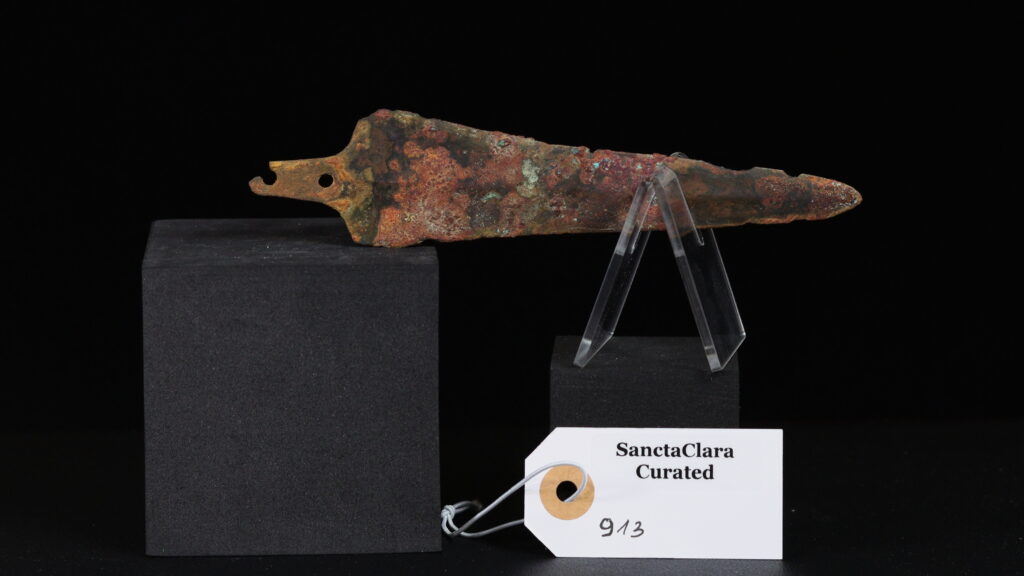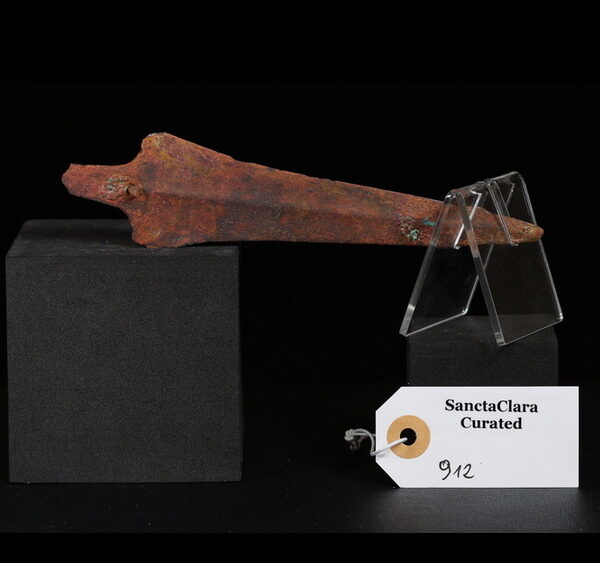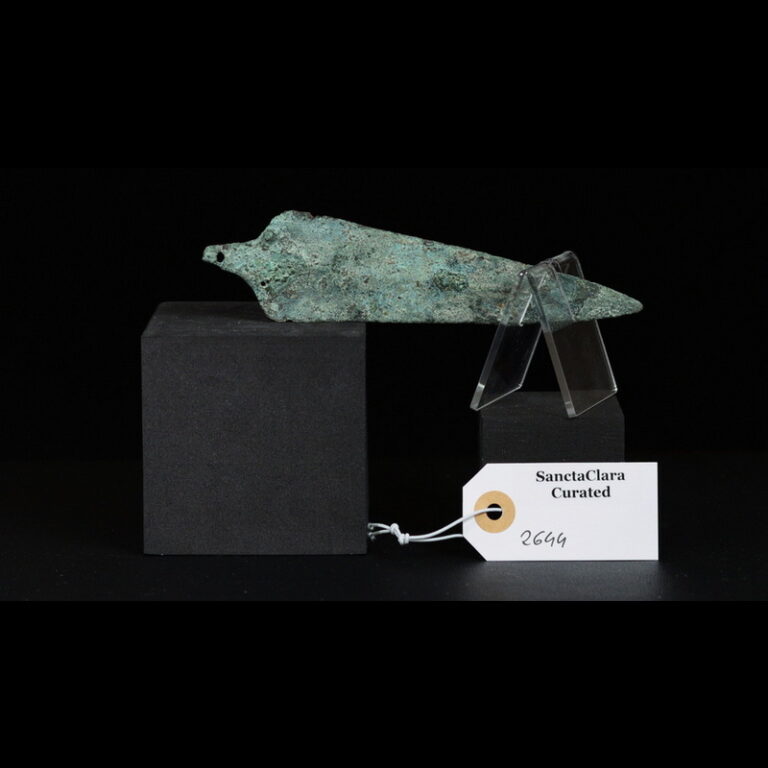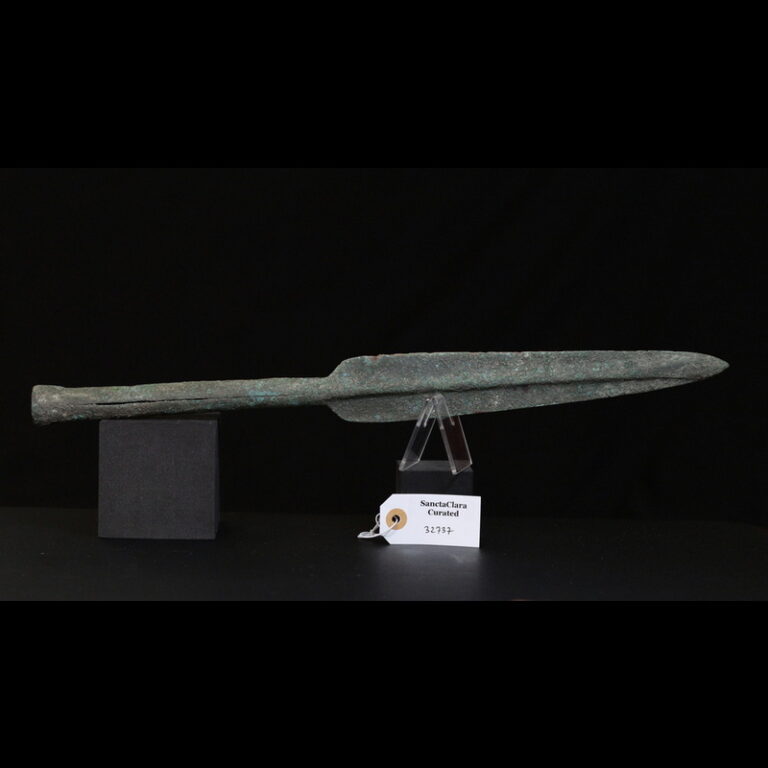
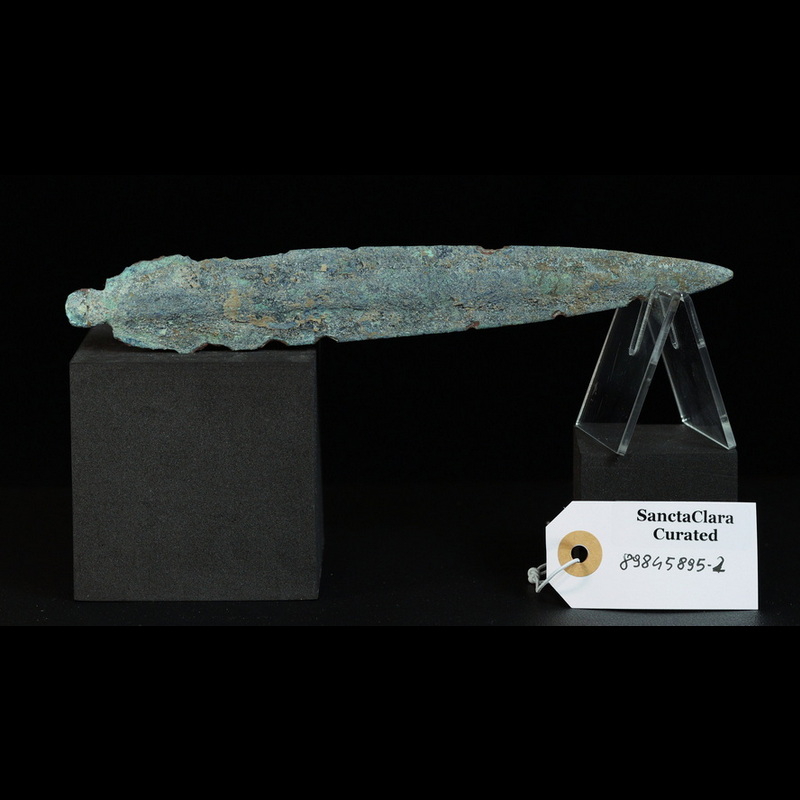

When we excavate a beautifully crafted Late Bronze Age flange-hilted sword, the first question is always: Was this the weapon of a seasoned warrior, or a pristine status symbol meant only for display or burial?
To answer this, we look very closely at the hilt mount, specifically the rivet holes. Here is an in-depth look at how we decode these microscopic and macroscopic clues.
I. The Biomechanics of a Sword Strike
To understand wear, we must understand the physics of the weapon. A sword is essentially a lever. When the blade strikes a hard target (like a wooden shield, a bronze breastplate, or bone), the impact creates massive kinetic energy that travels down the blade and directly into the hilt.
Because the organic grip (wood or bone) is somewhat flexible, and the bronze tang is rigid, the rivets become the primary anchor points. They absorb the sheer force of the impact. If a sword is used repeatedly, the metal will begin to record that trauma.
II. Decoding the Rivet Holes: Signs of Combat
When we put the tang of a excavated sword under magnification, we are looking for specific deformations that only occur through violent, repetitive kinetic stress.
Elongation (Ovalization): This is the most telltale sign of combat use. Rivet holes are initially drilled or cast as perfect circles. However, repeated heavy slashing or thrusting causes the rivets to press violently against the edges of the holes. Over time, the softer bronze stretches. The hole deforms from a circle into an oval. The direction of the elongation even tells us how the sword was predominantly used (e.g., thrusting pushes the wear toward the back of the hilt).
Notching and Step-Fractures: If the organic handle loosens even slightly during battle, the friction between the wood/bone and the bronze tang increases. We look for microscopic “steps” or deep notches worn into the edges of the rivet holes or the flanges, created by the constant, aggressive shifting of the hilt plates.
Bent or Sheared Rivets: Sometimes the rivets themselves survive. In combat weapons, we frequently find rivets that are bent internally. In extreme cases, the sheer force of a blow can completely shear a rivet in half, leaving a broken stump inside the tang.
The “Repair” Signature: A combat weapon was a massive investment of wealth. If a handle broke or a tang snapped near the hilt, it wasn’t discarded. Archaeologists often find swords with secondary rivet holes drilled clumsily next to the original, broken ones. This indicates a battlefield repair or a weapon that saw so much use it outlived its original grip.
III. The Markers of a Ceremonial or Status Weapon
Conversely, many heavily decorated weapons found in elite burials or hoards show no signs of trauma. These were items of profound social signaling, or perhaps specialized offerings to the gods.
Pristine Geometry: The rivet holes remain perfectly circular under magnification. The edges of the holes are sharp, showing no signs of the metal-on-wood friction that occurs when a weapon is swung.
Fragile Architecture: Some “swords” feature tangs that are incredibly thin, or rivet holes placed so close to the edge of the metal that a single heavy blow would tear the rivet right out. The craftsmen knew these would never strike a shield.
Oversized or Decorative Rivets: Ceremonial weapons sometimes feature massive, domed rivets made of contrasting metals or capped with gold foil. While visually stunning, these would be ergonomically terrible for a warrior’s grip and highly prone to snagging or denting.
Lack of Blade Trauma: We always corroborate hilt wear with blade wear. A ceremonial weapon will lack the deep edge-nicks, microscopic striations from aggressive sharpening (honing), and tip-bending that characterize a battlefield weapon.
IV. Modern Analytical Techniques
Today, we don’t just rely on the naked eye. We utilize:
Stereomicroscopy and SEM (Scanning Electron Microscopy): To identify micro-striations inside the rivet holes that indicate exactly how the metal deformed.
Metallography: By taking microscopic core samples, we can analyze the grain structure of the bronze. We can see if the metal around the rivet hole has been unintentionally work-hardened by the stress of repeated combat impacts.
Experimental Archaeology: We cast exact replicas of Bronze Age swords using period-accurate alloys and hafting methods. We then subject them to controlled impact testing against replica shields and armor to recreate and measure the exact wear patterns we see on the ancient artifacts.