
Document
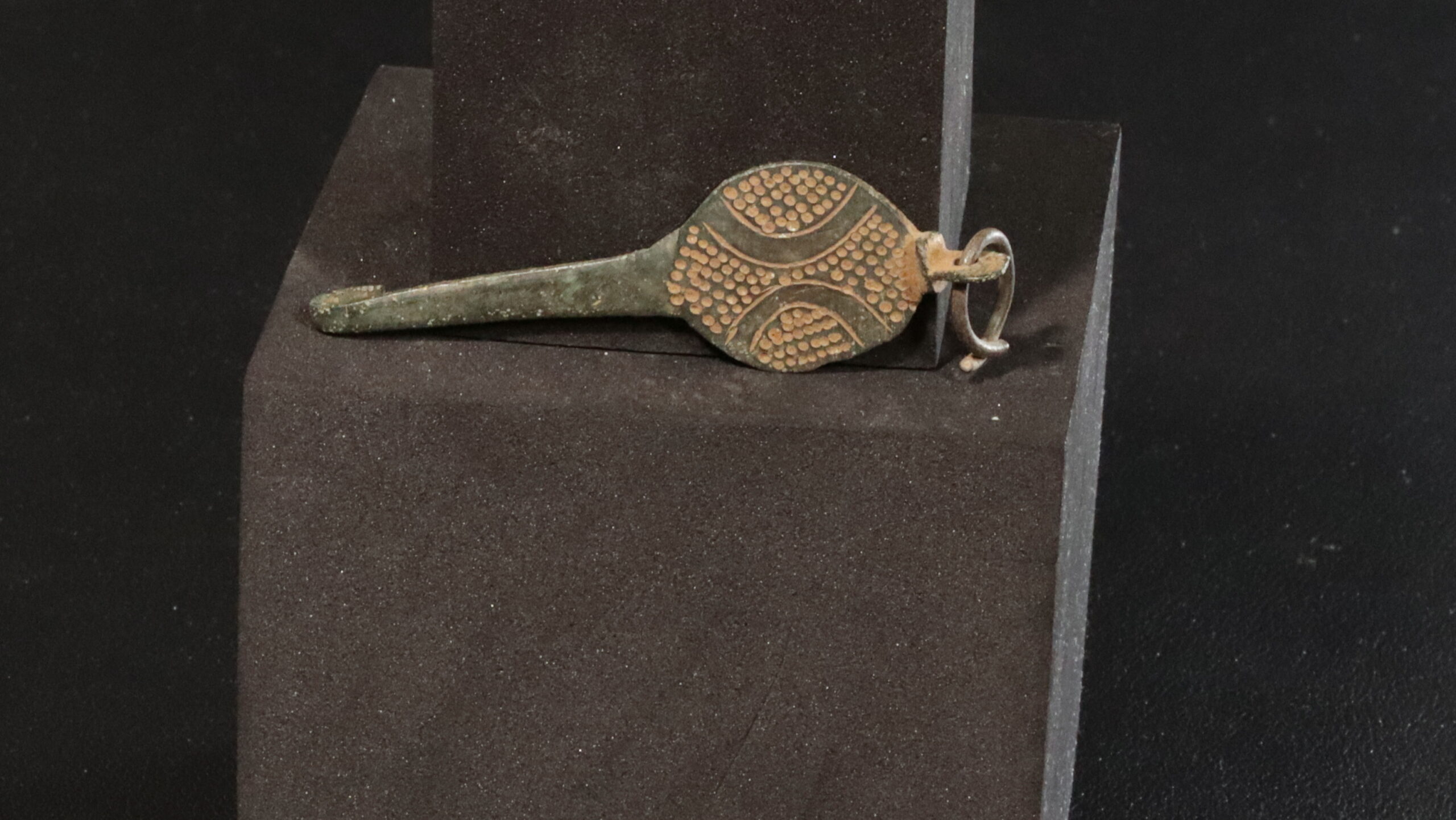
SCC Celtic Belt Hook 1
Metadata
Title
Celtic La Tene belt hook
Description
This object is a classic example of a La Tène style belt hook or belt clasp. It served the same function as the earlier Hallstatt Gürtelhaken—to fasten a warrior's or chieftain's belt—but its form and artistic decoration are entirely different.
The mechanism was simple and effective:
The flat, decorated plate was riveted or stitched to one end of a leather belt. The attached bronze ring provided a strong and flexible anchor point for this attachment.
The hook at the other end would engage with a hole or a second ring on the opposite end of the belt.
These belt hooks were integral parts of the elite warrior's panoply and are often found in burials alongside swords, spears, and other high-status items.
Cultural and Chronological Attribution
Culture: The artifact is unequivocally a product of the La Tène Culture. This culture, which succeeded the Hallstatt, is synonymous with the people popularly known as the Celts in ancient Europe. The decorative style, with its curvilinear designs and patterned fields, is a hallmark of La Tène art, a departure from the stricter, more geometric art of the preceding Hallstatt period.
Period: Middle to Late Iron Age, specifically La Tène C to La Tène D, circa 250 BCE to the 1st century BCE. The specific form of the hook and the stippled decorative pattern are characteristic of this later phase of the La Tène period.
Geographical Origin: The La Tène culture originated in an area centered on eastern France, Switzerland, and southern Germany, but it expanded dramatically. By the period this belt hook was made, La Tène groups had settled across a vast swathe of Europe, including the region of modern-day Poland. This artifact is likely from a local Celtic group or one of the neighboring cultures that were heavily influenced by La Tène craftsmanship, such as the Przeworsk or Jastorf cultures.
The mechanism was simple and effective:
The flat, decorated plate was riveted or stitched to one end of a leather belt. The attached bronze ring provided a strong and flexible anchor point for this attachment.
The hook at the other end would engage with a hole or a second ring on the opposite end of the belt.
These belt hooks were integral parts of the elite warrior's panoply and are often found in burials alongside swords, spears, and other high-status items.
Cultural and Chronological Attribution
Culture: The artifact is unequivocally a product of the La Tène Culture. This culture, which succeeded the Hallstatt, is synonymous with the people popularly known as the Celts in ancient Europe. The decorative style, with its curvilinear designs and patterned fields, is a hallmark of La Tène art, a departure from the stricter, more geometric art of the preceding Hallstatt period.
Period: Middle to Late Iron Age, specifically La Tène C to La Tène D, circa 250 BCE to the 1st century BCE. The specific form of the hook and the stippled decorative pattern are characteristic of this later phase of the La Tène period.
Geographical Origin: The La Tène culture originated in an area centered on eastern France, Switzerland, and southern Germany, but it expanded dramatically. By the period this belt hook was made, La Tène groups had settled across a vast swathe of Europe, including the region of modern-day Poland. This artifact is likely from a local Celtic group or one of the neighboring cultures that were heavily influenced by La Tène craftsmanship, such as the Przeworsk or Jastorf cultures.
Catalogue Number
700421
Period
250 BCE
Culture
La Tene
Material
Bronze
Dimensions and weight
69 mm
Curator Rating
3